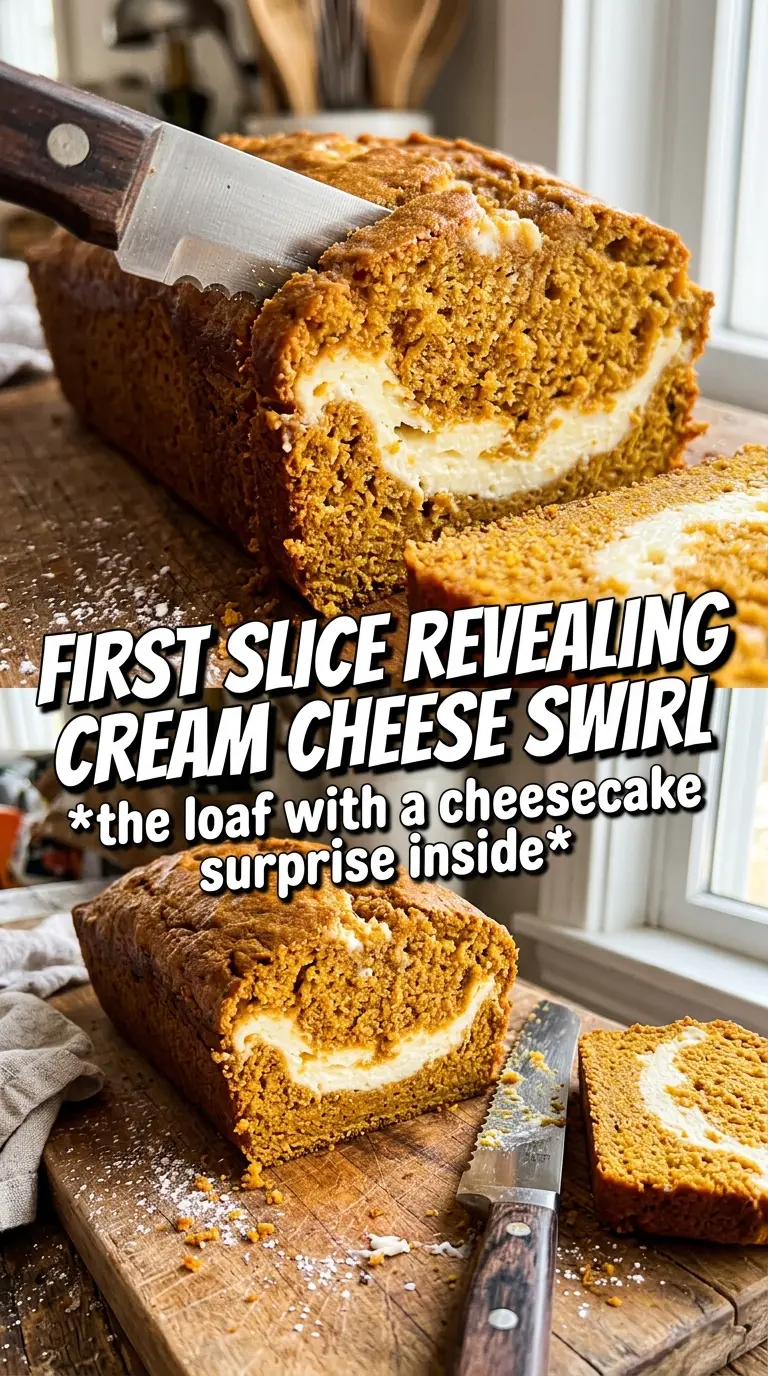
Pumpkin cream cheese bread bakes up with a soft, moist crumb, a tangy ribbon of cream cheese in the middle, and just enough cinnamon sugar on top to give every slice a little crackle. It’s the kind of loaf that looks bakery-made when you slice into it, but it comes together with ordinary pantry ingredients and one bowl for the batter. The contrast is what makes it memorable: warm pumpkin spice bread on the outside, cool creamy richness tucked through the center.
The trick is keeping the pumpkin batter thick enough to hold the filling instead of letting it sink and disappear. A full can of pumpkin puree gives the loaf that deep orange color and moist texture, while the oil keeps it tender for days. The cream cheese layer stays smooth because it’s beaten on its own first, then chilled briefly so it doesn’t melt straight into the batter before the loaf sets.
Below, I’ve included the little details that matter most: how to keep the swirl from blending into the bread, what to watch for if your loaf is browning too fast, and the best way to slice it cleanly once it cools.
The cream cheese layer stayed right in the middle and the bread sliced clean after cooling. I loved that the cinnamon sugar top gave it a little crunch without making the loaf dry.
Save this Pumpkin Cream Cheese Bread for a loaf with a tender pumpkin crumb, tangy cream cheese swirl, and cinnamon sugar top.
The Cream Cheese Layer That Stays Put Instead of Melting Away
The biggest mistake with filled quick breads is treating the filling like an afterthought. If the cream cheese mixture is too loose, it sinks into the batter and disappears. If the pumpkin batter is too thin, the filling drifts upward and the loaf bakes with a tunnel instead of a defined center.
This version solves both problems. The filling gets beaten smooth, then chilled while you make the batter, which helps it hold its shape long enough to stay centered. The batter itself is dense enough to support it, especially because pumpkin puree brings moisture without thinning the mixture the way extra milk would.
The other detail that matters is where you test for doneness. A toothpick pushed through the cream cheese center will lie to you every time. Check the edge of the loaf instead; that’s where you’ll get a clean read on whether the bread is baked through.
What Each Ingredient Is Doing in This Loaf
- Pumpkin puree — Use pure pumpkin, not pumpkin pie filling. The puree gives structure, color, and moisture without extra sugar or spices that would throw off the balance.
- All-purpose flour — This is the backbone of the loaf. It’s sturdy enough to hold the cream cheese filling but still keeps the crumb soft.
- Vegetable oil — Oil keeps quick bread tender longer than butter does. You can swap in melted coconut oil, but it will add a faint coconut note and firms up more when chilled.
- Brown sugar and granulated sugar — The brown sugar adds a deeper, molasses-like warmth, while the white sugar keeps the crumb lighter and helps the top bake with a little sheen.
- Cream cheese — Full-fat cream cheese gives the smoothest filling. Low-fat cream cheese can work, but it softens faster and won’t hold the swirl as neatly.
- Pumpkin pie spice and cinnamon — The pumpkin pie spice brings the classic fall spice mix, while the extra cinnamon sharpens the top crust and the filling so the flavor doesn’t taste flat.
Building the Loaf So the Swirl Doesn’t Sink
Mix the filling first
Beat the cream cheese, sugar, egg, vanilla, and cinnamon until it’s completely smooth and there are no lumps left. If the filling looks grainy at this stage, the cream cheese was too cold and those bits will still be there after baking. Set it in the fridge while you mix the batter so it thickens just enough to layer cleanly.
Keep the pumpkin batter just mixed
Whisk the dry ingredients together first so the spice and leavening are evenly distributed, then stir the wet ingredients in a separate bowl. Fold the wet into the dry until the flour disappears and stop there. Overmixing wakes up the gluten and gives you a tough loaf instead of a tender one.
Layer with purpose
Spread half the batter into the pan, then spoon the filling down the center rather than all the way to the edges. That keeps the cream cheese from touching the sides of the pan where it can overheat and separate. Top with the rest of the batter and use a knife for just a few gentle swirls; if you overdo it, the layers blur together.
Bake until the edges test clean
The loaf is done when the top is set, the center no longer looks wet, and a toothpick inserted at the edge comes out clean or with a few moist crumbs. The cream cheese center will still look slightly softer than the bread around it, and that’s normal. Let it cool in the pan before lifting it out, or the center can collapse while it’s still hot.
How to Adjust This Loaf Without Losing the Texture
Dairy-Free Version
Use a plant-based cream cheese that bakes well and has a thick, spreadable texture. The filling won’t taste exactly the same, but it still gives you that creamy center and the loaf keeps its structure. Skip any thin dairy-free yogurt add-ins; they make the filling too loose.
Gluten-Free Swap
A good 1:1 gluten-free flour blend works here, as long as it contains xanthan gum or a similar binder. The loaf will be a little more delicate when warm, so let it cool completely before slicing. That rest time helps the crumb set instead of crumbling apart.
Add Pecans to the Top
A handful of chopped pecans sprinkled over the cinnamon sugar adds crunch and a toasted, nutty edge. Add them after the cinnamon sugar so they stick better and toast on top instead of sinking into the batter. This is the easiest way to make the loaf feel a little more bakery-style.
Make It Less Sweet
You can reduce the sugar in the pumpkin batter by a few tablespoons without hurting the texture, but I wouldn’t cut the filling much more than that. Sugar does more than sweeten here; it helps the cream cheese layer stay smooth and the crumb stay soft. Go too low and the loaf turns dense and less balanced.
Storage and Reheating
- Refrigerator: Store covered for up to 5 days. The cream cheese center stays safest chilled, and the crumb stays moist.
- Freezer: Freeze slices individually wrapped, then sealed in a freezer bag for up to 2 months. Thaw in the fridge so the filling doesn’t weep as it warms.
- Reheating: Warm slices in the microwave in short bursts or in a low oven. Don’t blast it on high heat; that can make the cream cheese layer separate and the bread dry out at the edges.
Questions I Get Asked About This Recipe
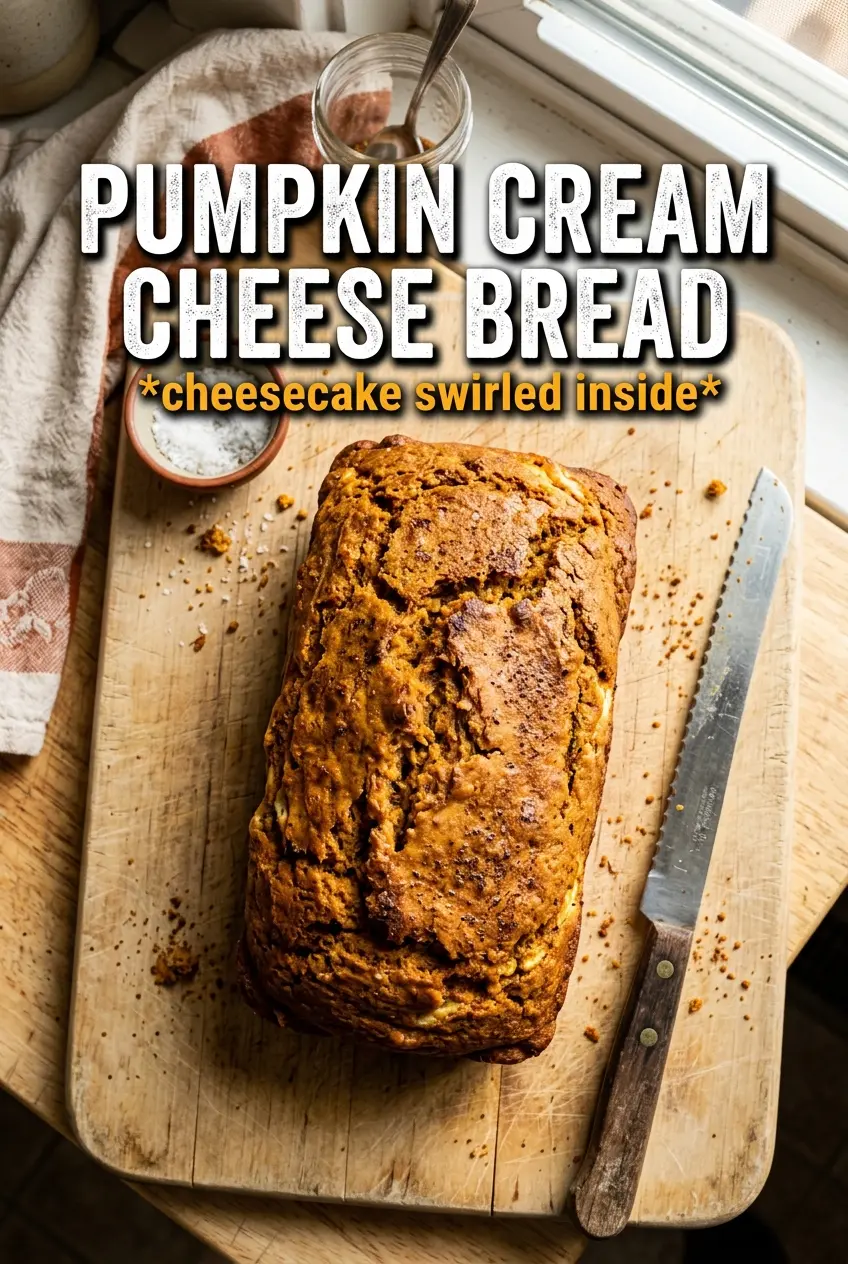
Pumpkin Cream Cheese Bread
Ingredients
Equipment
Method
- Preheat oven to 350F and grease a 9x5 loaf pan.
- Beat cream cheese filling ingredients until smooth, then refrigerate.
- Whisk all pumpkin bread dry ingredients together until evenly combined.
- Whisk pumpkin bread wet ingredients together in a separate bowl until glossy and smooth.
- Fold wet into dry just until no dry streaks remain.
- Pour half the batter into the loaf pan and spoon the cream cheese filling down the center.
- Top with remaining batter and swirl gently with a knife to marble the center.
- Sprinkle cinnamon sugar over the top evenly.
- Bake 60-65 minutes at 350F until a toothpick inserted at the edge (not through the cream cheese center) comes out clean.