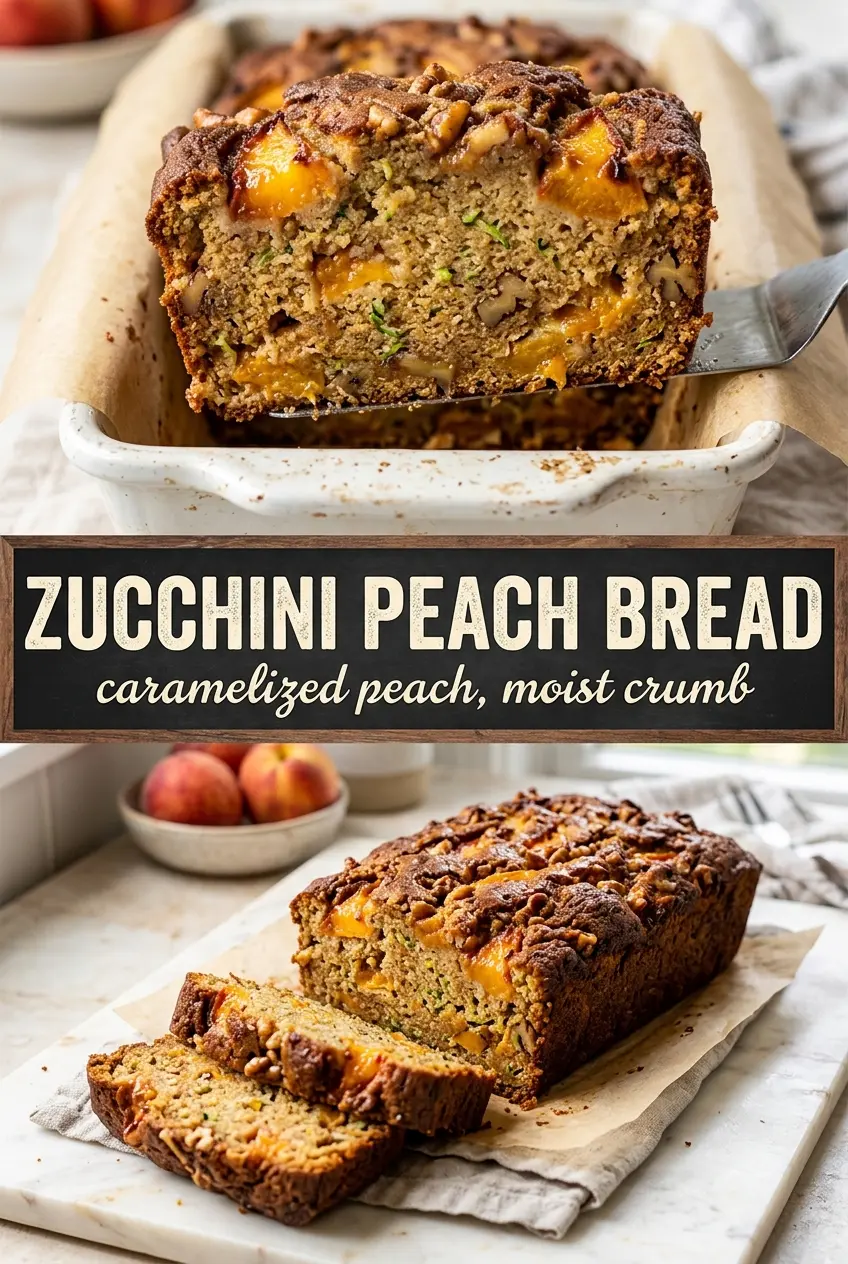
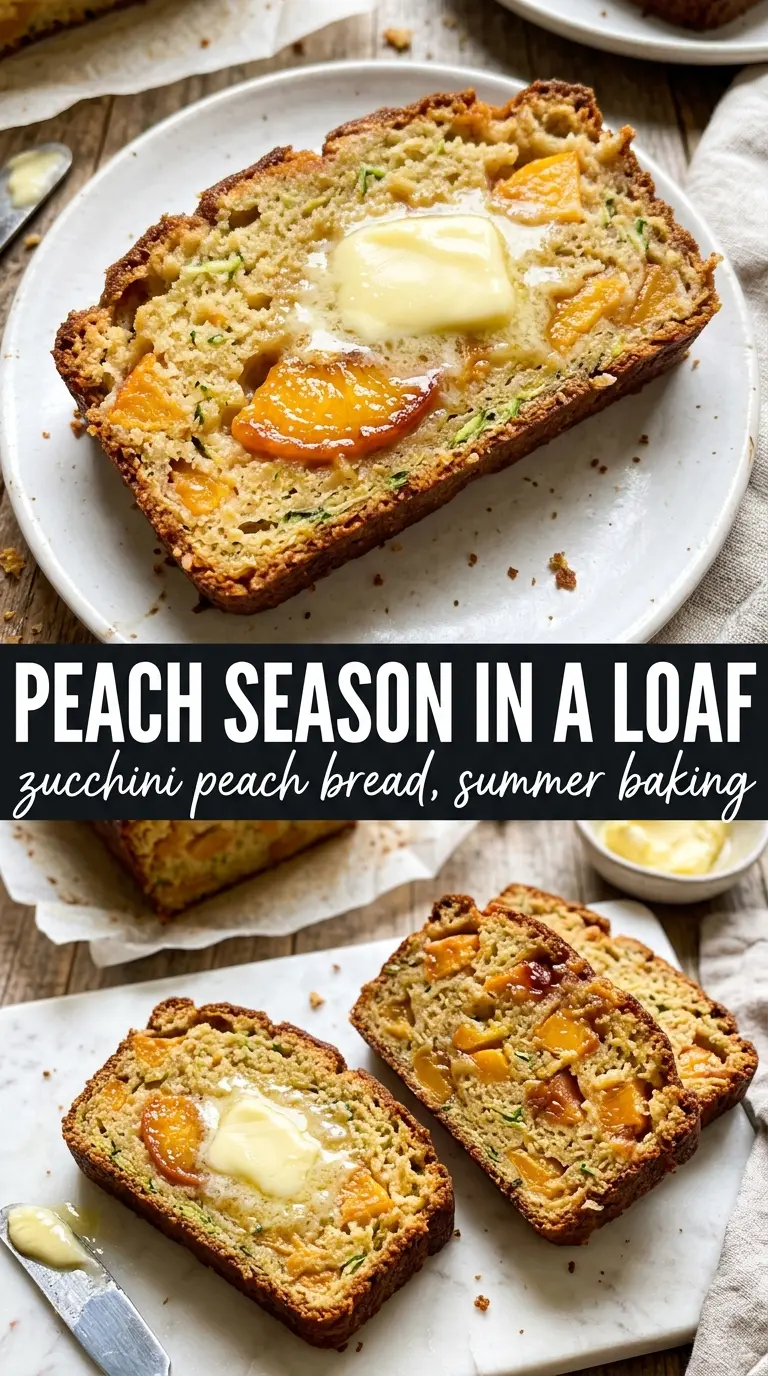
Golden zucchini peach bread bakes up with a soft, moist crumb and little bursts of juicy peach in every slice. The zucchini keeps the loaf tender without tasting like vegetables, while the peaches melt into the batter just enough to leave the whole kitchen smelling like warm fruit and cinnamon. It’s the kind of quick bread that disappears fast, whether you serve it warm for breakfast or slice it later in the day with coffee.
This version works because the zucchini is squeezed dry before it goes into the bowl. That one step keeps the loaf from turning heavy or gummy once the peaches start releasing their own juice. A little yogurt adds lift and a gentle tang, and the cinnamon-sugar topping gives the crust a thin, crackly finish that makes each slice taste finished, not flat.
Below, I’ve included the small details that matter most: how to keep the fruit from sinking, how to judge when the loaf is actually done, and a few smart swaps if you need to work with what’s in your kitchen.
The loaf came out so moist and the peaches stayed in little soft pockets instead of sinking. I also liked that the top got that light cinnamon crunch after 60 minutes.
Save this zucchini peach bread for the days when you want a soft, fruity quick bread with a cinnamon-sugar top.
The Trick to Keeping the Loaf Tender When the Peaches Start Letting Go
Quick bread goes wrong here when the fruit adds too much moisture too early. Peaches soften fast in the oven, and if the zucchini still has extra water in it, the batter gets heavy before the middle has a chance to set. That’s why this loaf depends on two small things working together: squeezed-dry zucchini and a batter mixed only until the flour disappears.
The other mistake is overmixing after the dry ingredients go in. Once flour hits the wet mixture, stir just until you stop seeing streaks. If you keep going, the loaf bakes up tight instead of soft, and the peaches break down into a wet layer instead of staying suspended through the crumb.
- Zucchini — Grate it fine, then squeeze it hard in a clean towel or your hands. That step matters more than the size of the shreds because the goal is structure, not more vegetable texture.
- Fresh peaches — Dice them small so they bake into soft pockets instead of collapsing the loaf. Firmer peaches hold shape better; very ripe ones can still work, but keep the pieces tiny.
- Greek yogurt — This adds moisture and a little tang without making the batter loose. Sour cream works in the same amount if that’s what you have.
- Oil — Oil keeps the crumb soft for days. Butter can be used, but the loaf won’t stay as tender once it cools.
What Each Ingredient Is Actually Doing in This Recipe
- Primary ingredient (the star) — Quality matters most. Choose the best you can find.
- Cooking medium (oil, butter, or broth) — This carries flavors and prevents dryness.
- Seasonings (salt, pepper, spices, herbs) — Layer flavors so nothing overpowers. Build depth gradually.
- Aromatics (garlic, onion, herbs) — Cook with fat to bloom flavors. Become the foundation.
- Supporting ingredients — Complement the main ingredient without overpowering it.
- Sauce or liquid (if applicable) — Brings flavors together. Balance richness with acid.
- Acid (lemon, vinegar, wine, or other) — Brightens and prevents flat-tasting results.
- Final finish (garnish, glaze, or sauce) — Prevents one-dimensional taste and adds visual appeal.
Building the Batter So the Fruit Stays Evenly Suspended
Mix the dry base first
Whisk the flour, baking soda, baking powder, salt, cinnamon, and nutmeg together before anything else. That keeps the leavening and spices distributed evenly, which matters in a quick bread because there’s no second chance to correct a lopsided batter. If you see a clump of baking soda later, that spot can taste harsh.
Whip the wet ingredients until smooth
Beat the sugar, eggs, oil, yogurt, vanilla, and almond extract until the mixture looks glossy and fully combined. You’re not trying to add a lot of air here; you just want a smooth base that will hold the zucchini and peaches without separating. If the mixture looks curdled, the yogurt wasn’t fully incorporated yet, so keep mixing until it evens out.
Fold in the zucchini and peaches last
Stir in the zucchini and peaches before the flour goes in, then add the dry ingredients and fold gently. Stop as soon as the batter looks combined, even if it still seems a little rough. The peaches will release some juice as they bake, and that’s normal; adding extra liquid now is how the loaf turns damp in the center and never firms up properly.
Bake until the center sets, not just the top
Scrape the batter into a greased 9×5 loaf pan and scatter the cinnamon-sugar topping over the surface. Bake until the top is deep golden and a toothpick comes out clean or with a few moist crumbs, usually around the 55-minute mark but sometimes closer to 65 depending on your peaches. If the top is browning too fast while the center still feels loose, lay a loose piece of foil over it and keep baking.
What to Change When Your Peaches Are Extra Juicy or You Need a Different Finish
If your peaches are very ripe
Use the ripest peaches only if you dice them small and keep the batter thick. Soft peaches bring more juice, which is great for flavor but risky for texture, so the smaller cut helps them melt into the loaf instead of pooling at the bottom.
Dairy-free version
Swap the Greek yogurt for an unsweetened dairy-free yogurt with a thick texture. Thin alternatives can make the batter loose, so use one that eats more like yogurt than milk. The loaf stays soft, though it loses the slight tang that regular yogurt adds.
Gluten-free version
Use a 1:1 gluten-free baking blend that already includes xanthan gum. A plain rice flour mix won’t give the same structure, and the loaf can crumble when sliced. The texture will be a little more delicate, but it still bakes up well if you let it cool fully before cutting.
Storage and Reheating
- Refrigerator: Store covered for up to 5 days. The crumb stays moist, but the topping softens after day one.
- Freezer: This loaf freezes well. Wrap slices or the whole cooled loaf tightly and freeze for up to 3 months.
- Reheating: Warm slices in the microwave for 10 to 15 seconds or in a low oven until just heated through. Don’t overheat it, or the peaches can turn mushy and the crumb dries out around the edges.