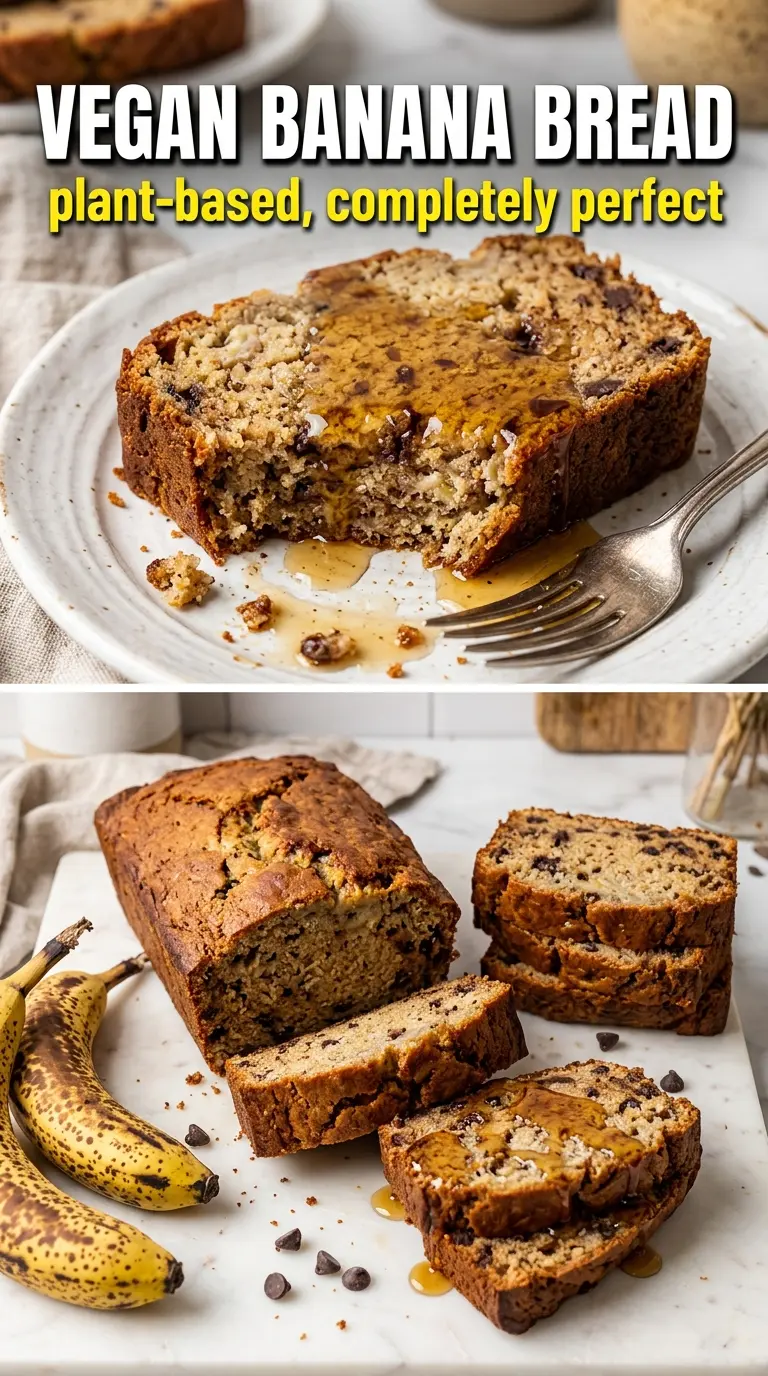
Vegan banana bread should come out moist, tender, and sliceable without tasting like a compromise. When it’s done right, you get a loaf with a deep golden crust, a soft crumb, and that familiar banana-cinnamon warmth that makes a second slice hard to resist. The trick is building enough structure to hold the loaf together while keeping the batter light enough to bake up plush instead of dense.
Flax eggs do the quiet work here. They help bind the batter the way eggs would, but they need a few minutes to thicken before they go into the bowl, and they work best when the batter is mixed just until the flour disappears. Melted coconut oil or vegan butter adds richness, while ripe bananas bring sweetness, moisture, and the banana flavor that makes the whole loaf taste finished.
Below, I’ve included the small details that matter most: how ripe the bananas should be, why the loaf needs to cool before slicing, and the simple swaps that still give you a strong, reliable result.
The loaf came out with a moist crumb and held together perfectly after cooling. I used coconut sugar and dairy-free chocolate chips, and my kids ate half the pan before it was even fully sliced.
Save this vegan banana bread for the days when you want a golden loaf with a moist crumb and no eggs or dairy.
The Part That Keeps Vegan Banana Bread From Turning Dense
The most common mistake with vegan banana bread is treating the batter like a quick cake batter and beating it too much. Once the flour goes in, every extra stroke builds more gluten, and that’s how you end up with a tight, rubbery loaf instead of a soft one. This recipe depends on a gentle hand at the end because the flax eggs and bananas already bring enough body to hold everything together.
The other place people go wrong is underestimating the bananas. You want very ripe ones with lots of brown spots, because they mash smoothly and bring both sweetness and moisture. If the bananas are still firm and pale, the loaf will taste flatter and the crumb will seem drier even if the bake time is right.
- Flax eggs — These are the binder here, and they need the full five-minute rest to turn gel-like before they go into the bowl. If they’re still loose, the batter won’t hold as well and the loaf can sink in the middle.
- Coconut oil or vegan butter — Melted fat gives the loaf richness and that soft, bakery-style bite. Vegan butter tastes a little more like classic banana bread, while coconut oil gives a cleaner flavor and works well if you don’t mind a faint coconut note.
- Plant-based milk — This loosens the batter just enough so it spreads evenly in the pan without becoming heavy. Any plain unsweetened version works; just avoid strongly flavored milks that can compete with the banana.
- Cinnamon — It doesn’t make the bread taste spiced in a loud way, but it deepens the banana flavor and keeps the loaf from tasting one-note. If you want a more classic bakery style loaf, don’t skip it.
What Each Ingredient Is Actually Doing in This Recipe
- Primary ingredient (the star) — Quality matters most. Choose the best you can find.
- Cooking medium (oil, butter, or broth) — This carries flavors and prevents dryness.
- Seasonings (salt, pepper, spices, herbs) — Layer flavors so nothing overpowers. Build depth gradually.
- Aromatics (garlic, onion, herbs) — Cook with fat to bloom flavors. Become the foundation.
- Supporting ingredients — Complement the main ingredient without overpowering it.
- Sauce or liquid (if applicable) — Brings flavors together. Balance richness with acid.
- Acid (lemon, vinegar, wine, or other) — Brightens and prevents flat-tasting results.
- Final finish (garnish, glaze, or sauce) — Prevents one-dimensional taste and adds visual appeal.
How to Mix the Batter So the Crumb Stays Soft
Start With the Wet Ingredients
Whisk the mashed bananas, melted coconut oil or vegan butter, sugar, flax eggs, vanilla, and plant milk until the mixture looks glossy and evenly combined. A few banana lumps are fine, but you don’t want streaks of oil or pockets of flax egg sitting in the bowl. If the fat starts to firm up because the bananas are cold, warm the mixture just enough to loosen it again before moving on.
Fold in the Dry Ingredients Lightly
Add the flour, baking soda, baking powder, cinnamon, and salt, then fold just until the flour disappears. The batter should look thick and a little rough, not whipped smooth. Overmixing is the fastest way to lose that tender crumb, and banana bread punishes that mistake more than most quick breads do.
Watch the Bake, Not Just the Clock
Scrape the batter into a greased 9×5 loaf pan and bake at 350°F until the top is deeply golden and a toothpick comes out clean from the center, usually 55 to 65 minutes. If the top browns too quickly before the middle is set, lay a loose piece of foil over the pan for the last 10 to 15 minutes. Pulling it early leaves you with a gummy center, while overbaking steals the moisture that makes this loaf worth making.
Let the Loaf Set Before Slicing
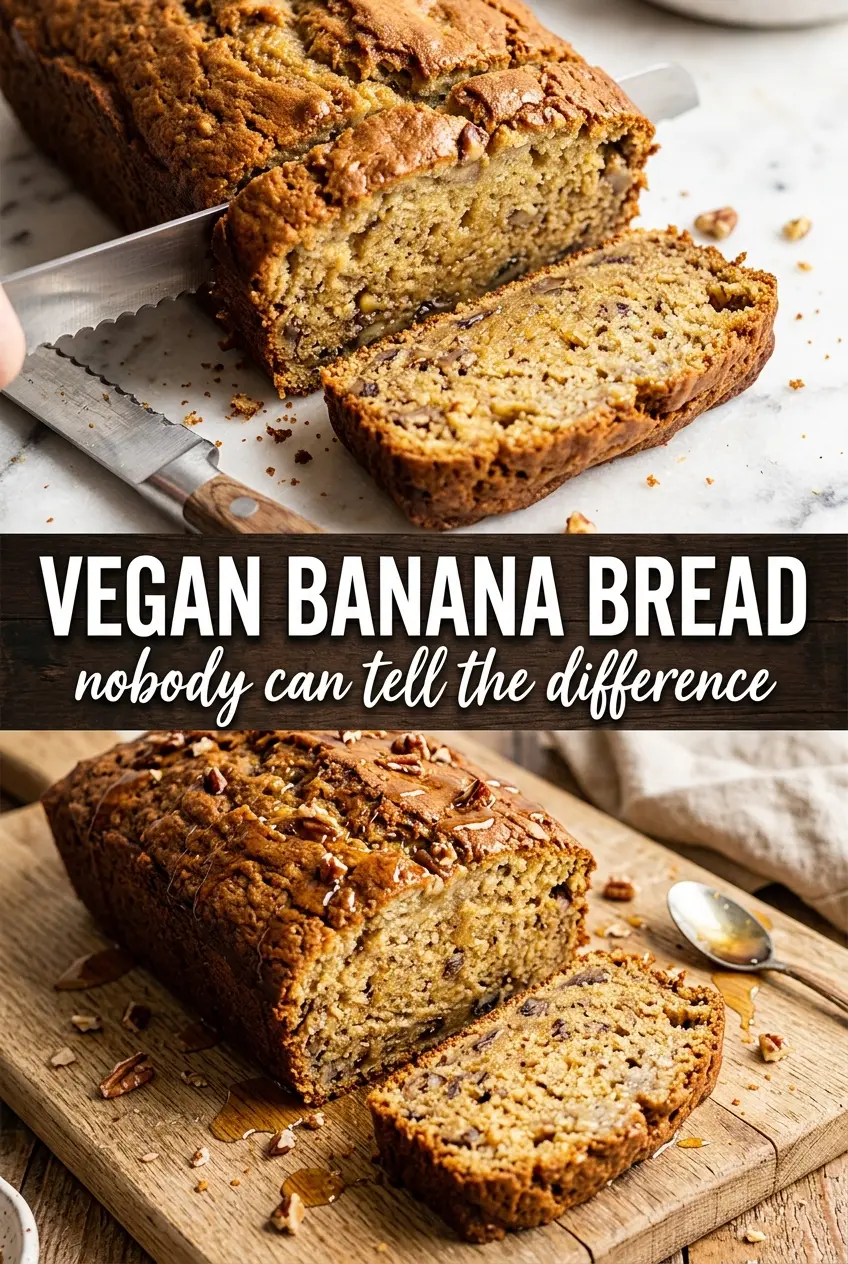
Cool the bread completely in the pan or on a rack before cutting into it. This part matters more than people think, because the crumb keeps setting as it cools and a warm loaf will fall apart or seem underbaked even when it’s finished. If you want clean slices, wait until the loaf is fully cool and use a serrated knife.
How to Adapt This Vegan Banana Bread Without Losing the Texture
Dairy-Free Chocolate Chip Banana Bread
Fold in the chocolate chips at the very end so they stay distributed instead of sinking into one layer. The chips add pockets of sweetness and a little extra richness, but they also weigh the batter down slightly, so don’t add more than the recipe calls for unless you’re ready for a heavier loaf.
Coconut Sugar for a Deeper, Less Sweet Loaf
Coconut sugar gives the bread a darker color and a deeper caramel note, but it won’t taste quite as sweet as white sugar. The crumb still stays tender, and this swap works especially well if your bananas are very ripe and naturally sweet.
Gluten-Free Version
Use a 1:1 gluten-free baking flour that includes xanthan gum for the closest texture. The loaf will usually be a little more delicate and may need the full bake time, but it still slices well once it cools completely.
Storage and Reheating
- Refrigerator: Store in an airtight container for up to 5 days. The crumb firms up a little in the fridge, but the flavor stays good.
- Freezer: This freezes well. Wrap the loaf or individual slices tightly and freeze for up to 3 months, then thaw at room temperature.
- Reheating: Warm slices in a toaster oven or microwave just until soft and fragrant. Don’t overheat them or the bread will dry out fast, especially if it was chilled first.
Questions I Get Asked About This Recipe
Vegan Banana Bread
Ingredients
Equipment
Method
- Mix ground flaxseed with water and let sit for 5 minutes until gel-like.
- Preheat the oven to 350°F and grease a 9x5 loaf pan.
- Whisk melted coconut oil, sugar, gel-like flax eggs, vanilla extract, and plant-based milk into the mashed bananas until fully combined.
- Fold in all-purpose flour, baking soda, baking powder, cinnamon, and salt until just combined.
- Fold in dairy-free chocolate chips if using.
- Pour the batter into the prepared loaf pan.
- Bake at 350°F for 55–65 minutes until deeply golden and a toothpick comes out clean.
- Cool completely before slicing so the texture sets further as it cools.