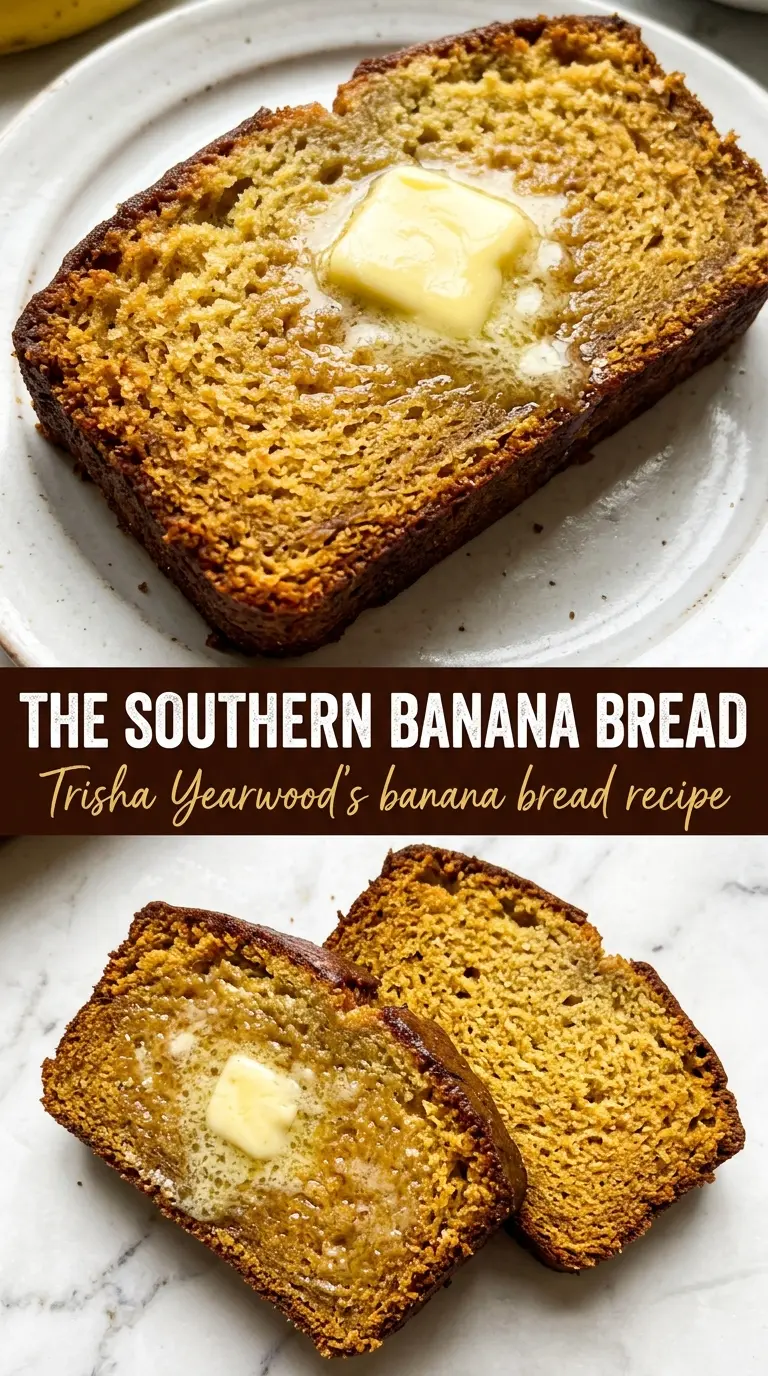
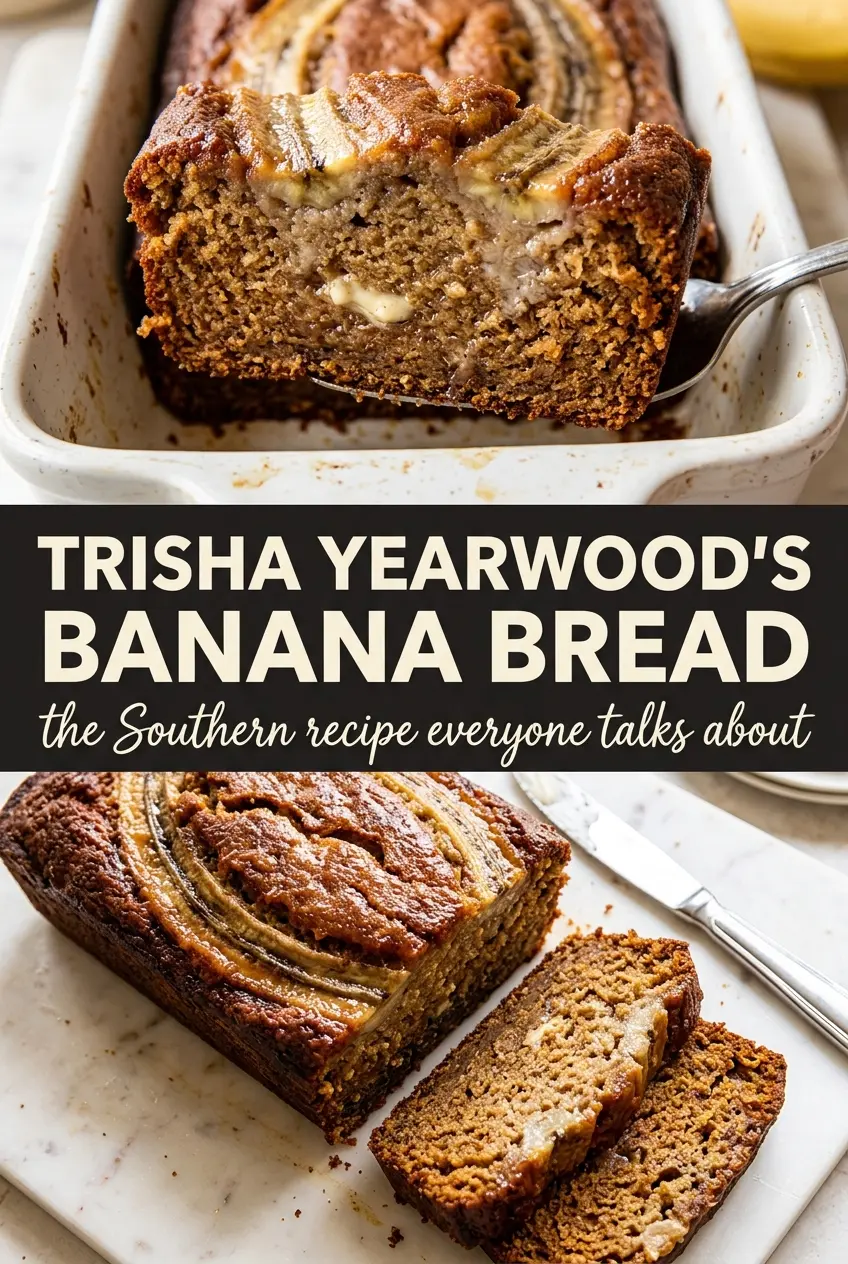
Trisha Yearwood’s banana bread bakes up with a tender crumb, a deep banana aroma, and that old-fashioned butter richness that makes a plain slice feel worth sitting down for. The top turns a deep golden brown and the center stays moist without collapsing, which is exactly what you want from a loaf that’s meant to be eaten warm with a little butter melting into it.
What sets this version apart is the balance: ripe bananas do the heavy lifting, but the butter and sugar are creamed first, which gives the loaf a softer, lighter texture than a quick-mix banana bread. The milk keeps the batter from feeling tight, and the nuts, if you use them, add just enough crunch to keep each bite interesting without taking over.
Below, I’ve included the small details that matter most — how ripe the bananas should be, why the batter should be folded gently, and what to do if you want a loaf that slices cleanly instead of crumbling.
The loaf came out so moist and the top had that perfect crackly crust. I added walnuts and the banana flavor was even better the next day.
Like this loaf? Save Trisha Yearwood’s banana bread for the mornings when you want a soft, buttery slice with real banana flavor.
Why Overmixing Is What Steals the Tender Crumb
Banana bread looks forgiving, but the texture changes fast once the flour goes in. Stirring too long develops the gluten in the flour and gives you a loaf that slices more like a pound cake gone dense than the soft, close crumb people want from banana bread. Fold only until the flour disappears and stop the moment you don’t see dry streaks.
The other mistake is chasing color before the center is baked. This loaf needs a low-and-slow bake at 325°F so the middle can set without the edges drying out. If the top browns early, tent it loosely with foil during the last 15 to 20 minutes and keep baking until the toothpick comes out clean from the center.
- Bananas — Use bananas with plenty of brown spots and a soft, almost jammy texture. That ripeness gives you the deepest flavor and enough moisture that the loaf doesn’t need extra fuss.
- Butter — Softened butter, creamed with the sugar, gives the bread a lighter crumb than melted butter would. Melted butter makes a denser loaf; it can work, but it won’t taste quite as classic.
- Baking soda — This is what helps the batter rise and keeps the loaf from feeling heavy. If your baking soda is old, the bread will bake up flatter and less tender.
- Pecans or walnuts — Totally optional, but they add a toasty finish that fits the Southern style here. Toasted nuts are worth the extra minute if you have time because they taste fuller and stay crispier in the loaf.
What Each Ingredient Is Actually Doing in This Recipe
- Primary ingredient (the star) — Quality matters most. Choose the best you can find.
- Cooking medium (oil, butter, or broth) — This carries flavors and prevents dryness.
- Seasonings (salt, pepper, spices, herbs) — Layer flavors so nothing overpowers. Build depth gradually.
- Aromatics (garlic, onion, herbs) — Cook with fat to bloom flavors. Become the foundation.
- Supporting ingredients — Complement the main ingredient without overpowering it.
- Sauce or liquid (if applicable) — Brings flavors together. Balance richness with acid.
- Acid (lemon, vinegar, wine, or other) — Brightens and prevents flat-tasting results.
- Final finish (garnish, glaze, or sauce) — Prevents one-dimensional taste and adds visual appeal.
Building the Batter Without Losing the Banana Flavor
Creaming the Butter and Sugar
Start by beating the softened butter and sugar until the mixture looks pale and a little fluffy. That step traps air and helps the loaf rise with a softer texture. If the butter is too cold, it won’t cream properly; if it’s melted, the bread turns denser and greasier.
Bringing in the Wet Ingredients
Beat in the eggs one at a time, then add the milk and vanilla. The batter may look a little loose at this point, and that’s fine. Once the mashed bananas go in, stir just until the mixture looks even and speckled with banana.
Folding in the Flour
Mix the flour, baking soda, and salt separately, then fold them into the banana mixture with a light hand. Stop as soon as the dry ingredients disappear. If you keep stirring after that, the loaf can turn gummy in the center or tough around the edges.
Baking Until the Center Is Set
Pour the batter into a greased 9×5 loaf pan and bake until the top is deeply golden and a toothpick inserted into the middle comes out clean or with just a few moist crumbs. If the toothpick comes out coated in wet batter, give it more time in five-minute increments. Let the loaf cool in the pan for at least 15 minutes so it firms up enough to slice cleanly.
How to Adapt This Southern Banana Bread for Different Kitchens
Walnut Version with More Texture
Add the full half cup of chopped walnuts and toast them first for a deeper, nuttier bite. Toasting keeps the nuts from tasting raw and helps them stay more noticeable in the finished loaf instead of disappearing into the crumb.
Dairy-Free Banana Bread
Swap the butter for a good plant-based baking stick and use unsweetened non-dairy milk. The loaf will still be soft and moist, though the flavor will be a little less rich and buttery than the original.
Lower-Sugar Slice
Reduce the sugar slightly to 3/4 cup if your bananas are very ripe. The loaf will be less sweet and a little less tender, but it still bakes up well as long as you don’t cut the sugar too far, since sugar also helps with moisture and browning.
Storage and Reheating
- Refrigerator: Store tightly wrapped for up to 5 days. The crumb stays moist, though the loaf firms up a little once chilled.
- Freezer: Banana bread freezes well. Wrap the cooled loaf or individual slices tightly in plastic, then foil, and freeze for up to 3 months.
- Reheating: Thaw at room temperature, then warm slices in a toaster oven or microwave just until the butter starts to melt. Don’t overheat it or the bread dries out fast.
Questions I Get Asked About This Recipe
Trisha Yearwood's Banana Bread
Ingredients
Equipment
Method
- Preheat your oven to 325°F and grease a 9x5 loaf pan with a light coating so the loaf releases easily.
- Cream the softened butter and sugar until light, then beat in the beaten eggs, milk, and vanilla extract until smooth.
- Stir the mashed ripe bananas into the creamed mixture until combined and no dry banana streaks remain.
- Sift the all-purpose flour, baking soda, and salt together, then fold into the banana mixture just until you no longer see flour.
- Fold in the chopped pecans or walnuts if using, distributing them evenly through the batter.
- Pour the batter into the prepared loaf pan and bake at 325°F for 60–70 minutes, until a toothpick comes out clean and the top is a deep golden brown.
- Cool the banana bread in the pan for at least 15 minutes, then slice and serve warm with softened butter.