Silky tortellini carbonara lands in that sweet spot between comfort food and a dinner that feels a little special. The cheese-filled pasta turns the classic carbonara idea into something heartier, while the egg-and-parmesan sauce clings to every curve instead of slipping to the bottom of the bowl. Crisp pancetta, sharp cheese, and a hit of black pepper give each bite that salty, creamy, punchy balance that keeps you going back for one more forkful.
The trick is treating the sauce like a finish, not a separate sauce simmering on the stove. The heat from the tortellini and pancetta pan is enough to thicken the eggs if you work quickly and keep the pan off the burner. Pasta water matters here too — not for flavor alone, but because its starch helps the sauce emulsify into something glossy instead of greasy or scrambled.
Below, I’ll walk through the part that matters most: how to keep the eggs silky, how much pasta water to add, and what to do if the sauce starts tightening up before it reaches the table.
The sauce turned silky instead of clumpy, and the pancetta stayed crisp even after tossing with the tortellini. I added the pasta water a little at a time and it coated every piece beautifully.
Save this tortellini carbonara for the night you want a glossy egg-and-parmesan sauce with crisp pancetta and almost no cleanup.
The Mistake That Scrambles Carbonara Sauce
With carbonara, the failure point is almost always heat. Egg yolks and parmesan want residual warmth, not a bubbling pan, and tortellini makes that easier to get wrong because the pasta traps heat inside each piece. If the pan is still on the burner when the egg mixture goes in, the sauce can turn grainy in seconds. Take the pan off heat first, then toss fast enough that the eggs coat the pasta before they have a chance to set.
The other part that matters is how much liquid you add. Tortellini carries less surface starch than long pasta, so the sauce can tighten fast if you don’t loosen it with reserved water. Add it in small splashes and keep tossing until the sauce looks glossy and lightly fluid, not thick and pasty.
- Off-heat mixing — This is what keeps the eggs creamy. The pan should feel hot, but not actively cooking.
- Reserved pasta water — The starch helps the sauce cling. Plain water won’t give you the same silky finish.
- Fast tossing — The motion matters as much as the heat. You want the sauce to emulsify around the tortellini instead of setting in one spot.
What Each Ingredient Is Actually Doing in This Dish
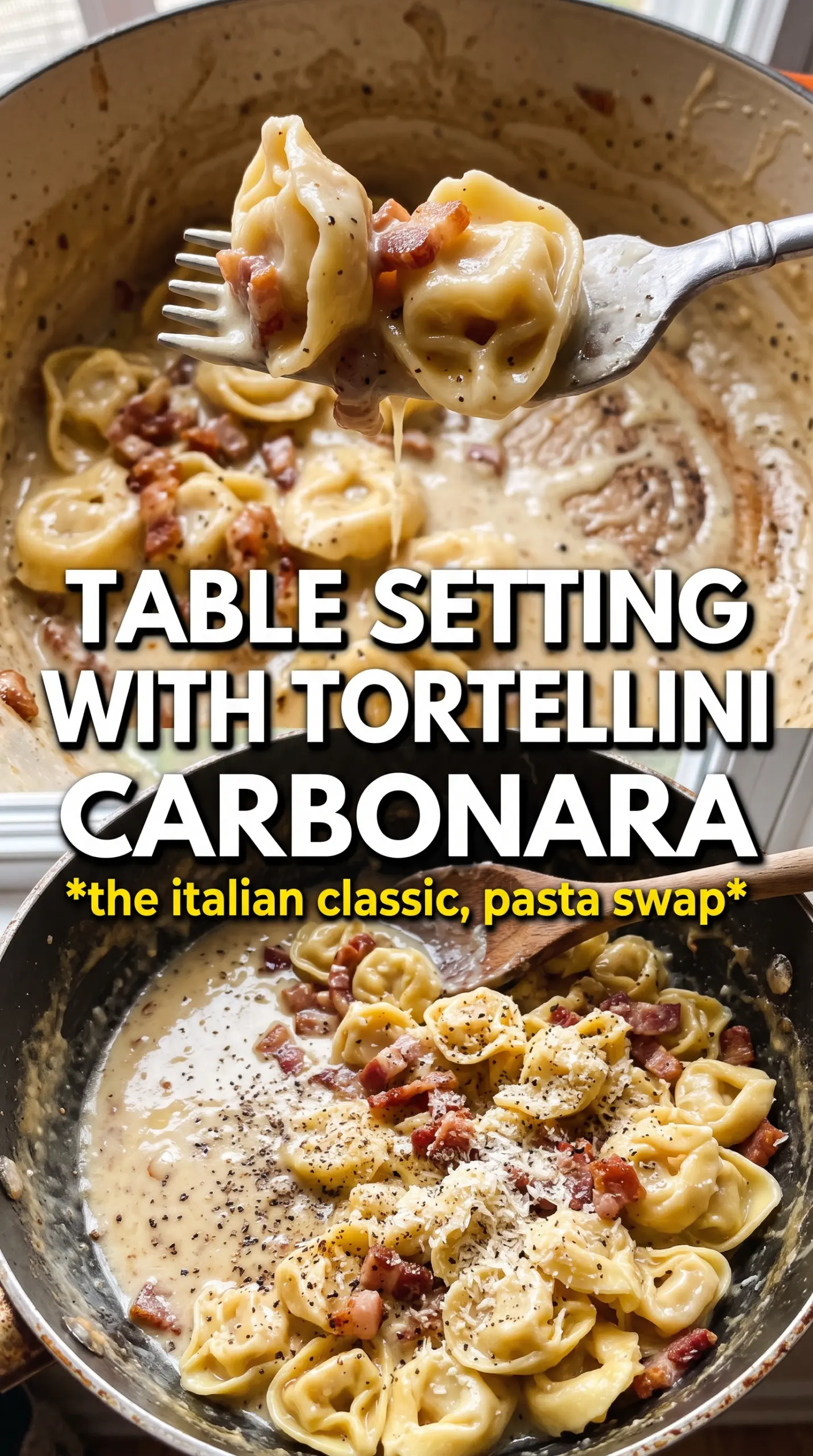
- Refrigerated cheese tortellini — This gives you a rich, filled pasta that turns carbonara into a fuller main dish. Fresh refrigerated tortellini cooks fast and stays tender; dried tortellini works, but it usually needs more time and can feel a little less delicate.
- Pancetta or thick-cut bacon — Pancetta brings a cleaner, more savory pork flavor, while bacon adds smokiness. Either one works, but cut it small so you get crisp edges in every bite instead of chewy chunks.
- Egg yolks plus one whole egg — The yolks give the sauce richness and body, and the whole egg loosens the texture just enough so it doesn’t turn into a heavy paste. If you use only yolks, the sauce can feel overly dense.
- Finely grated parmesan — Finely grated cheese melts into the sauce much more smoothly than coarse shreds. Freshly grated parmesan matters here because pre-grated cheese often contains anti-caking agents that make the sauce less silky.
- Garlic — Garlic is brief but important. It perfumes the fat after the pancetta cooks, and a minute is enough; let it go too long and it turns bitter fast.
- Nutmeg and black pepper — Nutmeg is subtle, not dominant, but it rounds out the cheese and egg. The pepper should be generous and freshly cracked, because that sharp bite is part of what makes carbonara taste complete.
Getting the Tortellini, Pancetta, and Sauce to Come Together at the Right Time
Boil the Pasta Until Tender but Still Perky
Cook the tortellini in well-salted water until it’s just tender and floating evenly. You want the pasta fully cooked but still firm enough to hold up when you toss it with the sauce. Reserve a full cup of cooking water before draining, because you’ll need it to adjust the texture at the end. If you forget this step, the sauce can turn tight and sticky instead of glossy.
Crisp the Pancetta Without Drying It Out
Start the pancetta in a cool pan and let the fat render slowly so the pieces crisp instead of seize. Once it’s browned, add the garlic and cook just until fragrant. Pull the pan off the heat right after that. If the garlic sits in the hot fat too long, it’ll turn harsh and overwhelm the sauce.
Build the Sauce in the Bowl Before It Hits the Pan
Whisk the yolks, whole egg, parmesan, nutmeg, and a generous amount of black pepper until the mixture looks thick and pale. This is what gives the sauce an even base, so you don’t end up with pockets of egg or clumps of cheese. The mixture will be grainy-looking at first because of the parmesan, and that’s normal. It smooths out once the hot pasta and a little pasta water hit it.
Finish Fast and Keep the Heat Gentle
Add the hot tortellini to the pancetta pan while the heat is off, then pour in the egg mixture and toss immediately. Add pasta water a splash at a time until the sauce turns creamy and coats the tortellini in a thin, shiny layer. If it starts to look scrambled, the pan was too hot; move faster next time and loosen it with more hot pasta water right away. Finish with salt only after tasting, because the pancetta and parmesan already bring plenty of salt to the bowl.
Ways to Adjust Tortellini Carbonara Without Losing the Creamy Finish
Use bacon instead of pancetta
Bacon gives you a smokier, slightly sweeter result, while pancetta stays more classic and savory. Use thick-cut bacon if that’s what you have, and don’t skip draining excess grease if the pan looks crowded with fat. Too much rendered fat can make the sauce feel slick instead of creamy.
Make it gluten-free
Use a gluten-free refrigerated tortellini or stuffed pasta that you already trust, since the sauce itself is naturally gluten-free. The main thing to watch is cooking time, because gluten-free pasta can go soft faster and break when tossed hard. Pull it as soon as it’s tender and work quickly at the end.
Make it lighter without losing the sauce
You can reduce the pancetta a little and keep the full egg base for a sauce that still feels rich. Don’t cut the parmesan too much, because that cheese is part of what gives carbonara its body. If you want it less heavy, increase the black pepper and parsley instead of thinning the sauce too aggressively.
Add peas for a little freshness
A handful of thawed peas works well here and gives the dish a little sweetness and color. Stir them in with the hot tortellini so they warm through without turning mushy. They don’t change the sauce much, but they do make the bowl feel a little less rich bite after bite.
Storage and Reheating
- Refrigerator: Store leftovers in an airtight container for up to 3 days. The sauce will tighten in the fridge, which is normal for egg-based pasta.
- Freezer: I don’t recommend freezing this dish. The sauce separates and the tortellini texture turns soft after thawing.
- Reheating: Warm gently in a skillet over low heat with a splash of water or milk, stirring constantly until loosened. High heat is what causes the eggs to go grainy, so keep the burner low and stop as soon as the sauce turns glossy again.
Answers to the Questions Worth Asking
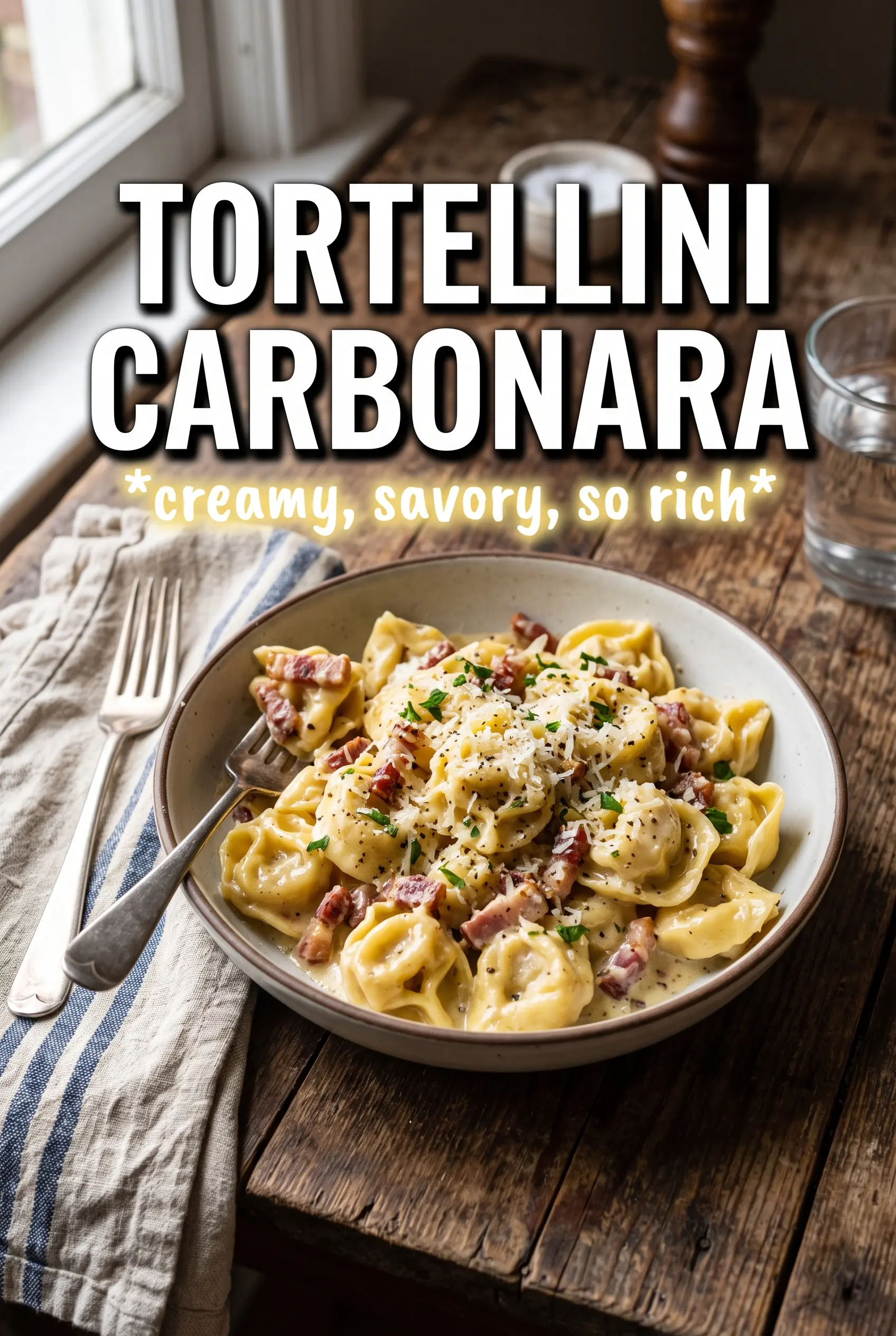
Tortellini Carbonara
Ingredients
Equipment
Method
- Bring a large pot of well-salted water to a boil and cook the refrigerated cheese tortellini until tender, then reserve 1 cup pasta cooking water.
- Keep the pasta hot and set it aside while you prepare the pancetta so everything is ready for a fast off-heat toss.
- In a large skillet, cook the diced pancetta over medium heat until crispy.
- Add the minced garlic and cook for 1 minute, then remove the skillet from the heat.
- In a bowl, whisk the egg yolks, whole egg, finely grated parmesan, nutmeg, and lots of freshly cracked black pepper until smooth and well combined.
- Add the hot tortellini to the pancetta pan off the heat and quickly pour in the egg-and-parmesan mixture.
- Toss vigorously, adding reserved pasta cooking water a splash at a time until the sauce turns silky and creamy.
- Season with salt to taste, then top with fresh parsley and extra parmesan (and more cracked black pepper if desired).