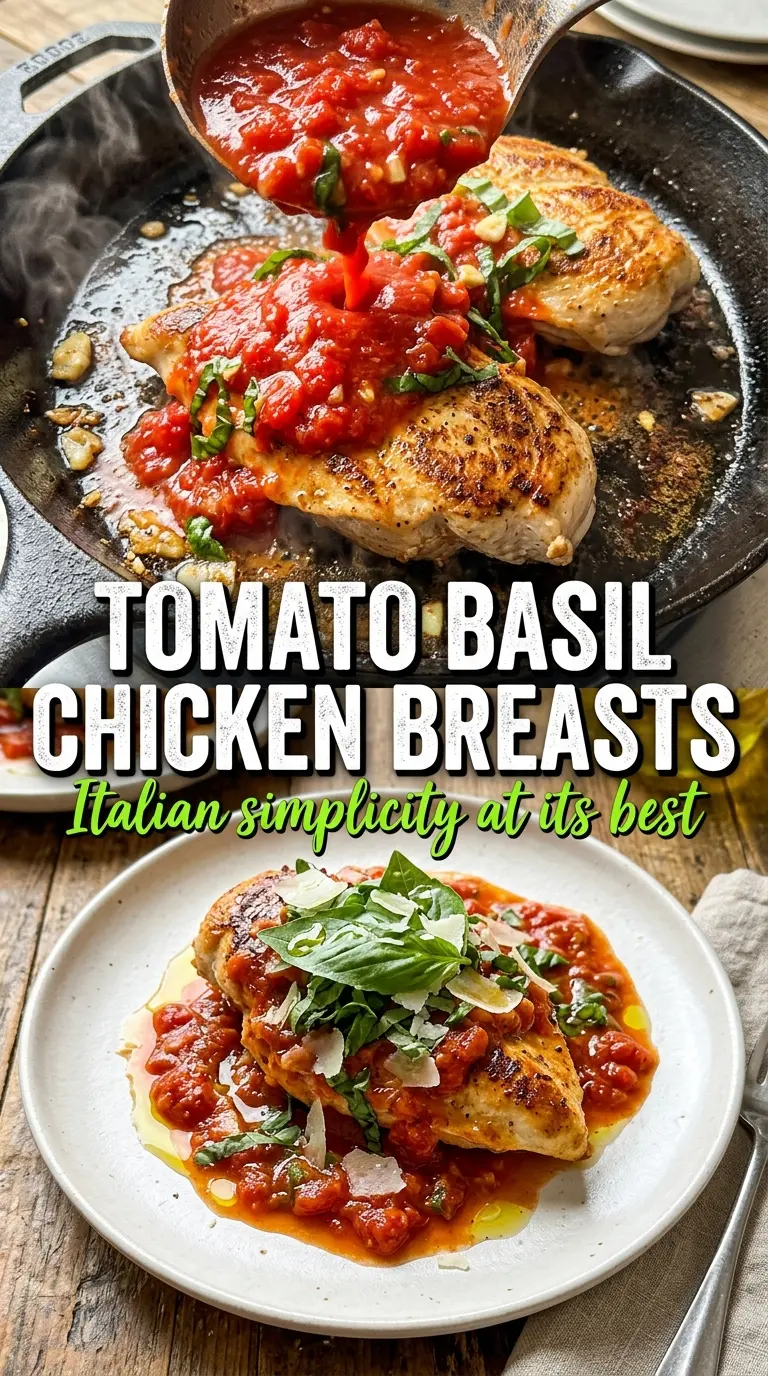
Golden-seared chicken breasts tucked into a bright tomato basil pan sauce are the kind of dinner that earns a repeat spot fast. The chicken stays juicy because it’s seared first, then finished gently in the sauce instead of being cooked dry from start to finish. The tomatoes soften just enough to burst, leaving behind a glossy, spoonable sauce that clings to every bite.
This version leans on a few smart details. A quick seasoning blend on the chicken gives the meat a better crust before it ever hits the skillet, and the balsamic vinegar sharpens the tomatoes without making the dish taste sweet. The fresh basil goes in at the end, which keeps it fragrant instead of muddy, and the Parmesan adds a salty finish that ties everything together.
Below you’ll find the exact order that keeps the chicken tender, plus the small changes that make this work with wine, broth, or a few pantry swaps when needed.
The chicken stayed juicy and the tomatoes broke down into the prettiest sauce. I used chicken broth instead of wine and still got that bright, savory finish my husband kept spooning over rice.
Save this tomato basil chicken for the nights when you want a fast skillet dinner with a bright tomato sauce and plenty of fresh basil.
The Part That Keeps the Chicken Juicy Instead of Dry
The biggest mistake with skillet chicken is letting the meat do too much work in the pan. If you cook it all the way through over high heat and then leave it sitting while the sauce comes together, the edges tighten up fast. This recipe avoids that by searing first for color, then finishing the chicken briefly in the tomato sauce so the juices stay where they belong.
The other thing that matters is the tomatoes. Cherry tomatoes hold their shape long enough to sear, then burst into a naturally thick sauce instead of turning watery. That means you don’t need flour, cream, or extra tomato paste to get body; the pan does the work for you once the tomatoes release their juices.
- Chicken breasts — Pound them lightly only if they’re uneven. Even thickness matters more than size here, because thin ends dry out before the center catches up.
- Cherry tomatoes — Use good ones if you can. The sweeter and juicier they are, the better the sauce tastes once they burst.
- Dry white wine or chicken broth — Wine gives the sauce a little lift, but broth works fine if that’s what you have. Either way, let it bubble so the sharp edge cooks off.
- Balsamic vinegar — This is the small hit of acid that keeps the sauce from tasting flat. Skip it only if your tomatoes are exceptionally sweet and ripe.
What Each Ingredient Is Actually Doing in This Chicken Recipe
- Chicken (the foundation) — Quality chicken starts with good sourcing. Even simple seasoning tastes better on good meat.
- Olive oil or butter (the cooking medium) — Fat carries flavors and keeps chicken from drying. It’s also what makes food taste delicious.
- Salt and pepper (proper seasoning) — Season generously; underseasoned chicken tastes bland. Apply inside and outside so the seasoning penetrates.
- Garlic and onion (the aromatic base) — These add depth and complexity. They sweeten slightly when cooked, becoming mellow and round.
- Acid (lemon, vinegar, wine, or tomato) — This brightens the dish and prevents it from tasting heavy. It also helps balance rich sauces.
- Fresh herbs or spices (the character) — These define the personality of the dish. Choose ones that complement your other flavors.
- Cream or sauce base (optional richness) — A sauce keeps the chicken moist and flavorful. Make sure it’s balanced with acid and herbs.
- Proper cooking technique (the final step) — Whether baking, pan-searing, or simmering, the right method ensures juicy, tender results without drying out the meat.
Building the Skillet Sauce in the Right Order
Seasoning and Searing the Chicken
Season the chicken well before it touches the pan. Salt, pepper, garlic powder, and Italian seasoning build the first layer of flavor and help the surface brown. Lay the breasts into hot olive oil and leave them alone until they release naturally; if they stick, they’re not ready yet. You want a deep golden crust, not pale steamed chicken, so don’t crowd the skillet.
Waking Up the Garlic
Once the chicken comes out, the garlic goes into the same pan for just about 30 seconds. It should smell fragrant, not dark and sharp. Garlic burns fast in an empty skillet, so keep it moving and add the tomatoes as soon as it smells sweet. If the pan looks dry, the tomatoes will still release enough juice to start the sauce.
Letting the Tomatoes Burst
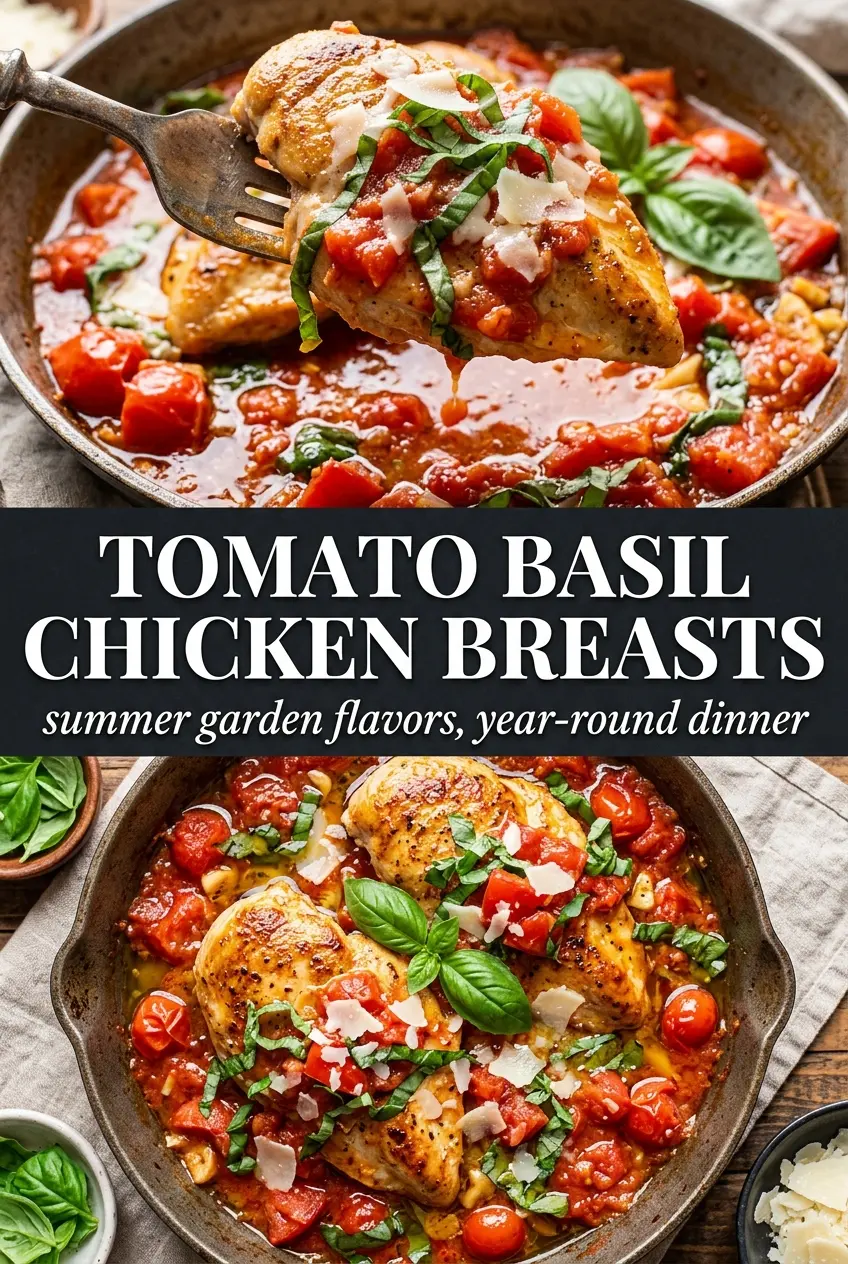
The tomatoes need a few minutes to soften and split open. Stir them often enough to keep them from scorching, but not so much that they lose all texture immediately. You’re looking for wrinkled skins, glossy juices, and a sauce that starts to look rustic around the edges. If your tomatoes are small and firm, they may need an extra minute or two before they give up their moisture.
Finishing the Sauce and Returning the Chicken
Pour in the wine or broth and let it bubble hard for a minute. That quick simmer pulls the browned bits off the bottom of the pan, which is where the flavor is hiding. Stir in the balsamic, red pepper flakes, and Italian seasoning, then return the chicken and spoon the sauce over the top. The final two minutes are just enough to warm everything through without overcooking the meat.
How to Change This Without Losing the Bright Tomato-Basil Balance
Make It Dairy-Free
Skip the Parmesan and finish with a drizzle of olive oil instead. You’ll lose the salty, nutty edge from the cheese, but the sauce stays bright and satisfying because the tomatoes and basil are already doing the heavy lifting.
Use Boneless Chicken Thighs
Thighs bring more richness and stay forgiving if you cook them a minute too long. They usually need a few extra minutes in the skillet, so cook until they’re deeply browned and hit temperature before you return them to the sauce.
Make It Gluten-Free
This recipe is naturally gluten-free as written as long as your broth is certified gluten-free. That’s one of the nice things about a pan sauce built from tomatoes, wine or broth, and herbs instead of a flour-thickened base.
Turn Up the Heat
Add a little extra red pepper flakes when the garlic goes in. That gives the heat a chance to mellow in the sauce, instead of sitting on top as a sharp burn.
Storage and Reheating
- Refrigerator: Store leftovers in an airtight container for up to 3 days. The basil will darken a bit, but the sauce holds up well.
- Freezer: It freezes fine for up to 2 months, though the tomatoes soften more after thawing. Freeze the chicken and sauce together, then thaw overnight in the fridge.
- Reheating: Warm gently in a covered skillet over low heat with a splash of broth or water. High heat tightens the chicken and can make the sauce taste flat, so keep it slow and steady.
Questions I Get Asked About This Recipe
Tomato Basil Chicken Breasts
Ingredients
Equipment
Method
- Season the chicken breasts with salt, pepper, garlic powder, and Italian seasoning to taste. Place olive oil in a large cast iron skillet over medium-high heat.
- Sear the chicken in the skillet for 5-6 minutes per side until golden. Cook until the internal temperature reaches 165°F, then remove the chicken to a plate.
- In the same pan, cook the minced garlic for 30 seconds, stirring to prevent browning. Add the halved cherry tomatoes and cook for 3-4 minutes until they burst and release their juices.
- Pour in the dry white wine and let it bubble for 1 minute. Stir in dried Italian seasoning, red pepper flakes, and balsamic vinegar.
- Return the chicken breasts to the pan and spoon the tomato sauce over each piece. Simmer for 2 minutes.
- Scatter the chiffonade fresh basil over the top. Finish with shaved Parmesan and a drizzle of extra olive oil before serving.