Golden-seared chicken breasts tucked into a bright tomato basil sauce are the kind of skillet dinner that disappears fast and still feels like you put in more effort than you did. The chicken stays juicy because it’s seared first and finished gently in the sauce, not boiled until dry. The tomatoes break down just enough to turn jammy, while fresh basil and balsamic keep the whole pan tasting sharp, sweet, and layered.
What makes this version work is the order. A hard sear builds flavor on the chicken, then the garlic goes in for just a few seconds before the tomatoes hit the pan, so nothing burns. The white wine or broth loosens the browned bits, and the final simmer is short on purpose — long enough to coat the chicken, not long enough to turn the breasts chalky.
Below, I’ll show you the little details that matter here, from getting the tomatoes to burst at the right moment to finishing the dish with basil so it stays fresh and fragrant.
The tomatoes collapsed into the sauce just like you said, and the chicken stayed juicy all the way through. I loved that the balsamic and basil made it taste fresh instead of heavy.
Save these tomato basil chicken breasts for the night you want a skillet dinner with juicy chicken, burst tomatoes, and fresh basil.
The Sear Is What Keeps the Chicken Juicy
The biggest mistake with boneless chicken breasts is treating them like they need a long simmer to become tender. They don’t. They need a fast, confident sear first, then a short finish in the sauce after the heat comes down. That gives you color on the outside and meat that still has some give when you slice it.
If the pan is crowded, the chicken steams instead of browns. Use a skillet that lets the pieces sit in a single layer with space between them. If your breasts are thick on one end and thin on the other, pound them lightly to an even thickness so the thinner end doesn’t dry out while the center cooks through.
What the Tomatoes, Wine, and Basil Are Each Doing Here
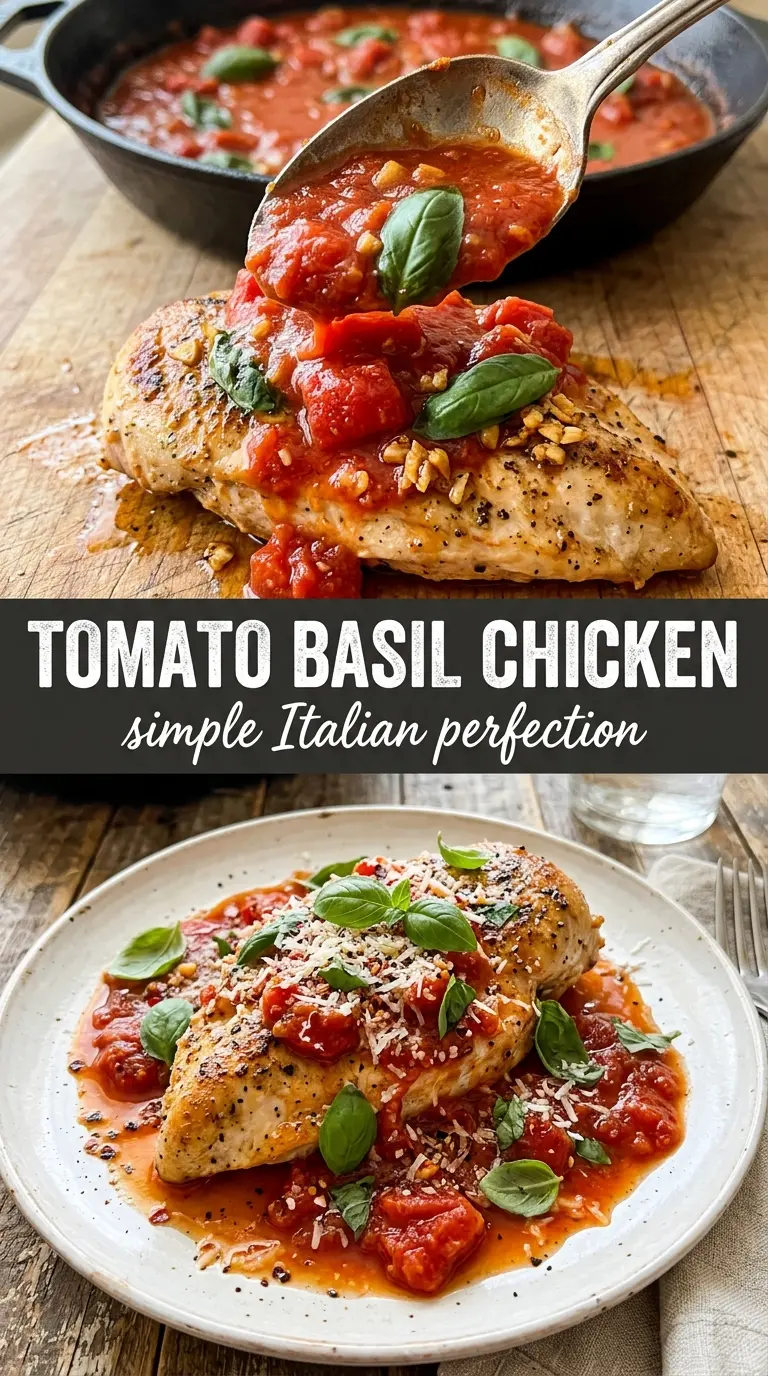
- Cherry tomatoes — These are the backbone of the sauce. They burst into a naturally sweet, glossy pan sauce that feels fresher than canned tomatoes here. Halve them so they collapse faster and release their juices without needing a long cook.
- Dry white wine or chicken broth — The liquid lifts the browned bits from the skillet and turns them into flavor. Wine gives the sauce a sharper edge, while broth keeps it milder and a little rounder. If you skip the wine, use broth and add the balsamic at the end so the sauce still has brightness.
- Balsamic vinegar — This is the quiet finishing note that keeps the sauce from tasting flat. Just a tablespoon is enough to deepen the tomatoes without making the dish taste sweet. Add it after the sauce has started to come together so the acid stays balanced instead of harsh.
- Fresh basil — Use fresh basil at the end, not at the start. Heat dulls its aroma, and this dish depends on that clean, green finish. Chiffonade it right before serving so the ribbons stay fragrant.
- Parmesan cheese — The shaved Parmesan melts just enough from the residual heat to add salt and a little richness. Pre-shaved cheese is fine, but a block shaved thin at the last minute gives you a cleaner finish and better texture over the top of the sauce.
Building the Pan Sauce Without Overcooking the Chicken
Season and Sear First
Season the chicken generously with salt, pepper, garlic powder, and Italian seasoning before it hits the pan. The skillet should be hot enough that the oil shimmers, then the chicken goes in and stays put until the underside is deep golden. If it sticks at first, leave it alone; it will release when the crust forms. Turn it too early and you lose the color that gives the sauce its depth.
Wake Up the Garlic, Then Add the Tomatoes
Garlic only needs about 30 seconds in the pan. Once you smell it, the tomatoes go in immediately so the garlic doesn’t burn and turn bitter. As the tomatoes heat, press a few gently with your spoon and let the rest blister and collapse on their own. That mix of soft and burst tomatoes gives the sauce body without needing cream or flour.
Reduce Just Enough to Glaze
When the wine or broth goes in, it should bubble and pick up the browned bits from the pan almost right away. Let that cook for about a minute, then stir in the balsamic and red pepper flakes. The sauce should look loose but glossy before the chicken goes back in. If it cooks down until it’s thick like jam, the chicken will overcook while you wait for the sauce to loosen again.
Finish With Basil and Parmesan Off the Heat
Return the chicken to the pan and spoon the sauce over the top, then let it simmer just until the center reaches 165°F. Turn off the heat before adding the basil and Parmesan so both keep their brightness. The basil should wilt from the residual warmth, not fade into the sauce, and the cheese should soften into the top without clumping.
How to Adapt This Skillet Dinner for Different Nights
Make It Dairy-Free
Leave off the Parmesan or swap in a dairy-free Parmesan-style topping if you like that salty finish. The sauce already has enough structure from the tomatoes, wine or broth, and basil, so you won’t miss the cheese in the pan. The dish stays bright and saucy without it.
Use Chicken Thighs Instead
Boneless skinless thighs work well if you want a deeper, richer chicken flavor. They need a few extra minutes in the skillet, and they’re more forgiving if you let them simmer a touch longer in the sauce. Expect a softer bite and a little more rendered fat in the pan.
Go Gluten-Free Without Changing the Method
This recipe is naturally gluten-free as written, as long as your broth is certified gluten-free. The technique doesn’t change at all, which is one reason this dish is such an easy weeknight win. Serve it with rice, polenta, or roasted potatoes instead of pasta.
Storage and Reheating
- Refrigerator: Store leftovers in an airtight container for up to 3 days. The sauce will thicken in the fridge, and the basil will lose some of its brightness.
- Freezer: The chicken and tomato sauce freeze well for up to 2 months, though the fresh basil is best added after reheating. Freeze in portions with a little sauce around each breast so they reheat more evenly.
- Reheating: Warm gently in a covered skillet over low heat with a splash of broth or water. The common mistake is blasting it in the microwave or over high heat, which tightens the chicken and makes the sauce separate.
Questions I Get Asked About This Recipe
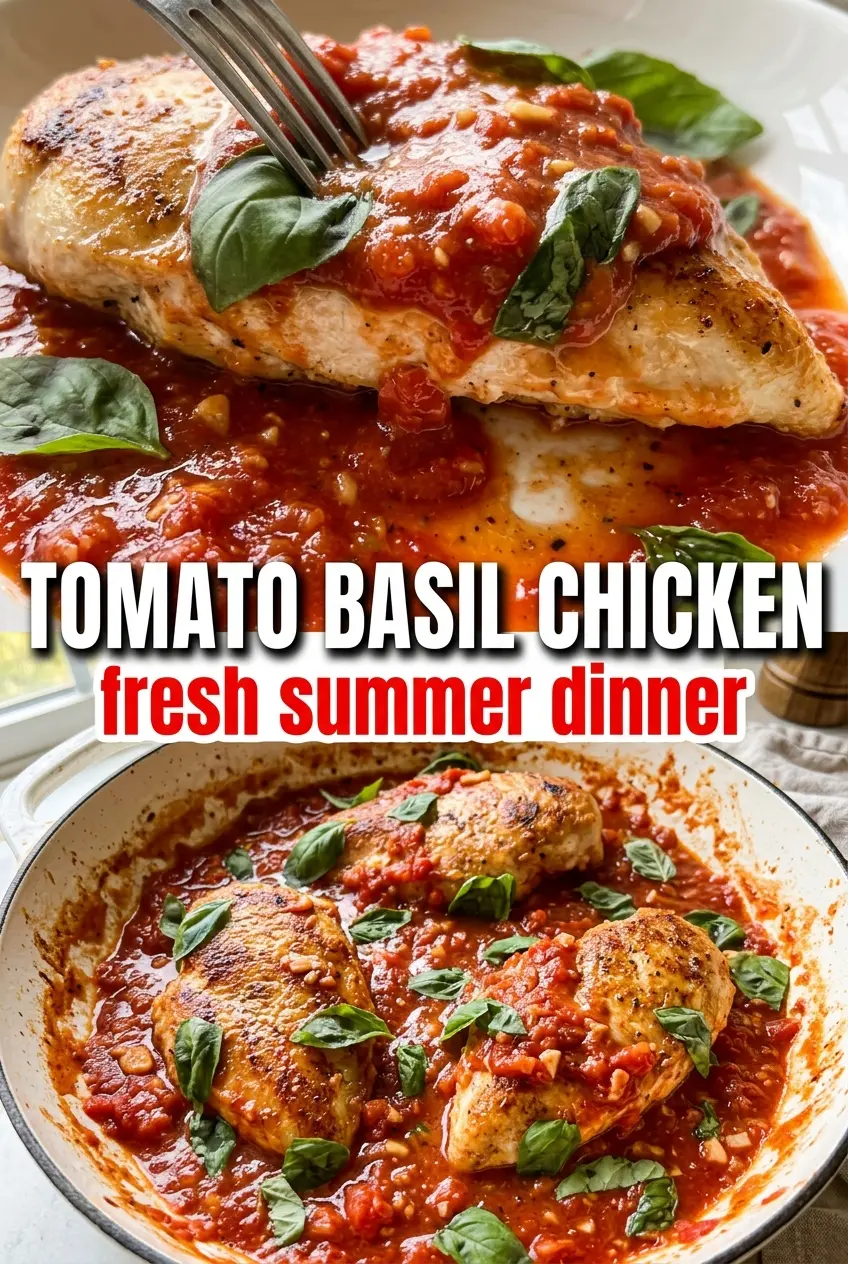
Tomato Basil Chicken Breasts
Ingredients
Equipment
Method
- Season the chicken breasts all over with salt, black pepper, garlic powder, and Italian seasoning to taste. Pat the surface evenly so it browns well.
- Heat the olive oil in a large skillet over medium-high heat until shimmering. Sear chicken for 5-6 minutes per side until golden, then check that the thickest part reaches 165°F and remove to a plate.
- In the same pan, cook the minced garlic for 30 seconds over medium-high heat, stirring, until fragrant. Don’t let it brown.
- Add halved cherry tomatoes and cook for 3-4 minutes until they burst and release their juices. Scrape up any browned bits from the bottom.
- Pour in the dry white wine and let it bubble for 1 minute. Stir in dried Italian seasoning, red pepper flakes, and balsamic vinegar.
- Return the chicken to the pan and spoon the tomato sauce over each breast. Simmer for 2 minutes so the chicken absorbs the flavors.
- Scatter the fresh basil over the top (including chiffonade ribbons and whole leaves for garnish).
- Finish with shaved Parmesan and an extra drizzle of olive oil before serving for a glossy, savory top.