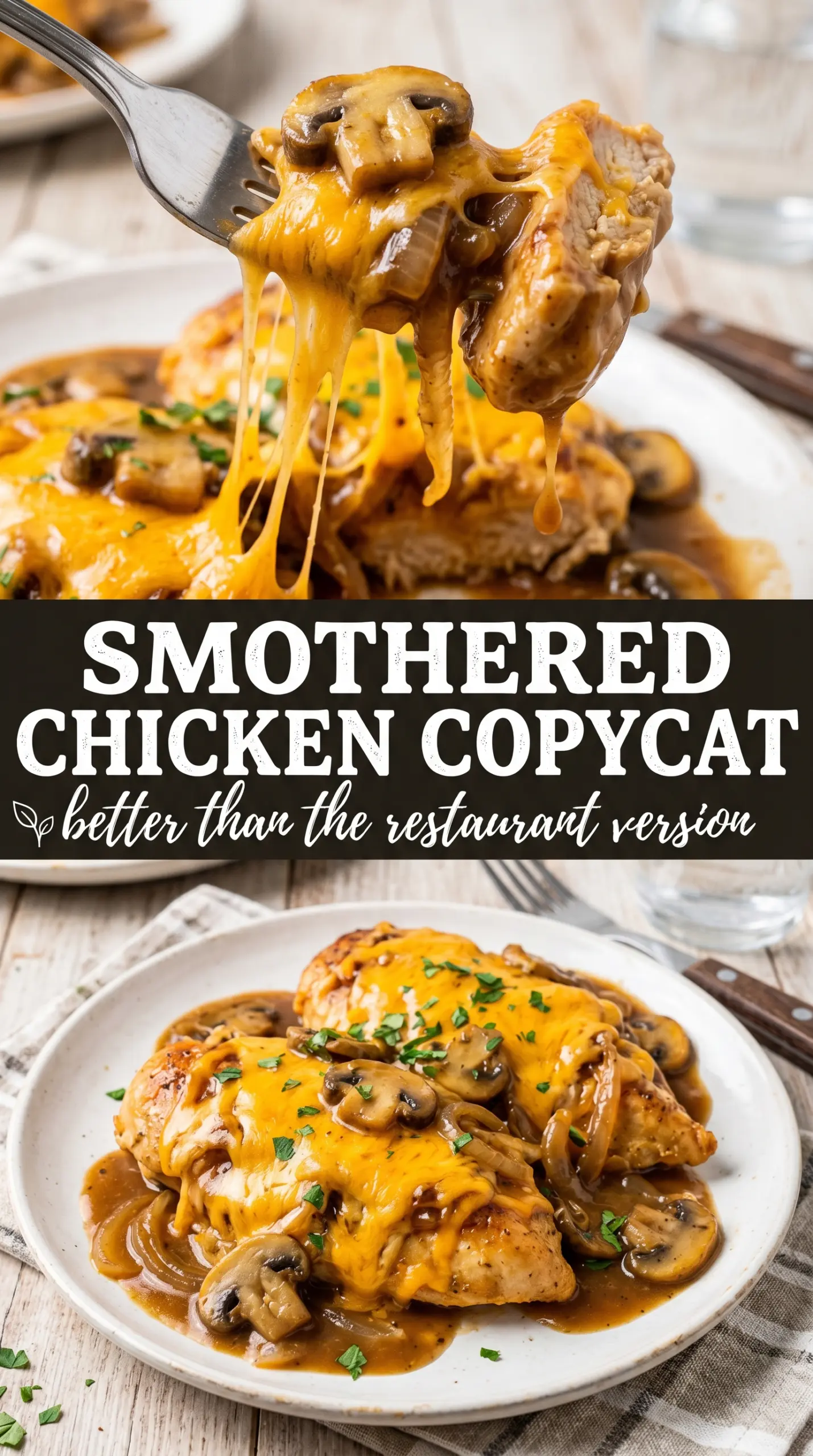
Golden seared chicken breasts under a tangle of caramelized onions, buttery mushrooms, and melted Monterey Jack hit that steakhouse note people keep chasing at home. The chicken stays juicy because it gets a hard sear first, then finishes under the broiler just long enough to melt the cheese without drying out the meat. What you end up with is a pan that looks like it came from a restaurant pass, but it’s straightforward enough for a weeknight.
The key is building each layer in the same skillet. The chicken picks up the seasoning and browning, then the onions and mushrooms cook in those drippings, which gives the topping a deep savory base without needing a separate sauce. A splash of whiskey or broth loosens the browned bits, and that little deglaze is what ties the whole dish together.
Below, I’ll show you how to keep the chicken from overcooking under the broiler and how to get those mushrooms and onions properly browned instead of soft and watery. There’s also a swap for when you want the same skillet dinner without the whiskey.
The chicken stayed juicy, and the onions and mushrooms got that steakhouse-style caramelized flavor instead of turning soggy. Broiling the Jack cheese at the end made it look just like the restaurant version.
Save this Texas Roadhouse Smothered Chicken copycat for the nights when you want seared chicken, caramelized onions, and melty Monterey Jack on one skillet dinner.
The Broiler Finish Is What Keeps This Chicken Juicy
A lot of smothered chicken recipes try to do everything in the oven, and that’s where the chicken can go from juicy to flat and dry. This version keeps the sear on the stovetop and only uses the broiler at the end, after the topping is already hot. That short blast is enough to melt the cheese and brown the top without overcooking the meat underneath.
The other detail that matters is thickness. If one breast is much larger than the others, pound it to an even thickness so it finishes at the same time. Thick ends and thin ends cook at different speeds, and the broiler doesn’t forgive that. The target is 165°F in the center, then out of the pan right away.
- Chicken breasts — Boneless, skinless breasts work best here because they sear cleanly and give you a big surface for the mushrooms and cheese. If yours are especially thick, slice them open horizontally or pound them lightly so they cook through before the crust over-browns.
- Cajun or steak seasoning — This is doing more than salt and pepper ever could in this recipe. The seasoning crust gives the chicken the steakhouse edge that makes the whole dish taste finished, so don’t underseason the surface.
- Monterey Jack cheese — Jack melts smoothly and stays creamy under the broiler. Pre-sliced is fine, but if you shred your own, it melts faster and more evenly. Use slices if you want a neat, restaurant-style blanket.
- Whiskey or broth — Whiskey adds a deeper, slightly smoky note, but broth works if you want the same pan sauce effect without the alcohol. Either way, the point is to lift the browned bits off the skillet so the topping tastes built, not just cooked.
What Each Ingredient Is Actually Doing in This Recipe
- Primary ingredient (the star) — Quality matters most. Choose the best you can find.
- Cooking medium (oil, butter, or broth) — This carries flavors and prevents dryness.
- Seasonings (salt, pepper, spices, herbs) — Layer flavors so nothing overpowers. Build depth gradually.
- Aromatics (garlic, onion, herbs) — Cook with fat to bloom flavors. Become the foundation.
- Supporting ingredients — Complement the main ingredient without overpowering it.
- Sauce or liquid (if applicable) — Brings flavors together. Balance richness with acid.
- Acid (lemon, vinegar, wine, or other) — Brightens and prevents flat-tasting results.
- Final finish (garnish, glaze, or sauce) — Prevents one-dimensional taste and adds visual appeal.
What Each Skillet Stage Is Doing for the Final Dish
From here on, the job is simple: brown first, soften second, melt last. If you rush the onions or crowd the mushrooms, the topping turns pale and wet instead of rich and savory. Keep the heat where it belongs for each stage and the whole pan tastes layered instead of one-note.
Seasoning and Searing the Chicken
Coat the chicken generously with the seasoning, then sear it in olive oil over medium-high heat until the outside is deeply golden, about 5 to 6 minutes per side. Don’t move it too early; if it sticks when you try to flip it, it needs another minute. You’re looking for a crust that releases on its own and an internal temperature of 165°F, because the broiler later is just for the topping.
Caramelizing the Onions
Melt the butter in the same skillet and cook the onions over medium heat until they turn soft, deeply golden, and sweet around the edges. If the pan seems dry, add a small splash of broth or water rather than turning the heat up and scorching the bottom. The onions should smell sweet, not sharp, before the mushrooms go in.
Brown the Mushrooms Before the Garlic
Add the sliced mushrooms and cook them until their moisture cooks off and the edges pick up color. Garlic goes in after that, not before, because garlic burns fast and gets bitter long before mushrooms are finished releasing their liquid. When you deglaze with whiskey or broth, scrape up every browned bit from the pan so that flavor ends up in the topping instead of staying stuck to the skillet.
Broil Only Until the Cheese Bubbles
Return the chicken to the skillet, pile on the onion-mushroom mixture, and top each breast with the Monterey Jack. Broil just until the cheese is melted, bubbling, and starting to take on golden spots. If you walk away for even a minute too long, the cheese can go from glossy to greasy, so stay close and pull the pan the second it looks done.
How to Adapt This When You Want a Different Finish
Chicken broth instead of whiskey
Use chicken broth in the pan if you want to skip the alcohol. It still loosens the browned bits and gives you that savory deglazed layer, just with a softer finish than whiskey.
Dairy-free version
Swap the butter for olive oil and use a good dairy-free meltable cheese. The topping won’t have the same creamy pull as Monterey Jack, but the onions, mushrooms, and seasoning still carry the dish.
Extra-steakhouse flavor
If you want a deeper restaurant-style finish, add a small pinch of smoked paprika to the seasoning and let the mushrooms brown a little longer before deglazing. That gives the pan a darker, more savory edge without changing the structure of the dish.
Storage and Reheating
- Refrigerator: Store leftovers in an airtight container for up to 3 days. The cheese will firm up, but the flavor holds well.
- Freezer: This freezes, but the onions and mushrooms soften after thawing, and the cheese can separate a little. Freeze only if you need to; wrap tightly and thaw overnight in the fridge.
- Reheating: Reheat covered in a 325°F oven until hot, or warm gently in a skillet with a splash of broth. The common mistake is blasting it in the microwave, which toughens the chicken and turns the cheese oily.
Answers to the Questions Worth Asking

Texas Roadhouse Smothered Chicken Copycat
Ingredients
Equipment
Method
- Season the chicken generously with Cajun seasoning; sear in olive oil in an oven-safe skillet over medium-high heat for 5-6 minutes per side until golden and the internal temperature reaches 165°F, then remove.
- Melt the butter in the same pan, then cook the onions over medium heat for 8-10 minutes until deeply caramelized.
- Add the mushrooms and garlic and cook for 4-5 minutes until golden, then deglaze with Jack Daniel's whiskey or chicken broth and season with salt and pepper.
- Return the chicken to the pan and top each breast with the mushroom and onion mixture.
- Lay 2 slices of Monterey Jack over the top of each chicken breast.
- Broil for 2-3 minutes until the cheese is melted, bubbly, and golden.
- Garnish with fresh parsley and serve.