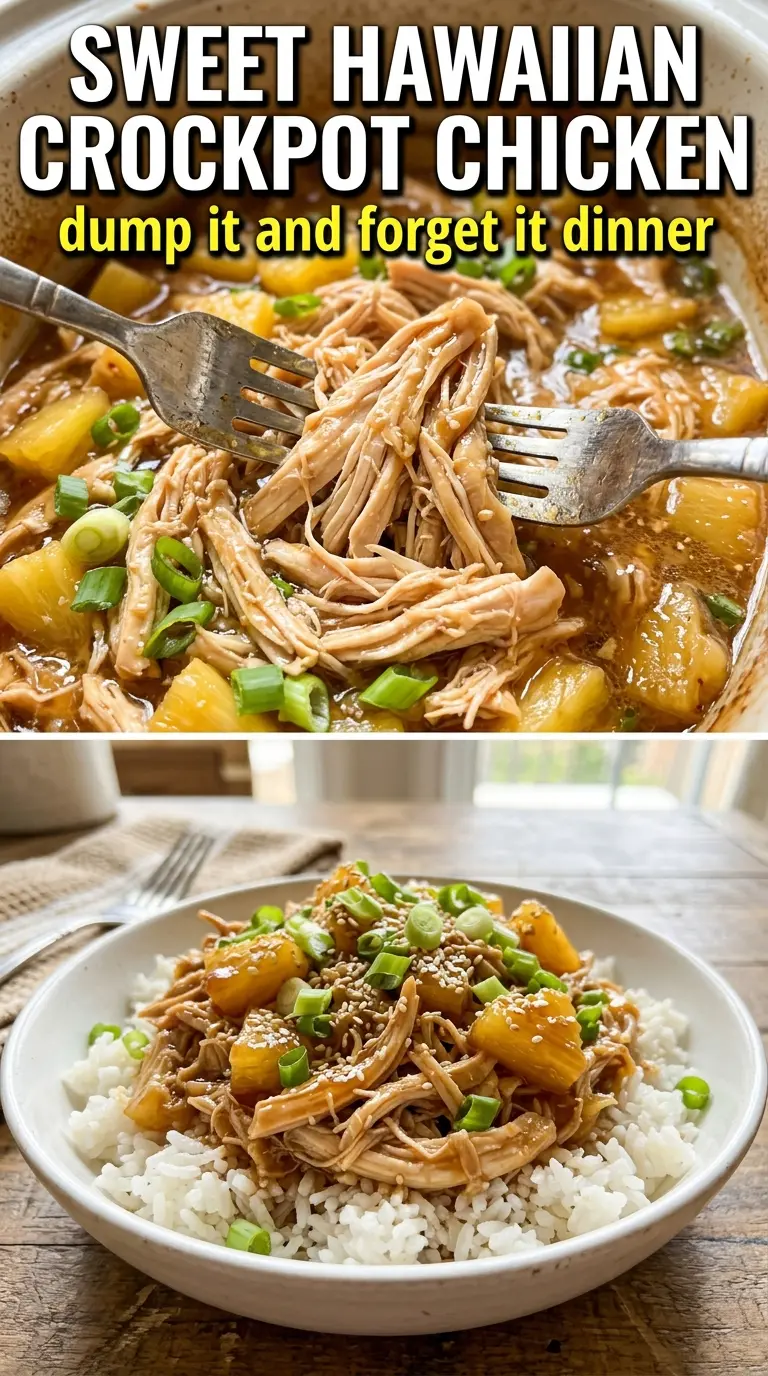
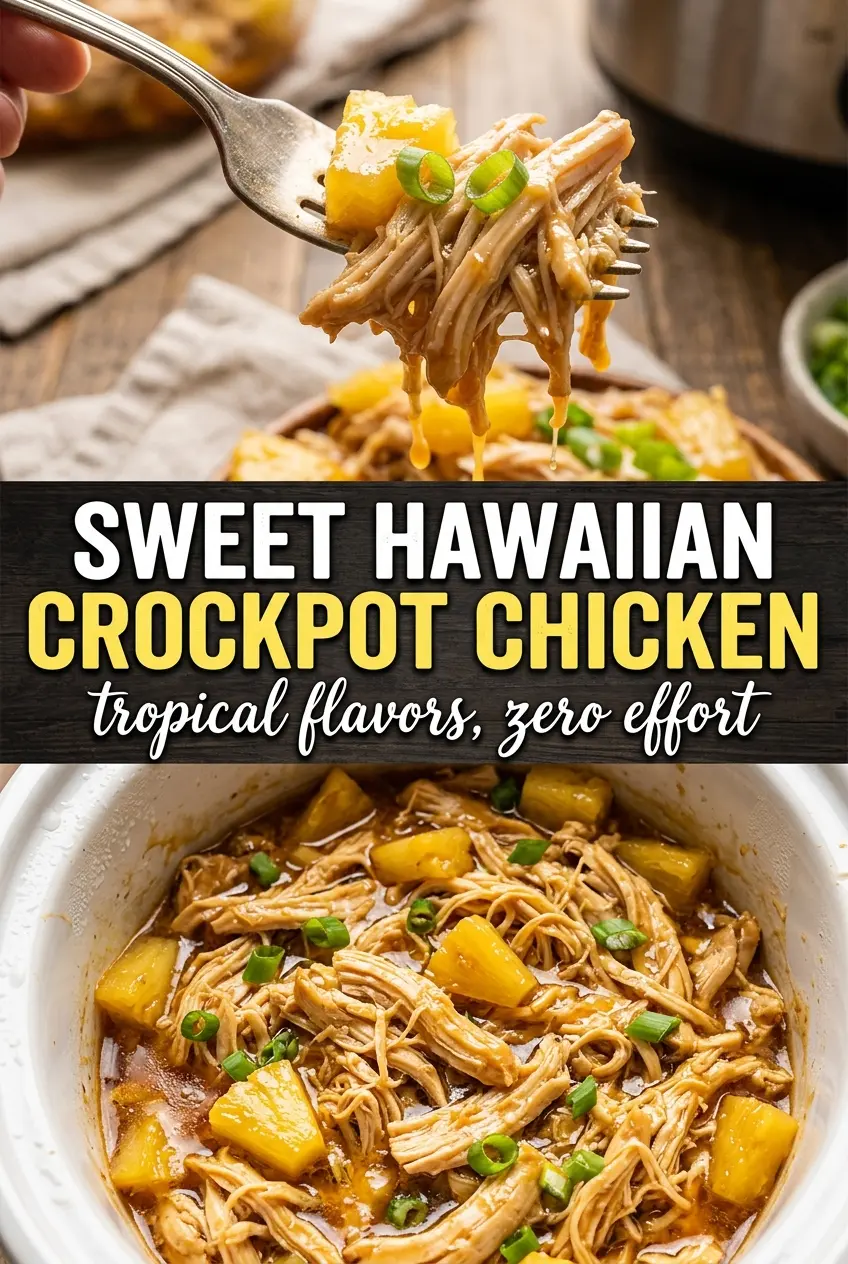
Sticky, sweet Hawaiian crockpot chicken turns into the kind of dinner people keep circling back to because it hits that perfect middle ground: tender shredded chicken, glossy pineapple sauce, and enough savory depth that it never tastes flat. The slow cooker does most of the work, but the last 20 minutes matter just as much as the long simmer, because that’s what turns a thin sweet-and-sour sauce into a glaze that clings to every bite.

This version leans on pineapple juice for brightness, soy sauce for salt, and a little ketchup for body and color. Brown sugar gives the sauce that caramel edge you expect from Hawaiian-style chicken, while rice vinegar keeps it from getting cloying. I use thighs instead of breasts because they stay juicy through a long cook and shred into softer, silkier strands.

Below you’ll find the small details that make a big difference, including how to thicken the sauce without turning it gummy and what to swap if you need a gluten-free version.

The sauce thickened into that sticky glaze I was hoping for, and the pineapple stayed bright instead of mushy. My husband went back for seconds before I even sat down.

★★★★★— Melissa R.

Save this sweet Hawaiian crockpot chicken for the nights when you want sticky pineapple glaze and almost no hands-on work.

Save to Pinterest

The Part Most Slow Cooker Chicken Gets Wrong: Too Much Liquid, Not Enough Glaze

The biggest mistake with pineapple chicken in the slow cooker is treating it like a braise instead of a sauce that needs to reduce. Pineapple releases juice, the chicken gives off moisture, and if you start with too much liquid, you end up with a thin, sweet broth instead of that sticky coating people want. The sauce in this recipe starts balanced and finishes thickened on high heat, which is what gives it that clingy, takeout-style finish.

Chicken thighs hold up better than breasts here because they can spend hours in the slow cooker without drying out or turning stringy in a bad way. They shred cleanly once tender, and the fat in the thighs helps the sauce taste richer even though the ingredient list stays simple.

  • Pineapple juice — Reserve some from the can and use it in the sauce. That bright, acidic sweetness is part of the dish’s backbone, and bottled pineapple juice often tastes flatter and sweeter than the canning liquid.
  • Soy sauce — This is what keeps the dish from tasting like dessert. Use regular soy sauce for the best balance, or low-sodium if you want more control over the salt level.
  • Brown sugar — It deepens the sauce and helps it glaze at the end. White sugar works in a pinch, but you lose that molasses note that makes the sauce taste rounder.
  • Cornstarch slurry — Don’t skip the final thickening step. The sauce won’t turn glossy until the starch has a few minutes to cook out and bloom in the heat.

What Each Ingredient Is Actually Doing in This Chicken Recipe
Cooked chicken with sauce and herbs
  • Chicken (the foundation) — Quality chicken starts with good sourcing. Even simple seasoning tastes better on good meat.
  • Olive oil or butter (the cooking medium) — Fat carries flavors and keeps chicken from drying. It’s also what makes food taste delicious.
  • Salt and pepper (proper seasoning) — Season generously; underseasoned chicken tastes bland. Apply inside and outside so the seasoning penetrates.
  • Garlic and onion (the aromatic base) — These add depth and complexity. They sweeten slightly when cooked, becoming mellow and round.
  • Acid (lemon, vinegar, wine, or tomato) — This brightens the dish and prevents it from tasting heavy. It also helps balance rich sauces.
  • Fresh herbs or spices (the character) — These define the personality of the dish. Choose ones that complement your other flavors.
  • Cream or sauce base (optional richness) — A sauce keeps the chicken moist and flavorful. Make sure it’s balanced with acid and herbs.
  • Proper cooking technique (the final step) — Whether baking, pan-searing, or simmering, the right method ensures juicy, tender results without drying out the meat.

How to Build the Sauce So It Turns Sticky Instead of Watery

Place the chicken in the slow cooker first, then pour the mixed sauce over the top so every piece gets coated without needing a lot of stirring. The pineapple chunks go on top, not under the chicken, which helps them keep their shape and keeps the sauce from becoming cloudy. If you bury them too deep, they soften too much and disappear into the sauce.

Cook on low if you have the time. That gentler heat gives the thighs a softer texture and keeps the sauce from shrinking too fast around the edges. When the chicken shreds easily, pull it apart right in the slow cooker, stir in the cornstarch slurry, and cook uncovered on high until the sauce looks glossy and lightly pooled around the chicken instead of thin and soupy. If it still looks loose, give it another 10 minutes. The sauce thickens as it cools, but it should already coat a spoon before you serve it.

Three Ways to Make It Fit the Night You’re Having

Gluten-Free Version

Swap the soy sauce for tamari or a certified gluten-free soy sauce. The flavor stays salty and savory, and the sauce still reduces the same way, so you don’t lose the sticky finish.

Using Chicken Breasts Instead of Thighs

Chicken breasts work if that’s what you have, but they need a shorter cook and a little more attention. Start checking early on the low end of the timing window, because breasts dry out fast once they go past tender.

Less-Sweet, More-Savory Sauce

Cut the brown sugar back by 1 to 2 tablespoons and add a splash more vinegar. That keeps the pineapple front and center but pulls the sauce away from candy-sweet territory.

Storage and Reheating

  • Refrigerator: Store leftovers in an airtight container for up to 4 days. The sauce thickens as it chills, which helps the chicken stay moist.
  • Freezer: It freezes well for up to 2 months. Cool it completely first, then freeze in flat portions so it thaws evenly.
  • Reheating: Warm it gently on the stovetop or in the microwave with a splash of water if needed. Don’t blast it on high heat, or the sauce can tighten up and the chicken can dry out at the edges.

Questions I Get Asked About This Recipe
Can I use fresh pineapple instead of canned pineapple?+

Yes, but you’ll need to replace the reserved pineapple juice with another liquid, like a little extra water mixed with a splash of pineapple juice or chicken broth. Fresh pineapple brings a brighter flavor, but canned pineapple is more consistent and gives you the juice that helps build the sauce.

How do I keep the chicken from getting dry in the slow cooker?+

Use thighs if you can, and stick to the low setting when you have the time. The main thing is not overcooking it after it’s already tender; once the meat shreds easily, move on to the thickening step and stop there.

How do I thicken the sauce if it still looks thin?+

Leave the lid off and keep it on high for a few more minutes. The cornstarch needs heat and a little reduction time to reach a glossy glaze, so if you stop too early it’ll stay loose instead of coating the chicken.

Can I make this sweet Hawaiian crockpot chicken ahead of time?+

Yes. You can mix the sauce and store it separately, then combine everything in the slow cooker when you’re ready to cook. The finished chicken also reheats well, which makes it a strong leftover dinner for rice bowls or lunch the next day.

[RECIPE_CARD_SHORTCODE]

Loading…

By Reading time
Servings 4–6 people

Sticky, sweet Hawaiian crockpot chicken turns into the kind of dinner people keep circling back to because it hits that perfect middle ground: tender shredded chicken, glossy pineapple sauce, and enough savory depth that it never tastes flat. The slow cooker does most of the work, but the last 20 minutes matter just as much as the long simmer, because that’s what turns a thin sweet-and-sour sauce into a glaze that clings to every bite.

This version leans on pineapple juice for brightness, soy sauce for salt, and a little ketchup for body and color. Brown sugar gives the sauce that caramel edge you expect from Hawaiian-style chicken, while rice vinegar keeps it from getting cloying. I use thighs instead of breasts because they stay juicy through a long cook and shred into softer, silkier strands.

Below you’ll find the small details that make a big difference, including how to thicken the sauce without turning it gummy and what to swap if you need a gluten-free version.

The sauce thickened into that sticky glaze I was hoping for, and the pineapple stayed bright instead of mushy. My husband went back for seconds before I even sat down.

★★★★★— Melissa R.

Save this sweet Hawaiian crockpot chicken for the nights when you want sticky pineapple glaze and almost no hands-on work.

Save to Pinterest

The Part Most Slow Cooker Chicken Gets Wrong: Too Much Liquid, Not Enough Glaze

The biggest mistake with pineapple chicken in the slow cooker is treating it like a braise instead of a sauce that needs to reduce. Pineapple releases juice, the chicken gives off moisture, and if you start with too much liquid, you end up with a thin, sweet broth instead of that sticky coating people want. The sauce in this recipe starts balanced and finishes thickened on high heat, which is what gives it that clingy, takeout-style finish.

Chicken thighs hold up better than breasts here because they can spend hours in the slow cooker without drying out or turning stringy in a bad way. They shred cleanly once tender, and the fat in the thighs helps the sauce taste richer even though the ingredient list stays simple.

  • Pineapple juice — Reserve some from the can and use it in the sauce. That bright, acidic sweetness is part of the dish’s backbone, and bottled pineapple juice often tastes flatter and sweeter than the canning liquid.
  • Soy sauce — This is what keeps the dish from tasting like dessert. Use regular soy sauce for the best balance, or low-sodium if you want more control over the salt level.
  • Brown sugar — It deepens the sauce and helps it glaze at the end. White sugar works in a pinch, but you lose that molasses note that makes the sauce taste rounder.
  • Cornstarch slurry — Don’t skip the final thickening step. The sauce won’t turn glossy until the starch has a few minutes to cook out and bloom in the heat.

What Each Ingredient Is Actually Doing in This Chicken Recipe

Cooked chicken with sauce and herbs
  • Chicken (the foundation) — Quality chicken starts with good sourcing. Even simple seasoning tastes better on good meat.
  • Olive oil or butter (the cooking medium) — Fat carries flavors and keeps chicken from drying. It’s also what makes food taste delicious.
  • Salt and pepper (proper seasoning) — Season generously; underseasoned chicken tastes bland. Apply inside and outside so the seasoning penetrates.
  • Garlic and onion (the aromatic base) — These add depth and complexity. They sweeten slightly when cooked, becoming mellow and round.
  • Acid (lemon, vinegar, wine, or tomato) — This brightens the dish and prevents it from tasting heavy. It also helps balance rich sauces.
  • Fresh herbs or spices (the character) — These define the personality of the dish. Choose ones that complement your other flavors.
  • Cream or sauce base (optional richness) — A sauce keeps the chicken moist and flavorful. Make sure it’s balanced with acid and herbs.
  • Proper cooking technique (the final step) — Whether baking, pan-searing, or simmering, the right method ensures juicy, tender results without drying out the meat.

How to Build the Sauce So It Turns Sticky Instead of Watery

Place the chicken in the slow cooker first, then pour the mixed sauce over the top so every piece gets coated without needing a lot of stirring. The pineapple chunks go on top, not under the chicken, which helps them keep their shape and keeps the sauce from becoming cloudy. If you bury them too deep, they soften too much and disappear into the sauce.

Cook on low if you have the time. That gentler heat gives the thighs a softer texture and keeps the sauce from shrinking too fast around the edges. When the chicken shreds easily, pull it apart right in the slow cooker, stir in the cornstarch slurry, and cook uncovered on high until the sauce looks glossy and lightly pooled around the chicken instead of thin and soupy. If it still looks loose, give it another 10 minutes. The sauce thickens as it cools, but it should already coat a spoon before you serve it.

Three Ways to Make It Fit the Night You’re Having

Gluten-Free Version

Swap the soy sauce for tamari or a certified gluten-free soy sauce. The flavor stays salty and savory, and the sauce still reduces the same way, so you don’t lose the sticky finish.

Using Chicken Breasts Instead of Thighs

Chicken breasts work if that’s what you have, but they need a shorter cook and a little more attention. Start checking early on the low end of the timing window, because breasts dry out fast once they go past tender.

Less-Sweet, More-Savory Sauce

Cut the brown sugar back by 1 to 2 tablespoons and add a splash more vinegar. That keeps the pineapple front and center but pulls the sauce away from candy-sweet territory.

Storage and Reheating

  • Refrigerator: Store leftovers in an airtight container for up to 4 days. The sauce thickens as it chills, which helps the chicken stay moist.
  • Freezer: It freezes well for up to 2 months. Cool it completely first, then freeze in flat portions so it thaws evenly.
  • Reheating: Warm it gently on the stovetop or in the microwave with a splash of water if needed. Don’t blast it on high heat, or the sauce can tighten up and the chicken can dry out at the edges.

Questions I Get Asked About This Recipe

Can I use fresh pineapple instead of canned pineapple?+

Yes, but you’ll need to replace the reserved pineapple juice with another liquid, like a little extra water mixed with a splash of pineapple juice or chicken broth. Fresh pineapple brings a brighter flavor, but canned pineapple is more consistent and gives you the juice that helps build the sauce.

How do I keep the chicken from getting dry in the slow cooker?+

Use thighs if you can, and stick to the low setting when you have the time. The main thing is not overcooking it after it’s already tender; once the meat shreds easily, move on to the thickening step and stop there.

How do I thicken the sauce if it still looks thin?+

Leave the lid off and keep it on high for a few more minutes. The cornstarch needs heat and a little reduction time to reach a glossy glaze, so if you stop too early it’ll stay loose instead of coating the chicken.

Can I make this sweet Hawaiian crockpot chicken ahead of time?+

Yes. You can mix the sauce and store it separately, then combine everything in the slow cooker when you’re ready to cook. The finished chicken also reheats well, which makes it a strong leftover dinner for rice bowls or lunch the next day.

Sweet Hawaiian Crockpot Chicken

Sweet Hawaiian crockpot chicken with pull-apart tender thighs and a sticky pineapple teriyaki glaze. The slow cooker turns pineapple chunks into a caramelized, golden sauce that clings to every shred over fluffy rice.
Prep Time 10 minutes
Cook Time 6 hours
Total Time 6 hours 10 minutes
Servings: 6 servings
Course: Main Dish
Cuisine: Hawaiian-American
Calories: 650

Ingredients
  

Boneless skinless chicken thighs
  • 2.5 lb boneless skinless chicken thighs
Pineapple chunks
  • 1 can (20 oz) pineapple chunks drained; reserve 1/2 cup juice
Soy sauce
  • 0.333 cup soy sauce
Brown sugar
  • 0.25 cup brown sugar packed
Ketchup
  • 3 tbsp ketchup
Rice vinegar
  • 3 tbsp rice vinegar
Garlic
  • 3 clove garlic minced
Fresh ginger
  • 1 tsp fresh ginger grated
Sesame oil
  • 1 tsp sesame oil
Cornstarch slurry
  • 2 tbsp cornstarch mixed with 3 tablespoons water
  • 3 tbsp water
Serving garnishes
  • 1 steamed rice
  • 1 sesame seeds
  • 1 sliced green onions

Equipment

  • 1 slow cooker

Method
 

Slow-cook the chicken
  1. Place the chicken thighs in the slow cooker. Spread them in an even layer so the sauce can coat everything.
  2. Whisk together the reserved pineapple juice, soy sauce, brown sugar, ketchup, rice vinegar, garlic, ginger, and sesame oil; pour over the chicken. The mixture should look glossy and evenly colored before it goes into the cooker.
  3. Add the pineapple chunks on top. Keep visible chunks on the surface so you can see them later in the finished glaze.
  4. Cover and cook on LOW for 6-7 hours or HIGH for 3-4 hours until the chicken is tender and easily shredded. The sauce will bubble gently around the edges as the pineapple turns syrupy.
Thicken into a glaze
  1. Shred the chicken in the slow cooker; stir it through the pineapple teriyaki sauce. You should see shredded strands coated in a thinner, pineapple-studded liquid.
  2. Stir in the cornstarch slurry and cook on HIGH uncovered for 20-30 minutes until the sauce thickens to a glaze. Watch for a shiny, caramelized cling that coats the spoon and looks thickened.
Serve
  1. Serve the Hawaiian pineapple chicken over steamed rice. The chicken and golden pineapple sauce should sit on top like a sticky topping.
  2. Garnish with sesame seeds and sliced green onions. Sprinkle right before serving so the green pops and the seeds look toasted.

Notes

For best caramelization, keep the slow cooker uncovered during the final 20-30 minutes so the pineapple teriyaki sauce reduces into a thick glaze. Store leftovers in the fridge up to 4 days in a sealed container; reheat gently until hot. Freezing is not recommended because the sauce can thin and the chicken texture may change. For a lower-sugar swap, use a 1:1 brown-sugar substitute (packed) and taste after thickening—this helps maintain the same glossy glaze.

Keep this recipe handy

Pin it, print a tidy copy, leave a quick comment, or copy the link to share.

Save to Pinterest

Leave a Comment

Recipe Rating