Pasta salad gets a lot better when the dressing has its own personality, and this one does. The sun-dried tomato oil carries a deep, savory richness that clings to every piece of pasta, while feta, olives, and basil keep each bite bright and briny instead of heavy. After a short chill, the flavors settle into each other and the pasta takes on that seasoned, glossy finish that makes people go back for another forkful.
The detail that matters most here is starting with pasta cooked just to al dente and cooled completely before the dressing goes on. Warm pasta drinks in too much oil and softens the feta before it has a chance to stay distinct. Chopping the sun-dried tomatoes small and slicing the onion thin also helps every bite taste balanced instead of bulky.
Below, I’ve included the exact trick for keeping the salad from tasting flat after chilling, plus a few smart swaps if you need to adjust the ingredients for what’s in your pantry.
The dressing coated everything without pooling at the bottom, and after the chill the basil and feta tasted even better together. I also liked that the pasta stayed firm instead of getting mushy the next day.
Pin this sun-dried tomato pasta salad for a make-ahead side that stays bold, creamy, and full of Mediterranean flavor.
Why This Pasta Salad Stays Bright Instead of Turning Greasy
The biggest problem with pasta salad is usually imbalance: too much oil, not enough acid, and ingredients that all taste flat after a few hours in the fridge. This version avoids that by using the reserved sun-dried tomato oil as a flavor base, then cutting it with red wine vinegar so the dressing tastes bold instead of heavy. That little hit of acid keeps the olives, feta, and tomatoes tasting distinct rather than muddy.
The second thing that matters is the order. Pasta goes in cooled, the dressing gets whisked separately, and the basil and pine nuts are added at the end so they stay fresh and textured. If you toss everything together while the pasta is warm, the cheese softens too fast and the herbs lose their snap.
- Cooked pasta — Short shapes like penne or rigatoni catch the dressing in the ridges and hold onto the chopped tomatoes. Long noodles work poorly here because they tangle and don’t carry the mix as evenly.
- Reserved sun-dried tomato oil — This is where the deep tomato flavor comes from. Plain olive oil works in a pinch, but you lose that concentrated savory edge that makes the salad taste like more than just pasta with add-ins.
- Feta — Use a block and crumble it yourself if you can. Pre-crumbled feta is drier and tends to disappear into the salad instead of giving you those little creamy-salty pockets.
- Toasted pine nuts — They add a soft crunch and a buttery note that balances the brine from the olives. If pine nuts are out of budget, sliced almonds are the closest swap and still give you that toasted finish.
What Each Ingredient Is Actually Doing in This Pasta Salad
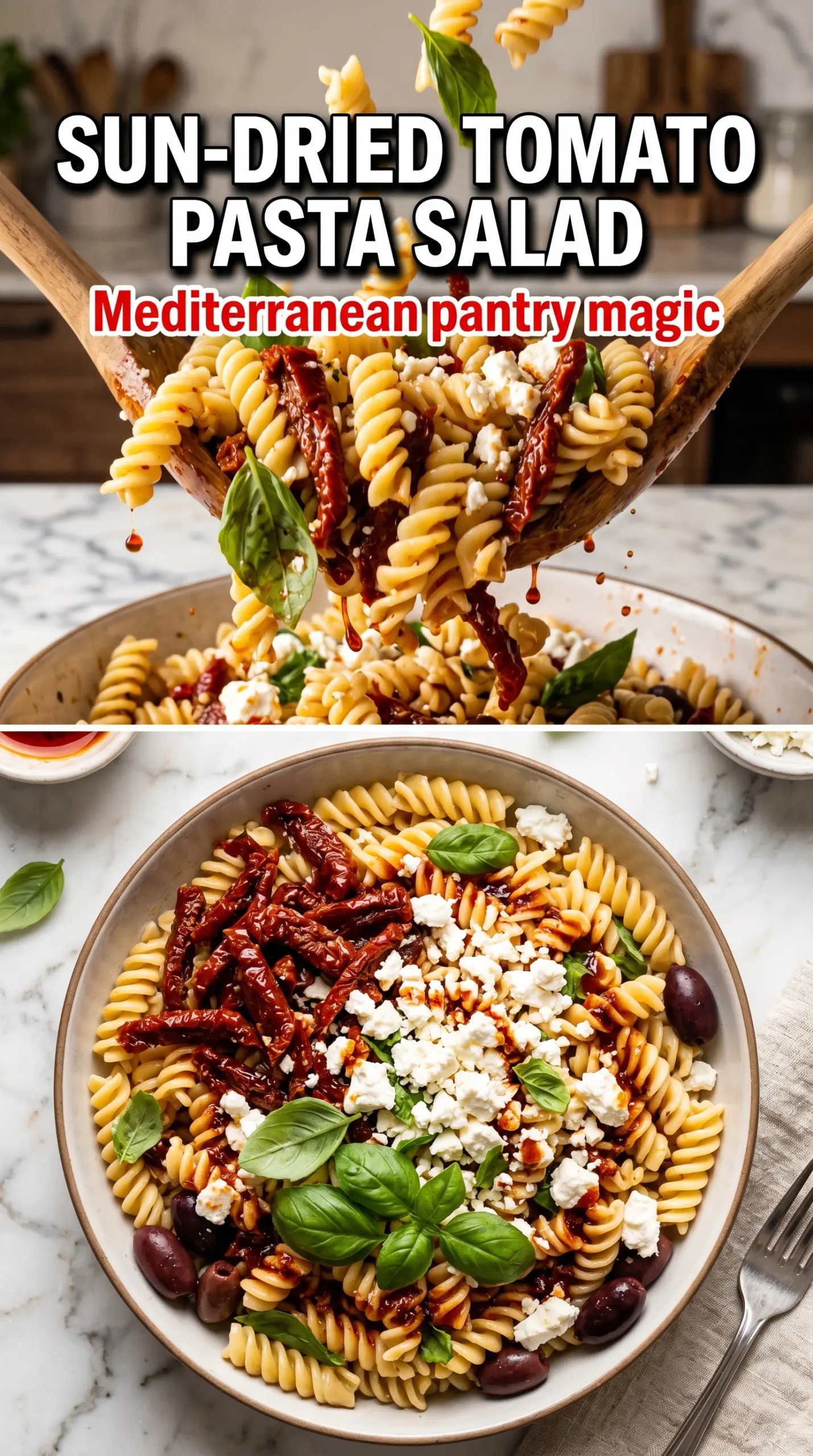
- Cooked pasta (the foundation) — Short shapes like penne or rotini hold dressing better than long noodles. Cook to al dente and cool completely before dressing.
- Olive oil or vinaigrette (the binding medium) — This carries all the flavors throughout and keeps the pasta from clumping. Don’t skip the emulsifier (mustard or vinegar) or the oil separates.
- Vinegar or lemon juice (the brightness) — Acid prevents the salad from tasting heavy and keeps it tasting fresh even after chilling. Fresh is better than bottled.
- Fresh vegetables (the texture and nutrition) — Cut to similar sizes so they cook evenly if blanched. Raw vegetables add crunch; cooked ones soften and absorb flavor.
- Cheese (the creaminess and salt) — Whether feta, parmesan, or mozzarella, cheese adds richness and prevents the salad from tasting one-dimensional.
- Olives, capers, or sun-dried tomatoes (the briny contrast) — These bring sharp flavor that balances sweet vegetables and creamy dressing. They keep the salad interesting.
- Fresh herbs (the finish) — Basil, parsley, or dill added at the end stay bright and fragrant. Cooked herbs lose their personality.
- Proper chilling time (the flavor settling) — 30 minutes lets flavors meld without the pasta getting soggy. The cold temperature also mutes seasoning, so season boldly.
Building the Salad So Every Bite Tastes Seasoned
Cooking the Pasta to Hold the Dressing
Boil the pasta until it’s just al dente, then drain it and toss it with a tiny splash of olive oil so it doesn’t stick while it cools. You want the noodles fully cool before anything wet goes on them, because warm pasta drinks up dressing unevenly and softens as it sits. If the pasta feels even a little damp or steamy, give it more time spread out on a tray.
Whisking the Dressing Until It Tastes Sharp
Mix the reserved sun-dried tomato oil, olive oil, red wine vinegar, Italian seasoning, and garlic until the dressing looks cohesive and smells bright. Taste it before it hits the pasta; it should be a little bolder than you think, because the cold pasta mutes seasoning. If it tastes flat now, it’ll taste dull after chilling.
Combining the Mix-Ins Without Crushing Them
Fold in the sun-dried tomatoes, olives, feta, onion, and basil with a light hand. The goal is even distribution, not mashing the cheese into the pasta. Add the dressing while the pasta is fully cool, then toss until the noodles look glossy and every surface has a thin coating instead of a puddle at the bottom.
Finishing After the Chill
Let the salad rest in the fridge for about 30 minutes, then toss it again before serving. That second toss matters because the pasta settles and the dressing gathers at the bottom while it chills. If it needs a lift, add a small splash of vinegar or a pinch of salt right before serving rather than over-dressing it from the start.
How to Adapt This for Different Diets and Pantry Swaps
Make it gluten-free
Use a sturdy gluten-free short pasta and cook it just to the edge of done so it doesn’t split when tossed. Gluten-free pasta can tighten up as it chills, so dress it while it’s still slightly warmer than room temperature, then check the texture after the rest and add a drizzle of olive oil if needed.
Make it dairy-free
Skip the feta and add a handful of chopped marinated artichokes or a few extra olives for savory depth. You lose the creamy-salty contrast, so finish with a little extra vinegar and a pinch more salt to keep the salad lively.
Swap the pine nuts
Toasted sliced almonds or chopped pistachios both work well here. Almonds are more affordable and give you a clean crunch, while pistachios lean a little sweeter and make the salad feel richer.
Storage and Reheating
- Refrigerator: Store covered for up to 4 days. The basil softens a bit, but the flavor holds well.
- Freezer: I don’t recommend freezing this salad. The pasta texture turns soft and the feta gets crumbly in an unhelpful way after thawing.
- Reheating: Serve it cold or at cool room temperature. If it has been in the fridge overnight, let it sit out for 15 to 20 minutes and toss with a small splash of olive oil before serving so the dressing loosens back up.
Answers to the Questions Worth Asking
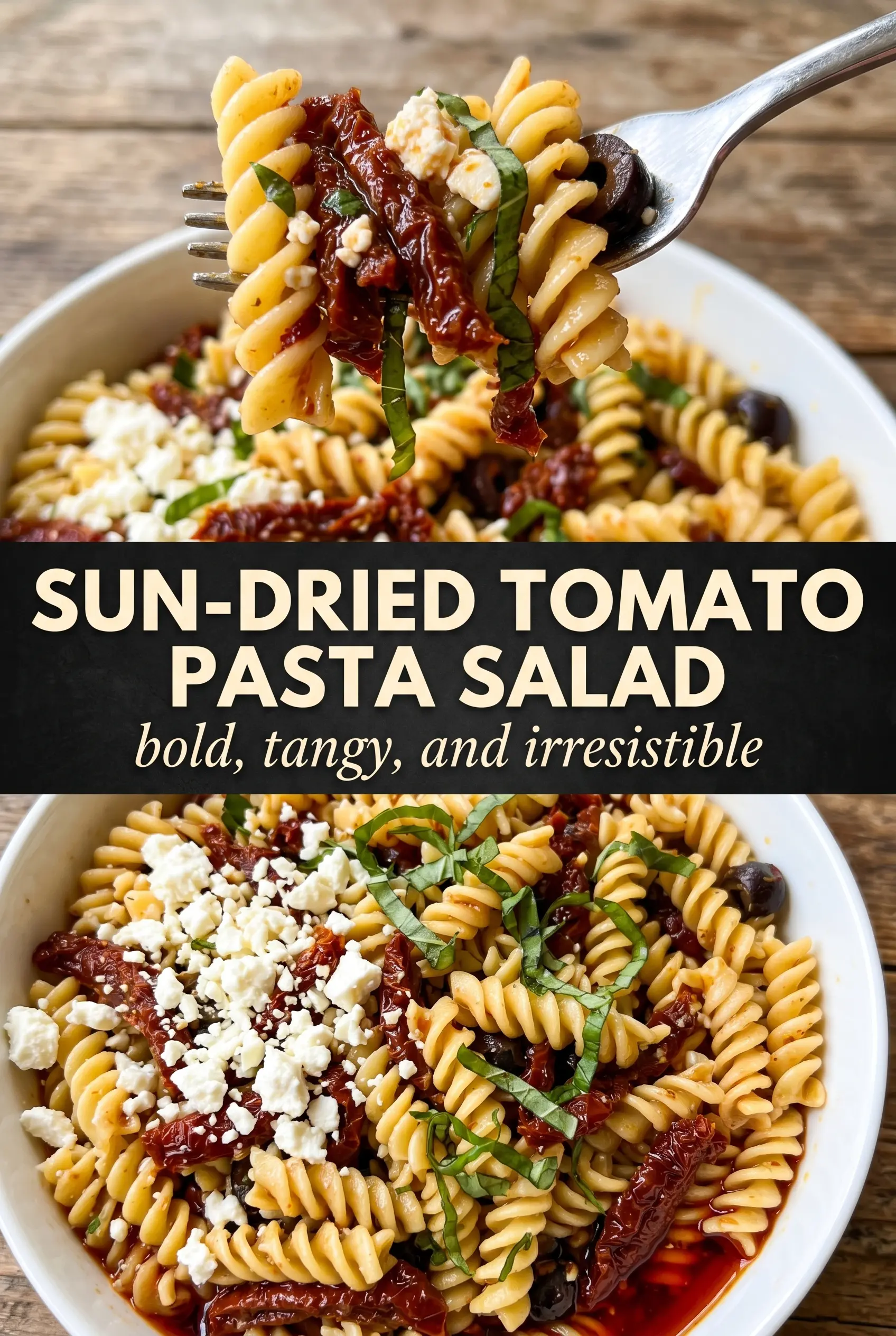
Sun-Dried Tomato Pasta Salad
Ingredients
Equipment
Method
- Cook the penne or rigatoni pasta in boiling water until al dente, then drain and immediately toss with a splash of olive oil to prevent sticking. Spread the pasta on a sheet pan and cool completely.
- Toast the pine nuts on a sheet pan at 350°F for 3 to 5 minutes, stirring once, until lightly golden and fragrant. Set aside to cool.
- Whisk reserved sun-dried tomato oil, olive oil, red wine vinegar, Italian seasoning, and minced garlic until smooth and glossy.
- Combine cooled pasta with chopped sun-dried tomatoes, halved kalamata olives, crumbled feta, thinly sliced red onion, and torn basil in a large bowl.
- Pour the dressing over the pasta salad and toss thoroughly until everything is evenly coated.
- Fold in toasted pine nuts, then season with salt and pepper to taste.
- Refrigerate for 30 minutes, then toss again before serving so the pasta stays coated and the flavors meld.