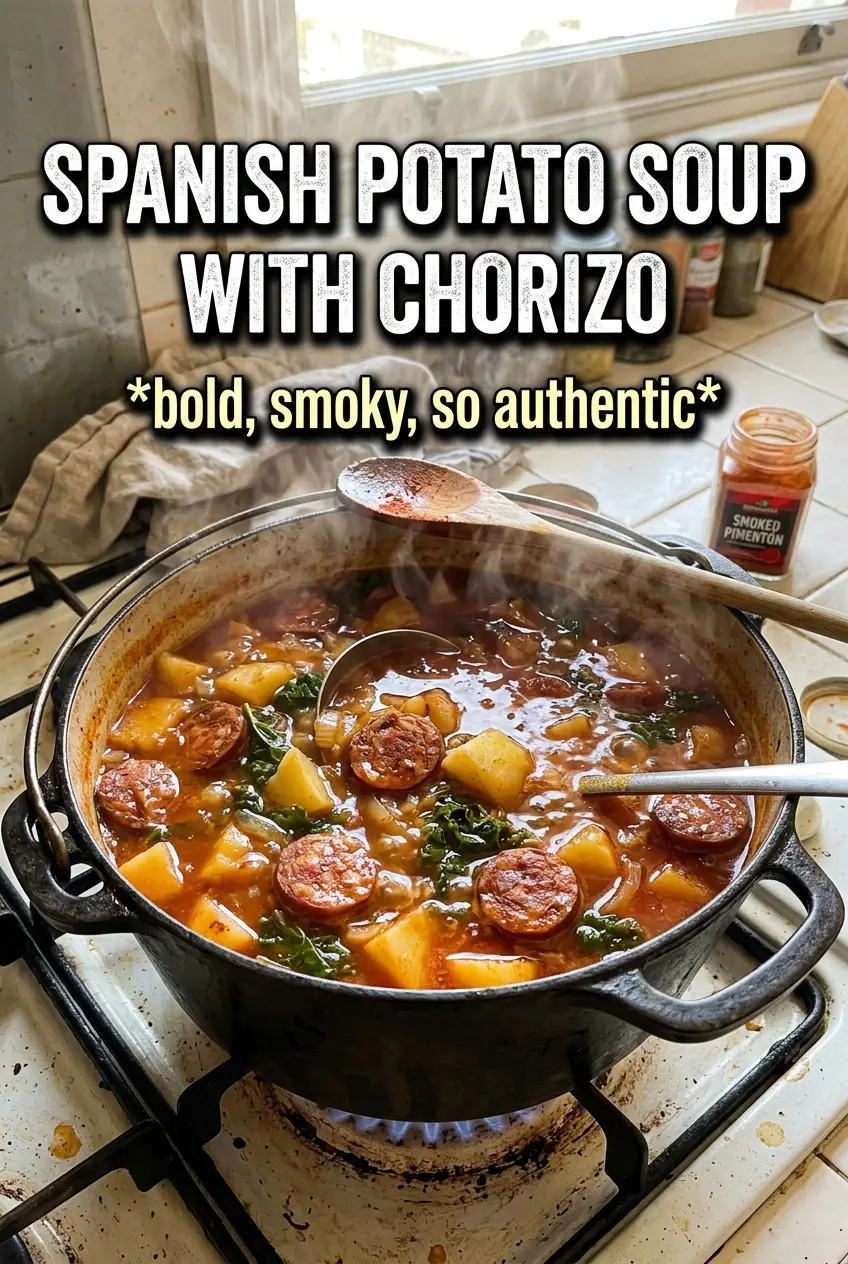
Spanish potato soup with chorizo has the kind of broth that grabs your attention before you even take a bite: smoky, brick-red, and full of potato, beans, and little rounds of chorizo that perfume the whole pot. It eats like a proper meal, not a starter, with enough body from the potatoes and beans to feel filling without turning heavy.
What makes this version work is the order of operations. The chorizo renders first, so the onion and bell pepper cook in seasoned fat instead of plain oil. That extra step gives the soup a deeper base and keeps the paprika from tasting flat. The potatoes simmer until tender but still hold their shape, and the beans go in near the end so they stay intact instead of turning pasty.
Below, I’ve included the small details that matter: how to keep the broth balanced, what to do if your chorizo is especially salty, and the swaps that still keep the soup tasting like itself.
The chorizo fat made the broth taste smoky and rich, and the potatoes stayed tender without falling apart. I added a little extra parsley at the end and the whole pot tasted even better the next day.
Save this Spanish potato soup with chorizo for a smoky, one-pot dinner with tender potatoes, beans, and a broth that gets deeper as it sits.
The Trick to Keeping the Broth Smoky, Not Muddy
The biggest mistake with this kind of soup is dumping every spice into liquid and hoping it tastes deep. Smoked paprika and cumin need a minute in the hot pot before the broth goes in, because that brief toast wakes them up and keeps the flavor round instead of dusty. If the spices hit cold liquid too early, they tend to taste thin no matter how long you simmer.
The second thing that matters is using the chorizo fat as part of the base. Spanish chorizo brings its own paprika and fat, and that drippings layer is where the soup gets its color and backbone. Keep the heat at medium, not high, so the spices bloom instead of scorching. Burned paprika turns bitter fast and there’s no hiding it later.
What Each Ingredient Is Doing in the Pot
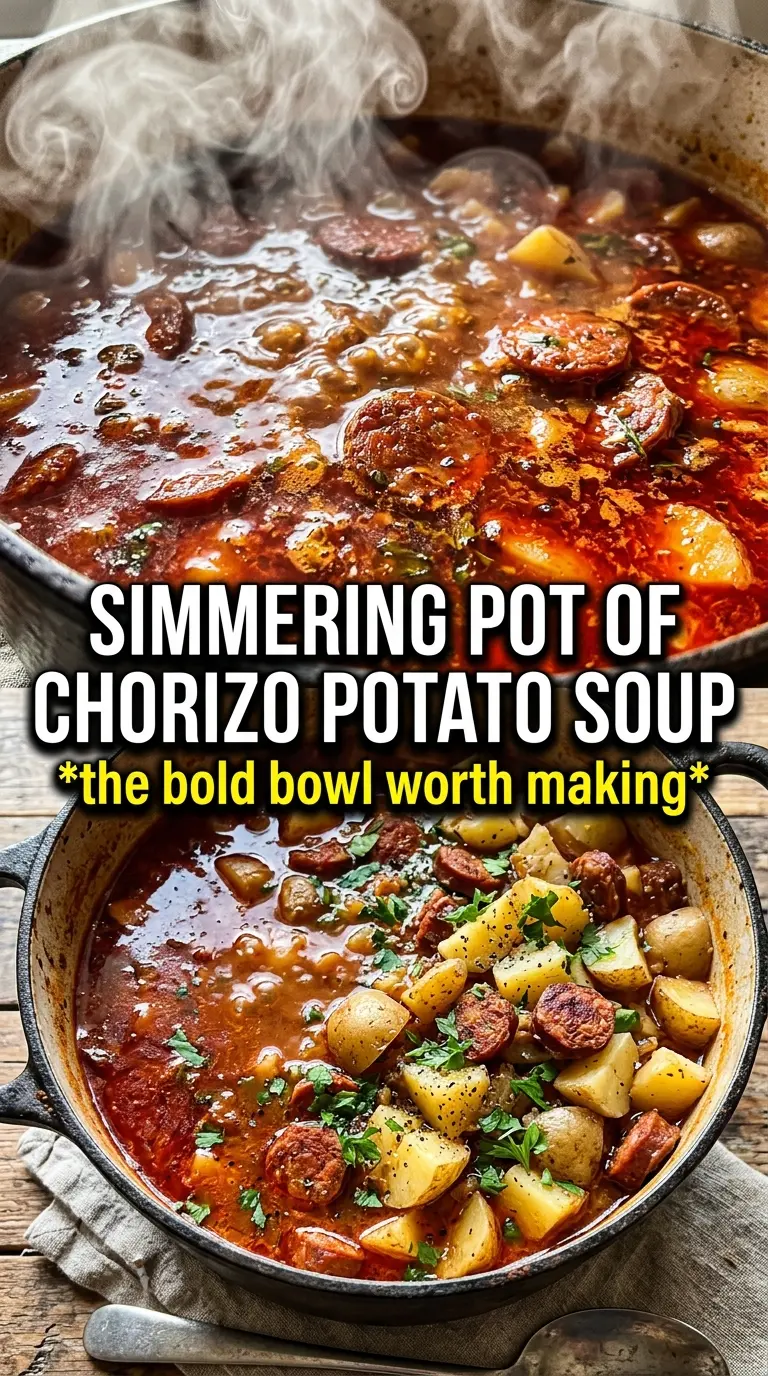
- Spanish chorizo — This is the flavor engine. It should be cured Spanish chorizo, not raw Mexican chorizo, because the cured version slices cleanly, renders fat, and seasons the broth as it cooks. If yours is especially salty, hold back on the final salt until the end.
- Yukon gold potatoes — These hold their shape better than russets and give the soup a silkier edge without falling apart. If you use russets, the soup will thicken more and the texture will be softer, almost stew-like.
- White beans — They add body and make the soup feel complete. Cannellini or great northern beans both work. Drain them well so the broth stays clean instead of starchy.
- Smoked paprika — This is not the place to substitute regular paprika. The smoky note is what makes the soup taste Spanish, especially once it mingles with the chorizo drippings.
- Diced tomatoes — They add just enough acidity to keep the broth from tasting heavy. Use canned diced tomatoes with their juice; that liquid helps build the base without extra work.
Building the Soup in the Right Order
Render the Chorizo First
Start the chorizo in a dry-enough pot with just the olive oil to keep things moving, and let the slices brown on both sides. You want the fat to melt out and the edges to darken a little, not blacken. Pull the chorizo out once it’s cooked so it doesn’t tighten up while the vegetables soften. If the pot looks crowded, work in batches; steaming chorizo leaves the fat trapped instead of released.
Soften the Vegetables in the Drippings
Cook the onion and red bell pepper in the rendered fat until the onion turns translucent and the pepper loses its raw crunch. This is where the soup picks up sweetness, so don’t rush it. When the garlic goes in, give it just a minute; if it browns hard, the whole pot can taste sharp. Stir often and scrape up the browned bits from the bottom as the vegetables release their moisture.
Toast the Spices Before the Broth
Stir in the smoked paprika, cumin, and turmeric and cook them just until they smell fragrant. That short toast keeps the spices from tasting flat in the finished soup. Add the tomatoes right after that so the pan doesn’t dry out and catch. If the spices stick, the heat is too high; lower it and keep the mixture moving.
Simmer Until the Potatoes Are Tender
Once the broth and potatoes go in, bring the pot up to a gentle simmer and keep it there. A hard boil can break the potatoes on the outside before the centers are done. The potatoes are ready when a knife slides in cleanly but the cubes still hold their edges. Add the beans and reserved chorizo near the end so they warm through without turning mushy.
How to Adjust This Soup Without Losing Its Character
Make It Dairy-Free Without Changing Anything Else
This soup is naturally dairy-free as written, which is one of the reasons it tastes so clean and satisfying. Keep the olive oil and chorizo drippings as the fat source, and don’t add cream unless you want to shift it into a richer, heavier bowl.
Use Plant-Based Chorizo for a Meatless Version
A good plant-based chorizo can stand in if you want the same smoky profile without pork. Brown it gently and add a touch more olive oil if the pan seems dry, since you won’t get the same rendered fat. The soup will be lighter, but the paprika and beans still carry the dish.
Swap the White Beans for Chickpeas
Chickpeas give the soup a firmer bite and hold up well if you want a little more chew. They won’t thicken the broth as much as white beans, so the soup stays a touch brothy and a little less creamy-looking.
Storage and Reheating
- Refrigerator: Store for up to 4 days. The broth gets a little thicker as the potatoes sit, which is normal.
- Freezer: This freezes well for up to 2 months. Cool it completely first, then freeze in airtight containers with a little headspace.
- Reheating: Warm it gently on the stovetop over medium-low heat until steaming. Don’t boil it hard, or the potatoes can break down and the chorizo can turn tough.