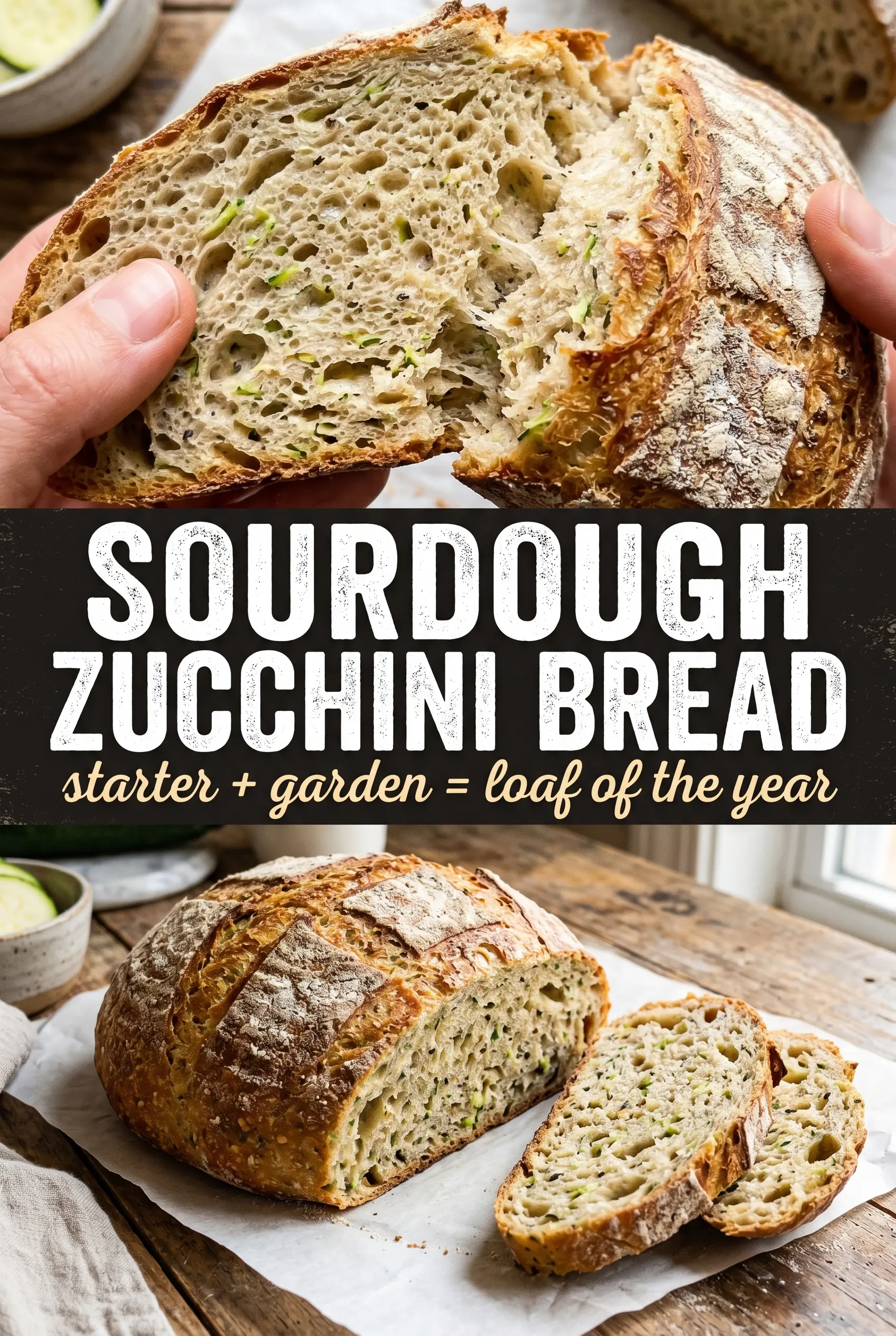
Golden on top, tender in the middle, and just tangy enough to keep each slice interesting, sourdough zucchini bread earns its place in the breakfast rotation fast. The crumb stays moist without turning heavy, and the loaf slices cleanly once it cools, which matters when you want something that feels homemade instead of dense or soggy.
This version leans on both zucchini and sourdough starter for structure and moisture. The zucchini brings tenderness, but only if you squeeze it dry first; leave too much water in and the loaf bakes up gummy in the center. The starter adds a gentle tang and a deeper, more developed flavor than a standard quick bread, even when you use discard. A little cinnamon rounds everything out without pushing it into dessert territory.
Below, I’ve included the small details that make the biggest difference: how dry the zucchini should be, what to look for when the loaf is fully baked, and the best way to handle add-ins like walnuts or chocolate chips without sinking them to the bottom.
The loaf baked up with a perfect crackly top and the crumb stayed moist for days. I used discard and the tang came through in the best way without making it taste sour.
Save this sourdough zucchini bread for a moist, tangy loaf with a crackly golden top and an easy discard-friendly method.
The Reason Zucchini Bread Turns Dense, and How Sourdough Fixes It
The biggest problem with zucchini bread is usually too much moisture. Zucchini looks harmless once it’s grated, but it can carry a lot of water into the batter, and that extra liquid steals structure from the loaf. When people end up with a gummy center, it’s often because the zucchini went in wet and the batter never had a chance to set properly.
Sourdough starter helps here because it brings body and a little acidity without asking the loaf to rise like a yeast bread. The baking soda and baking powder do the lift, while the starter adds flavor and a softer crumb. That combo gives you a quick bread that tastes more developed than the usual version, but still bakes in an hour or so.
- Zucchini — Squeeze it dry after grating. You want moisture inside the loaf, not puddles in the batter.
- Sourdough starter — Active starter or discard both work here. Discard gives you the tang and depth without needing peak fermentation.
- Oil — This keeps the crumb tender for days. Butter can work, but it firms up more once the loaf cools.
- Sugar — It doesn’t just sweeten. It helps the loaf brown and keeps the texture soft instead of dry.
What Each Ingredient Is Doing in the Batter

- Flour — All-purpose flour gives the loaf enough structure to hold the zucchini and starter without turning tough. A heavier flour will make it more rustic, but it can also make the crumb feel dry.
- Baking soda and baking powder — Both matter here. The soda reacts with the starter’s acidity, and the baking powder gives the loaf a little extra lift so it doesn’t sit flat in the pan.
- Cinnamon — This is quiet background warmth, not a spice loaf situation. Keep it modest or it takes over the tang from the starter.
- Eggs — They bind the batter and help the loaf rise evenly. Room-temperature eggs mix more smoothly, but cold eggs won’t ruin it.
- Walnuts or chocolate chips — Optional, but both work. Toss them with a spoonful of flour before folding them in so they don’t all sink to the bottom.
The Mixing Order That Keeps the Loaf Tender
Start With the Dry Bowl
Whisk the flour, baking soda, baking powder, salt, and cinnamon first so the leaveners are evenly distributed. If the soda clumps in one spot, that section of the loaf can taste sharp or rise unevenly. This is one of those quick breads where the dry bowl does more work than it looks like.
Build the Wet Base Until It Looks Smooth
Beat the sugar, eggs, oil, starter, and vanilla until the mixture looks glossy and fairly smooth. You’re not whipping air into it; you’re dissolving the sugar and getting the starter fully blended so the batter bakes evenly. If it looks streaky, keep mixing before the flour goes in.
Fold, Don’t Stir Like You Mean It
Add the zucchini, then fold in the dry ingredients just until no dry flour remains. Overmixing here tightens the crumb and makes the loaf chewy in the wrong way. Stop as soon as the batter looks combined, then fold in the walnuts or chocolate chips if you’re using them.
Watch the Center, Not Just the Timer
Bake until the top is deeply golden and a toothpick inserted in the center comes out clean or with a few moist crumbs. If the top browns too quickly before the middle is done, tent it lightly with foil for the last 10 to 15 minutes. Let it cool in the pan for 15 minutes before turning it out, because slicing too early can make the center collapse and smear.
How to Adapt This Loaf Without Losing the Texture
Make it dairy-free without changing the crumb
This loaf is already dairy-free as written if your starter is dairy-free, which most are. That means you don’t need to swap anything to keep the texture light and moist. It’s one of the easier quick breads to fit into a dairy-free routine because the oil does the tenderness work.
Use chocolate chips for a sweeter slice
Chocolate chips push this from breakfast bread toward snack cake territory, but the sourdough tang keeps it from tasting flat. Use the lower end of the mix-in amount if you want the zucchini flavor to stay visible. Mini chips spread more evenly through the loaf than large ones.
Swap walnuts for a softer crumb
Leave out the walnuts if you want a smoother slice or if you’re packing this for kids. The loaf will still hold together beautifully, and the crumb feels a little more uniform without the crunch. If you miss the texture, a sprinkle of chopped nuts on top gives you the same look without crowding the batter.
Use sourdough discard with confidence
Discard works just as well as active starter here because the leavening comes from baking soda and baking powder, not fermentation. If your discard is very thick, loosen it with a tablespoon or two of water so it blends smoothly. A very sour discard will make the tang more pronounced, which some people love in this loaf.
Storage and Reheating
- Refrigerator: Store in an airtight container for up to 5 days. The crumb stays moist, and the sourdough flavor deepens a little by day two.
- Freezer: This loaf freezes well. Wrap individual slices tightly and freeze for up to 3 months, then thaw at room temperature or straight from frozen.
- Reheating: Warm slices in a toaster oven or a dry skillet over low heat until just heated through. Microwaving too long makes the crumb rubbery, so use short bursts if that’s your only option.
Answers to the Questions Worth Asking
Sourdough Zucchini Bread
Ingredients
Equipment
Method
- Preheat your oven to 350°F and grease a 9x5 loaf pan.
- Whisk all-purpose flour, baking soda, baking powder, salt, and cinnamon together until evenly combined.
- In a separate bowl, beat granulated sugar, eggs, vegetable oil, sourdough starter, and vanilla extract until smooth.
- Stir in the grated, squeezed-dry zucchini until evenly distributed.
- Fold the dry ingredients into the wet ingredients until just combined, taking care not to overmix; fold in walnuts or chocolate chips if using.
- Pour the batter into the greased loaf pan and smooth the top.
- Bake at 350°F for 55–65 minutes, until a toothpick comes out clean and the top is golden.
- Cool the loaf for 15 minutes before slicing so it sets and holds its crumb.
- Let slices rest at room temperature (tang develops more after one day) for the best sourdough flavor.