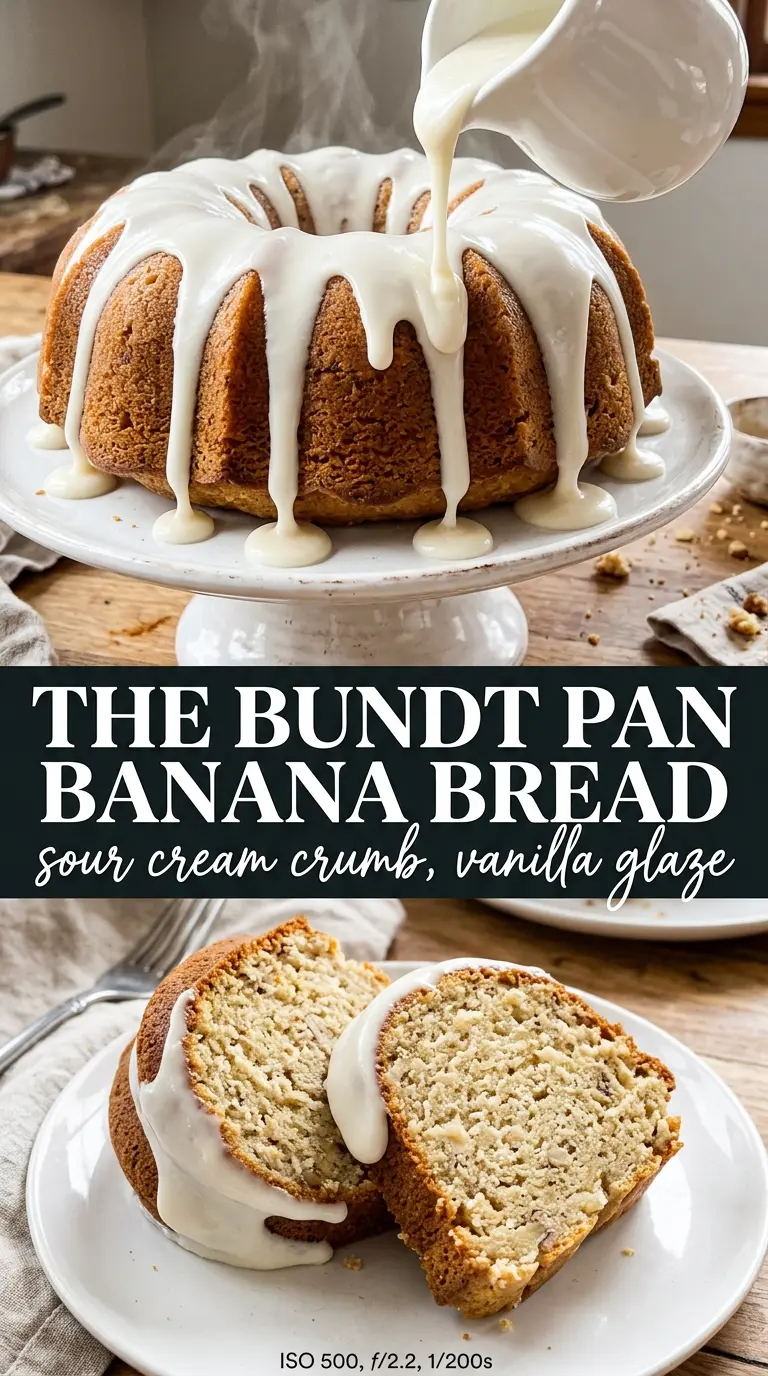
Moist banana bread gets a little more dramatic in a bundt pan. The ridges bake up with a deep golden crust while the center stays tender and plush, and the cream cheese glaze settles into every curve instead of sliding right off the top. It slices cleanly, looks bakery-made, and still tastes like the banana bread you want with coffee or after dinner.
The sour cream is doing more than adding tang. It keeps the crumb soft for days and gives the batter enough richness that the loaf doesn’t dry out in the taller bundt shape. Bananas bring the flavor, but the real difference here is balance: enough flour to hold the structure, enough butter for a rich crumb, and just enough leavening to lift the cake without turning it airy.
Below you’ll find the little things that matter most: how to keep the bundt from sticking, what tells you it’s baked through, and how to get the glaze thick enough to cling without turning runny.
The crumb stayed unbelievably moist, and the glaze settled into the bundt ridges just like the picture. I baked mine for 54 minutes and it released cleanly after cooling for 20 minutes.
Love a bakery-style sour cream banana bread bundt? Save this one for the day you want a moist crumb and thick cream cheese glaze.
The Bundt Pan Trick That Keeps Banana Bread from Baking Up Dry
A bundt pan changes the whole game here. The batter has more surface area than a standard loaf, which means it can dry out if the recipe isn’t built with enough moisture and enough fat. Sour cream solves that problem without making the bread heavy, and the banana flavor stays centered instead of getting lost in a cakey crumb.
The other thing people miss is the bake time. Bundt pans need a longer, slower bake than loaf pans, and pulling it too early leaves the middle gummy even when the edges look done. You’re looking for a deep golden top, a clean toothpick from the thickest part, and a cake that feels set when you tap the pan lightly.
- Grease and flour every ridge — Bundt pans hold onto batter in the carved details. Butter alone usually isn’t enough, so get into the grooves with a pastry brush or paper towel and dust with flour after every inch is coated.
- Sour cream — This is what keeps the crumb soft and fine. Plain Greek yogurt works in a pinch, but it brings a little more tang and a slightly firmer texture.
- Very ripe bananas — Dark speckled bananas give the deepest flavor and the best sweetness. If yours are still a little firm, roast them in the peel at 300°F until the skins blacken and the flesh softens.
- Cooling before inverting — A bundt that comes out too soon can tear, but leaving it in the pan too long traps steam and makes the crust soggy. Twenty minutes is the sweet spot.
What Each Ingredient Is Actually Doing in the Glaze and Batter
- Butter — Softened butter beats with the sugar into a light base that helps the bread bake up tender instead of dense. Use real butter here; the flavor matters in a simple banana cake like this.
- Sugar — It doesn’t just sweeten the loaf. It also helps hold moisture, which is part of why the crumb stays plush after a day or two.
- Eggs — They build structure so the bundt can hold its shape. Add them one at a time so the batter stays smooth and doesn’t curdle.
- All-purpose flour — This is the backbone of the bread. Spoon it into the measuring cup and level it off so you don’t end up with a dry, tight crumb.
- Baking soda and baking powder — The banana and sour cream need the lift from both. Soda reacts with the acidity, while baking powder gives a little extra insurance for a tall bundt.
- Cream cheese glaze — Softened cream cheese makes the glaze thick and tangy, while the milk loosens it just enough to pour. Add the milk slowly; if it gets too thin, it won’t cling to the ridges.
Mixing the Batter Without Losing the Tender Crumb
Building the Creamed Base
Start with butter and sugar until the mixture looks pale and fluffy, not just combined. That step gives the bread some lift before the flour goes in. If the butter is too cold, it won’t aerate properly; if it’s melted, the loaf will bake up dense and greasy. Add the eggs one at a time so the batter stays smooth and emulsified.
Bringing in the Bananas and Sour Cream
Stir the mashed bananas and sour cream into the creamed base until the batter looks evenly speckled and glossy. This is where the moisture comes from, so don’t rush to the flour yet. If the bananas are still chunky, mash them more first; big lumps can leave wet pockets in the finished cake. The batter should look thick, but still spoonable.
Finishing the Batter Gently
Fold in the dry ingredients just until the flour disappears. Overmixing is the fastest way to make banana bread tough, especially in a bundt pan where you want a clean slice and a tender center. A few streaks of flour are better than beating the batter smooth. Once it looks mostly uniform, stop stirring and get it into the pan.
Baking, Cooling, and Glazing
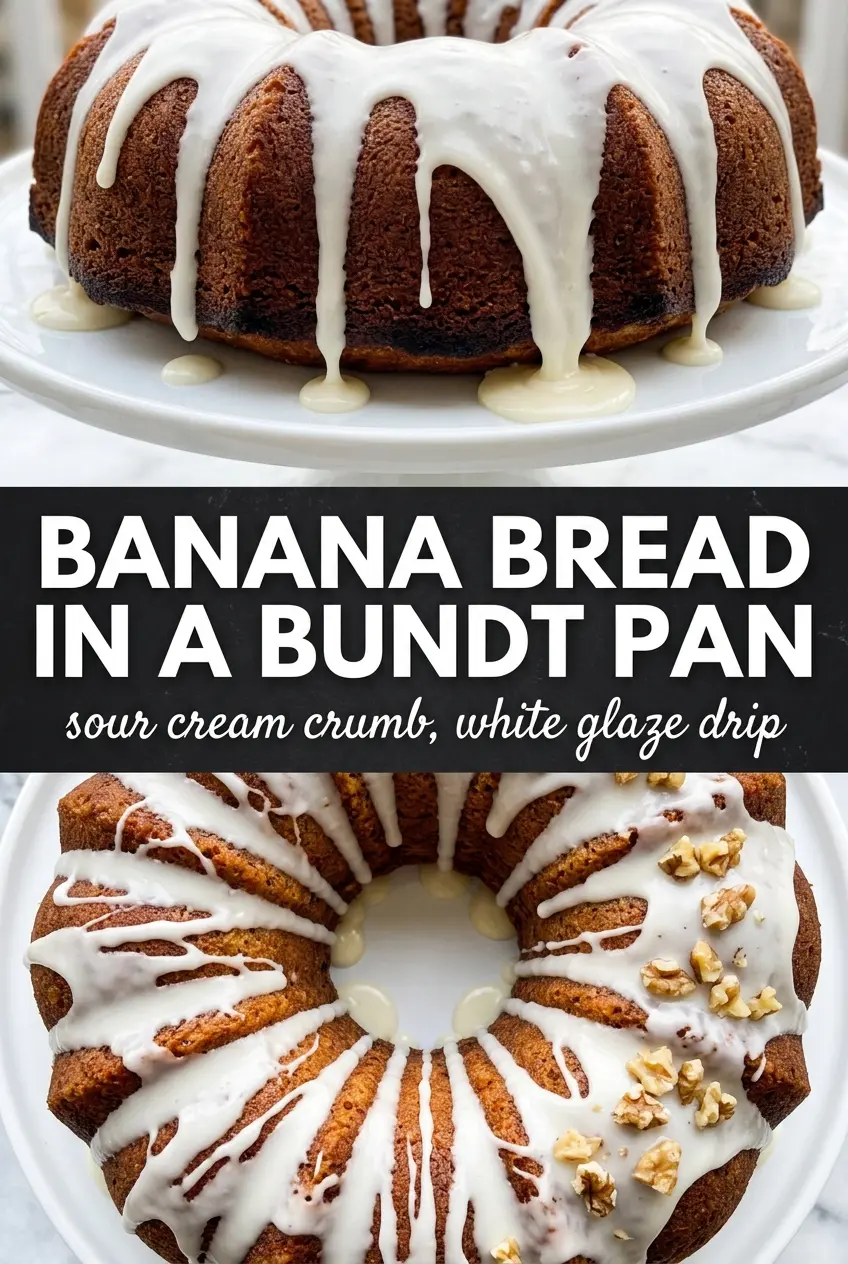
Bake until the top is deeply golden and a toothpick from the thickest part comes out clean or with just a few moist crumbs. Let it cool in the pan for 20 minutes, then invert it onto a rack and cool all the way before glazing. If you glaze too early, the icing melts into the cake instead of sitting in those pretty ridges. A fully cooled bundt gives you that thick, bakery-style drip.
How to Adapt This Bundt Banana Bread for Different Kitchens
Dairy-Free Swap
Use a plant-based butter and replace the sour cream with a thick dairy-free yogurt. The crumb will still be moist, but the glaze won’t have the same tang unless you use a dairy-free cream cheese that you already trust for frosting.
Gluten-Free Version
A good 1:1 gluten-free baking blend works here, especially one with xanthan gum already mixed in. The batter may need a few extra minutes in the oven, and the finished crumb will be a little more delicate, so let it cool fully before slicing.
Walnut or Pecan Add-In
Fold in up to 3/4 cup chopped nuts for crunch and a little toastiness. Toast them first if you want the flavor to stand out; raw nuts can taste flat against the sweet banana batter.
Make It Without the Glaze
The bread stands on its own if you want a less sweet finish. Dust it with powdered sugar after cooling, or leave it plain for breakfast and add the glaze only when you’re serving it as dessert.
Storage and Reheating
- Refrigerator: Store covered for up to 5 days. The glaze firms up in the fridge, but the crumb stays moist.
- Freezer: Freeze the unfrosted bundt, tightly wrapped, for up to 2 months. Thaw overnight before glazing so the icing doesn’t slide off a cold surface.
- Reheating: Warm slices for 10 to 15 seconds in the microwave. Don’t overheat them or the bread turns rubbery and the glaze melts away completely.
Answers to the Questions Worth Asking
Sour Cream Banana Bread (Bundt Pan)
Ingredients
Equipment
Method
- Preheat the oven to 350°F. Thoroughly grease and flour a 10-cup bundt pan, coating every crevice so the ridges release cleanly.
- Beat the softened butter and sugar until light and fluffy. The mixture should look paler and slightly airy before moving on.
- Add the eggs one at a time, mixing well after each addition. Continue until the batter looks smooth and cohesive.
- Mix in the vanilla extract. Stir just until evenly distributed.
- Stir in the mashed bananas and sour cream. The batter will thicken and turn glossy.
- Fold in the all-purpose flour, baking soda, baking powder, cinnamon, and salt until just combined. Stop as soon as no dry streaks remain—do not overmix.
- Pour the batter into the prepared bundt pan. Spread it evenly so it bakes into a uniform dome and center hole.
- Bake for 50–60 minutes at 350°F until a toothpick comes out clean and the top is deeply golden. Look for a firm, springy surface with rich brown edges.
- Cool the bread for 20 minutes before inverting. The loaf should release with defined ridges, not smear.
- Glaze once fully cooled by mixing the cream cheese, powdered sugar, milk, and vanilla until smooth. Spoon over the bundt so the thick glaze cascades down every ridge.