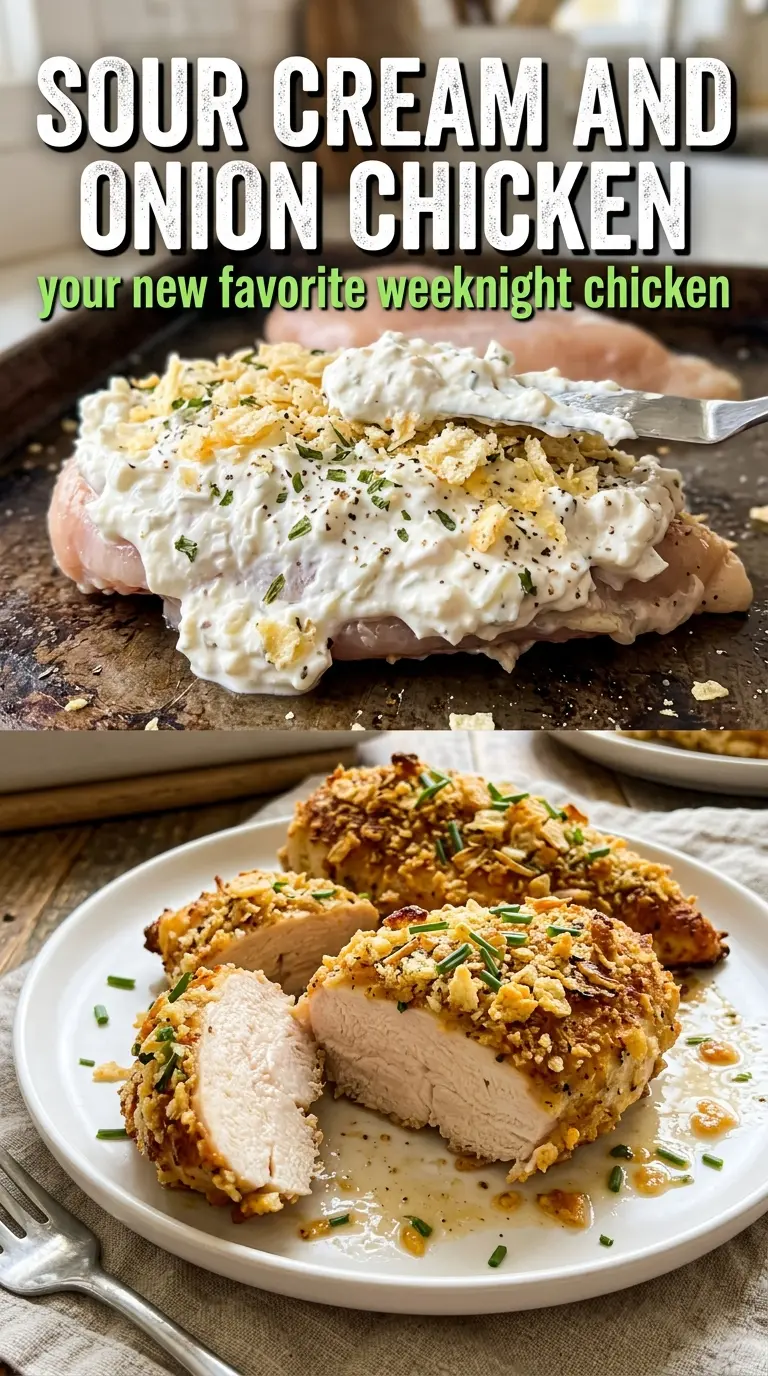
Sour Cream and Onion Chicken lands with the kind of contrast that keeps people coming back: a thick, tangy coating under a crisp, golden onion crust, with juicy chicken underneath that stays tender instead of drying out. The topping bakes into a puffy shell that tastes like the best parts of a classic chip-and-dip combo, only built into dinner.
What makes this version work is the layering. The sour cream mixture acts like both marinade and glue, so the chicken stays protected while the crushed crispy onions and Parmesan bake into a crust that actually sticks. If you’ve had onion-topped chicken where the coating slid off or went soggy, the fix is in the order: creamy layer first, crunchy layer pressed on firmly, then straight into a hot oven.
Below you’ll find the small details that keep the crust crisp, the chicken juicy, and the flavor balanced instead of salty. There’s also a few practical notes on substitutions and storage, because this is the kind of recipe that gets made again once it earns its place on the table.
The onion topping got beautifully crisp and the chicken stayed juicy all the way through. I was worried the sour cream would make it soggy, but the crust held up even after I plated it.
Save this Sour Cream and Onion Chicken for the nights when you want a golden crust, a tangy creamy base, and barely any cleanup.
The Coating Needs to Be Thick Enough to Stay Put
The biggest mistake with this kind of chicken is treating the sour cream layer like a light smear. It needs to be thick enough to anchor the onion crust and protect the chicken as it bakes. If the coating is too thin, the crumbs slide off before the top browns, and the chicken can dry out before the crust sets.
Press the topping on with your fingertips or the back of a spoon. That little bit of pressure helps the crushed fried onions and Parmesan cling instead of falling into the pan. The oven does the rest, but only if the top starts out in one solid layer.
- Chicken breasts — Use pieces that are close in size so they finish together. If one breast is much thicker, pound it to an even thickness or it will still be raw in the center when the crust is done.
- Sour cream — Full-fat sour cream gives the best body and the tangiest finish. Plain Greek yogurt works in a pinch, but it bakes up a little sharper and less plush.
- Onion soup mix — This brings the seasoning base and the onion flavor in one shot. If you swap it out, you’ll need to rebuild both the salt and the savory depth.
- Crispy fried onions — Crush them enough to make a coarse topping, not powder. A few bigger pieces give you those crunchy craggy spots that brown best.
- Parmesan — This adds salt, nuttiness, and helps the crust set. Pre-grated works, but freshly grated melts and browns with a cleaner texture.
What Each Ingredient Is Actually Doing in This Chicken Recipe
- Chicken (the foundation) — Quality chicken starts with good sourcing. Even simple seasoning tastes better on good meat.
- Olive oil or butter (the cooking medium) — Fat carries flavors and keeps chicken from drying. It’s also what makes food taste delicious.
- Salt and pepper (proper seasoning) — Season generously; underseasoned chicken tastes bland. Apply inside and outside so the seasoning penetrates.
- Garlic and onion (the aromatic base) — These add depth and complexity. They sweeten slightly when cooked, becoming mellow and round.
- Acid (lemon, vinegar, wine, or tomato) — This brightens the dish and prevents it from tasting heavy. It also helps balance rich sauces.
- Fresh herbs or spices (the character) — These define the personality of the dish. Choose ones that complement your other flavors.
- Cream or sauce base (optional richness) — A sauce keeps the chicken moist and flavorful. Make sure it’s balanced with acid and herbs.
- Proper cooking technique (the final step) — Whether baking, pan-searing, or simmering, the right method ensures juicy, tender results without drying out the meat.
Getting the Crust Golden Before the Chicken Overcooks
Building the Creamy Base
Mix the sour cream and onion soup mix until the seasoning disappears into the base. You want a smooth, spreadable coating with no dry pockets of soup mix left behind, because those little clumps can taste harsh once baked. Season the chicken first, then coat it generously so every part has a layer of that mixture. Don’t scrape it on too thin; it should look like a proper blanket, not a stain.
Pressing On the Crunch
Combine the crushed fried onions, Parmesan, and garlic powder in a separate bowl, then press that mixture firmly onto the top of each breast. The goal is a rough, craggy surface that will toast instead of steaming. If you just sprinkle it on, most of it falls off in the dish. Firm pressure is what gives you that crackled, bakery-style top.
Baking to the Right Temperature
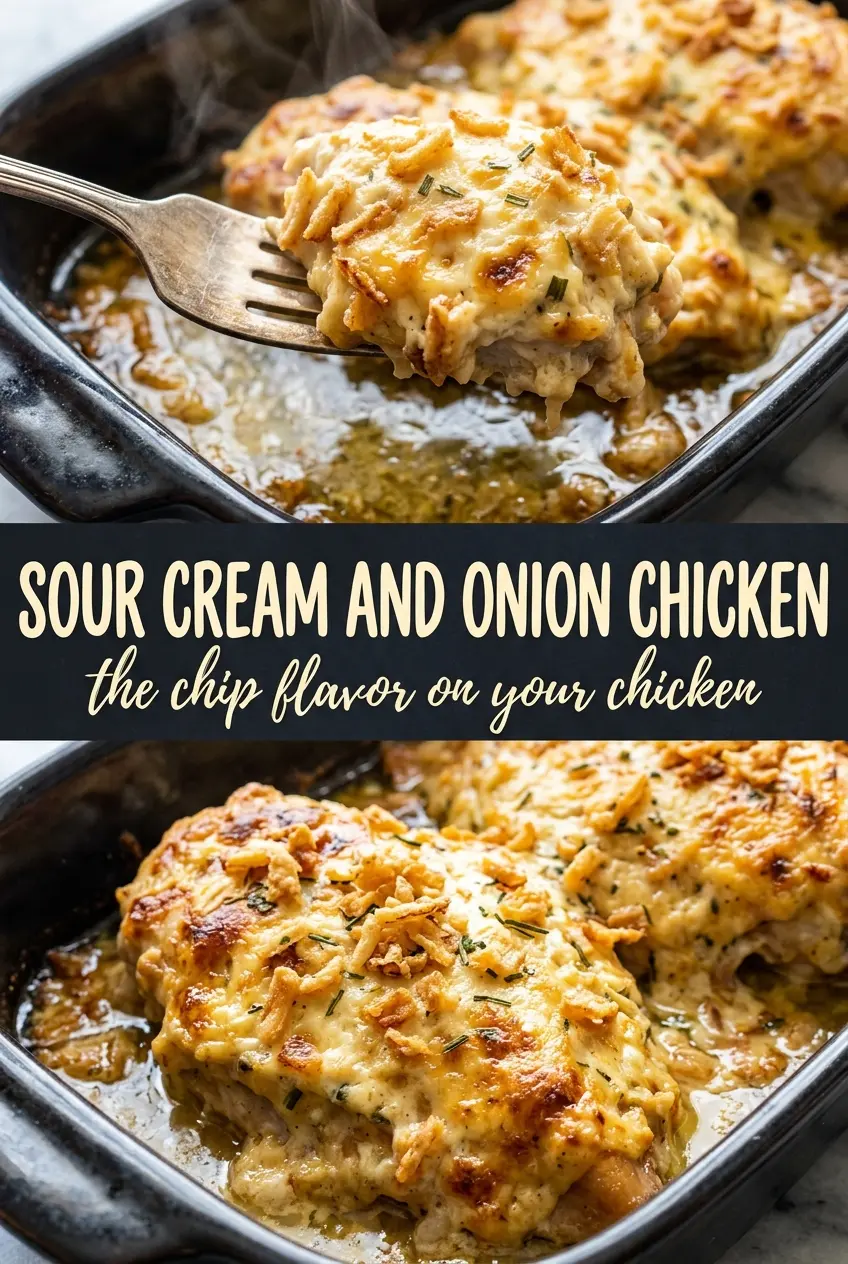
Bake at 375°F until the topping is deep golden and the thickest part of the chicken reaches 165°F. The crust should look set and a little puffed, and the edges will darken first. If the topping is browning too quickly before the chicken is done, tent the dish loosely with foil for the last few minutes. Let it rest briefly before serving so the juices settle and the coating stays intact.
Three Ways to Make This Recipe Fit Your Kitchen
For extra juicy results with thick chicken breasts
Pound the chicken to an even thickness before coating it. That keeps the ends from drying out while the center finishes, and it helps the topping bake evenly from edge to edge.
For a lighter, tangier version
Swap the sour cream for plain Greek yogurt. The chicken still stays creamy and the topping still browns well, but the flavor turns sharper and the sauce bakes a little less rich.
For a gluten-free version
Use a gluten-free onion soup mix and certified gluten-free crispy onions. The texture stays close to the original, but you’ll want to check the seasoning on the soup mix because some gluten-free versions run saltier than standard packets.
For a more pronounced onion bite
Add a tablespoon of finely minced sautéed onion to the sour cream mixture. It deepens the onion flavor without changing the crust, but it does add a touch of moisture, so keep the coating thick.
Storage and Reheating
- Refrigerator: Store leftovers in an airtight container for up to 3 days. The crust softens a bit, but the flavor holds well.
- Freezer: It freezes, though the onion topping loses some crunch. Freeze cooled portions tightly wrapped, then thaw in the fridge before reheating.
- Reheating: Reheat in a 350°F oven until hot in the center. The microwave makes the topping soggy, so use it only if you don’t care about the crust.
Answers to the Questions Worth Asking
Sour Cream and Onion Chicken
Ingredients
Equipment
Method
- Preheat oven to 375°F and grease a baking dish so the crust releases easily. Stop when the oven is fully up to temperature.
- Mix sour cream and onion soup mix until well combined. The mixture should look thick and cohesive.
- In a separate bowl, combine crushed crispy fried onions, Parmesan cheese, and garlic powder. Mix until the onion pieces are evenly coated with the cheese and seasonings.
- Season boneless skinless chicken breasts with salt and pepper to taste. Pat the surface lightly so seasoning adheres.
- Coat each chicken breast thickly with the sour cream mixture. Use enough coating so the top looks fully covered.
- Press the onion-Parmesan mixture firmly onto the top of each sour cream-coated breast. Press down so it clings and forms a solid layer.
- Bake for 25-28 minutes at 375°F until the topping is golden and the internal temperature reaches 165°F. Look for a browned, puffy crust with a crackled surface.
- Garnish with extra crispy fried onions and fresh chives. Add them right after baking so they stay bright and crisp.