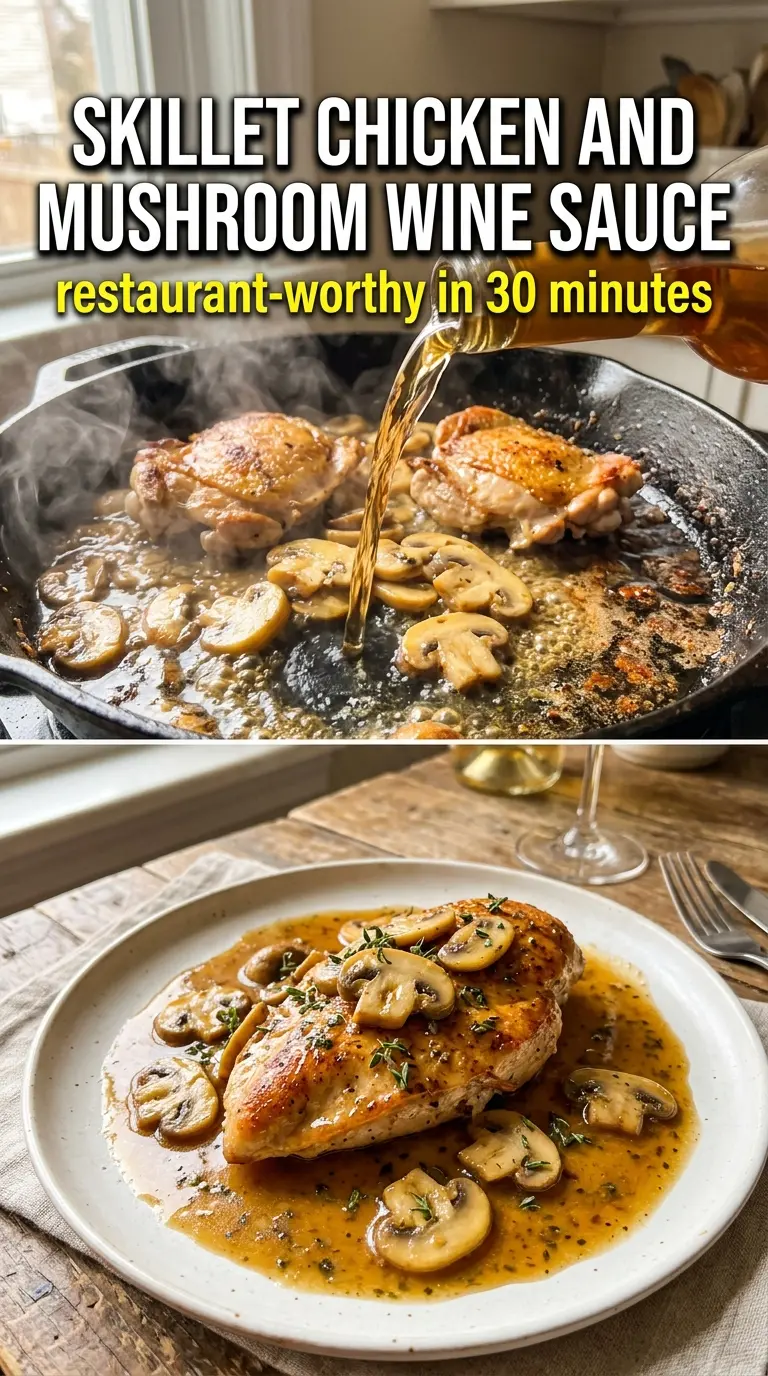
Golden-seared chicken breasts tucked into a dark mushroom wine sauce earn their place on the table fast. The chicken stays juicy, the mushrooms go deeply savory, and the sauce finishes silky enough to coat a spoon without turning heavy. It tastes like you spent a lot longer at the stove than you did.
The key is building the sauce in layers: first the browned chicken, then the mushrooms cooked until they give up their moisture and start to take on color, then the wine to loosen every caramelized bit from the pan. That reduction matters. If you rush past it, the sauce tastes flat instead of rounded and glossy.
Below, I’ve included the small details that keep the sauce smooth and the chicken tender, plus a few substitutions that still keep the dish in the same cozy, elegant lane. If you’ve ever had a mushroom cream sauce turn thin or greasy, the fix is here.
The sauce reduced down beautifully and clung to the chicken instead of running all over the plate. My husband said the mushrooms tasted like they came from a restaurant.
Save this skillet chicken and mushroom wine sauce for the nights when you want a glossy pan sauce that tastes rich without much fuss.
The Secret to a Sauce That Stays Silky Instead of Splitting
Most chicken-and-mushroom skillet sauces break when the pan is too hot after the cream goes in, or when the liquid never reduces enough before the dairy is added. This version works because the wine cooks down first, the broth adds body, and the cream goes in last over a steady simmer, not a hard boil. That order gives you a sauce that turns glossy instead of greasy.
The mushrooms matter here too. If they go into a crowded pan, they steam and turn rubbery before they brown. Give them enough space and leave them alone long enough for the edges to color; that browning is part of the sauce’s depth, not just a garnish for the pan.
- Chicken breasts — Boneless, skinless breasts work because they sear quickly and stay elegant under the sauce. If yours are thick on one end and thin on the other, pound them to even thickness so the smaller end doesn’t dry out while the center cooks.
- Dry red wine — This is the backbone of the sauce, not just a splash for aroma. Use a wine you’d drink, because the flavor concentrates as it reduces. White wine works in a lighter, brighter version, but red gives you that deeper Marsala-style color and savoriness.
- Cremini mushrooms — They hold up better than white button mushrooms and bring a fuller, earthier flavor. Slice them thick enough to stay meaty after simmering. If all you have are button mushrooms, they’ll still work; the sauce just lands a little milder.
- Dijon mustard — A teaspoon doesn’t make the sauce taste mustardy. It sharpens the cream and keeps the wine reduction from tasting flat. This is one of those ingredients that disappears into the background but makes the whole pan taste finished.
What Each Ingredient Is Actually Doing in This Chicken Recipe
- Chicken (the foundation) — Quality chicken starts with good sourcing. Even simple seasoning tastes better on good meat.
- Olive oil or butter (the cooking medium) — Fat carries flavors and keeps chicken from drying. It’s also what makes food taste delicious.
- Salt and pepper (proper seasoning) — Season generously; underseasoned chicken tastes bland. Apply inside and outside so the seasoning penetrates.
- Garlic and onion (the aromatic base) — These add depth and complexity. They sweeten slightly when cooked, becoming mellow and round.
- Acid (lemon, vinegar, wine, or tomato) — This brightens the dish and prevents it from tasting heavy. It also helps balance rich sauces.
- Fresh herbs or spices (the character) — These define the personality of the dish. Choose ones that complement your other flavors.
- Cream or sauce base (optional richness) — A sauce keeps the chicken moist and flavorful. Make sure it’s balanced with acid and herbs.
- Proper cooking technique (the final step) — Whether baking, pan-searing, or simmering, the right method ensures juicy, tender results without drying out the meat.
Building the Pan Sauce in the Right Order
Searing the Chicken to Set the Base
Season the chicken generously before it hits the pan so the surface has enough flavor to stand up to the sauce. Cook it over medium-high heat until the outside is deeply golden and the meat reaches 165°F in the thickest part, then move it out of the skillet. If the chicken is pale, the sauce won’t have the same depth because you miss the browned bits left behind in the pan.
Letting the Mushrooms Brown, Not Sweat
Melt the butter in the same skillet and add the mushrooms in a single layer if you can. At first they’ll release liquid; keep cooking until that liquid evaporates and the mushrooms start to sizzle and turn a shade darker. If you stop too soon, they taste watery and the sauce ends up thin instead of rich.
Reducing the Wine Before the Cream Goes In
Add the garlic for just a minute, then pour in the wine and scrape the bottom well. Let it simmer until the sharp alcohol smell cooks off and the liquid looks slightly syrupy. This is the moment that gives the sauce its backbone; if you add the broth and cream before the wine reduces, the finished sauce tastes loose and less focused.
Finishing the Sauce to a Spoon-Coating Texture
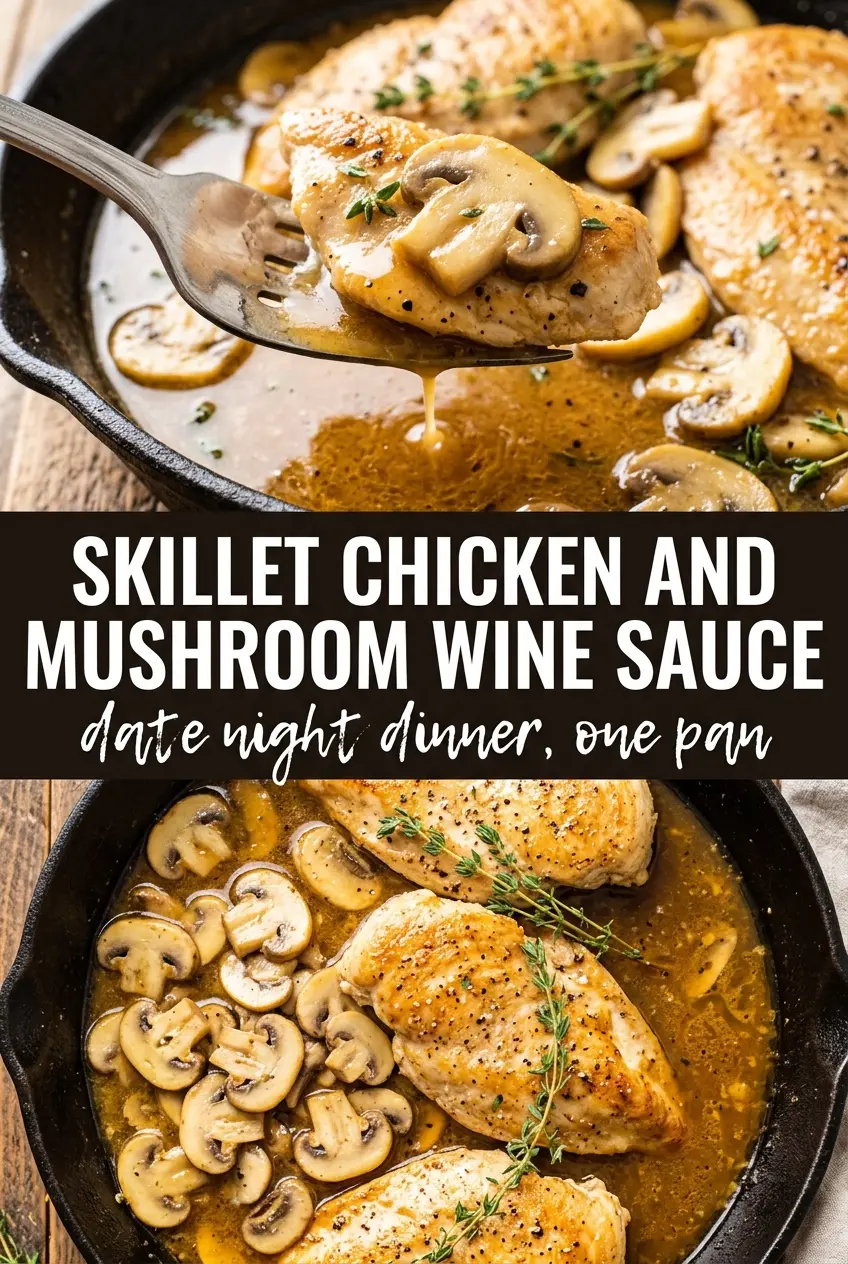
Stir in the broth, cream, Dijon, and thyme, then simmer until the sauce thickens enough to cling to the back of a spoon. The sauce should look glossy and move slowly across the pan, not bubble furiously. Return the chicken only after the sauce has thickened a bit, so the meat warms through without overcooking.
How to Adapt This Chicken and Mushroom Wine Sauce
Make it dairy-free without losing body
Swap the butter for olive oil and use full-fat coconut milk or an unsweetened dairy-free cooking cream in place of the heavy cream. Coconut milk gives the sauce a slight sweetness, so keep the Dijon in the pan to balance it. The sauce will still coat the chicken, but it won’t have quite the same rich finish as cream.
Use white wine for a lighter, brighter pan sauce
Dry white wine makes the sauce more delicate and a little less earthy. It still deglazes the pan and gives you that same silky reduction, but the flavor lands closer to a classic French chicken skillet than a Marsala-style version. Use the same amount and reduce it the same way.
Make it gluten-free without changing the method
This recipe is naturally gluten-free as written as long as your chicken broth is certified gluten-free. Keep an eye on the broth label, since that’s the ingredient most likely to hide a problem. The texture and technique stay exactly the same.
Turn it into a mushroom-heavy skillet dinner
Use 12 ounces of mushrooms instead of 8 if you want more of that savory pan sauce flavor in every bite. You’ll need a minute or two longer to brown them, but the payoff is a deeper mushroom presence and a thicker-looking skillet. The chicken stays the same.
Storage and Reheating
- Refrigerator: Store in an airtight container for up to 3 days. The sauce may thicken as it chills, which is normal.
- Freezer: Freeze for up to 2 months, but note that cream sauces can separate a little after thawing. If you want the best texture, freeze the chicken and sauce in a shallow container and reheat gently.
- Reheating: Warm it slowly in a skillet over low heat with a splash of broth or water. High heat is what turns the cream grainy and tightens the chicken too much.
Questions I Get Asked About This Recipe
Skillet Chicken and Mushroom Wine Sauce
Ingredients
Equipment
Method
- Season chicken breasts generously with salt, pepper, garlic powder, and dried thyme, then pat to help the seasoning adhere. Sear in olive oil in a large skillet over medium-high heat for 5-6 minutes per side until golden and cooked through to 165°F; remove to a plate.
- Melt butter in the same pan, then add sliced cremini mushrooms and cook over medium-high heat for 5-6 minutes until deeply golden. Stir in minced garlic and cook for 1 minute.
- Pour in the dry red wine, deglaze by scraping up all browned bits from the pan, and simmer for 3 minutes until slightly reduced. You should see the liquid darken and loosen the fond.
- Add chicken broth, heavy cream, Dijon mustard, and fresh thyme leaves, then simmer for 5-6 minutes until the sauce thickens. The sauce should look glossy and coat the back of a spoon.
- Return the chicken breasts to the pan and spoon the mushroom wine sauce over each breast until evenly coated. Garnish with fresh thyme sprigs and serve, letting a bit of dark sauce pool around the chicken.