Golden chicken breasts tucked into a glossy mushroom wine sauce earn their place in the dinner rotation fast. The chicken stays juicy because it gets seared first, then finished gently in the sauce instead of being left to dry out on its own. The mushrooms bring that deep, browned savoriness that makes the whole skillet taste like it took a lot more effort than it did.
The part that matters most here is the pan build. You want the mushrooms to go from pale and squeaky to deeply browned before the wine hits, because that color is what gives the sauce its backbone. The Dijon doesn’t make this taste like mustard; it sharpens the cream and keeps the sauce from feeling flat. A good dry red wine gives the sauce more depth, but a dry white works if that’s what you have open.
Below, I’ve included the timing cues that keep the chicken tender and the sauce silky, plus a few practical swaps for when you want to change the direction without losing what makes the dish work.
The sauce thickened up beautifully and never turned greasy, and the mushrooms picked up all that flavor from the pan. I used dry white wine and it still tasted rich and balanced.
Save this skillet chicken and mushroom wine sauce for a night when you want a glossy pan sauce that tastes like it came from a restaurant.
The Sear Matters More Than the Sauce
The biggest mistake with skillet chicken is crowding the pan or moving it too soon. Chicken breast needs a real sear to develop flavor, and that browned crust also keeps the meat from tasting boiled once the sauce goes in. If the pan is too busy, the chicken steams and the fond you need for the wine sauce never really forms.
Let the chicken sit undisturbed until it releases on its own and the surface turns a deep gold. The same goes for the mushrooms. If you rush them, they leak moisture and the sauce ends up thinner and flatter. Browned mushrooms plus browned chicken bits are what give this dish its depth.
What Each Ingredient Is Actually Doing in This Skillet
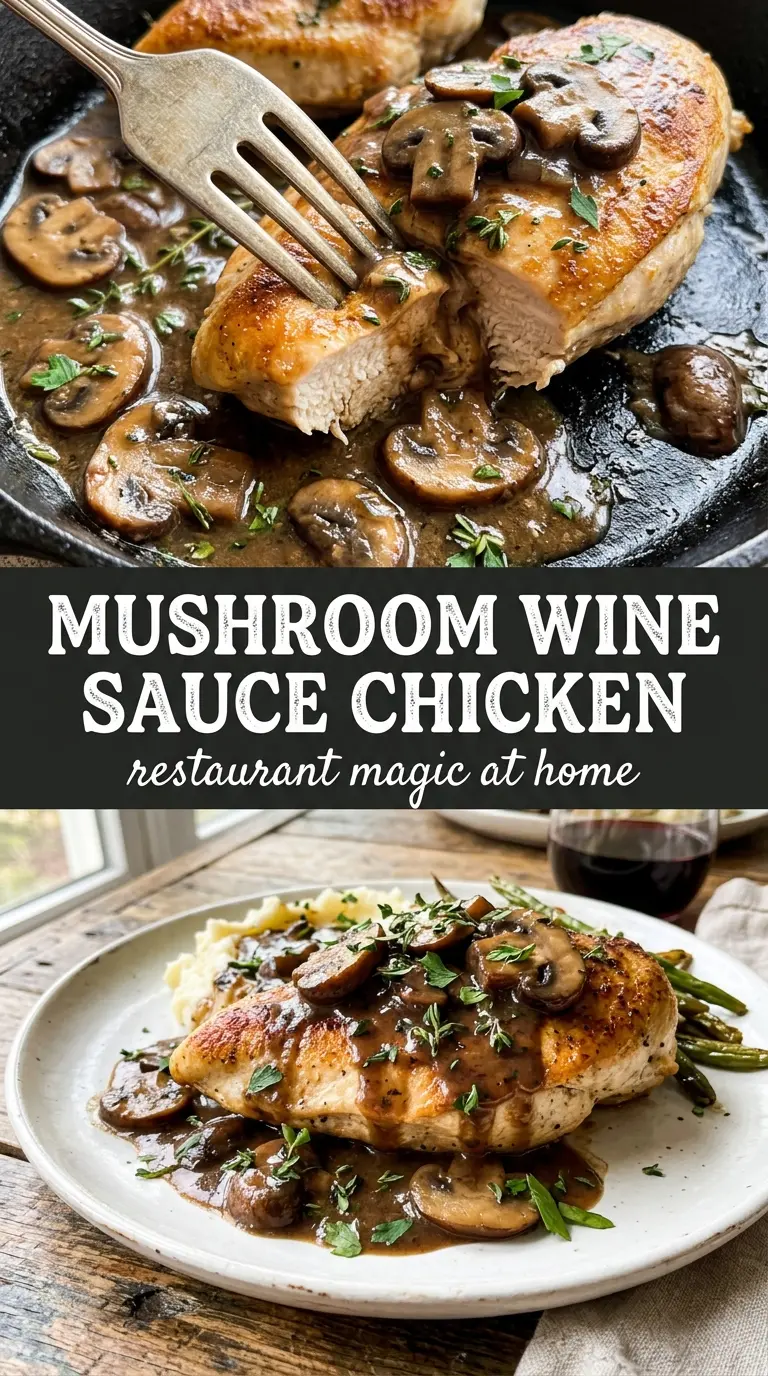
- Chicken breasts — These cook quickly and stay elegant on the plate, but they dry out fast if you overcook them. Pull them as soon as they reach 165°F, then let the sauce finish the job of warming them through.
- Cremini mushrooms — These give the sauce its earthy, meaty base. White button mushrooms work in a pinch, but they’re milder and don’t brown with the same depth.
- Dry red wine — This is where the sauce gets its backbone. Use a wine you’d actually drink, because harsh wine tastes harsher after reduction; if you want a lighter, brighter sauce, dry white wine works too.
- Heavy cream — This softens the wine and turns the pan juices into a silky sauce. Half-and-half can split more easily and won’t cling as well, especially if the sauce boils hard.
- Dijon mustard — A teaspoon is enough to round out the cream and keep the sauce from tasting one-note. It doesn’t make the dish taste mustardy; it just gives the sauce a little edge.
- Fresh thyme — Dried thyme seasons the chicken, but fresh thyme at the end makes the whole skillet taste alive. Add it near the finish so the flavor stays bright instead of muddy.
Building the Wine Sauce Without Breaking It
Season and Sear the Chicken First
Season the chicken generously before it ever touches the skillet, then sear it in hot olive oil until the outside is deeply golden and the center reaches 165°F. If the heat is too low, you’ll get pale chicken with no color; if it’s too high, the outside will burn before the middle is done. Once the chicken is cooked, move it out of the pan so it doesn’t keep overcooking while you build the sauce.
Brown the Mushrooms Until They Stop Looking Wet
Melt the butter and let the sliced mushrooms cook until they release moisture, then keep going until that liquid cooks off and the edges turn dark golden. This is the point that gives the sauce its mushroom flavor, so don’t stop at soft. Add the garlic after the mushrooms are browned, not before, or it can scorch and turn bitter.
Deglaze and Reduce Before the Cream Goes In
Pour in the wine and scrape the bottom of the pan until every browned bit lifts into the liquid. Let it simmer for a few minutes so the sharp alcohol smell cooks off and the flavor concentrates. Then add the broth, cream, Dijon, and thyme, and keep the heat at a steady simmer rather than a hard boil. If the sauce boils aggressively, the cream can turn grainy and the texture gets thin instead of glossy.
Return the Chicken for the Final Finish
Put the chicken back into the skillet and spoon the sauce over the top for a minute or two, just until everything is hot and coated. The sauce should lightly coat the back of a spoon and pool slowly around the chicken, not run like broth. Fresh thyme sprigs on top are more than garnish; they give the first bite a clean herbal note that cuts through the cream.
How to Adapt This for a Different Pantry or a Smaller Occasion
Use white wine for a lighter sauce
Dry white wine gives the sauce a brighter, cleaner edge and a slightly less earthy finish. It’s the better swap if you want the mushrooms and thyme to stay in the foreground instead of the wine becoming the boldest note.
Make it dairy-free without losing the pan-sauce feel
Use a good unsweetened coconut cream or an oat-based cooking cream in place of the heavy cream, then keep the simmer gentle so it doesn’t separate. The sauce will be a little less rich and more neutral, but it still clings nicely if you reduce it properly.
Swap in chicken thighs for a richer result
Boneless, skinless thighs stay juicier and taste a little richer, but they need a few extra minutes to cook through. They’re the better choice if you want more forgiving chicken and don’t mind a slightly more rustic look.
Storage and Reheating
- Refrigerator: Store leftovers in an airtight container for up to 3 days. The sauce will thicken as it chills, which is normal.
- Freezer: It freezes, but the cream sauce may separate a bit when thawed. Freeze only if you need to, and thaw it slowly in the fridge overnight.
- Reheating: Warm gently in a covered skillet over low heat with a splash of broth or water. High heat is the fastest way to turn the sauce grainy and push the chicken past tender.
Answers to the Questions Worth Asking
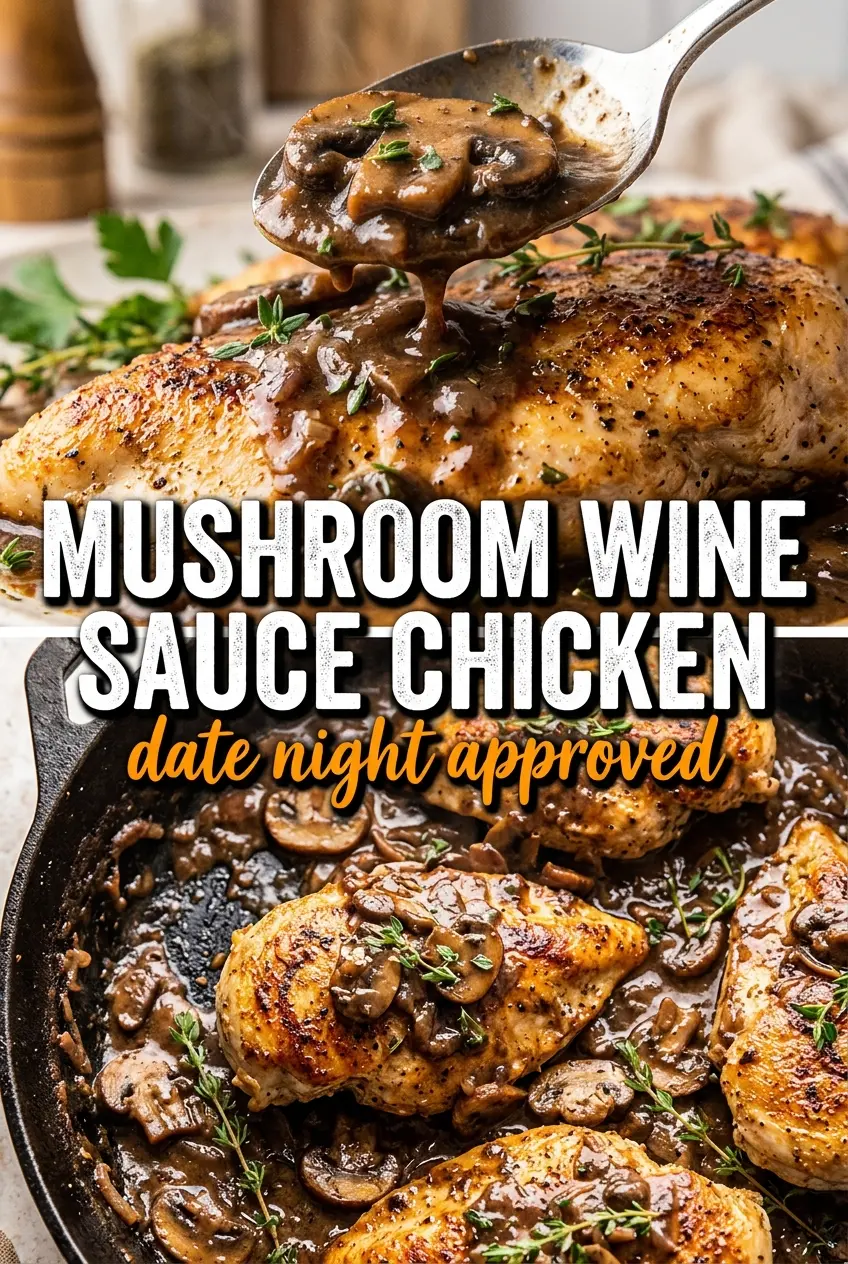
Skillet Chicken and Mushroom Wine Sauce
Ingredients
Equipment
Method
- Season the chicken breasts generously with salt, pepper, garlic powder, and dried thyme. Heat olive oil in a large skillet over medium-high heat until shimmering, then sear the chicken for 5-6 minutes per side until golden and cooked through to 165°F.
- Transfer the seared chicken to a plate. Keep it warm while you make the sauce in the same pan.
- Melt the butter in the same pan. Add the sliced cremini mushrooms and cook over medium-high heat for 5-6 minutes until deeply golden.
- Add the minced garlic and cook for 1 minute. Stir to prevent burning and keep the aromatics fragrant.
- Pour in the dry red wine and deglaze, scraping up all browned bits from the pan. Simmer for 3 minutes until the wine reduces slightly and the liquid looks darker.
- Add chicken broth, heavy cream, Dijon mustard, and fresh thyme leaves. Simmer for 5-6 minutes until the sauce thickens enough to coat a spoon.
- Return the chicken breasts to the pan and spoon the sauce over each one. Let everything warm through briefly so the chicken takes on the glossy mushroom wine sauce.
- Top with fresh thyme sprigs and serve immediately. Spoon extra sauce over the chicken for a dark, glossy finish with visible herb flecks.