Caramelized sausage, tender cabbage, and onions with a sharp Dijon-vinegar glaze make this stir fry the kind of weeknight dinner that doesn’t need anything extra to feel complete. The sausage gets browned first, which gives the whole pan a savory base, and the cabbage cooks long enough to pick up color at the edges without turning limp or watery.
What makes this version work is the order. The sausage goes in hot and comes back in at the end, so it stays meaty instead of steamed. The butter carries the onions and garlic, then the Dijon, apple cider vinegar, and brown sugar turn into a quick glaze that coats everything without making the dish heavy. A little caraway adds a subtle deli-style note, but it’s optional if you want a cleaner cabbage-and-sausage flavor.
Below you’ll find the one step that keeps the cabbage from going mushy, plus a few smart swaps if you want to change the sausage, make it lower carb, or stretch it farther for leftovers.
The cabbage kept a little bite and the sausage got those browned edges I always chase. The Dijon and cider vinegar at the end made the whole skillet taste bright instead of heavy.
Save this sausage and cabbage stir fry for the nights when you want a fast skillet dinner with browned sausage and a tangy Dijon glaze.
The Step That Keeps the Cabbage from Turning Watery
The biggest mistake with cabbage skillet dinners is crowding the pan and rushing the vegetable stage. Cabbage needs contact with the hot surface to soften and pick up those caramelized edges, not steam in its own moisture. If the skillet looks packed, cook the cabbage in two batches or use a wider pan so the heat can do its job.
The other thing that matters is when the acidic glaze goes in. Dijon and vinegar taste sharp on their own, but once they hit the warm cabbage and sausage, they round out the richness instead of slicing through it harshly. Add them after the cabbage has softened and browned in spots, not at the beginning, or you’ll slow down the browning you worked for.
- Brown the sausage first so the pan starts with flavor, not just heat.
- Let the onions go golden before the cabbage goes in; pale onions won’t give you the same depth.
- Add the vinegar mixture at the end so the cabbage keeps its texture and the sauce clings instead of evaporating.
What Each Ingredient Is Actually Doing in the Skillet
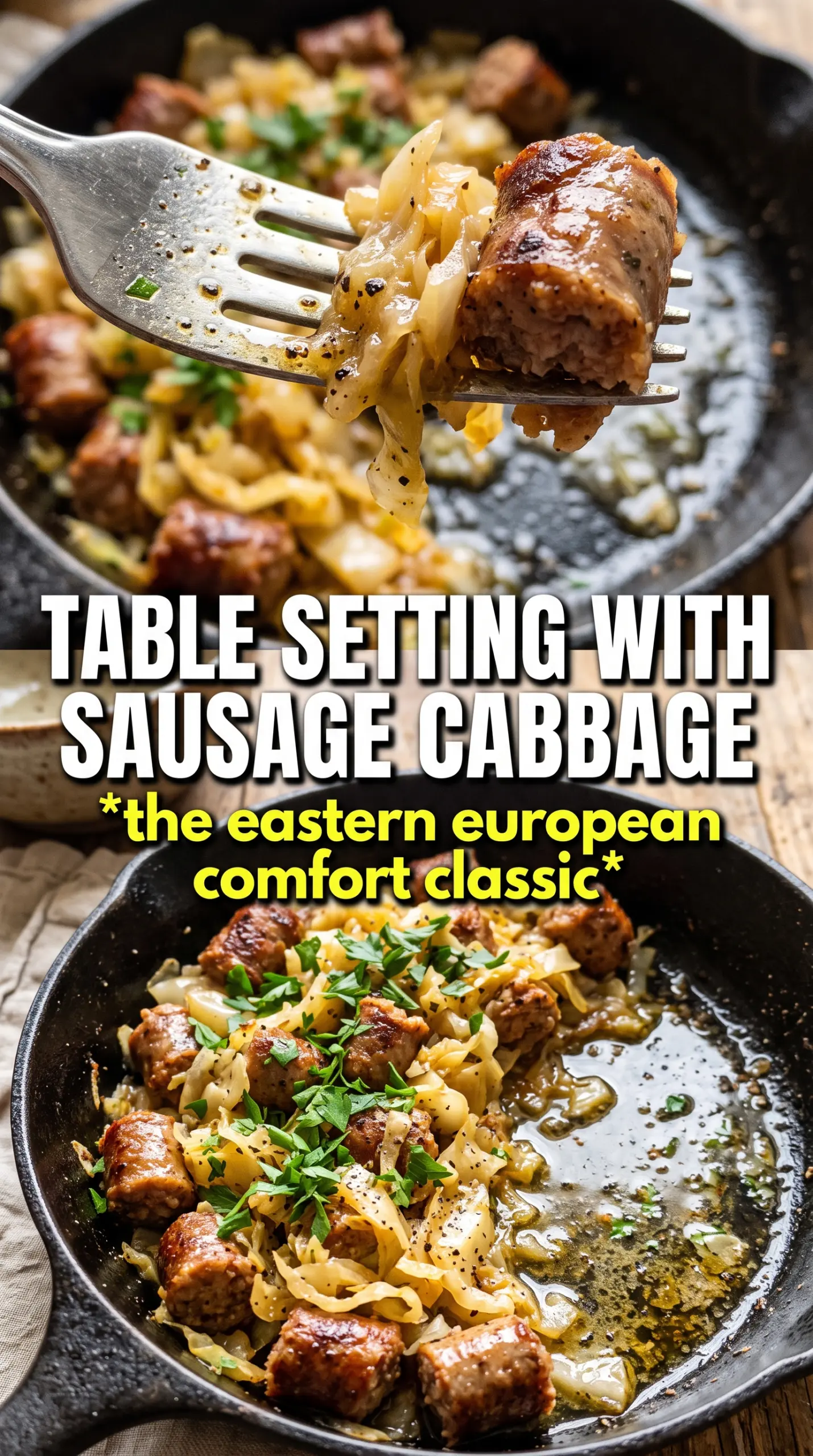
- Smoked kielbasa or andouille — This brings the main flavor and enough fat to brown well. Kielbasa is milder and a little sweeter; andouille gives the dish more heat and smoke. Use whichever style you like eating straight from the pan, because the sausage flavor stays front and center.
- Green cabbage — Green cabbage holds its shape better than napa or savoy and gets those browned edges without falling apart. A half head looks like a lot at first, but it shrinks fast once the moisture cooks off.
- Dijon mustard — Dijon emulsifies the butter and vinegar into a gloss that coats the cabbage. Yellow mustard won’t give the same depth or sharpness, so this is one place where the real thing matters.
- Apple cider vinegar — This cuts through the butter and sausage fat and keeps the pan tasting bright. White vinegar works in a pinch, but apple cider vinegar gives the sauce a softer finish.
- Brown sugar — Just enough sugar rounds out the acidity and helps the glaze cling. Leave it out if you want a sharper skillet, but the sauce will taste more aggressively tangy.
- Caraway seeds — Optional, but they give the cabbage a classic deli-style note. If you don’t like caraway, skip it entirely rather than swapping in a random spice; this dish is better clean than confused.
Building the Skillet in the Right Order
Get the Sausage Browned First
Start with a hot skillet and let the sausage slices sit long enough to get real color on the cut sides. You’re not just warming them through; you’re building the savory base for the whole dish. If they’re pale, the final skillet will taste flat. Pull them out once they’re browned and set them aside so they don’t dry out while the vegetables cook.
Let the Onions Go Soft and Golden
Melt the butter in the same pan and add the sliced onion. Cook until the onions are softened and taking on golden edges, which usually takes about five minutes. If the heat is too high, the butter will brown before the onions are ready, so keep it at a steady medium. The onion should smell sweet, not scorched.
Cook the Cabbage Until the Edges Catch
Add the garlic and caraway for just a minute, then pile in the cabbage. Stir occasionally and let it sit against the pan between turns so it can sear a little instead of steaming constantly. You want the cabbage wilted, glossy, and lightly browned at the edges. If the pan looks dry before the cabbage softens, add a small knob of butter rather than water, which only cools the skillet down.
Finish with the Tangy Glaze
Whisk the Dijon, apple cider vinegar, and brown sugar together, then pour it over the cabbage once it has color. Toss in the sausage and let everything heat through for a minute or two so the glaze coats each bite. Season at the end with salt and pepper, because the sausage already brings saltiness and you can always add more. Fresh parsley on top gives the dish a clean finish right before serving.
How to Change This Skillet Without Losing What Makes It Good
Make It with Chicken Sausage
Chicken sausage works if you want something a little lighter, but it won’t brown as deeply or leave as much fat in the pan. Add an extra teaspoon of butter before the onions go in so the vegetables still pick up flavor. You’ll get a cleaner, leaner skillet with less smoke and less richness.
Skip the Caraway for a Milder Dish
If caraway isn’t your thing, leave it out. The dish still has plenty going on from the browned sausage, onion, Dijon, and vinegar. This is a better move than replacing it with cumin or fennel, which pulls the flavor in a different direction.
Make It Lower Carb
This recipe is already naturally low in carbs, but you can skip the brown sugar if you want it even leaner. The glaze will taste sharper and less rounded, so add the sugar back only if the vinegar feels too aggressive. That tiny bit of sweetness is doing more balancing than you’d think.
Stretch It for a Bigger Crowd
Add another half head of cabbage and an extra onion if you need to feed more people without doubling the sausage. The dish will feel a little less meaty, but the glaze and browned vegetables carry it well. Use a larger skillet or two pans so the cabbage still caramelizes instead of steaming.
Storage and Reheating
- Refrigerator: Store in an airtight container for up to 4 days. The cabbage softens a bit more as it sits, but the flavor holds up well.
- Freezer: It freezes okay for up to 2 months, though the cabbage will be softer after thawing. Cool it completely first and freeze in flat portions for faster reheating.
- Reheating: Warm it in a skillet over medium-low heat with a splash of water or broth. Don’t blast it in the microwave for too long or the sausage can turn rubbery and the cabbage can collapse.
Answers to the Questions Worth Asking
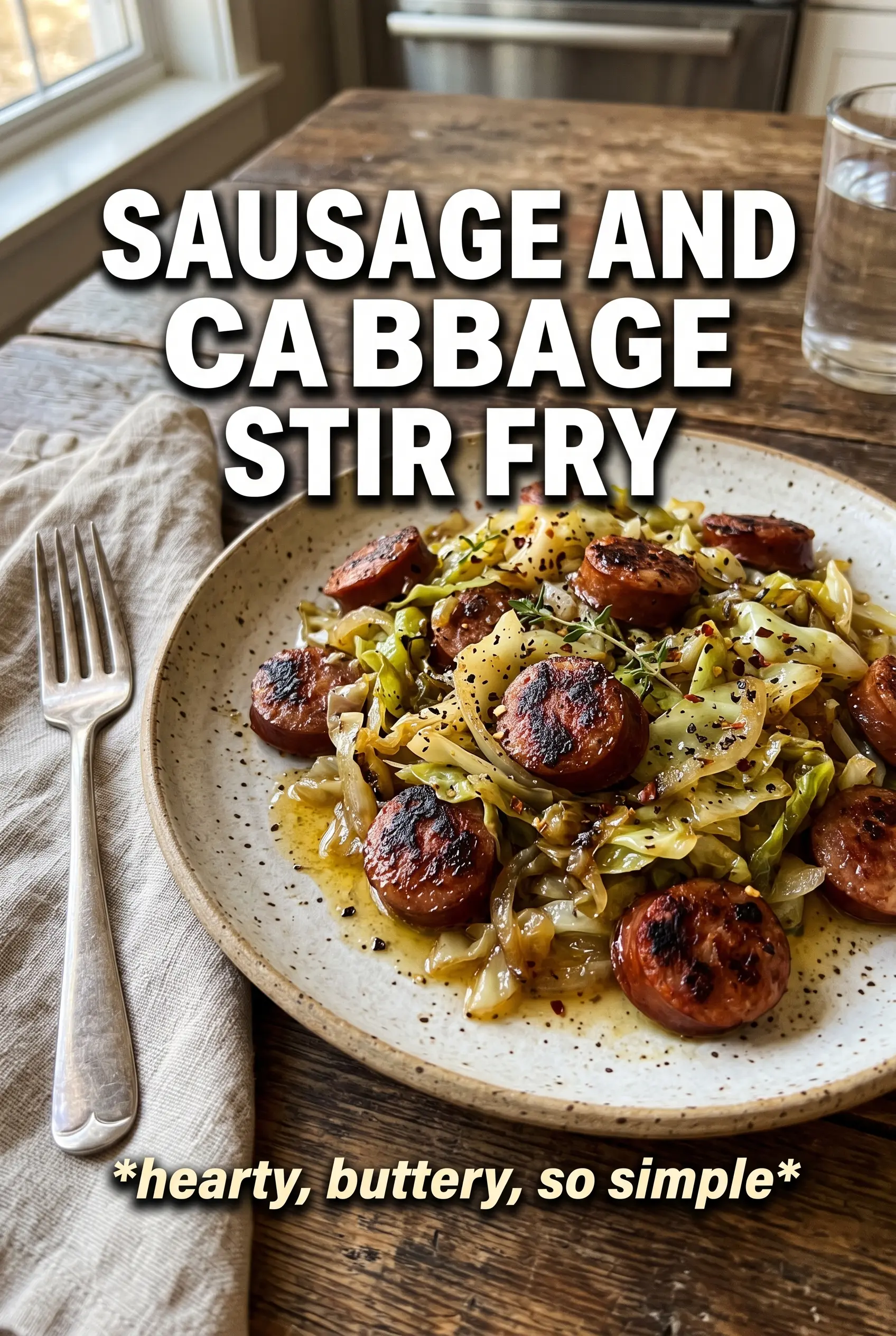
Sausage And Cabbage Stir Fry
Ingredients
Equipment
Method
- Heat a large skillet over medium-high heat and brown the sausage slices until caramelized, about 6 to 8 minutes, turning occasionally until the rounds are deeply browned. Remove sausage and set aside.
- Melt the butter in the same pan over medium heat, then sauté the onion for 5 minutes until softened and golden, stirring occasionally. Add the minced garlic and caraway seeds and cook for 1 minute until fragrant, scraping browned bits from the pan.
- Add the chopped cabbage to the skillet and cook for 8 to 10 minutes, stirring occasionally, until wilted and slightly caramelized at the edges. Keep the heat medium to maintain light browning while preventing burning.
- Whisk the Dijon mustard, apple cider vinegar, and brown sugar in a small bowl, then pour the mixture over the cabbage and let it bubble for 30 to 60 seconds. Return the sausage to the skillet and toss until the glaze coats everything evenly.
- Season with salt and pepper to taste, then top with fresh parsley and serve hot. Letting it sit for 2 minutes helps the sauce cling to the cabbage.