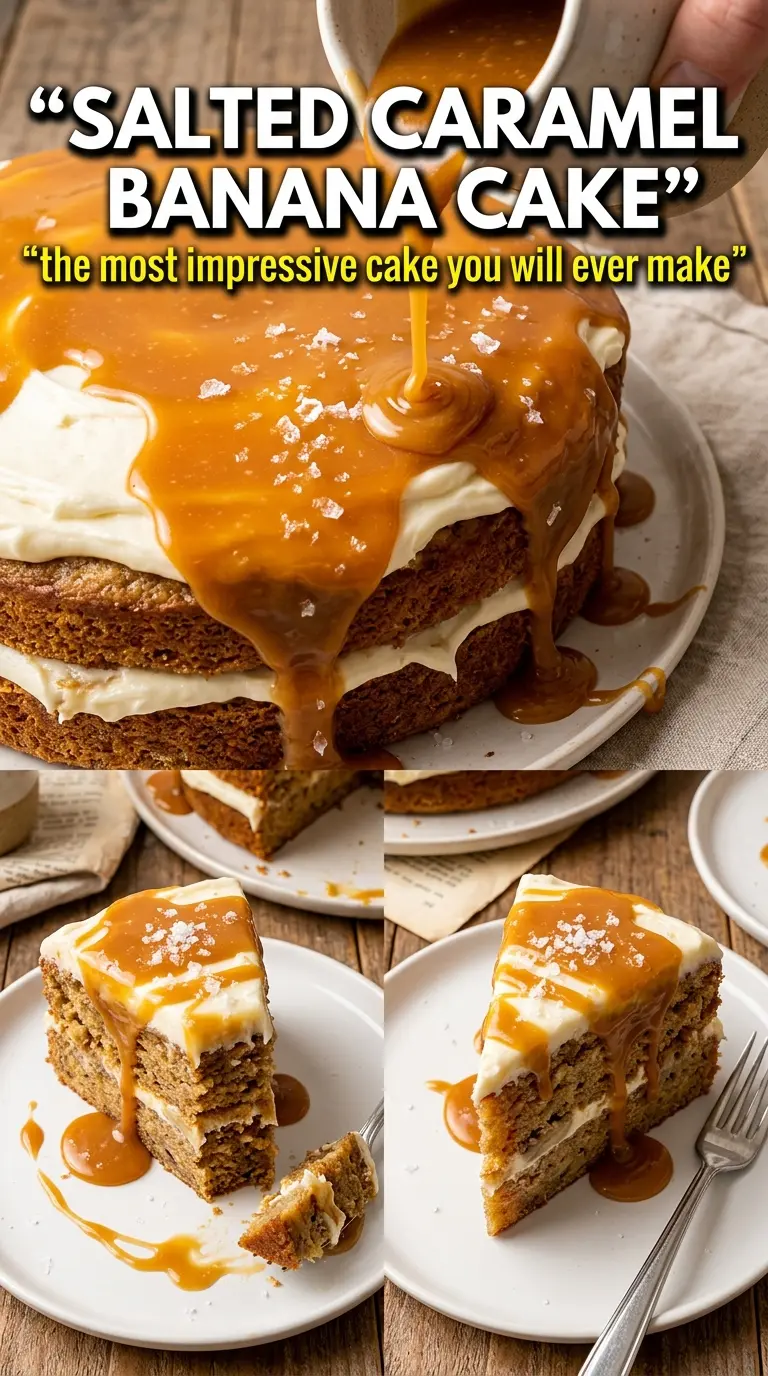
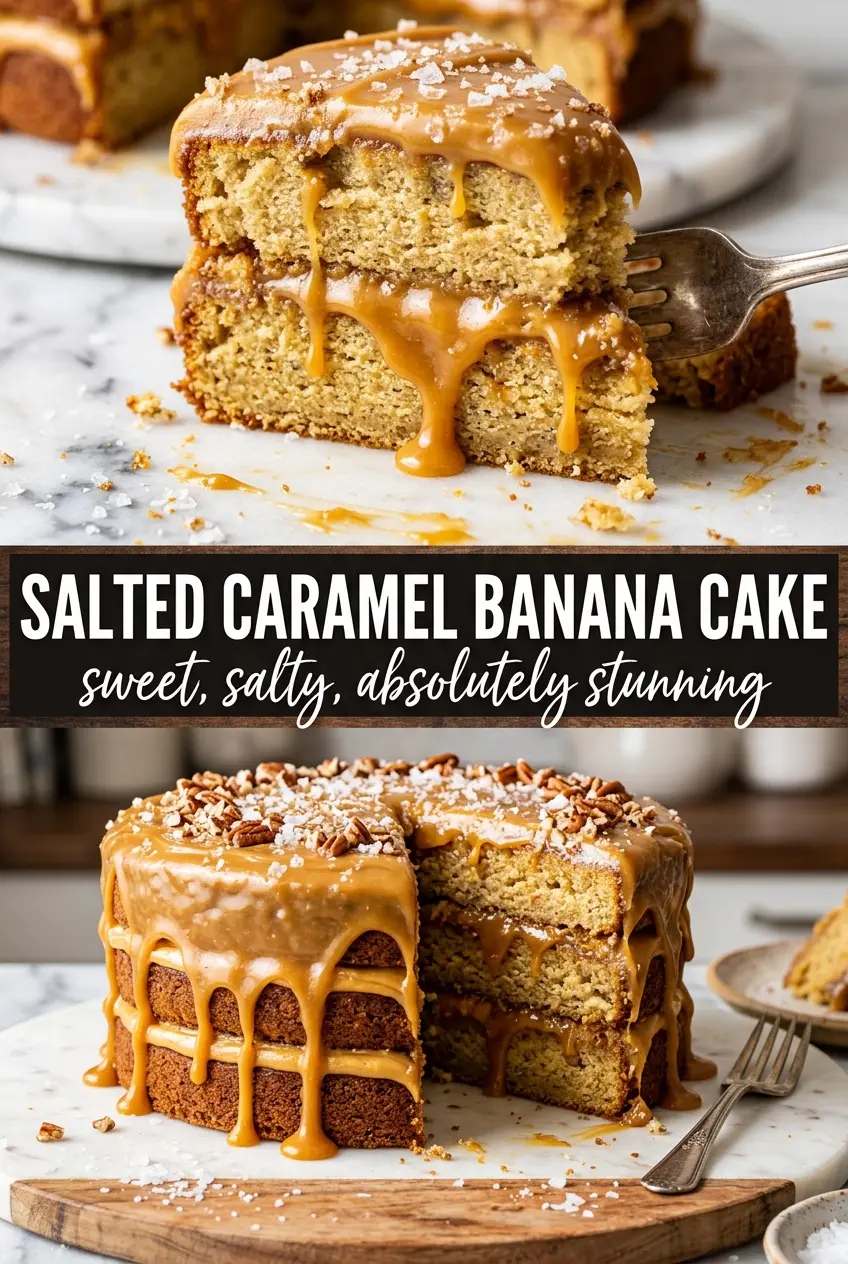
Salted caramel banana cake earns its place on the table the second you slice into it. The crumb stays soft and tender from the ripe bananas and sour cream, while the salted caramel cream cheese frosting brings enough tang to keep every bite from tipping into plain sweetness. Then the caramel drips down the sides and the flaky sea salt sharpens everything at the finish. It looks like a celebration cake, but it tastes like something you’d happily make on a regular Sunday.
The trick here is balance. Overripe bananas give the cake moisture and that deep banana flavor, but the batter still needs structure from the flour, baking powder, and baking soda so the layers rise cleanly instead of baking up dense. Sour cream keeps the crumb plush, and the caramel sauce goes into the frosting instead of the cake itself, which means the flavor stays bold without weighing down the layers. The salt on top isn’t decoration. It keeps the caramel from reading flat and one-note.
Below you’ll find the parts that matter most: how to keep the cake layers from turning gummy, why the frosting needs fully softened cream cheese, and a few smart swaps if you need to work with what you’ve got.
The cake layers came out super moist, and the salted caramel frosting stayed fluffy instead of sliding off. I used store-bought caramel and it still tasted bakery-level after the flaky salt went on top.
Save this salted caramel banana cake for the days when you want soft banana layers, fluffy caramel frosting, and a dramatic caramel drizzle.
The Difference Between a Tender Banana Cake and a Dense One
The biggest risk with banana cake is overmixing after the flour goes in. Bananas already bring a heavy, moist texture, and if you beat the batter too long, the cake turns tight instead of fluffy. Fold the dry ingredients in just until the flour disappears, then stop. A few streaks are better than a batter that has been worked to death.
The other thing that matters is how ripe the bananas are. You want them deeply speckled, soft, and fragrant. Pale bananas don’t bring enough sweetness or banana flavor, and they’ll leave the cake tasting more like vanilla cake with a hint of banana than the rich, mellow dessert this should be. The sour cream helps the layers stay soft for days, but it can’t fix under-ripe fruit.
What Each Ingredient Is Doing in the Layers and Frosting
- Ripe bananas — These give the cake its moisture and signature flavor. Mash them until mostly smooth, but don’t worry about a few small lumps; they melt into the crumb and keep the texture more interesting.
- Sour cream — This is what keeps the cake plush without making it wet. Plain full-fat Greek yogurt can stand in if needed, but the batter will be a little tangier and slightly less rich.
- Butter and sugar — Creaming them together traps air, which helps the cake rise. If the butter is too cold, the mixture won’t fluff properly and the layers will bake up heavier.
- Cream cheese — It gives the frosting its tang and enough body to hold the caramel. It needs to be fully softened or you’ll end up with little lumps that no amount of beating will smooth out.
- Salted caramel sauce — This brings the flavor the cake is named for. A good store-bought caramel works fine here, since the frosting also has cream cheese and butter to round it out.
- Flaky sea salt — Use it at the end, not in the frosting. You want those little sharp pops on top, where they can cut through the sweetness instead of disappearing into it.
How to Keep the Layers Soft, Tall, and Easy to Frost
Creaming the Base Properly
Beat the butter and sugar until the mixture looks pale and noticeably fluffy. That step gives the cake its lift before the dry ingredients ever go in. Once the eggs, vanilla, and bananas are added, the batter may look a little loose and uneven, and that’s fine. The point is to build a smooth base without overworking the fruit.
Adding the Dry Ingredients in Batches
Alternate the flour mixture and sour cream in three additions, starting and ending with the dry ingredients. This keeps the batter from curdling and helps everything emulsify evenly. If you dump all the flour in at once, you’ll chase clumps around the bowl and end up mixing longer than you should. Stop as soon as the batter looks combined.
Baking Until the Center Springs Back
Divide the batter evenly between the pans so the layers bake at the same rate. Pull them from the oven when a toothpick comes out clean or with a few moist crumbs, and the tops spring back lightly when touched. If you wait until they’re completely dry, the cake will lose the soft texture that makes it special. Cool the layers all the way before frosting, or the caramel frosting will melt and slide.
Whipping the Frosting to a Spreadable Finish
Beat the cream cheese and butter until there are no lumps left, then add the powdered sugar and caramel sauce. The frosting should look thick, glossy, and easy to spread, not runny. If it feels loose, chill it for 10 to 15 minutes before assembling. That short rest makes a big difference when you’re drizzling caramel over the top.
How to Adapt This Cake Without Losing the Caramel-Banana Balance
Dairy-Free Version
Use a plant-based butter, dairy-free cream cheese, and coconut or oat-based sour cream. The cake itself adapts well, but the frosting will be a little softer and less tangy, so chill it before stacking and serving.
Gluten-Free Swap
Use a 1:1 gluten-free baking flour that includes xanthan gum. The cake will still be tender, but it may need the full bake time plus a few extra minutes, and it should cool completely before you move it because gluten-free cakes are more fragile when warm.
Cupcake or Sheet Cake Version
Bake the batter as cupcakes for about 18 to 22 minutes, or in a 9×13-inch pan for a simpler dessert. You’ll lose the dramatic layer look, but the caramel frosting and flaky salt still carry the whole idea. Watch the bake time closely, since smaller or thinner cakes dry out faster.
Storage and Reheating
- Refrigerator: Store covered for up to 4 days. The frosting firms up in the fridge, but the cake stays moist.
- Freezer: Freeze unfrosted cake layers wrapped tightly for up to 2 months. Thaw them in the fridge before frosting for the cleanest texture.
- Reheating: This cake is best served at room temperature, not warmed. If it’s been chilled, let slices sit out for 30 to 45 minutes so the frosting softens and the caramel flavor comes through.
Answers to the Questions Worth Asking
Salted Caramel Banana Cake
Ingredients
Equipment
Method
- Preheat the oven to 350°F, then grease two 8-inch round pans.
- Beat the softened butter and sugar until fluffy, about 2–3 minutes.
- Add the eggs and vanilla, then beat just until combined.
- Mix in the mashed ripe bananas until the batter looks evenly streaked.
- Incorporate the flour mixture and sour cream alternately in three additions, starting and ending with flour, mixing until just combined.
- Divide the batter between the two pans and bake for 30–35 minutes, until a toothpick comes out clean.
- Cool the cakes completely before frosting.
- Beat the softened cream cheese and butter until smooth.
- Add the powdered sugar and beat until combined and fluffy.
- Beat in the salted caramel sauce until the frosting is smooth and spreadable.
- Place one cake layer on a serving plate and spread frosting over the top.
- Add the second cake layer, then frost the top and sides.
- Drizzle additional salted caramel over the top and down the sides for a dramatic drip.
- Finish with flaky sea salt on top.