Roasted tomato basil soup turns deep red, silky, and a little sweet in the best way when the tomatoes spend enough time in the oven to lose their raw edge. The roasting step does the heavy lifting here: it concentrates the juices, softens the onion, and turns the garlic mellow enough to blend right into the broth instead of shouting through it. What you end up with is a bowl that tastes layered, not flat.
The balsamic vinegar sharpens the tomatoes just enough, and the cream rounds everything out without burying the tomato flavor. Fresh basil goes in at the end so it stays bright instead of turning dull and muddy in the pot. I’ve made versions of this soup that tasted thin or tinny, and the difference is almost always in that first roast and the final balance of acid, salt, and sweetness.
Below, I’ve added the details that matter most: how to get those edges caramelized without burning the garlic, why the soup gets blended after the broth goes in, and the small adjustment that keeps the finished bowl tasting balanced instead of overly creamy.
The tomatoes roasted down into something rich and sweet, and the soup blended up so smooth I didn’t even need to strain it. My husband kept dunking grilled cheese in it until the pot was empty.
Save this roasted tomato basil soup for the nights when you want a creamy bowl of soup with caramelized tomato depth and grilled cheese on the side.
The Roast Is Doing More Than Softening the Tomatoes
Tomato soup can fall flat when the vegetables go straight into a pot and boil. That method makes a serviceable soup, but it doesn’t build the same sweetness or depth. Roasting first changes the tomatoes, onion, and garlic in ways simmering never will: moisture concentrates, edges caramelize, and the garlic turns mellow enough to disappear into the base instead of tasting sharp.
The other mistake is rushing the blend before the vegetables have enough color. Those browned edges are where the flavor lives. If the pan looks a little scorched in spots, that’s fine; the broth will loosen those bits and carry them into the soup. What you want to avoid is blackened garlic or onions that are still pale and watery, because then the soup tastes one-note.
What Each Ingredient Is Actually Doing In This Soup
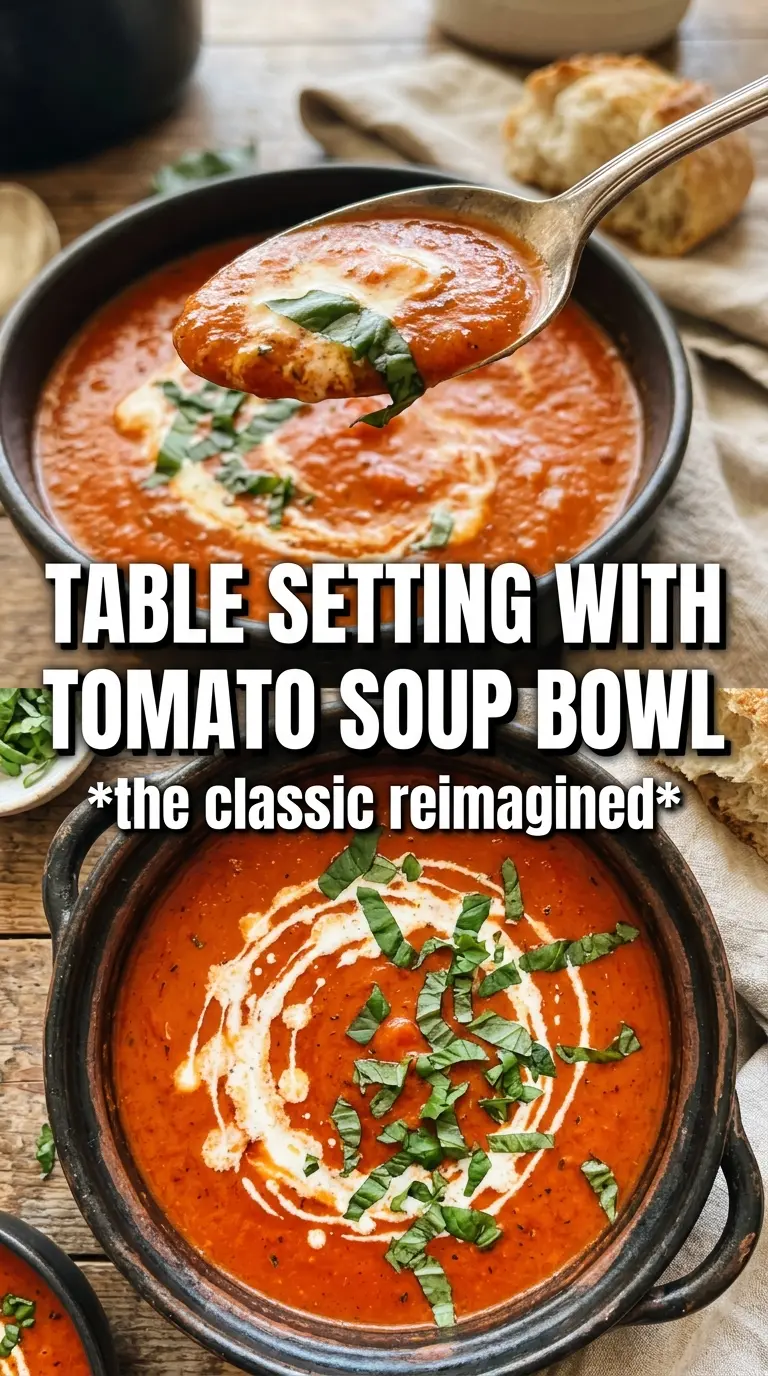
- Roma or vine tomatoes — Roma tomatoes give you a meatier, less watery soup, while vine tomatoes bring a little more juiciness and a brighter tomato flavor. Use the best tomatoes you can find, because roasting improves them but it can’t fix bland ones.
- Garlic — Halving the head crosswise lets the cloves roast evenly and makes the garlic easy to squeeze straight into the pot. Whole cloves would be harder to tame and can stay harsh; roasted garlic should taste sweet and soft.
- Onion — The onion adds body and natural sweetness that keeps the soup from tasting sharp after blending. Quarter it so the edges catch enough heat to caramelize instead of steaming.
- Olive oil — This helps the vegetables brown and carries the herbs. A good olive oil matters here because it stays in the finished soup, but you don’t need anything precious for roasting.
- Broth — Chicken broth gives a fuller finish, while vegetable broth keeps the soup vegetarian. Use a broth you’d drink on its own, because a weak broth shows up immediately in a blended soup.
- Heavy cream — This smooths the acids and gives the soup that velvety finish. Half-and-half can work in a pinch, but it won’t coat the spoon the same way.
- Fresh basil — Add it at the end so the soup tastes fresh and not cooked-down. Dried basil can work in the roast, but it won’t give the same bright finish as fresh leaves stirred in just before serving.
- Balsamic vinegar — This wakes up the tomatoes after blending and keeps the soup from tasting heavy. Don’t skip it unless your tomatoes are exceptionally sweet, and even then use just a little because the acid matters.
Building the Soup So It Blends Silky Instead of Grainy
Roasting Until the Edges Brown
Spread the tomatoes cut-side up if you can, with the onion and garlic tucked around them on the sheet pan. Drizzle with the oil and season well, then roast until the tomatoes slump, the onion softens, and the edges start to darken in spots. If the pan looks dry halfway through, that’s normal; the tomatoes will give off plenty of juice as they collapse.
Blending the Base
Move everything to a pot, add the broth and balsamic, and blend until completely smooth. An immersion blender works best because you can control the texture and stop as soon as it’s silky. If you use a regular blender, work in batches and vent the lid slightly, since hot soup can push upward fast.
Finishing With Cream and Basil
Stir in the cream and basil over low heat, then let the soup warm through without boiling hard. High heat can mute the basil and make the cream taste flat. Taste at the end and add the sugar only if the tomatoes need it; the goal is balance, not sweetness.
Dairy-Free Tomato Basil Soup
Swap the heavy cream for full-fat coconut milk or an unsweetened oat cream. Coconut milk gives you a richer, slightly sweeter soup, while oat cream stays more neutral. Either way, keep the heat low at the end so the soup stays smooth.
Vegetarian Version
Use vegetable broth instead of chicken broth and you’ll keep the soup fully vegetarian without losing much body. If your broth is thin, add a little extra salt and a small splash more balsamic so the flavor still feels rounded.
Thicker, More Rustic Texture
Use slightly less broth and blend only most of the vegetables, leaving a few soft bits behind. That gives you a heartier bowl with more body and a little texture, which works well if you’re serving it with grilled cheese croutons.
Storage and Reheating
- Refrigerator: Store for up to 4 days. The flavor gets a little deeper overnight, and the soup may thicken as it chills.
- Freezer: Freeze for up to 3 months, but the cream can separate slightly when thawed. For the best texture, freeze the soup before adding the cream, then stir it in after reheating.
- Reheating: Warm it slowly over medium-low heat, stirring often. Don’t boil it hard, or the cream can turn grainy and the basil will taste dull.
Questions I Get Asked About This Recipe
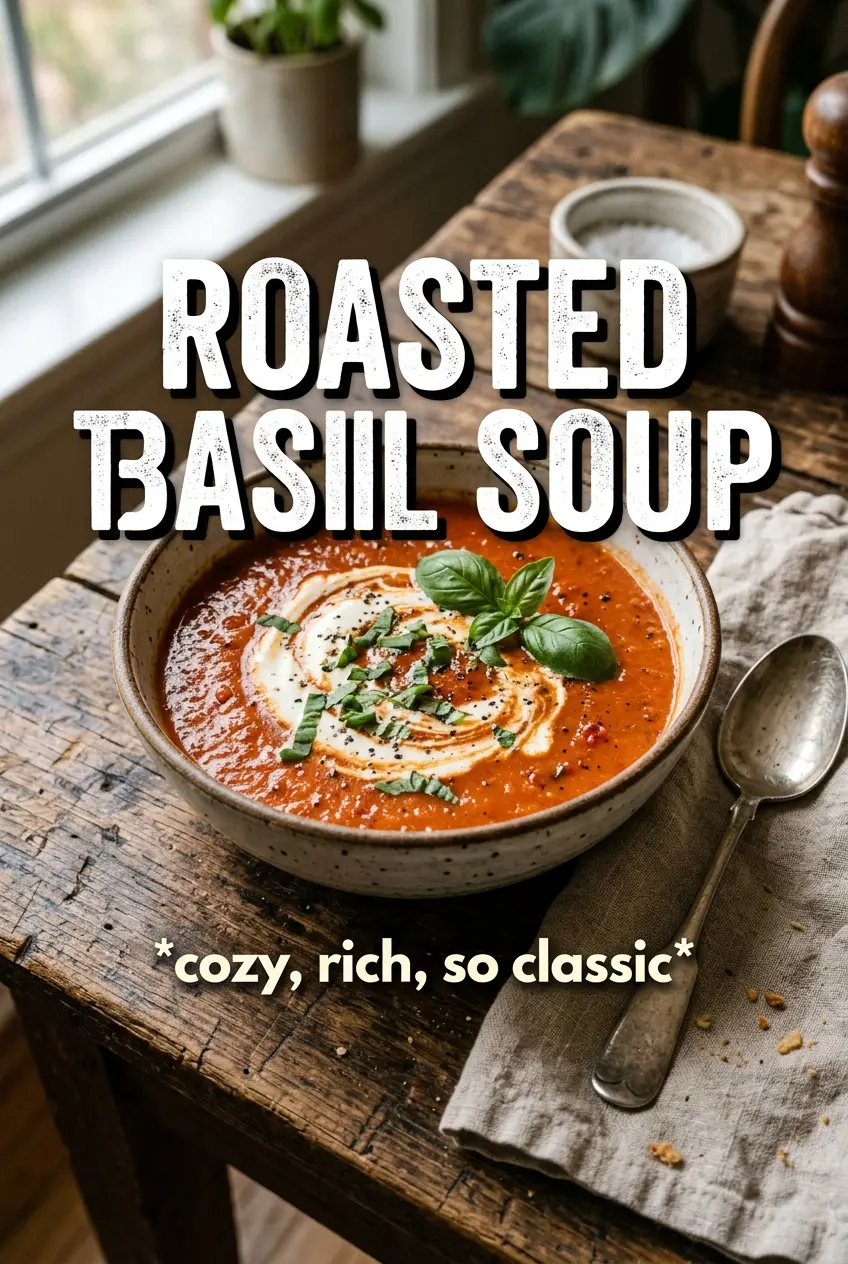
Roasted Tomato Basil Soup
Ingredients
Equipment
Method
- Preheat the oven to 425°F, then arrange the halved tomatoes, halved garlic, and quartered onion on a rimmed baking sheet in a single layer.
- Drizzle with 1/4 cup of the olive oil, then season with salt, pepper, and the dried oregano.
- Roast for 35-40 minutes, until caramelized and slightly charred at the edges, with visible dark spots on the tomatoes and onion.
- Squeeze the roasted garlic from its skins, then transfer all roasted vegetables to a large pot.
- Add the broth and balsamic vinegar, then blend smooth with an immersion blender until no chunks remain.
- Stir in the heavy cream and fresh basil leaves, then simmer for 10 minutes until the soup looks uniformly creamy and gently steams.
- Add the sugar and season with salt and pepper to taste, then stir until fully incorporated.
- Ladle the soup into bowls and serve with grilled cheese croutons or crusty bread on the side.