These red, white and blue mini cheesecakes bake up with a clean little rise, a creamy center, and a crust that stays sturdy enough to hold under the fruit and whipped cream. Each one feels neat and special without turning into a project, which is exactly why they disappear fast at a party.
The trick here is treating them like real cheesecake, just in a smaller package. Softened cream cheese beats smooth before the eggs go in, and the sour cream keeps the filling from tasting heavy. Bake them only until the centers are just barely set, because the residual heat finishes the job while they cool. Push them too far in the oven and you lose that soft, custardy middle.
Below, I’ve included the one visual cue that matters most when they come out of the oven, plus a few easy swaps if you need to adjust the toppings or make them ahead. They’re straightforward, but a couple of small details make the difference between good and bakery-worthy.
I loved how the centers stayed creamy after chilling, and the Oreo bottom held up even with the whipped cream and berries on top. I baked mine right at 20 minutes and they came out with that perfect little jiggle.
Like these red, white and blue mini cheesecakes? Save them to Pinterest for the party dessert tray that needs a crisp crust, creamy centers, and easy make-ahead topping.
The Small-Batch Trick That Keeps Mini Cheesecakes Creamy
The biggest mistake with mini cheesecakes is baking them like cupcakes. Cheesecake needs gentle heat and a short bake, or the eggs tighten too much and the centers turn dry and bouncy. Pull these when the edges look set and the middle still has a soft wobble. That wobble is your cue, not a problem.
These also depend on a smooth batter. If the cream cheese still has cold bits in it, you’ll get tiny lumps that never fully disappear. Beat the cream cheese and sugar first until the mixture looks glossy, then add the eggs one at a time so the batter stays silky instead of turning loose and grainy.
- Cream cheese — Full-fat cream cheese gives the filling its structure and that dense, creamy bite. Lower-fat versions bake up softer and can taste a little thin.
- Sour cream — This keeps the texture plush and adds a faint tang that balances the sweetness. Plain Greek yogurt works in a pinch, but it’s a little sharper and can make the filling slightly firmer.
- Oreos or Golden Oreos — Either one works as the crust base. Regular Oreos bring a deeper chocolate note, while Golden Oreos keep the whole dessert lighter and let the berries stand out more.
- Fresh strawberries and blueberries — Fresh fruit matters here because frozen berries weep as they thaw and turn the topping soggy. Slice the strawberries just before serving so they stay bright and don’t bleed onto the whipped cream.
What Each Layer Is Doing in These Cheesecakes

The crust gives you a clean base without any extra mixing or pre-baking. Pressing one cookie into each liner sounds almost too simple, but it keeps the bottoms tidy and the texture pleasantly firm under the filling. If your liners are very thin, the cookie can stick a little, so use good paper liners and let the cheesecakes chill fully before peeling them back.
The vanilla and sour cream are quiet ingredients, but they matter. Vanilla rounds off the cream cheese, and sour cream keeps the centers from tasting flat. The whipped cream and fruit belong on top only after chilling; if you add them early, the berries start to bleed and the cream collapses before serving.
Getting the Centers Set Without Overbaking
Building the Filling
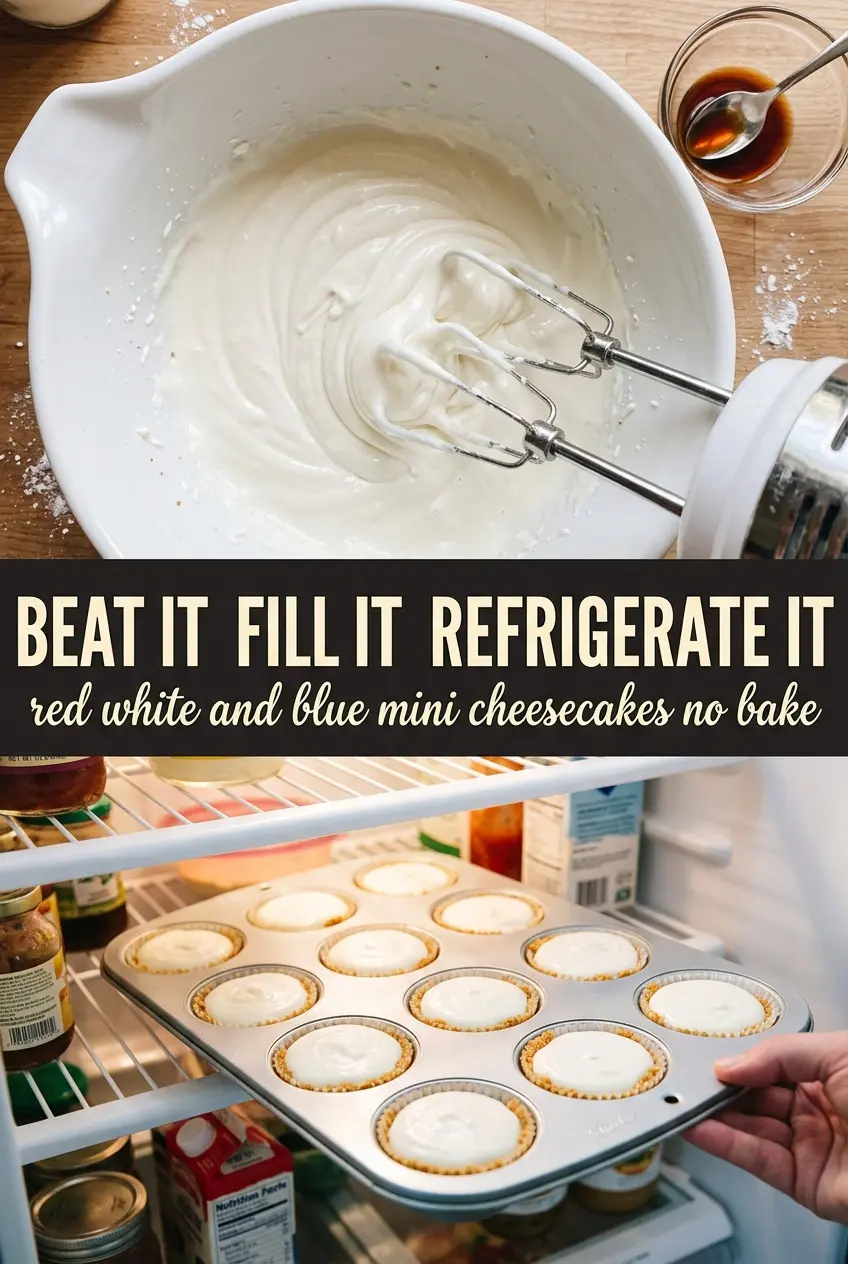
Beat the cream cheese and sugar until the mixture is smooth and light in color, scraping the bowl so no dense streaks hide at the bottom. Add the eggs one at a time and stop as soon as each one disappears, because overmixing adds too much air and can cause the centers to puff, crack, and sink. The batter should look thick, glossy, and completely even before you portion it.
Filling the Muffin Tin
Divide the batter evenly and fill each cup about three-quarters full. That gives the cheesecakes room to rise a little without spilling over the liners. If one cup looks lower than the others, add a spoonful more batter now instead of trying to fix it after baking, when the texture is already set.
Watching for the Right Bake
Bake just until the edges look set and the centers still jiggle slightly when you tap the pan. They’ll finish firming as they cool, and that’s what keeps them creamy instead of rubbery. If the tops start to brown deeply or crack, they’ve gone too far for this style of cheesecake.
Cooling and Chilling
Let the pan sit on the counter for 30 minutes before moving the cheesecakes to the fridge. That slow cool helps the centers settle without shrinking sharply. Chill them for at least 2 hours, and longer if you want the cleanest texture and easiest topping.
How to Adapt These for Different Toppings and Make-Ahead Needs
Use gluten-free sandwich cookies for the crust
Swap in gluten-free chocolate or vanilla sandwich cookies in the same one-cookie-per-cup format. The crust stays just as neat, but some gluten-free cookies are a little more fragile, so press them in gently and chill the cheesecakes fully before moving them out of the pan.
Make them with mixed berries instead of strawberries and blueberries
Raspberries, blackberries, or sliced cherries all work if that’s what you have. Keep the fruit fresh and dry, and add it right before serving so the topping doesn’t turn watery. Berries with higher juice content bring a brighter tart note, which plays well against the sweet filling.
Skip the whipped cream for a cleaner, less sweet finish
The cheesecakes still taste complete with just fruit and sprinkles on top. Without the whipped cream, the berry topping sits flatter and the cookies read a little more clearly in each bite, which is useful if you want a tidier dessert platter.
Storage and Reheating
- Refrigerator: Store the cheesecakes without toppings for up to 4 days. The crust stays best in the first two days, and the filling holds its texture well.
- Freezer: These freeze well before topping. Wrap each cheesecake tightly and freeze for up to 1 month, then thaw overnight in the refrigerator.
- Reheating: Don’t reheat these; cheesecake is meant to be served chilled. If they’re too firm straight from the fridge, let them sit at room temperature for 10 to 15 minutes before topping and serving.
Answers to the Questions Worth Asking
Red, White and Blue Mini Cheesecakes
Ingredients
Equipment
Method
- Preheat the oven to 325°F and line a 12-cup muffin tin with cupcake liners.
- Place one Oreo cookie flat in the bottom of each liner.
- Beat cream cheese and granulated sugar until smooth.
- Add the large eggs one at a time, mixing well after each addition.
- Beat in vanilla extract and sour cream until combined and creamy.
- Divide batter evenly among the 12 cups, filling each about 3/4 full.
- Bake at 325°F for 18–20 minutes until the centers are just barely set, and expect them to firm as they cool.
- Cool the cheesecakes in the pan for 30 minutes until they are no longer hot to the touch.
- Refrigerate for at least 2 hours until fully chilled and set.
- Before serving, top each mini cheesecake with a swirl of whipped cream, then place a strawberry slice and a few blueberries on top.
- Finish each cheesecake with a pinch of red and blue sprinkles for a red-white-blue look.