Ranch roasted carrots come out with caramelized edges, a tender center, and a savory coating that keeps you going back for one more piece. The ranch seasoning clings to every stick, and the Parmesan melts just enough to add a salty finish without turning the carrots heavy or greasy.
The trick is simple: high heat, plenty of space on the pan, and a light enough hand with the oil that the carrots roast instead of steam. I like to toss them well before they ever hit the oven, then leave them alone long enough to brown before giving the pan a quick turn halfway through. That’s what gives you those crisped edges and that deep roasted flavor.
Below, you’ll find the detail that matters most for this recipe: how to keep the carrots from softening too early, plus a few easy ways to adjust the seasoning if you want them a little more herby, a little more cheesy, or a little more kid-friendly.
The carrots roasted up with browned edges and stayed tender instead of mushy, and the ranch seasoning tasted even better after the Parmesan went on at the end.
Save these ranch roasted carrots for the nights when you want an easy side with crisp edges, savory ranch seasoning, and a cheesy finish.
The Reason These Carrots Brown Instead of Going Soft
Roasted carrots can go wrong fast when the pan is crowded. Once they start sitting on top of each other, they release moisture and steam instead of browning, and you end up with limp carrots that taste boiled. A hot oven helps, but the real difference is giving every piece a little breathing room on the sheet pan.
The other thing that matters here is when the ranch seasoning goes on. It needs oil to stick and it needs direct heat to bloom, but too much seasoning piled on at once can scorch in spots before the carrots are tender. Tossing the carrots evenly before roasting gives you a savory crust without burnt patches.
- Single layer only — if the carrots overlap, they trap steam and lose that roasted edge.
- 425F oven — hot enough to brown the outside before the centers turn soft.
- Halfway toss — that second turn keeps the color even and prevents one side from drying out.
What the Ranch, Parmesan, and Fresh Herbs Each Bring
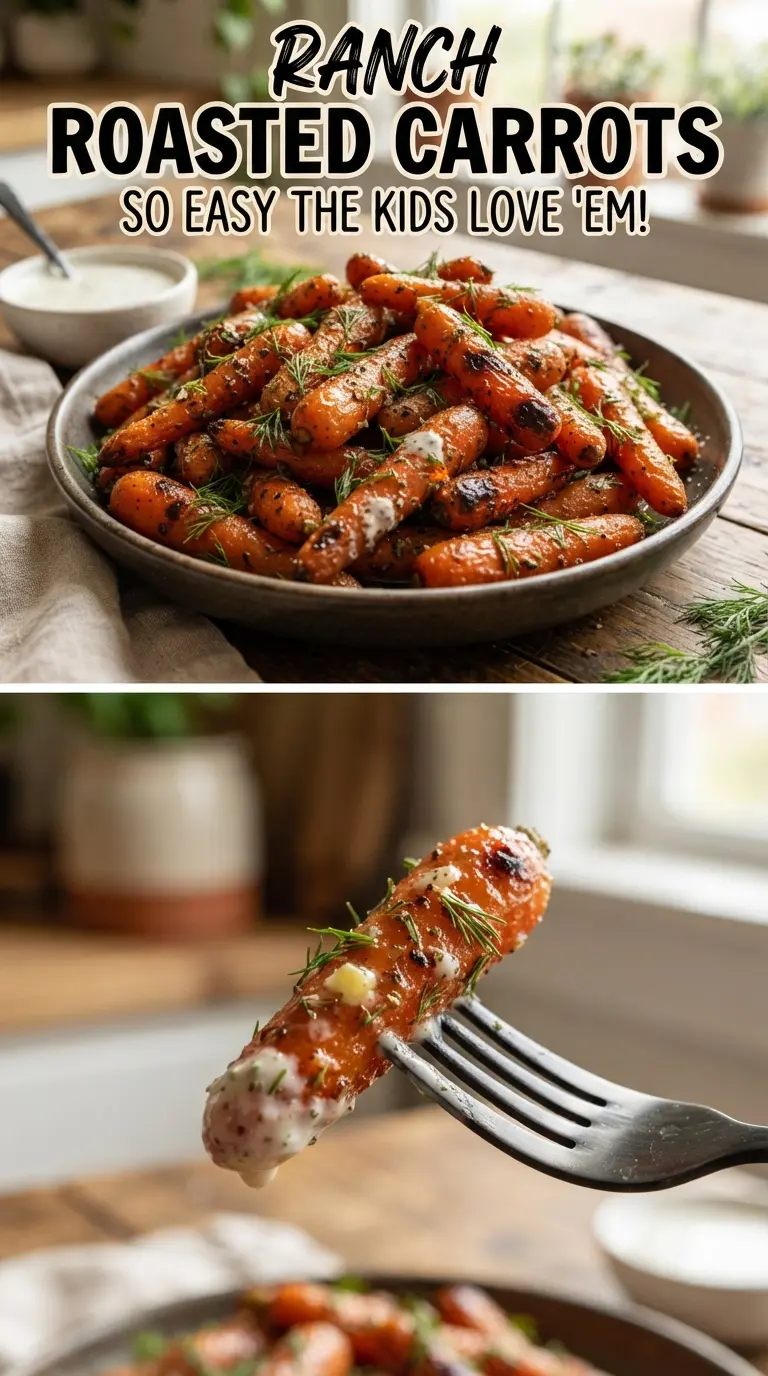
- Carrots — look for firm carrots that feel heavy for their size. Thicker carrots are fine, but cut them into similar sticks so they finish at the same time. If yours are on the skinny side, check them a few minutes early because they brown faster.
- Ranch seasoning — this is what gives the carrots their punch. A store-bought packet works perfectly here because it’s balanced with dried herbs, garlic, and onion, which hold up better in the oven than raw seasonings would.
- Parmesan — use finely grated Parmesan, not big shreds, so it clings to the hot carrots and melts into the surface. If you only have pre-shredded Parmesan, it still works, but the finish will be a little less silky.
- Fresh dill or parsley — add it at the end for brightness. Dill leans more savory and ranch-like; parsley keeps the flavor cleaner and a little fresher.
Getting the Seasoning to Stick and the Edges to Caramelize
Coating the Carrots Evenly
Toss the carrots with the olive oil and ranch seasoning until every piece looks lightly coated and speckled. If the seasoning sits in clumps, those spots can taste overly salty while the rest of the carrots stay bland. A large bowl gives you enough room to coat them without breaking the sticks.
Roasting for Color, Not Just Tenderness
Spread the carrots in a single layer on a parchment-lined sheet pan and roast at 425F until the edges darken and the thickest pieces yield when pierced with a fork. If they’re still pale, they need more time; if the bottoms are browning too fast, move the pan one rack higher. The goal is deep color with a tender bite, not mush.
Finishing After the Oven
Sprinkle the Parmesan over the hot carrots as soon as they come out, then finish with the herbs. The residual heat softens the cheese just enough to melt into the seasoning without turning it greasy. Add the herbs at the end so they stay bright instead of wilting into the pan.
How to Adapt Ranch Roasted Carrots for Different Tables
Dairy-Free Version
Skip the Parmesan and finish with extra herbs plus a tiny pinch of flaky salt. You’ll lose the cheesy finish, but the ranch seasoning still gives the carrots plenty of savory flavor. If you want a little richness back, add an extra teaspoon of olive oil after roasting.
Extra Crispy Edges
Cut the carrots slightly thinner and keep the oven hot. Thinner sticks caramelize faster, so watch them closely in the last 5 minutes. You’ll get more browned edges and a little less soft center.
More Herb Forward
Use parsley plus a small spoonful of chopped dill, then add a touch more after roasting. That keeps the carrots brighter and less cheesy, which works well if you’re serving them next to roasted chicken or grilled fish.
Storage and Reheating
- Refrigerator: Store leftovers in an airtight container for up to 4 days. The carrots soften a bit as they sit, but the flavor holds up well.
- Freezer: Freezing isn’t ideal here. Carrots lose their roasted texture after thawing and turn softer than you probably want.
- Reheating: Warm them on a sheet pan in a 400F oven for 8 to 10 minutes. The microwave works in a pinch, but it steams the carrots and dulls the edges you worked to get.
Answers to the Questions Worth Asking
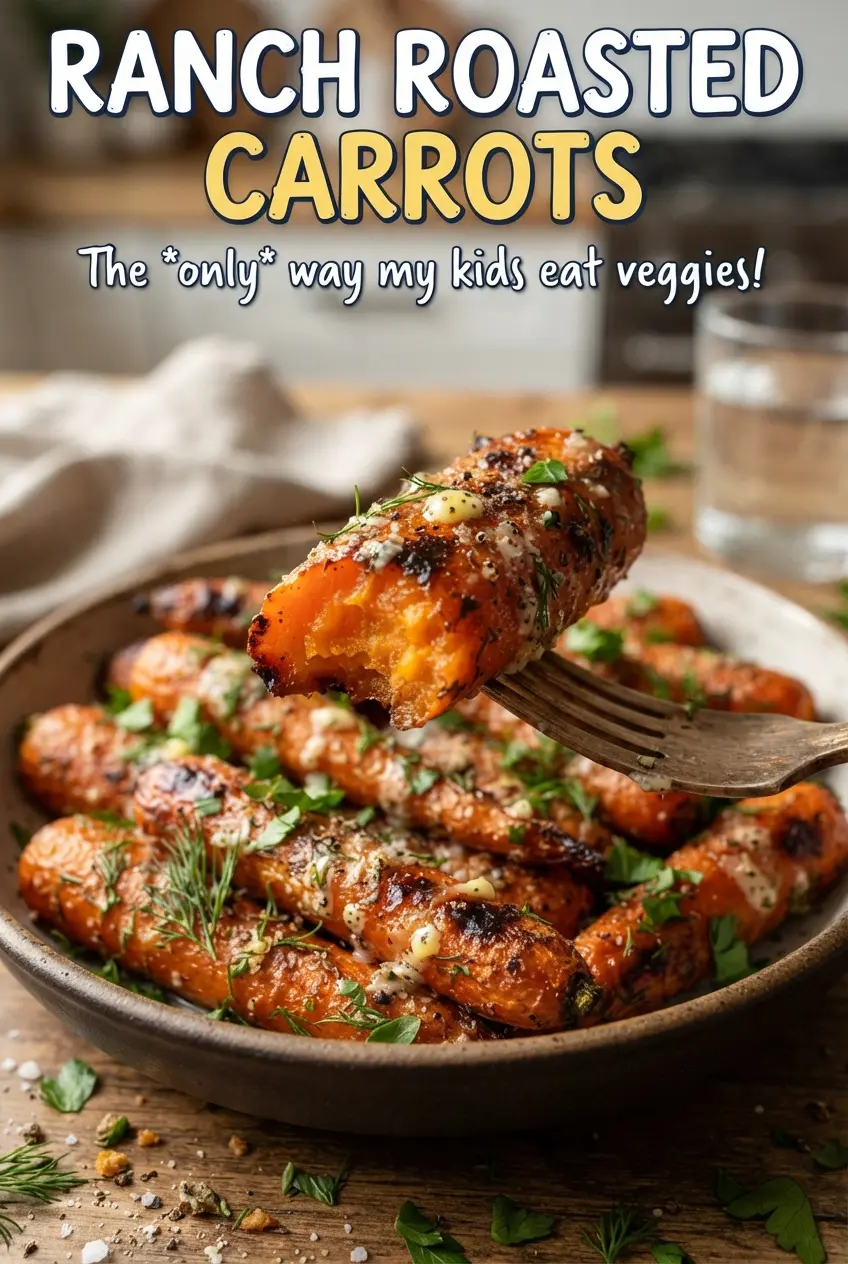
Ranch Roasted Carrots
Ingredients
Equipment
Method
- Preheat the oven to 425F and line a sheet pan with parchment for easy cleanup. Visual cue: the parchment should lie flat with no wrinkles.
- Toss the carrot sticks with olive oil and ranch seasoning until evenly coated. Visual cue: the carrots should look glossy with a speckled ranch coating.
- Spread the carrots in a single layer on the sheet pan. Visual cue: the sticks should have space between them so they roast instead of steam.
- Roast for 20-25 minutes, tossing halfway, until tender and browned at the edges. Visual cue: edges should turn golden brown and the carrots should pierce easily.
- Sprinkle the carrots with grated Parmesan and the chopped fresh dill or parsley, then serve warm. Visual cue: Parmesan should look melted and slightly clumped on the hot carrots.