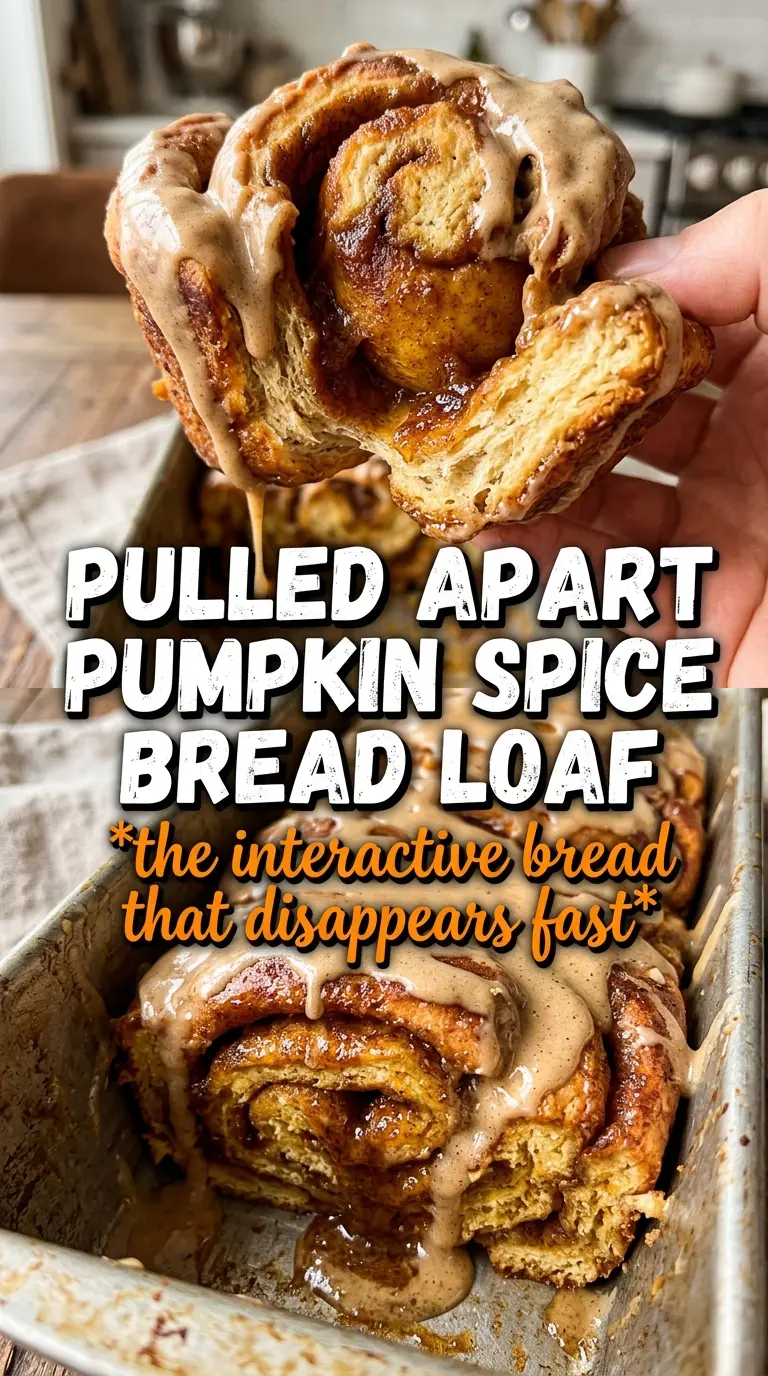
Pumpkin spice pull apart bread bakes up soft, layered, and fragrant, with buttery cinnamon-sugar seams tucked between every tender square. The top turns deep golden while the inside stays pillowy and slightly rich from pumpkin puree, which keeps the dough moist without making it heavy. When you lift a piece away, the layers separate in soft sheets instead of tearing into crumbs.
The trick is treating the dough like a proper enriched bread, not a quick sweet loaf. Warm milk wakes up the yeast, and the pumpkin goes in with the wet ingredients so it blends evenly without smearing the dough later. The filling is generous, but it stays put better when the butter is melted and brushed on in a thin layer before the sugar mixture goes over it. That gives you defined swirls and less leakage in the pan.
Below, I’ll walk through the part that matters most: how to stack and slice the dough so the loaf pulls apart cleanly, plus a few swaps and storage notes for busy mornings.
The layers pulled apart beautifully and the cream cheese glaze soaked just enough into the warm bread without turning it soggy. I followed the rise time exactly and the center baked through perfectly.
Save this pumpkin spice pull apart bread for a breakfast bake with soft layers, warm spice, and cream cheese glaze.
The Reason the Layers Stay Soft Instead of Doughy
Pull apart bread can go wrong in two opposite ways: it bakes up dry on the edges or gummy in the middle. The fix is in the structure. This dough is enriched enough to stay tender, but not so wet that it collapses, and the pumpkin puree adds moisture without needing extra fat to carry it.
The other thing that matters is the second rise. Once the stacked dough goes into the loaf pan, it needs time to puff into the gaps so the layers bake together instead of leaving raw seams. If the loaf looks tight and cramped in the pan, give it the full rise. That extra half hour is what turns a stack of dough squares into pull apart bread.
- Yeast — Warm milk wakes it up fast, but the milk should feel warm, not hot. If it’s too hot to hold your finger in comfortably, it can kill the yeast before the dough even starts.
- Pumpkin puree — Use plain pumpkin puree, not pie filling. Pie filling is already sweetened and spiced, which throws off both the dough texture and the flavor balance.
- Butter — Melted butter goes in the dough and the filling, but for different reasons. In the dough it adds richness; in the filling it helps the sugar cling and melt into the seams instead of falling to the bottom of the pan.
- Pumpkin pie spice and cinnamon — The pumpkin pie spice deepens the dough while the cinnamon drives the filling. You need both, or the bread tastes flat.
What Each Ingredient Is Actually Doing in This Recipe
- Primary ingredient (the star) — Quality matters most. Choose the best you can find.
- Cooking medium (oil, butter, or broth) — This carries flavors and prevents dryness.
- Seasonings (salt, pepper, spices, herbs) — Layer flavors so nothing overpowers. Build depth gradually.
- Aromatics (garlic, onion, herbs) — Cook with fat to bloom flavors. Become the foundation.
- Supporting ingredients — Complement the main ingredient without overpowering it.
- Sauce or liquid (if applicable) — Brings flavors together. Balance richness with acid.
- Acid (lemon, vinegar, wine, or other) — Brightens and prevents flat-tasting results.
- Final finish (garnish, glaze, or sauce) — Prevents one-dimensional taste and adds visual appeal.
Building the Loaf So Every Slice Pulls Apart Cleanly
Mixing the Enriched Dough
Start by dissolving the yeast in warm milk with the sugar, then add the melted butter, egg, and pumpkin puree. The mixture should look smooth and a little rusty-orange before the flour goes in. Once you add the dry ingredients, knead until the dough turns elastic and only slightly tacky, about 7 to 8 minutes. If it stays sticky enough to coat your hands heavily, keep kneading before adding more flour.
Rolling and Filling the Rectangle
Roll the dough into a 12×16 rectangle with even thickness so the layers bake at the same rate. Brush on the melted butter first, all the way to the edges, then sprinkle the sugar-spice mixture evenly over the surface. If the filling clumps in one area, those spots can leak out and caramelize too hard in the pan. A thin, even layer gives you neat swirls and a cleaner bottom.
Stacking for the Pull-Apart Texture
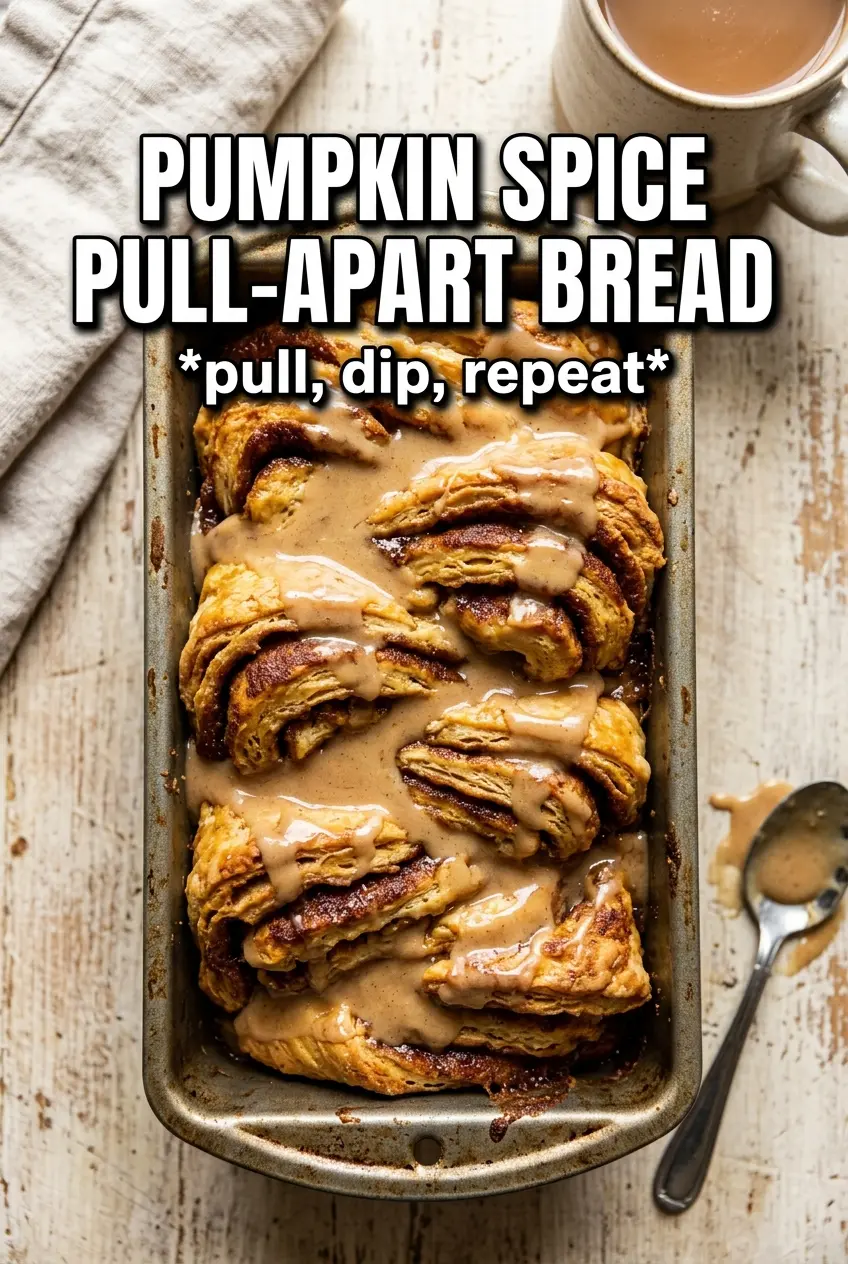
Cut the rectangle into four long strips, stack those strips, then cut the stack into six squares. Set the squares on their sides in the loaf pan so the cut edges face up and down. That upright positioning is what creates the pull-apart layers. If you lay the pieces flat, you’ll get more of a filled bread loaf than a tear-and-share loaf.
Baking Until the Center Sets
Bake at 350°F until the top is deeply golden and the center feels set when lightly pressed, usually 35 to 40 minutes. Tent the loaf with foil halfway through if the top is browning too quickly, which keeps the sugar from scorching before the middle bakes through. The bread is done when the layers look set and a skewer inserted in the center comes out without raw dough clinging to it.
Glazing While Warm
Beat the cream cheese, powdered sugar, milk, and vanilla until smooth, then drizzle it over the loaf while it’s still warm. Warm bread helps the glaze melt just enough to sink into the crevices without disappearing completely. If the loaf is piping hot, wait a few minutes first or the glaze will melt into a thin puddle instead of staying on top.
How to Adapt This Pull Apart Bread Without Losing the Good Part
Dairy-Free Version
Use unsweetened non-dairy milk, plant-based butter, and a dairy-free cream cheese for the glaze. The bread will still rise and bake well, but the glaze won’t have quite the same tangy richness. That said, the pumpkin and spice carry the flavor enough that the swap works nicely.
Make It Ahead for Brunch
Shape the loaf, cover the pan, and refrigerate overnight after the second rise begins. In the morning, let it sit on the counter while the oven heats so it loses the chill before baking. Straight from the fridge, the center can bake sluggishly while the top browns too fast.
A Less-Sweet Breakfast Loaf
Cut the brown sugar in the filling back a bit if you want the spice and pumpkin to lead. The loaf will still separate nicely, but the filling will taste more like cinnamon toast than dessert bread. I wouldn’t reduce it too much, or you lose the gooey layers that make the recipe worth baking.
Storage and Reheating
- Refrigerator: Store covered for up to 4 days. The bread softens a little as it sits, but the glaze helps keep the top from drying out.
- Freezer: Freeze the baked loaf without glaze, tightly wrapped, for up to 2 months. Thaw overnight in the refrigerator, then glaze after warming.
- Reheating: Warm individual pieces in the microwave for 15 to 20 seconds, or cover the whole loaf with foil and heat in a low oven. The biggest mistake is blasting it uncovered, which dries out the edges before the center warms.
Answers to the Questions Worth Asking
Pumpkin Spice Pull Apart Bread
Ingredients
Equipment
Method
- In a bowl, warm the milk until warm, then stir in the yeast and sugar. Let stand for 5 minutes until foamy, a clear cue the yeast is active.
- Stir in the melted butter, egg, and pumpkin puree until smooth. Mix just until the mixture looks evenly combined and glossy.
- Add the flour, pumpkin pie spice, and salt, then knead until smooth and elastic for 7-8 minutes. You’ll know it’s ready when the dough feels springy and slightly tacky but not sticky.
- Cover the dough and let it rise for 1 hour until doubled in size. The visual cue is a puffy dough that slowly springs back when gently pressed.
- Roll the dough into a 12x16 rectangle on a lightly floured surface. Aim for even thickness so the layers bake uniformly.
- Brush the rectangle with the melted butter. Make sure the surface is evenly coated so the filling clings in every bite.
- Mix the brown sugar, cinnamon, pumpkin pie spice, and nutmeg, then sprinkle the filling mixture evenly over the buttered dough. The top should look evenly speckled with sugar and spices.
- Cut the dough into 4 strips lengthwise. Each strip should be distinct so you can stack them cleanly.
- Stack the strips, then cut into 6 square stacks. The stack edges should show a layered spiral effect from the filling.
- Place the stacks on their sides in a greased 9x5 loaf pan. Space them snugly so the loaf rises into a cohesive pull-apart block.
- Cover and let rise for 30 minutes until puffy. The visual cue is the dough creeping up in the pan and looking lighter in color.
- Bake at 350F for 35-40 minutes until the loaf is golden. Tent with foil halfway through to prevent over-browning.
- While warm, whisk the cream cheese, powdered sugar, milk, and vanilla into a smooth glaze. Drizzle over the entire surface for a shiny, creamy finish.