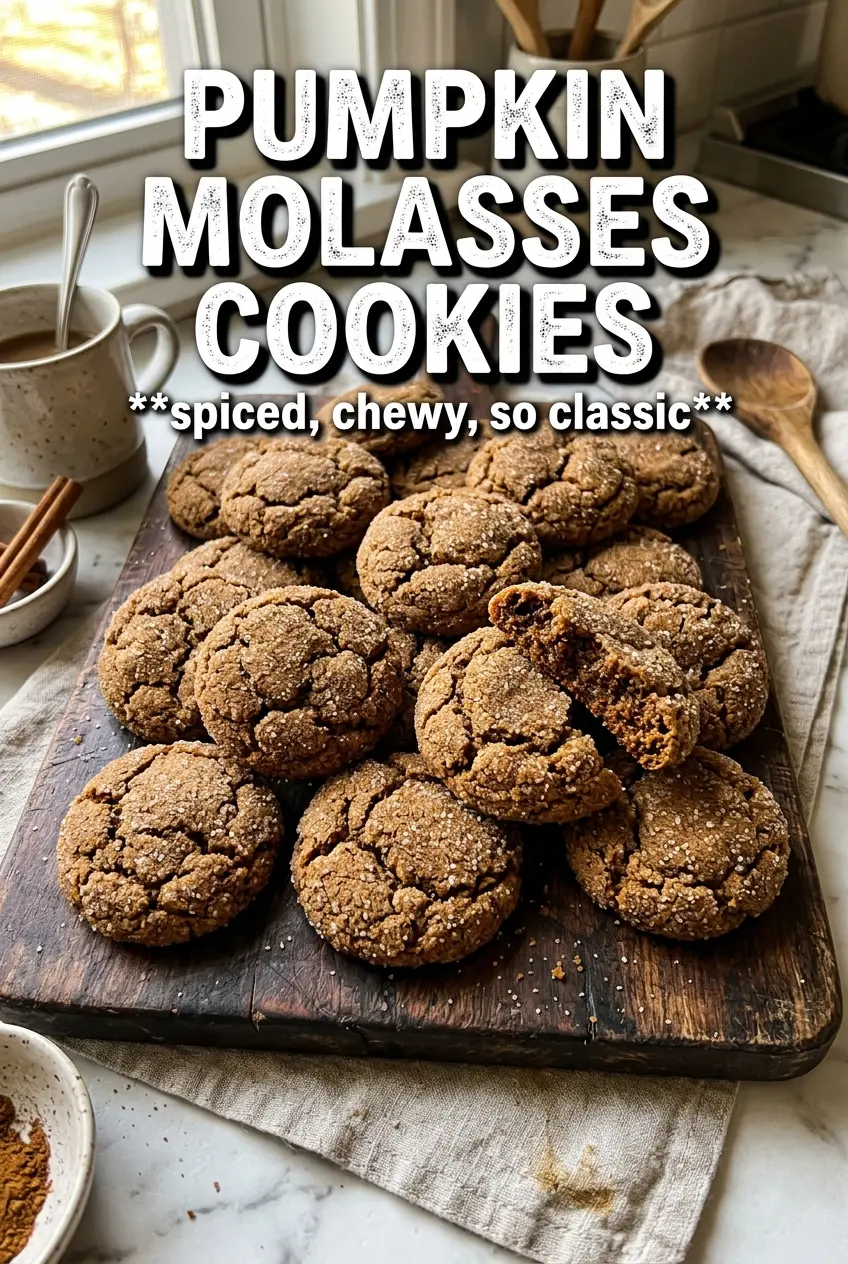
Pumpkin molasses cookies bake up with crisp, sugared edges and a soft center that stays chewy instead of cakey. The flavor lands deep and warm first, then the pumpkin comes through as a rounded, mellow note under the molasses, cinnamon, ginger, and cloves. They look like bakery cookies, but they’re the kind that disappear fast from a home kitchen because the texture is just right.
The trick is keeping the pumpkin under control. Pumpkin puree brings more water than most cookie doughs can handle, and if it goes in straight from the can, the cookies spread less cleanly and lean toward bready. Blotting it dry first keeps the dough thick enough to hold its shape while still giving the cookies that soft, tender middle. A short chill firms the butter back up, and rolling the dough in granulated sugar gives you the crinkled, sparkly finish that makes these stand out.
Below, I’ve included the one step that matters most for that chewy texture, plus the ingredient swap that works if you’re out of one of the warm spices. These cookies are straightforward, but a few small details make the difference between good and unforgettable.
The pumpkin stayed in the background and the molasses flavor came through beautifully. Chilling the dough made a big difference, and the cookies came out crinkled with soft centers instead of spreading flat.
Love the crackly sugar coating and chewy center in these Pumpkin Molasses Cookies? Save them to Pinterest for the next time you want a spiced cookie that bakes up thick and crinkled.
The Trick to Keeping Pumpkin Cookies Chewy Instead of Cakey
Pumpkin cookies tend to drift into muffin territory because pumpkin puree adds moisture without much structure. The fix here is simple: dry the pumpkin first, then chill the dough before baking. That combination keeps the dough dense enough to hold those crinkled tops and prevents the cookies from puffing into soft little domes.
The other piece that matters is the baking time. Pull these when the edges look set and the centers still look slightly soft. If you wait until the tops look completely done in the oven, they’ll bake past chewy by the time they cool on the sheet.
What Each Ingredient Is Doing in These Cookies
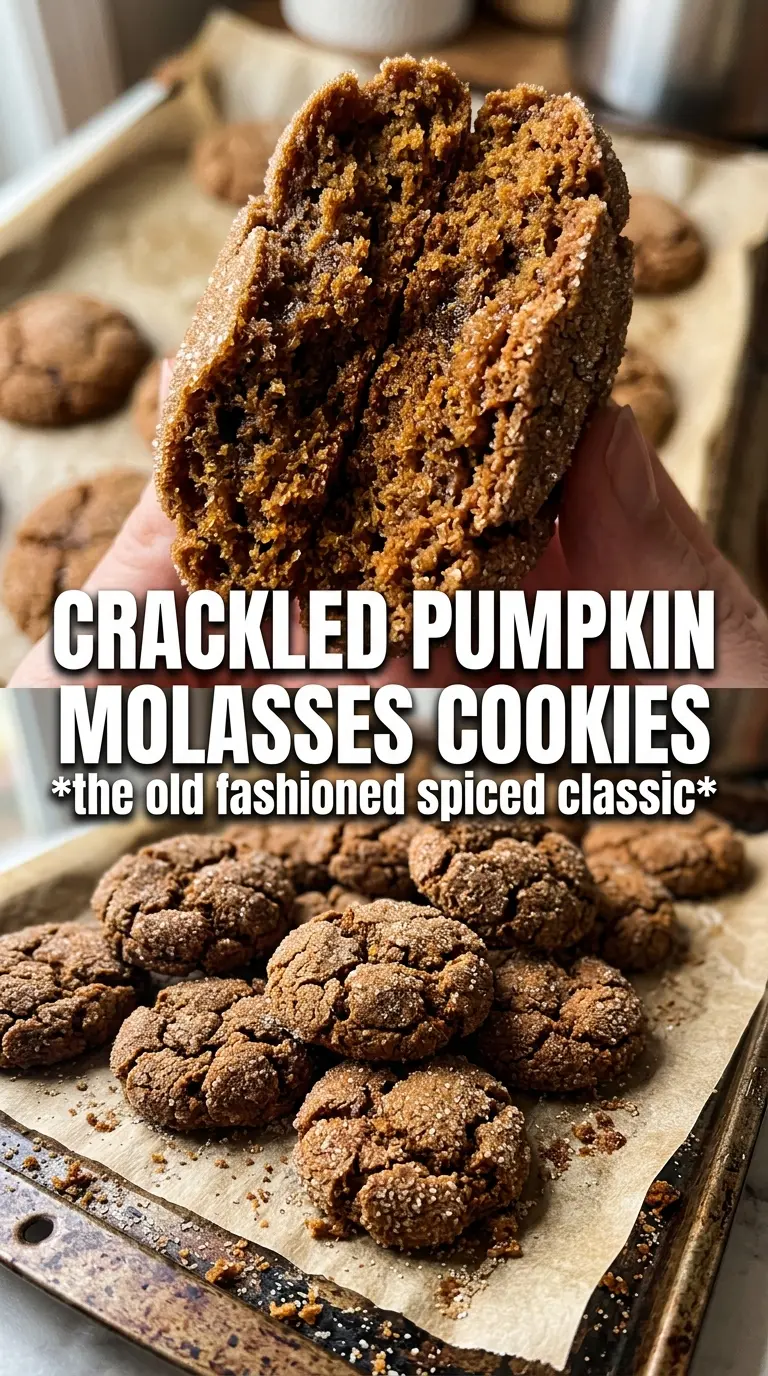
- Pumpkin puree — A small amount gives the cookies that faint pumpkin note and soft texture, but only if it’s blotted dry first. If you skip that step, the dough loosens and the cookies lose their chew.
- Molasses — This is where the deep color and old-fashioned spice-cookie flavor come from. There isn’t a true substitute if you want the same result, but dark corn syrup or honey won’t give you the same taste or color.
- Brown sugar — Packed brown sugar adds moisture and helps the centers stay tender. Granulated sugar won’t give the same chew, though you can use light or dark brown sugar depending on how strong you want the molasses note to be.
- Butter — Softened butter creates the right structure for scooping and rolling. Melted butter would make the dough spread too much and flatten the cookies.
- All the spices — Cinnamon, ginger, cloves, allspice, and black pepper build a warm, layered cookie instead of a flat pumpkin cookie. Black pepper sounds unusual, but it sharpens the spice blend without tasting peppery.
- Baking soda — This gives the cookies lift and helps create that cracked surface. If your baking soda is old, the cookies can come out dense and dull-looking.
How to Build the Dough So the Cookies Stay Thick and Crinkled
Blot the Pumpkin First
Press the pumpkin puree between layers of paper towel until it loses some of its wet shine and feels thicker. You don’t need it bone dry, but you do need to remove enough moisture that it won’t slacken the dough. If the pumpkin looks watery, the cookies will spread unevenly and bake up soft in the wrong way.
Mix the Butter, Sugar, and Wet Ingredients Until Smooth
Beat the softened butter and brown sugar until the mixture looks creamy and a little lighter in color. Then add the egg, molasses, blotted pumpkin, and vanilla and mix until everything is evenly combined. If the mixture looks slightly curdled at this point, don’t panic; once the flour goes in, it comes together.
Fold in the Dry Ingredients and Chill the Dough
Add the flour mixture and stir just until no dry streaks remain. Overmixing at this stage makes the cookies tougher and can flatten the spice flavor. Chill the dough for 30 minutes, long enough for the butter to firm up and for the flour to hydrate, which gives you thicker cookies and cleaner edges.
Roll in Sugar and Stop the Bake Early
Scoop the dough into 1 1/2-tablespoon balls, then roll each one in granulated sugar before baking. That outer coating helps the tops crack beautifully and gives the finished cookies a light crunch. Bake just until the edges are set and the centers still look a touch soft; they’ll finish on the hot pan without drying out.
Three Ways to Adjust These Cookies Without Losing the Good Parts
Gluten-Free Pumpkin Molasses Cookies
Use a 1:1 gluten-free baking blend that includes xanthan gum. The cookies will still be chewy, but the texture may be a little more delicate, so let them cool on the baking sheet for a few extra minutes before moving them.
Dairy-Free Version
Swap the butter for a dairy-free baking stick with a similar fat content. Avoid soft tub spreads, which can make the dough too loose and reduce the crinkled finish.
Spice It Up More
Add an extra 1/4 teaspoon ginger or a pinch more black pepper if you want the spice to read stronger against the pumpkin. The cookies will taste a little sharper and more molasses-forward, which works especially well if you like a gingerbread-style cookie.
Storage and Reheating
- Refrigerator: Store in an airtight container for up to 5 days. The cookies stay soft, though the sugar coating softens a bit after the first day.
- Freezer: These freeze well either as baked cookies or as dough balls. Freeze the scooped dough on a tray, then store in a freezer bag for up to 2 months and bake straight from frozen with 1 to 2 extra minutes.
- Reheating: Warm baked cookies in a 300F oven for 3 to 4 minutes. Don’t use the microwave unless you want the centers to turn sticky and the sugar coating to disappear.