Pumpkin cake turns out best when it’s plush, warmly spiced, and sturdy enough to hold a thick layer of frosting without sinking under it. This version does that balance well. The crumb stays tender from the pumpkin puree and sour cream, while the brown sugar and spice give it that deep, autumn bakery-cake feel without tasting heavy.
The frosting is the part that keeps people going back for another slice. Cream cheese and butter give it structure, caramel sauce brings the right amount of cooked sugar flavor, and the powdered sugar firms it up enough to spread cleanly between layers. I like to cool the cake completely before frosting, because even a slightly warm layer will loosen the cream cheese frosting and send the caramel drizzle sliding faster than you want.
Below, I’ve included the texture cues I watch for in the oven, the one frosting step that keeps it smooth, and a few swaps that still give you a cake worth serving proudly.
The cake layers baked up moist and even, and the caramel cream cheese frosting spread like a dream once everything was fully cooled. I got clean slices and the salted caramel drizzle made it taste like a bakery cake.
Save this pumpkin cake with caramel cream cheese frosting for the days when you want a spiced layer cake with a smooth, caramel-kissed finish.
The Reason This Pumpkin Cake Stays Tender Instead of Dense
Pumpkin cakes can go heavy fast when they’re overloaded with puree or mixed too long. The trick here is keeping the batter on the thick side but not overworked. Once the dry ingredients go in, stop as soon as you no longer see streaks of flour. That’s the point where the cake keeps its lift instead of turning tight and gummy.
The other thing that matters is the balance of moisture. Pumpkin puree gives flavor and color, but sour cream adds a little tang and a softer crumb that pumpkin alone can’t manage. Brown sugar helps the cake stay moist for days, and the butter gives it a more classic layer-cake texture than oil-based versions. If your cake has ever baked up squat or rubbery, it was probably mixed too much or baked until the center dried out instead of just setting.
What Each Ingredient Is Doing in the Cake and Frosting
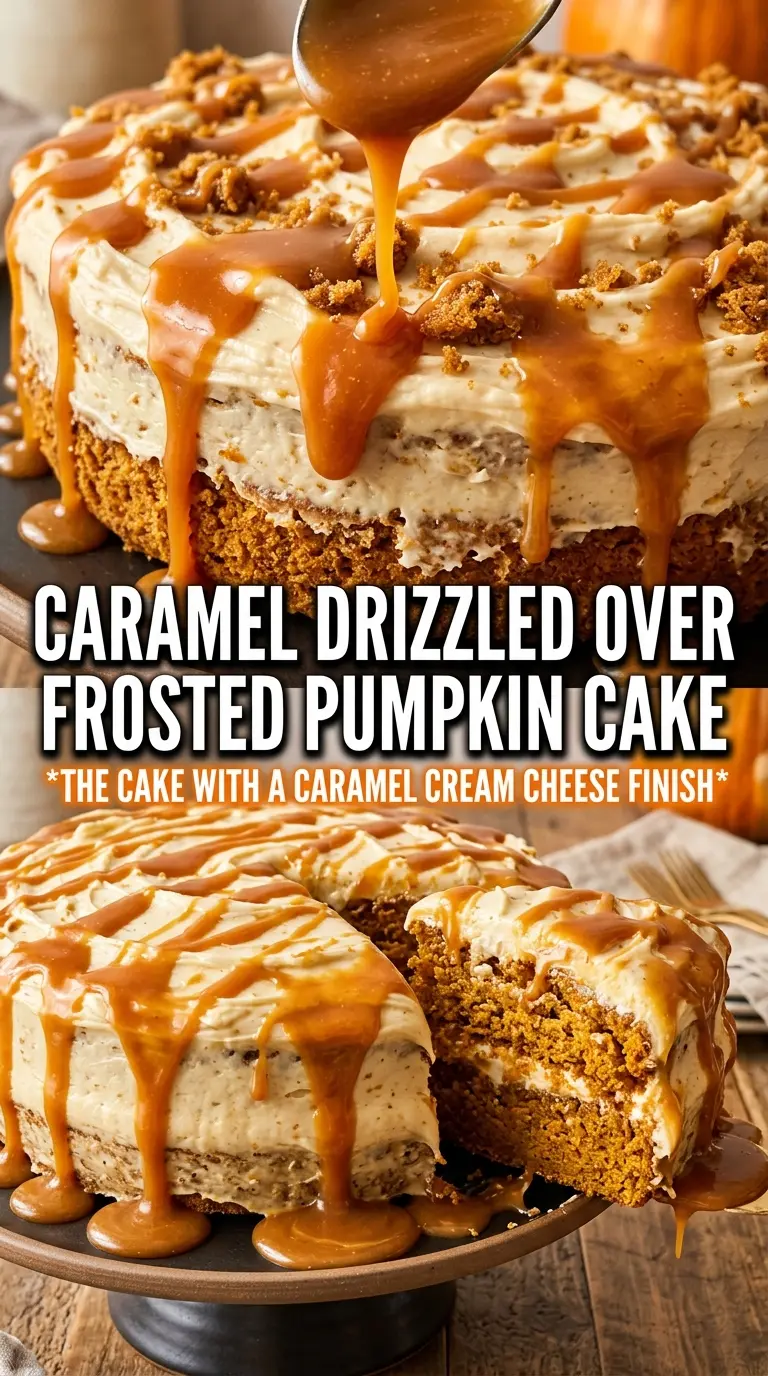
- Pumpkin puree — Use plain pumpkin puree, not pumpkin pie filling. Pie filling already has sugar and spices mixed in, which throws off both the texture and the balance of the cake.
- Brown sugar — This does more than sweeten. It adds a darker, almost molasses-like depth that works with the spice and helps the crumb stay moist.
- Sour cream — This is one of the best texture insurance policies in the recipe. It adds richness and tenderness without making the batter greasy, and plain full-fat Greek yogurt works well if that’s what you have.
- Cream cheese frosting base — The cream cheese has to be softened enough to beat smooth before the sugar goes in. If it’s cold, you’ll get little lumps that stay visible no matter how long you mix.
- Caramel sauce — Use a thick caramel sauce, not a thin syrup. It should flavor the frosting without thinning it into something that slides off the cake.
Building the Layers Without Losing the Structure
Mix the Butter, Sugar, and Eggs Until They Look Creamy
Start by beating the butter and brown sugar until the mixture looks lighter and a little fluffy. That step traps air and helps the cake rise instead of baking up flat. Add the eggs one at a time so the batter stays smooth, then mix in the pumpkin, sour cream, and vanilla just until combined. If the batter looks slightly curdled at this point, don’t panic — it will come back together once the dry ingredients go in.
Fold in the Dry Ingredients and Stop Early
Whisk the flour, baking powder, baking soda, spices, and salt in a separate bowl before adding them to the wet mixture. That keeps the spices from clumping and helps the leavening distribute evenly. Stir only until the last streaks of flour disappear. If you keep mixing past that point, the gluten develops and the cake loses that soft, fine crumb you want in a layer cake.
Bake Until the Center Springs Back
Divide the batter evenly between the pans and bake at 350°F until the tops are set and a toothpick comes out with just a few moist crumbs. The cake should spring back when you touch the center lightly, and the edges will pull just a little from the pan. If the middle still looks shiny or sinks when you nudge it, give it a few more minutes. Pulling it too early is how you end up with a layer that collapses while cooling.
Beat the Frosting Until It Spreads Cleanly
For the frosting, beat the cream cheese and butter first until smooth and pale. Then add the caramel sauce, vanilla, and powdered sugar gradually so the frosting thickens without turning grainy. If it feels loose, chill it for 10 to 15 minutes before spreading. That short rest makes the difference between a frosting that holds clean edges and one that drifts down the sides of the cake.
How to Adapt This Pumpkin Cake for Different Kitchens
Make It Gluten-Free Without Losing the Tender Crumb
Use a good 1:1 gluten-free baking flour that includes xanthan gum. The cake will still be soft and sliceable, though it may bake up a touch more fragile, so let the layers cool completely before moving them. A gritty GF blend will show in the crumb, so choose one you trust for cakes.
Swap the Sour Cream for Greek Yogurt
Plain full-fat Greek yogurt works in the same amount and keeps the same tangy tenderness. The cake may bake up just a little firmer, but it still stays moist. Avoid low-fat yogurt if you can; the frosting already brings enough richness, and the cake needs the full-bodied dairy to stay plush.
Turn It Into a Cupcake Batch
This batter works well for cupcakes if you want easier portioning. Fill the liners about two-thirds full and start checking a few minutes early, since cupcakes bake faster than layers. You’ll get the same spiced pumpkin flavor, but the frosting will sit in a taller swirl on top instead of between layers.
Storage and Reheating
- Refrigerator: Store covered for up to 5 days. The frosting firms up in the fridge, but the cake itself stays moist.
- Freezer: Freeze the unfrosted cake layers wrapped tightly in plastic and foil for up to 2 months. Thaw in the fridge before frosting for the cleanest result.
- Reheating: Let slices sit at room temperature for 20 to 30 minutes before serving. If you warm them too much, the cream cheese frosting softens and the caramel drizzle starts to slide.
Questions I Get Asked About This Recipe
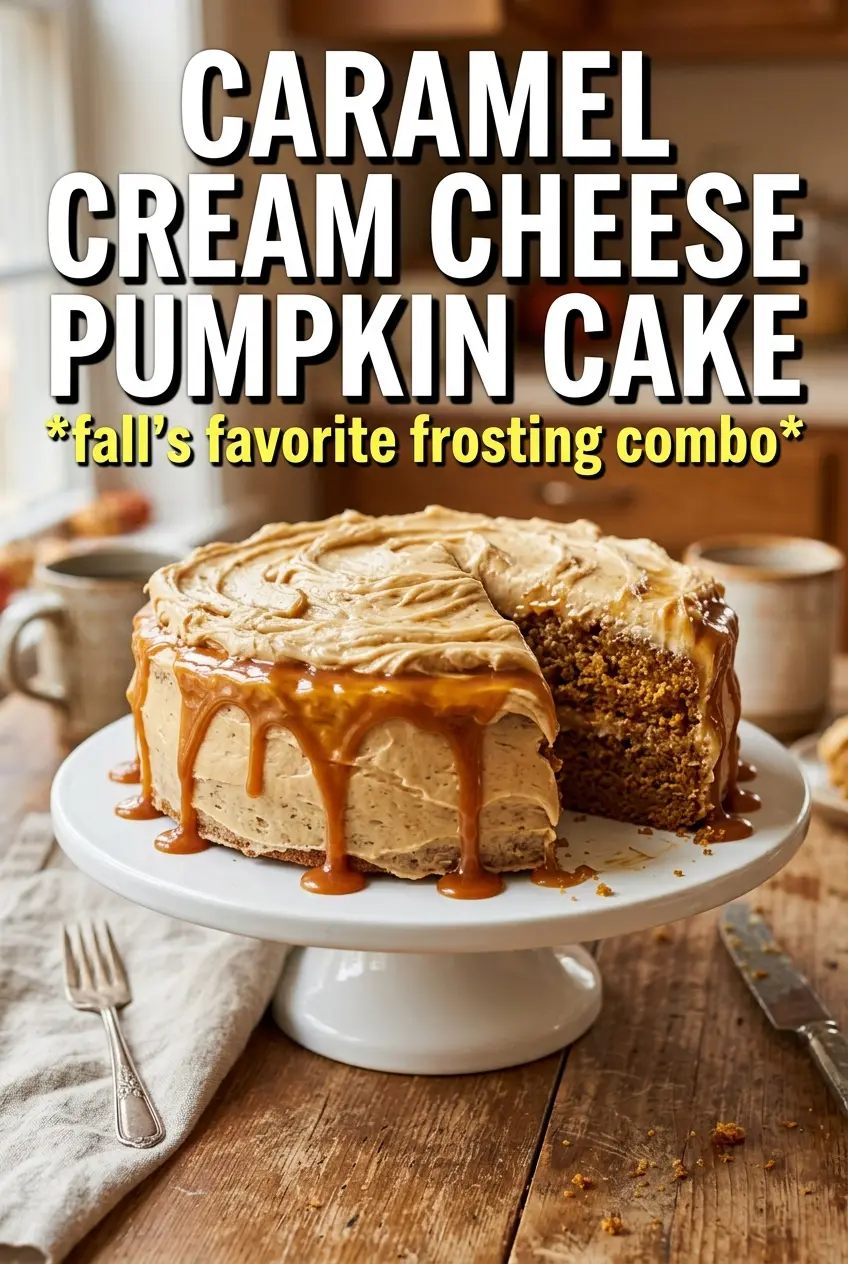
Pumpkin Cake With Caramel Cream Cheese Frosting
Ingredients
Equipment
Method
- Preheat oven to 350°F, then grease two 9-inch round pans. The oven should be fully heated before you mix and bake.
- Beat butter and brown sugar until combined. Continue until the mixture looks lighter and smooth, then add eggs one at a time.
- Add pumpkin puree, sour cream, and vanilla to the bowl, mixing until glossy and uniform. Scrape the sides so no streaks remain.
- Whisk flour, baking powder, baking soda, pumpkin pie spice, cinnamon, and salt together. Stir until the dry ingredients are evenly speckled with spices.
- Fold the dry ingredients into the wet mixture just until no dry pockets show. Mix only until combined to keep the cake tender.
- Divide the batter between the two prepared pans. Aim for an even layer so both cakes bake at the same rate.
- Bake for 35–40 minutes at 350°F, until a toothpick in the center comes out clean. The tops should look set and lightly spring back.
- Cool the cakes completely in the pans before frosting. This prevents the frosting from melting and sliding.
- Beat cream cheese and unsalted butter until smooth. Mix until there are no lumps and the texture looks creamy.
- Beat in caramel sauce until fully incorporated. The frosting should turn a caramel color with a glossy look.
- Beat in powdered sugar gradually, then add vanilla. Stop when the frosting is thick enough to spread and hold swirls.
- Frost between the layers with a generous layer of frosting. Spread to the edges so the cake layers fuse cleanly.
- Frost over the outside of the cake, swirling as you spread. For even coverage, smooth first lightly, then add the swirl texture.
- Drizzle salted caramel over the top and down the sides. Use a steady hand so thin ribbons cascade for a neat finish.