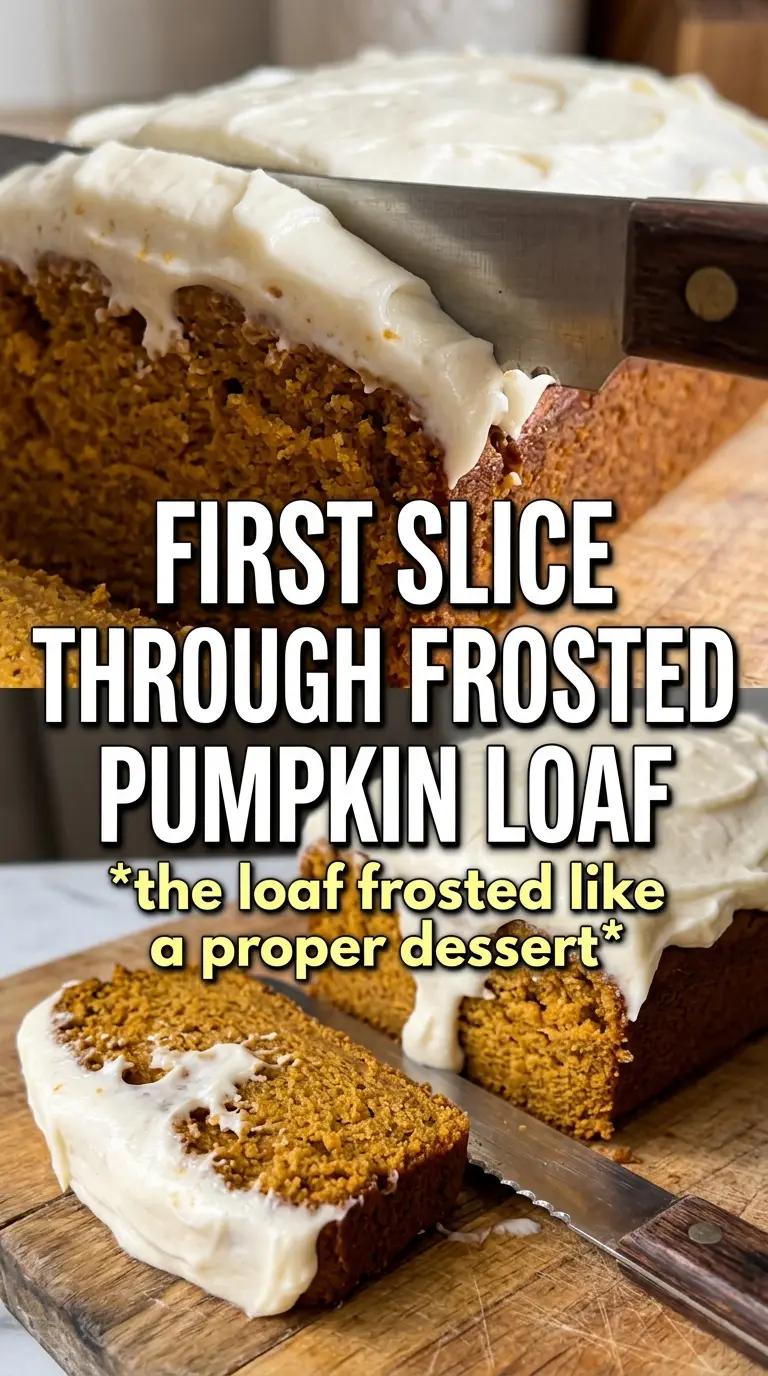
Deeply spiced pumpkin bread with a thick layer of cream cheese frosting is the kind of loaf that disappears slice by slice, usually before it has a chance to cool all the way down. The crumb stays tender and moist for days, the top bakes up with a gentle dome, and that cool tangy frosting turns each slice into something that feels just a little more special than standard quick bread.
This version leans on pumpkin puree for moisture and brown sugar for a soft, almost caramel-like depth, while the oil keeps the loaf plush instead of dry. The batter comes together fast, but the real payoff is in the texture: mixing just until the flour disappears keeps the bread from turning tight or bready. The frosting matters too. A little cinnamon in the cream cheese layer echoes the spice in the loaf without making it taste heavy.
Below, I’m walking through the small details that keep the bread tender, how to avoid a dense center, and the easiest way to get frosting that spreads smoothly instead of sliding off the top.
The loaf came out super moist and the frosting set up thick enough to slice cleanly the next day. I loved that the cinnamon in the frosting matched the bread without making it overly sweet.
Save this pumpkin bread with cream cheese frosting for the loaf that stays moist, slices cleanly, and tastes even better the next day.
The Part That Keeps This Loaf Tender Instead of Heavy
The biggest mistake with pumpkin bread is treating the batter like cake and beating it smooth. Once the flour goes in, too much mixing builds structure that works against you. This loaf wants to stay soft and close-crumbed, so the dry and wet ingredients should be folded together only until the flour streaks disappear.
The other thing that keeps it from drying out is the balance of pumpkin, oil, and brown sugar. Pumpkin brings moisture, oil keeps that moisture in the crumb, and brown sugar adds softness that plain white sugar doesn’t. If your bread has ever baked up dry at the edges and gummy in the middle, it was probably either overmixed or pulled too early.
What Each Ingredient Is Doing in the Loaf and Frosting
- Pumpkin puree — Use plain pumpkin puree, not pumpkin pie filling. Pie filling is already sweetened and spiced, which throws off the balance here and can make the loaf taste muddy. The puree is doing the moisture work, so don’t swap in a thinner squash puree unless you’re ready for a looser batter and a less sturdy loaf.
- Brown sugar plus granulated sugar — The white sugar gives clean sweetness, while the brown sugar adds depth and keeps the crumb softer. If you only use white sugar, the bread still works, but it tastes flatter and bakes up a little less plush.
- Oil — Oil gives this bread a tender, moist texture that stays that way for days. Melted butter will add flavor, but it also firms up as the loaf cools, which changes the texture and makes the bread less soft the next day. Neutral oil is the safest choice.
- Pumpkin pie spice and cinnamon — Pumpkin pie spice brings the warm background notes, while the extra cinnamon sharpens the flavor enough that the loaf doesn’t taste one-note. If you don’t have pumpkin pie spice, use a mix of cinnamon, ginger, nutmeg, and a pinch of cloves.
- Cream cheese and butter — Both need to be softened all the way so the frosting turns smooth instead of grainy. Cold cream cheese leaves little lumps that never fully disappear. If your kitchen is warm, chill the finished frosting for a few minutes before spreading so it holds its shape on the loaf.
Building the Batter and Frosting Without Ruining Either One
Whisking the Dry Mix First
Start by whisking the flour, baking soda, spices, and salt together until the color looks even. That step keeps the baking soda and spice from clumping in one spot, which matters more than people think in a quick bread. If you skip this, you can end up with a bite that tastes oddly salty or overly spiced while the rest of the loaf tastes flat.
Bringing the Wet Ingredients Together
Whisk the pumpkin, sugars, oil, eggs, and vanilla until the mixture looks smooth and glossy. You’re not trying to whip in much air here; you just want everything fully combined so the loaf bakes evenly. If the eggs are still streaky, keep whisking a little longer before adding the dry ingredients.
Stopping at Just Combined
Fold the dry ingredients into the wet mixture until you no longer see dry flour, then stop. A few small streaks are better than an overworked batter, because the loaf finishes mixing as it bakes. Pour it into the pan right away and smooth the top gently so it rises evenly instead of cracking wildly down one side.
Knowing When the Loaf Is Done
Bake until a toothpick comes out clean or with a few moist crumbs, not wet batter. The top should spring back lightly when touched, and the loaf should have a deep golden color around the edges. If the center still looks shiny, give it more time; pulling it too early is the fastest way to get a sunken middle.
Frosting a Fully Cool Loaf
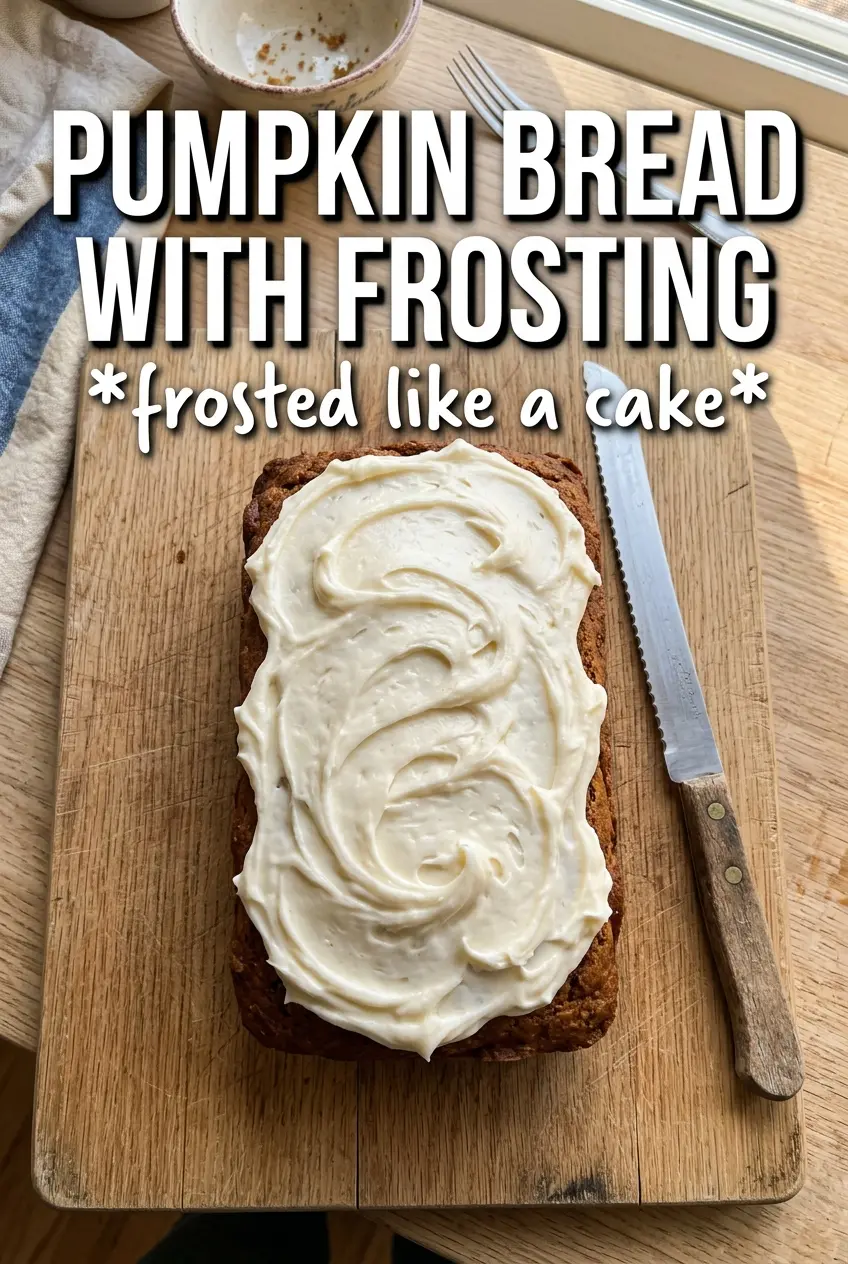
Beat the cream cheese and butter until completely smooth before adding the powdered sugar, vanilla, cinnamon, and milk. Add the milk slowly so the frosting stays thick enough to spread without running off the sides. Frost only after the loaf is fully cool, or the topping will melt and slide.
How to Adjust This Loaf for Different Kitchens and Eating Styles
Gluten-Free Version That Still Slices Cleanly
Use a 1:1 gluten-free baking flour that includes xanthan gum. The loaf will be a little more delicate, so let it cool completely before frosting and slicing. Without that full cool-down, gluten-free quick bread tends to crumble.
Dairy-Free Frosting Swap
Use dairy-free cream cheese and a plant-based butter that firms up when chilled. The frosting won’t have exactly the same tang, but it still spreads well if both ingredients are softened first and the milk is added a teaspoon at a time.
Less Sweet, More Spiced Loaf
Cut the granulated sugar slightly and keep the brown sugar as written, then add a touch more cinnamon to the batter. That gives you a loaf that tastes a little more breakfast-forward and a little less like dessert, though the frosting will still bring sweetness back to the top.
Storage and Reheating
- Refrigerator: Store covered for up to 5 days. The frosting firms up in the fridge, and the loaf tastes even more developed on day two.
- Freezer: Freeze unfrosted slices or the whole unfrosted loaf for up to 3 months. Wrap tightly in plastic and foil, then thaw at room temperature before frosting.
- Reheating: Warm a plain slice briefly in the microwave or toaster oven. If it’s already frosted, let it sit at room temperature first so the frosting softens instead of melting into the bread.
Questions I Get Asked About This Recipe
Pumpkin Bread With Cream Cheese Frosting
Ingredients
Equipment
Method
- Preheat the oven to 350F and grease a 9x5 loaf pan with nonstick coating so the loaf releases cleanly.
- Whisk the dry ingredients together until the pumpkin pie spice and cinnamon are evenly dispersed.
- Whisk the pumpkin puree, sugar, brown sugar, oil, eggs, and vanilla until smooth and glossy.
- Fold the wet mixture into the dry ingredients until just combined, stopping as soon as no dry streaks remain to keep the crumb tender.
- Pour the batter into the greased loaf pan and tap the pan lightly to level the top.
- Bake for 60-65 minutes at 350F until a toothpick inserted in the center comes out clean or with just a few moist crumbs.
- Cool the loaf completely in the pan before frosting so the cream cheese layer stays thick and spreadable.
- Beat the softened cream cheese and butter until smooth and lump-free.
- Add powdered sugar, vanilla, cinnamon, and 2 tablespoons milk, then beat until thick; add 1 more tablespoon milk only if needed for a spreadable consistency.
- Spread the frosting generously over the cooled loaf, covering the top edges.
- Dust the frosted loaf with cinnamon and serve after the frosting sets slightly.