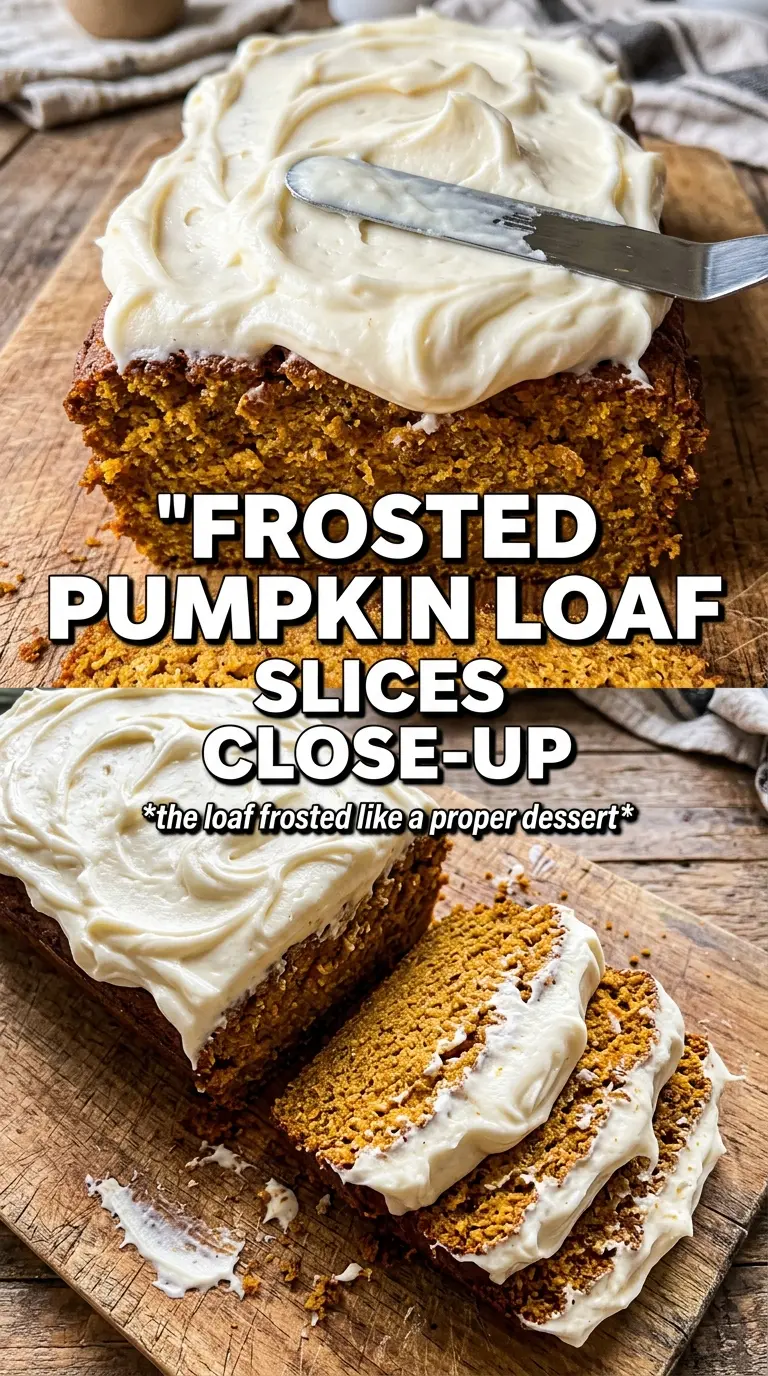
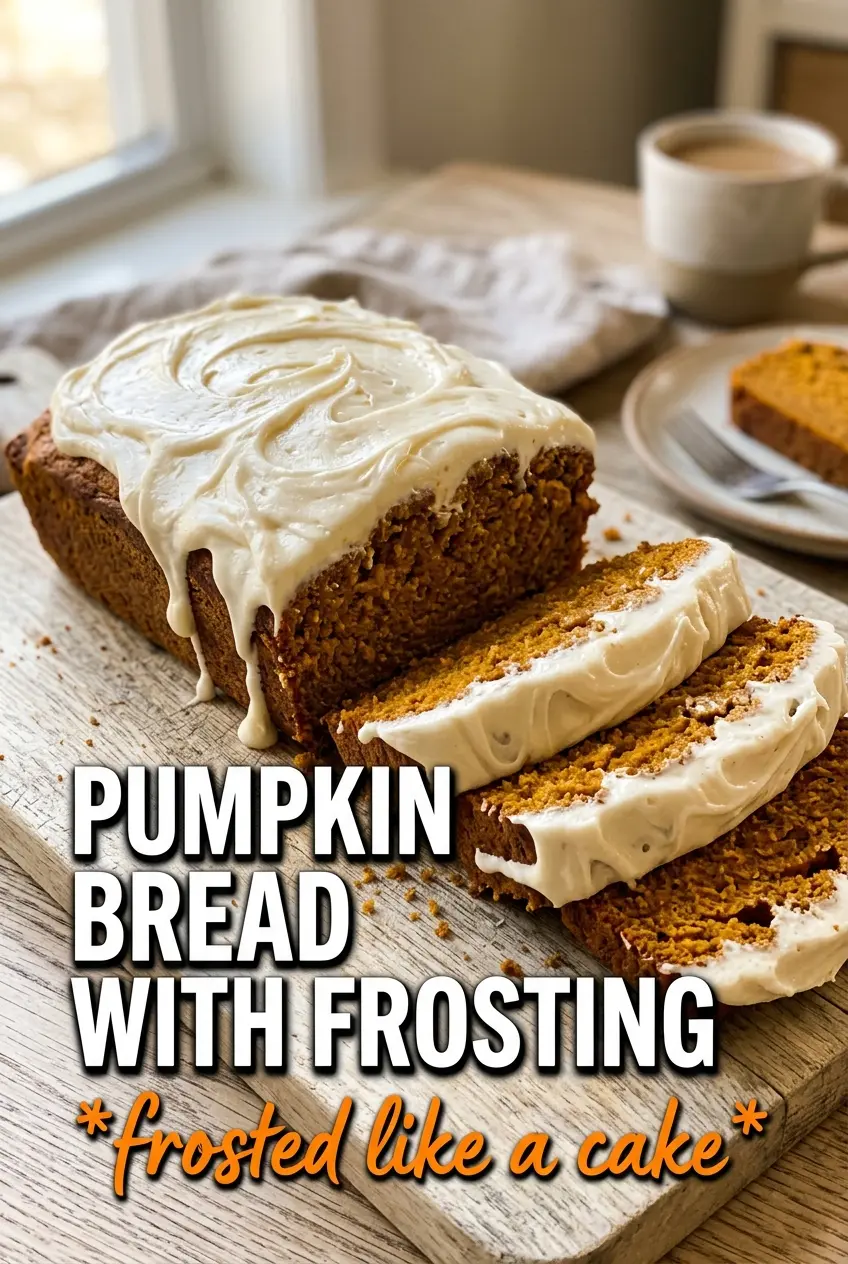
Moist, warmly spiced pumpkin bread gets a major upgrade when it’s finished with a thick layer of tangy cream cheese frosting. The loaf stays tender and rich without turning heavy, and the frosting gives each slice that bakery-style contrast: soft crumb underneath, cool and creamy sweetness on top. A dusting of cinnamon pulls everything together and makes the whole thing taste even more like fall without leaning on pumpkin pie filling or overly sweet spice cake territory.
The balance matters here. Pumpkin puree brings moisture, but the bread still needs enough structure to slice cleanly after it cools. Brown sugar adds depth, granulated sugar keeps the crumb light, and oil keeps the loaf soft for days. The frosting is kept simple on purpose so it spreads easily and doesn’t overpower the bread; a little milk loosens it just enough to swoop across the top instead of tearing into the loaf.
Below you’ll find the small details that make this recipe work the way it should, including how to avoid a gummy center and how to frost the loaf so it looks generous without sliding off.
The loaf baked up with a really soft crumb and the frosting held its shape beautifully after chilling. I liked that the cinnamon on top kept it from tasting too sweet, and the slices cut cleanly once it was fully cooled.
Save this pumpkin bread with cream cheese frosting for the kind of loaf that stays soft for days and slices cleanly once the frosting sets.
The Part That Keeps the Loaf Tender Instead of Gummy
Pumpkin bread goes wrong when the batter gets overmixed or the loaf comes out before the center has set. Pumpkin puree brings a lot of moisture, which is what makes this bread stay plush, but it also means you need to stop stirring as soon as the flour disappears. Once the dry ingredients go in, the batter should look thick and a little streaky, not glossy and smooth.
The other piece that matters is bake time. The top can look done before the middle is ready, especially in a 9×5 loaf pan. Use the toothpick test in the center, not near the edge, and let the bread cool all the way before frosting it. If you rush that part, the frosting melts, the top turns sticky, and the slices lose their clean edges.
What Each Ingredient Is Doing in the Loaf and Frosting
- Pumpkin puree — This gives the bread its moisture, color, and soft texture. Use pure pumpkin puree, not pumpkin pie filling, or the loaf will come out overly sweet and spiced in a way you can’t control.
- Brown sugar — It adds a deeper, almost caramel note that works with the pumpkin spice. If you only have granulated sugar, the bread still works, but the flavor will be flatter and the crumb a little less soft.
- Vegetable oil — Oil keeps the loaf tender after it cools, which is what you want in a quick bread you’ll slice the next day. Melted butter can work, but the bread won’t stay as soft.
- Cream cheese — This is the frosting’s backbone. Use full-fat cream cheese that’s properly softened so the frosting turns smooth instead of lumpy.
- Powdered sugar — It thickens the frosting without making it gritty. Add it gradually so you can stop at a spreadable texture instead of ending up with frosting that’s stiff and hard to spread.
- Milk — A small splash loosens the frosting just enough to spread cleanly over the cooled loaf. Start with less than you think you need; too much and the frosting slides off the sides.
Building the Batter and Frosting It Without a Mess
Mixing the Dry Ingredients First
Whisk the flour, baking soda, pumpkin pie spice, cinnamon, and salt together before anything wet goes in. That extra minute helps the spices spread evenly through the loaf instead of bunching up in one bite. If you skip this, the bread can bake with pale spots or pockets of spice.
Bringing the Wet Ingredients Together
Whisk the pumpkin puree, both sugars, oil, eggs, and vanilla until the mixture looks smooth and thick. The sugar should dissolve into the pumpkin a bit, and the eggs should disappear completely. A few small lumps of brown sugar are fine, but if the mixture looks separated, keep whisking before adding the flour.
Folding the Batter Gently
Add the dry ingredients to the wet mixture and fold just until no dry flour remains. A few streaks are better than overworking it, because overmixing builds gluten and makes the loaf dense. The batter should be thick enough to mound slightly in the pan, not pour like cake batter.
Baking and Cooling Before the Frosting
Scrape the batter into a greased 9×5 loaf pan and bake until a toothpick inserted in the center comes out clean, 60 to 65 minutes. If the top is browning too fast, tent it loosely with foil for the last part of the bake. Let the loaf cool completely in the pan or on a rack before frosting; warm bread will melt the frosting and make the top slide.
Beating the Frosting to the Right Texture
Beat the cream cheese, butter, powdered sugar, vanilla, cinnamon, and just enough milk to make a smooth, spreadable frosting. If it looks too loose, add a little more powdered sugar. If it feels stiff, add milk by the teaspoon. Spread it thickly over the cooled loaf and finish with a dusting of cinnamon.
How to Adapt This Loaf for Different Kitchens and Different Crowds
Dairy-Free Frosting Swap
Use a plant-based cream cheese and vegan butter in the frosting. The texture will be slightly softer and the flavor a little less tangy, so chill it for 10 to 15 minutes before spreading if it feels loose.
Gluten-Free Loaf
Swap in a 1:1 gluten-free baking flour that includes xanthan gum. The loaf will still be tender, but it may need a few extra minutes in the oven and should cool fully before slicing so it doesn’t crumble.
Extra-Spiced Version
Add an extra 1/2 teaspoon cinnamon or a pinch of ginger to push the warm spice forward. That small bump works well if you like the bread to taste more like classic pumpkin loaf and less like a mild tea cake.
Storage and Reheating
- Refrigerator: Store covered for up to 5 days. The frosting firms up, but the bread stays moist.
- Freezer: Freeze the unfrosted loaf tightly wrapped for up to 2 months. Frost after thawing for the best texture.
- Reheating: Bring slices to room temperature before serving. If you want a warm slice, heat it without frosting first, then add frosting after warming so it doesn’t melt off.
Questions I Get Asked About This Recipe
Pumpkin Bread With Cream Cheese Frosting
Ingredients
Equipment
Method
- Preheat oven to 350F and grease a 9x5 loaf pan.
- Whisk all-purpose flour, baking soda, pumpkin pie spice, cinnamon, and salt until evenly combined.
- Whisk pumpkin puree, granulated sugar, brown sugar, vegetable oil, eggs, and vanilla until smooth.
- Fold the flour mixture into the pumpkin mixture just until no dry streaks remain.
- Bake for 60-65 minutes until a toothpick comes out clean.
- Cool the loaf completely before frosting.
- Beat cream cheese and unsalted butter until smooth and creamy.
- Beat in powdered sugar, then add vanilla and cinnamon until smooth and spreadable.
- Add milk 1 tablespoon at a time until the frosting is thick but easily spreadable.
- Spread frosting generously over the cooled loaf in an even layer.
- Dust the top with cinnamon for a finished look.