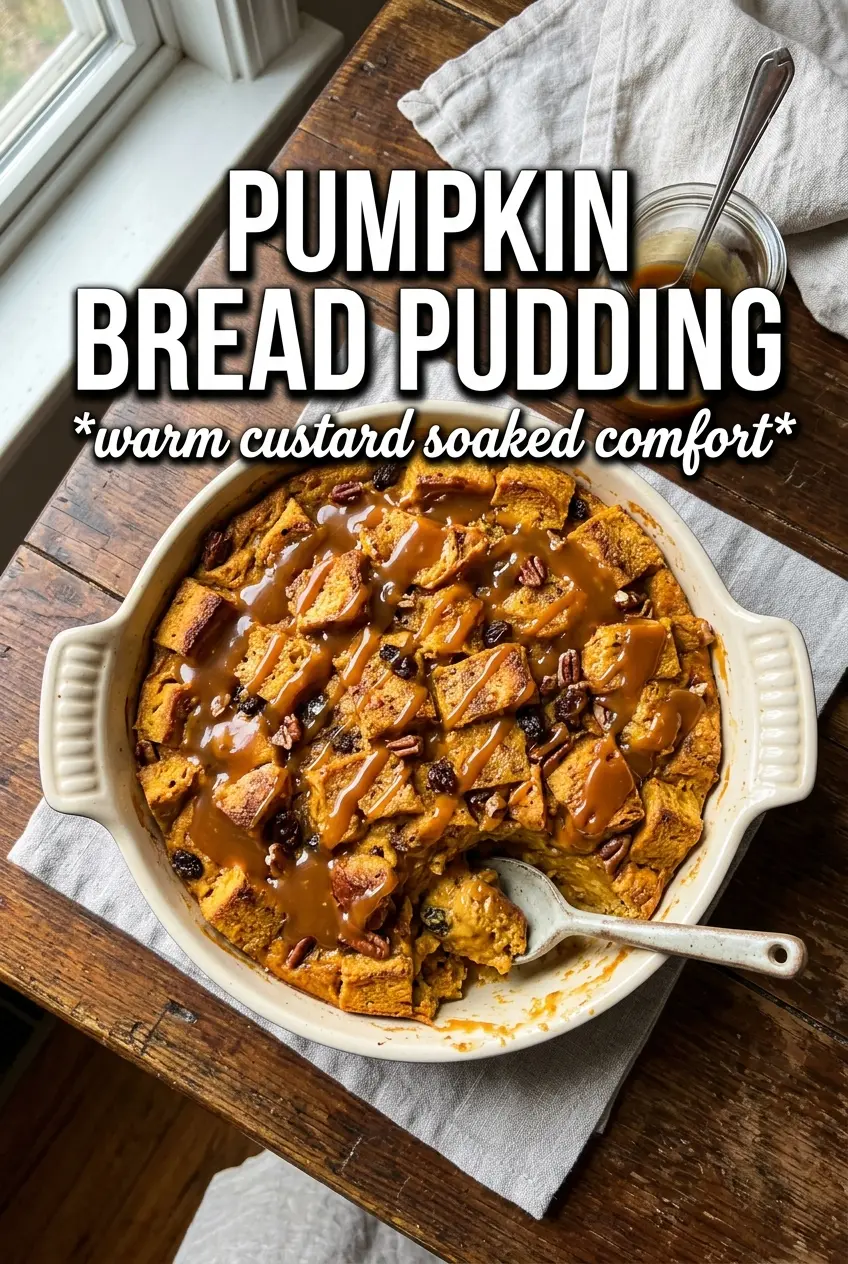
Golden edges, a custardy center, and warm pumpkin spice make pumpkin bread pudding the kind of dessert that disappears fast once it hits the table. The bread turns soft and rich without falling apart, and the caramel bourbon sauce gives each spoonful a buttery finish that feels a little special without being fussy. It’s the sort of dessert that earns repeat requests because it tastes like you spent all afternoon on it, even though the work is straightforward.
The trick is using sturdy bread and giving it time to soak. Brioche or challah holds onto the pumpkin custard without turning muddy, and the rest time lets the cubes absorb the mixture all the way through so the center bakes up creamy instead of eggy. A touch of heavy cream keeps the custard lush, while the brown sugar deepens the pumpkin flavor instead of flattening it.
Below, I’ll walk through the small details that keep the texture right, how to know when it’s baked through, and a few swaps that still give you a bakery-worthy result.
The custard soaked in perfectly and the top baked up with those crisp, caramelized edges I always want. I added a little extra bourbon to the sauce and it tasted like a restaurant dessert.
Save this pumpkin bread pudding for the nights when you want a warm custardy dessert with crisp edges and caramel bourbon sauce.
The Reason the Custard Stays Creamy Instead of Watery
Pumpkin bread pudding can turn soggy fast if the custard is too thin or the bread is too soft. The balance here is what keeps it spoonable instead of soupy: enough eggs to set the base, enough cream to keep it rich, and enough sturdy bread to hold the structure after soaking. The other piece that matters is the rest time. Thirty minutes gives the cubes time to drink in the custard before baking, which means you get even texture all the way through instead of a dry top and a puddly bottom.
The bake is done when the center is set but still has a slight wobble when you nudge the pan. If you wait until it looks completely firm in the oven, it usually goes too far and loses that soft, almost bread-pudding-like middle. The browned edges are part of the appeal, but the middle should still look tender.
- Brioche or challah — Both are rich enough to stay plush after baking. Sandwich bread works in a pinch, but it breaks down faster and gives you a denser pudding.
- Pumpkin puree — Use plain pumpkin puree, not pumpkin pie filling. Pie filling already has sugar and spices added, which throws off the custard balance.
- Heavy cream — This is what gives the pudding its silky finish. You can swap in more milk, but the texture will be lighter and less luxurious.
- Brown sugar — It deepens the pumpkin and adds a caramel note that white sugar alone won’t give you. The split between brown and granulated sugar keeps the sweetness from tasting flat.
What Each Ingredient Is Doing in the Pan
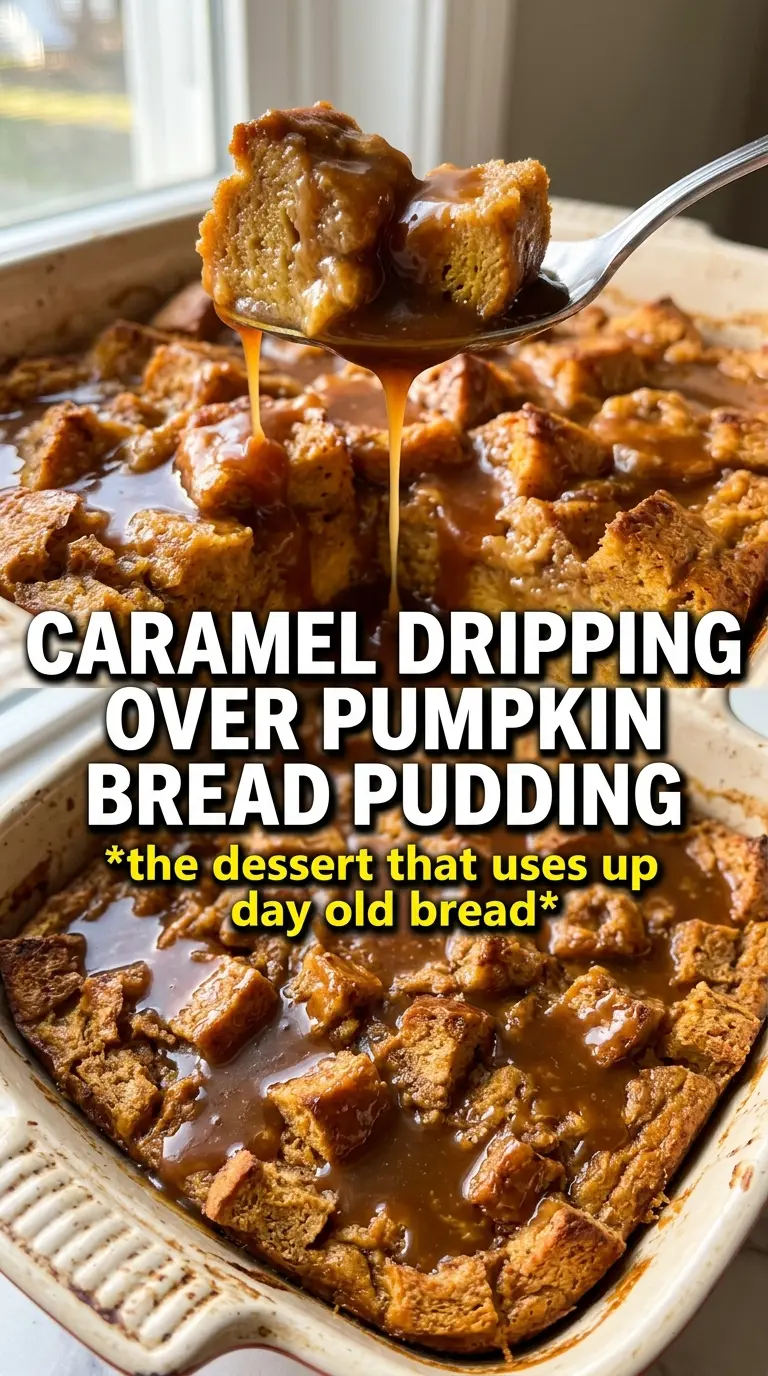
- Eggs — They set the custard so the pudding slices and spoons cleanly. Four eggs is enough for body without making it taste like baked custard.
- Pumpkin pie spice and cinnamon — This is the backbone of the pumpkin flavor. If you only have one or the other, use both if possible; cinnamon alone tastes flatter, and pumpkin pie spice alone can read a little generic.
- Vanilla — It rounds out the squashy edge of the pumpkin and makes the caramel sauce taste more cohesive. A good vanilla extract matters here because the flavor shows up in every bite.
- Salt — Even this small amount keeps the dessert from tasting heavy. It sharpens the spices and helps the caramel sauce taste less cloying.
- Bourbon — In the sauce, it adds warmth and a faint oak note that plays well with the pumpkin. You can leave it out, but the sauce will taste more one-note and sweeter.
Building the Custard So the Center Bakes Through
Setting Up the Bread
Grease the baking dish first, then spread the bread cubes in an even layer so the custard can reach everything. If the cubes are packed too tightly in one heap, the center stays dry and the edges overbake before the middle catches up. Day-old bread works best because it has enough structure to soak without dissolving. If your bread is very fresh, cube it and let it sit out for a bit so it dries slightly.
Whisking the Pumpkin Base
Whisk the pumpkin, eggs, milk, cream, sugars, spices, vanilla, and salt until the mixture looks smooth and even. You don’t want streaks of pumpkin or pockets of egg white, because those bake into uneven bites. The mixture should pour like a loose custard, not a thick batter. If it looks grainy from the sugar, keep whisking until the grains dissolve as much as they can.
Soaking Without Overmixing
Pour the custard over the bread and press down gently so every cube gets coated. The bread should look saturated, but don’t stir aggressively or you’ll break the cubes into mush. Let it rest for the full 30 minutes; that pause is what lets the center hydrate. If the top still looks a little dry halfway through, press the bread down again rather than adding extra liquid.
Baking to the Right Set
Bake at 350°F until the top is golden and the center no longer sloshes when you move the pan. The edges will look deeper brown and slightly crisp, which is exactly what you want. If the top browns too quickly before the center sets, lay a piece of foil loosely over the pan for the last stretch. Pull it from the oven and let it rest a few minutes before serving so the custard finishes settling.
How to Change This Without Losing the Texture You Want
Dairy-Free Version
Use full-fat canned coconut milk in place of the cream and milk. The pudding will still set nicely, and the coconut adds a faint sweetness that works with pumpkin, but the sauce will taste different and a little less classic. If you go this route, skip the bourbon only if you want the coconut to stay front and center.
Gluten-Free Bread Swap
Use a sturdy gluten-free loaf with a tight crumb, not a soft sandwich bread. Gluten-free bread can get fragile once soaked, so cube it and dry it out well before assembling. The texture will be a little more delicate, but you can still get crisp edges and a creamy center.
Skipping the Bourbon
Leave the bourbon out of the sauce and add an extra teaspoon of vanilla instead. The sauce will still be rich and buttery, but it will lean sweeter and less complex. That’s the cleanest swap if you’re serving kids or anyone who wants the dessert alcohol-free.
Storage and Reheating
- Refrigerator: Store covered for up to 4 days. The custard firms up a little in the fridge, but the flavor gets even better the next day.
- Freezer: It freezes well in individual portions. Wrap tightly and freeze for up to 2 months, then thaw in the fridge before reheating.
- Reheating: Warm in a 300°F oven, covered loosely with foil, until heated through. The biggest mistake is microwaving it too long, which makes the custard rubbery and dries out the edges.