Pasta salad gets a lot more interesting when it actually eats like a meal, and this one does. The noodles are coated in a glossy peanut-lime dressing that clings instead of pooling, the shredded chicken gives it staying power, and the cabbage and carrots keep every bite crisp and lively. It’s the kind of bowl that disappears fast because it hits salty, tangy, nutty, and fresh all at once.
The key is balance. Cook the pasta just to al dente, then rinse it cold so it stops carrying heat and soaking up dressing before you’re ready. The peanut dressing starts thick, which is exactly what you want; warm water loosens it into something pourable without turning it thin or greasy. From there, the chilled rest matters because the flavors settle into the noodles instead of sitting on the surface.
Below you’ll find the small details that make this salad work from the first bite to the last, plus a few swaps that keep the texture right even if you change the noodles or protein.
The dressing coated every noodle without getting heavy, and the chill time made the peanut-lime flavor pop. I added extra cabbage for crunch and it stayed crisp even the next day.
Save this protein packed Thai pasta salad for a make-ahead lunch with bold peanut-lime dressing and plenty of crunch.
The trick is keeping the noodles cold before they drink up all the dressing
With pasta salad, the most common mistake is dressing hot noodles and expecting the texture to stay light. Warm pasta keeps absorbing sauce as it cools, which leaves you with a dry salad on top and a heavy one at the bottom. Rinsing the pasta under cold water stops the cooking immediately and clears away surface starch so the peanut dressing can coat instead of clumping.
The other thing that matters here is the balance of soft and crunchy. Shredded chicken and edamame bring substance, but the cabbage and carrots keep the bowl from eating flat. If the salad tastes muted after chilling, it usually needs salt, acid, or both — a squeeze of lime wakes up the peanut butter faster than more dressing does.
What each ingredient is actually doing in this bowl
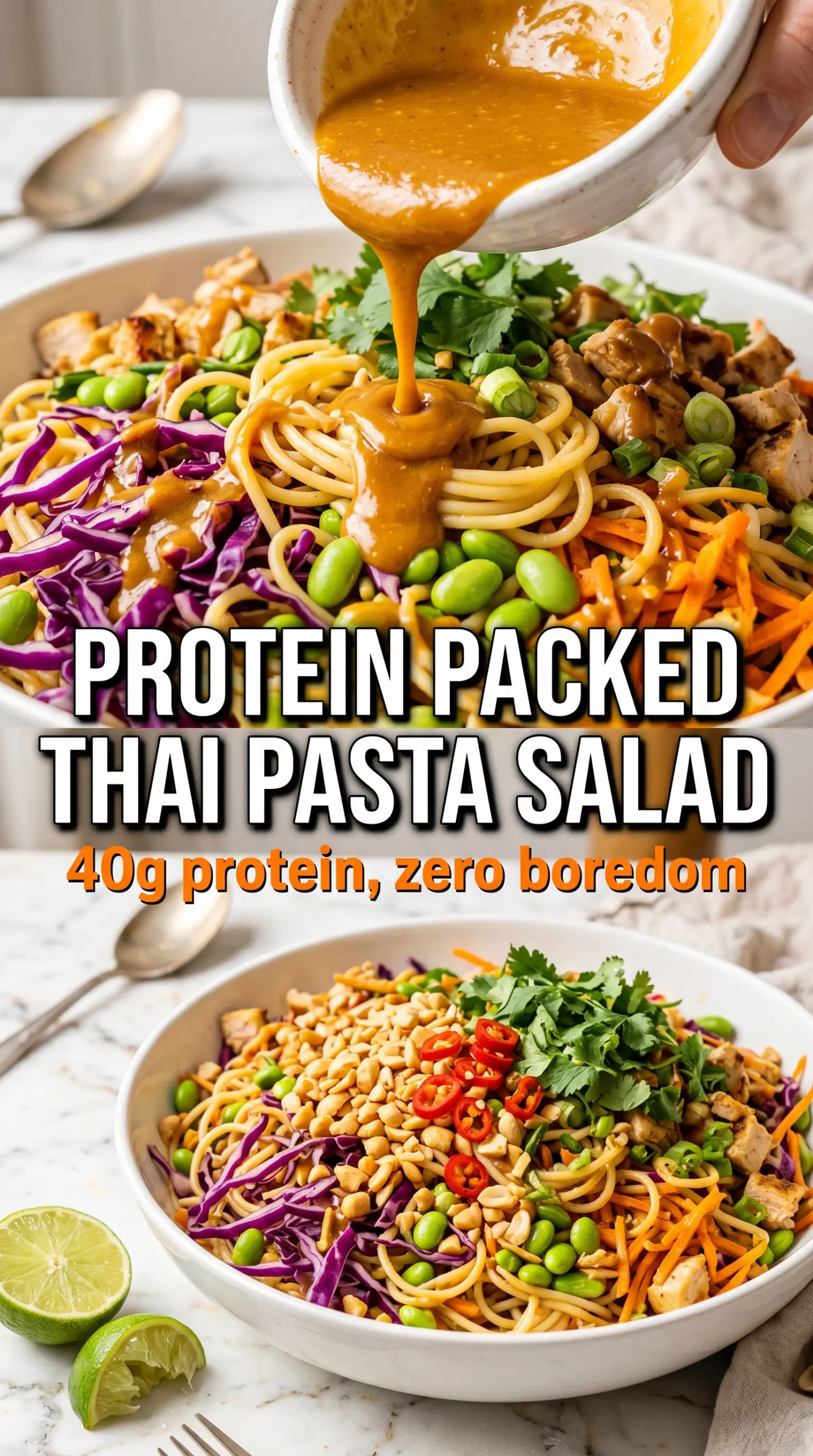
- Linguine, spaghetti, or rice noodles — Any long noodle works, but you want something with enough surface area to hold the dressing. Rice noodles keep it gluten-free, while wheat pasta gives the salad a little more chew. Cook them just to al dente; soft noodles get mushy once they chill.
- Peanut butter — This is the backbone of the dressing, not just a background note. Natural or standard creamy peanut butter both work, but the thinner the peanut butter, the less warm water you’ll need. If it’s stiff, whisk in the water a tablespoon at a time until the dressing pours easily.
- Soy sauce, rice vinegar, and lime juice — These three keep the dressing from tasting heavy. Soy sauce brings salt and depth, rice vinegar adds clean sharpness, and lime gives the salad its bright finish. If you swap in tamari, the flavor stays the same and the dish turns gluten-free.
- Shredded chicken — This turns the salad into a main dish and helps it feel satisfying even when served cold. Rotisserie chicken works fine here; just pull it into small shreds so it blends with the noodles instead of sitting in big chunks.
- Edamame, cabbage, and carrots — These are the crunch and color. Edamame adds extra protein and a nutty bite, while cabbage and carrots stay crisp after chilling. Pre-shredded cabbage is fine, but slice it thin enough that it bends with the noodles.
- Sesame oil, garlic, and sriracha — Sesame oil adds the toasted note that makes the dressing taste complete, garlic sharpens it, and sriracha gives warmth without turning the salad spicy-hot. A little goes a long way, so taste before adding more heat.
How to build the salad so the dressing stays glossy, not gluey
Cooking the noodles at the right moment
Boil the pasta until just al dente, then drain it and rinse it under cold water until it’s fully cooled. That rinse matters because it stops the carryover cooking and removes the surface starch that would otherwise make the noodles stick together. Let them drain well; extra water on the pasta dilutes the dressing and washes out the peanut flavor.
Whisking the dressing until it loosens
Blend or whisk the peanut butter, soy sauce, vinegar, lime juice, honey, sesame oil, sriracha, and garlic until smooth, then add warm water a little at a time. The dressing should look thick but pourable, like a loose satay sauce. If it seems separated, keep whisking; peanut butter often needs a minute to emulsify fully before it turns silky.
Tossing while everything is still cool
Combine the cooled noodles, chicken, edamame, cabbage, carrots, and green onions, then pour the dressing over and toss until every strand is coated. Add the cilantro after most of the dressing is distributed so it stays bright instead of getting bruised. The salad needs that 30-minute chill because the noodles absorb just enough dressing to taste seasoned all the way through without going soft.
Finishing for texture and brightness
Right before serving, add the chopped peanuts and a squeeze of lime. The peanuts lose their crunch fast once they sit in the dressing, so keep them on top. If the salad has thickened in the fridge, a splash of lime juice or a spoonful of warm water brings it back without making it watery.
How to adapt this Thai pasta salad without losing the balance
Make it gluten-free with rice noodles and tamari
Use rice noodles instead of wheat pasta and swap soy sauce for tamari. The texture gets a little softer and more delicate, so don’t overcook the noodles or they’ll break when tossed. The flavor stays bold, and the peanut-lime dressing still carries the whole bowl.
Make it vegetarian by swapping in extra edamame
Leave out the chicken and add another cup of edamame or some cubes of baked tofu. Edamame keeps the protein high and fits the nutty dressing naturally, while tofu will soak up more sauce and give a softer bite. If you use tofu, brown it first so the salad doesn’t turn one-note.
Use rotisserie chicken when dinner needs to happen fast
Rotisserie chicken works well as long as you shred it into small pieces and remove any overly salty skin. It saves time and blends into the salad better than chunky leftover chicken breast. The only tradeoff is a slightly richer flavor, which actually plays nicely with the peanut dressing.
Storage and Reheating
- Refrigerator: Store in an airtight container for up to 4 days. The noodles absorb more dressing as it sits, so the salad gets thicker by day two.
- Freezer: I don’t recommend freezing this salad. The noodles and vegetables lose their texture once thawed, and the dressing can separate.
- Reheating: This salad is best served cold or just lightly tempered from the fridge. If it feels tight after chilling, stir in a spoonful of warm water or lime juice instead of heating it, which would soften the vegetables and make the dressing oily.
Answers to the questions worth asking
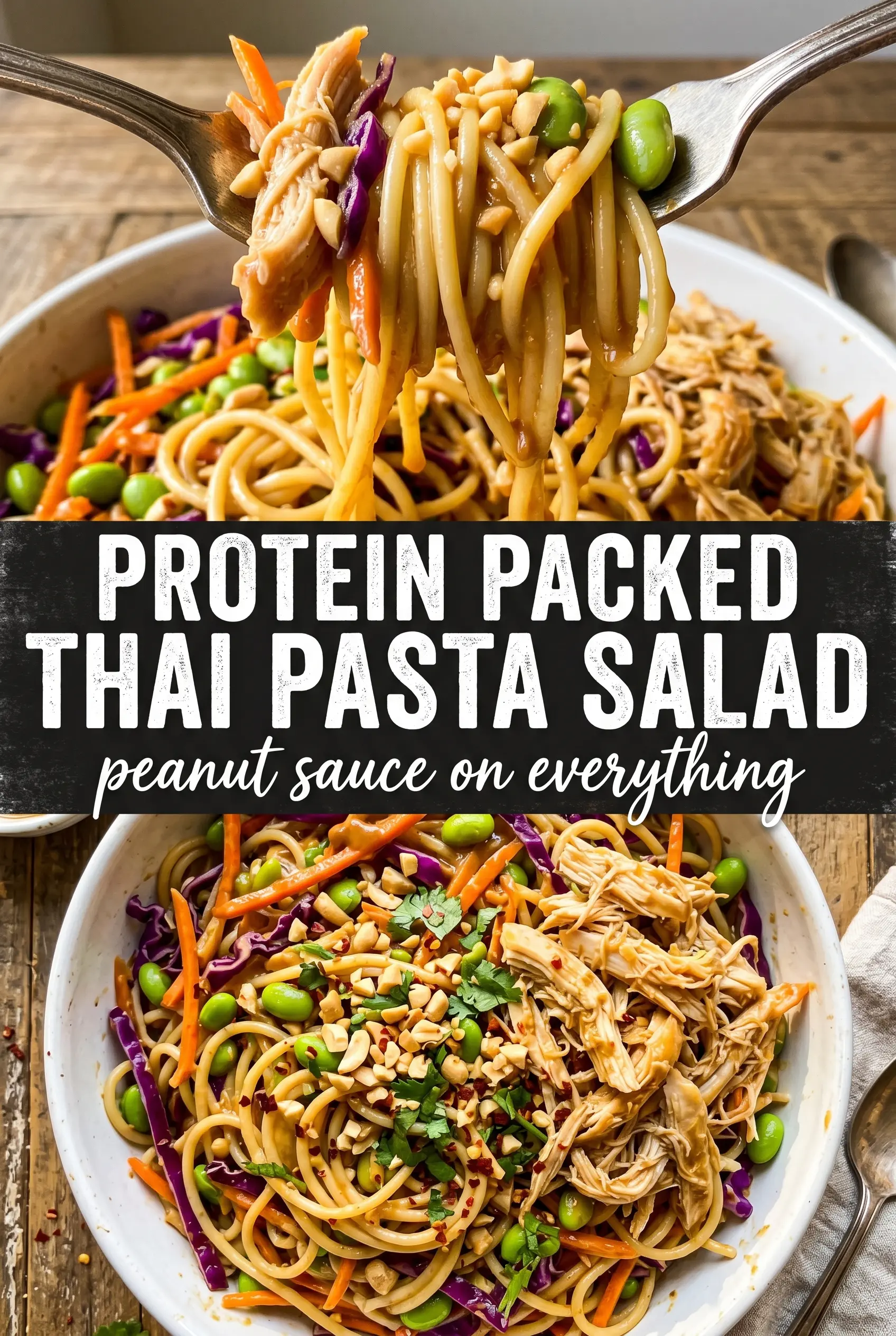
Protein Packed Thai Pasta Salad
Ingredients
Equipment
Method
- Bring a large pot of water to a boil, then cook linguine, spaghetti, or rice noodles to al dente, about 8–10 minutes depending on package directions. Drain immediately and rinse cold to stop cooking, then cool until no longer warm.
- Whisk or blend peanut butter, soy sauce, rice vinegar, lime juice, honey, sesame oil, sriracha, garlic, and warm water until smooth and pourable, adding the full amount of warm water for a thick but coatable texture. If needed, add a splash more warm water so it flows easily.
- In a large mixing bowl, combine cooled noodles with cooked chicken breast, edamame, shredded red cabbage, shredded carrots, and green onions. Toss to distribute everything evenly through the pasta.
- Pour Thai peanut dressing over the pasta mixture and toss thoroughly until the noodles look evenly coated. Scrape the bottom so no dry pockets remain.
- Fold in fresh cilantro, then refrigerate the salad for 30 minutes to let flavors meld. Cover to prevent the noodles from drying out in the fridge.
- Top the chilled Thai peanut noodle salad with roughly chopped roasted peanuts and additional lime wedges before serving. Serve cold for the crunchiest cabbage and best peanut-lime flavor.