Pineapple zucchini bread bakes up with a soft, moist crumb, bright tropical sweetness, and just enough cinnamon to keep the loaf from tasting flat. It’s the kind of quick bread that slices cleanly once cooled, but still feels tender and fresh on the tongue, with little pockets of pineapple giving each bite a juicy lift.
What makes this version work is balance. The zucchini brings moisture without a strong vegetable flavor, while the drained crushed pineapple adds sweetness and tang without turning the batter wet and heavy. Squeezing the zucchini dry matters more than most people think, and the reserved pineapple juice gives the glaze a clean fruit flavor instead of just sugary sweetness.
Below, I’ll walk through the little details that keep the loaf from sinking in the middle and show you the best way to get that glossy glaze on top while the bread is still warm.
The loaf stayed unbelievably moist for days, and the pineapple flavor came through without making it soggy. I loved that the top baked up golden and the glaze set just enough to slice cleanly.
Pin this pineapple zucchini bread for a moist tropical loaf with a clean pineapple glaze and tender crumb.
The Reason This Loaf Stays Moist Without Turning Dense
Quick breads like this one fail in one of two ways: they dry out, or they get heavy and gummy from too much moisture. Pineapple zucchini bread sits right on that edge, which is why the prep matters more than the ingredient list. Draining the pineapple and squeezing the zucchini dry keeps the batter hydrated without flooding the flour.
The other thing that keeps the crumb light is restraint. Once the flour goes in, stop stirring as soon as the dry streaks disappear. Overmixing builds structure in a quick bread batter, and structure is the last thing you want here because it turns a tender loaf into something tight and bready instead of soft and sliceable.
What the Pineapple, Zucchini, and Coconut Are Each Doing Here
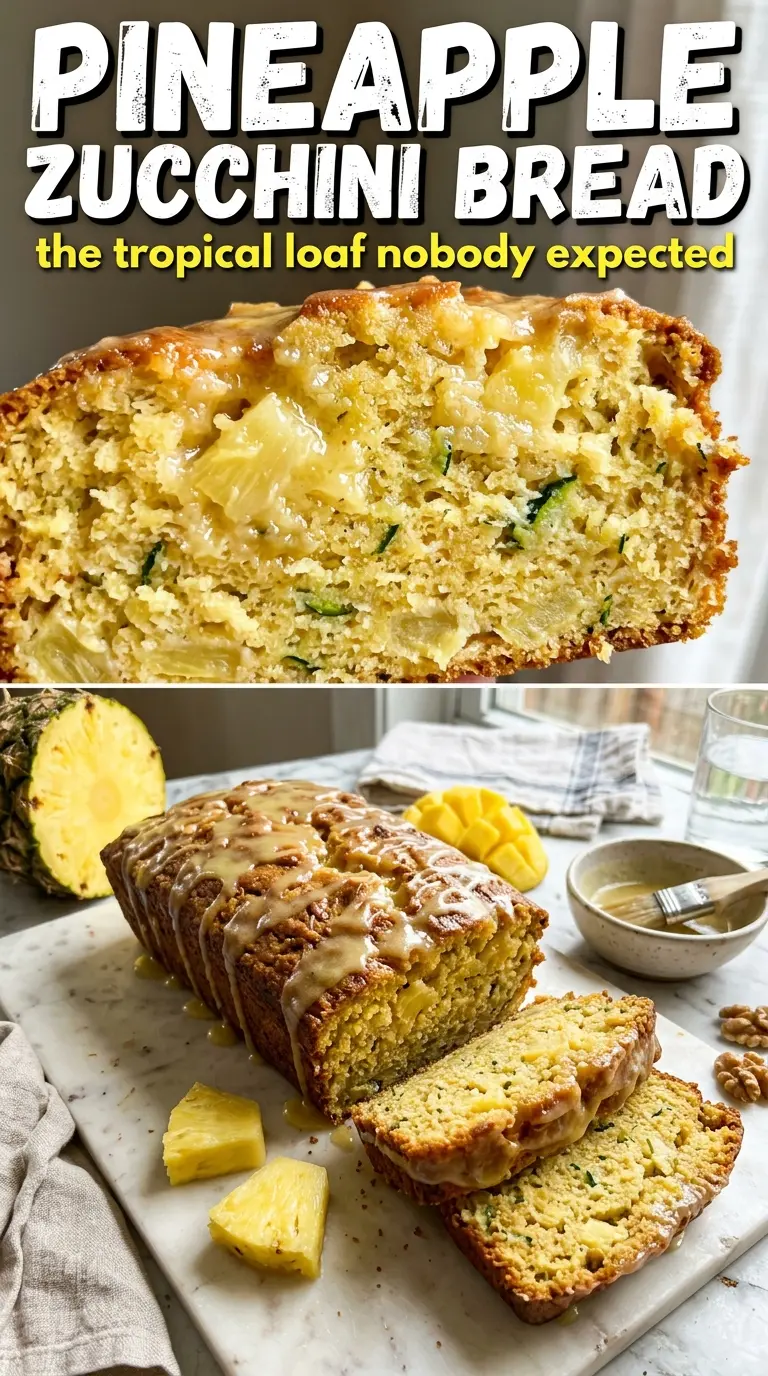
- Crushed pineapple — This gives the loaf its tropical sweetness and a little tang. Drain it well, but don’t press it bone-dry; you want the fruit, not the extra liquid. If canned pineapple is all you have, it works better than fresh here because the texture is softer and blends into the batter more evenly.
- Zucchini — Zucchini fades into the background flavor-wise, but it’s carrying moisture and keeping the crumb supple. Grate it fine and squeeze out the liquid in a clean towel or several layers of paper towels. If you skip that step, the center can stay damp long after the edges are baked.
- Vegetable oil — Oil keeps this loaf softer than butter would. It gives you that plush, stay-moist texture even after a day or two, which is exactly what you want in a quick bread.
- Sweetened coconut — Optional, but it adds chew and a little extra sweetness that plays nicely with the pineapple. If you leave it out, the loaf is still good; if you add it, don’t add more than the recipe calls for or the batter gets crowded and heavy.
- Reserved pineapple juice for the glaze — This is the part that keeps the topping from tasting one-note. Powdered sugar alone gives you sweetness; pineapple juice gives it brightness and makes the glaze taste like it belongs on the loaf instead of sitting on top of it.
Getting the Batter Mixed and the Center Baked Through
Building the Wet Base
Beat the sugar, eggs, oil, and vanilla until the mixture looks smooth and a little glossy. That step dissolves the sugar enough to help the loaf bake evenly, and it gives you a more unified batter before the fruit goes in. Add the pineapple and zucchini next, and stir just enough to spread them through the mixture. If you see a little liquid at the bottom of the bowl, the zucchini wasn’t squeezed well enough.
Bringing in the Dry Ingredients
Whisk the flour, baking soda, baking powder, salt, and cinnamon together before they ever hit the wet bowl. That keeps the leaveners and spice distributed evenly, so you don’t get bitter pockets or a loaf that rises unevenly. Fold the dry mixture in with a spatula and stop when you still see a few streaks of flour. Those streaks disappear in the oven; if you keep stirring now, the crumb turns tight.
Reading the Bake
Use a greased 9×5 loaf pan and bake until the top is deeply golden and a toothpick comes out clean from the center, usually around 55 to 65 minutes. If the top browns too fast before the middle is done, tent it loosely with foil for the last 15 minutes. The loaf should spring back lightly when pressed in the center, and the edges will pull a touch from the pan. Let it cool for 15 minutes before glazing so the top is warm enough to catch the glaze but not so hot that it disappears into the bread.
How to Adjust This Loaf Without Losing the Moist Crumb
Make It Dairy-Free Without Changing the Texture
This loaf is naturally dairy-free as written, which is part of why the crumb stays so soft. If you swap the glaze for a citrus glaze or skip it entirely, the bread still bakes up with the same tender texture. Stick with oil instead of butter if you want that same moist finish.
Skip the Coconut for a Cleaner Pineapple Flavor
Leaving out the coconut makes the loaf a little less chewy and lets the pineapple stand out more clearly. Nothing else needs to change. If you do keep it, toast the coconut first for a deeper flavor, then cool it before folding it in so it doesn’t melt into the batter.
Turn It Into Muffins
Portion the batter into a lined muffin tin and bake at 350°F until the tops spring back and a tester comes out clean, usually around 18 to 22 minutes. Muffins lose the loaf’s long bake time but keep the same flavor. They’re a smart choice if you want faster cooling and neater portions.
Storage and Reheating
- Refrigerator: Store tightly wrapped for up to 4 days. The crumb stays moist, but the glaze softens a bit after the first day.
- Freezer: Freeze slices or the whole cooled loaf, wrapped well and then bagged, for up to 3 months. Thaw at room temperature while still wrapped so condensation doesn’t make the crust sticky.
- Reheating: Warm slices briefly in the microwave or toaster oven. Don’t heat it too long or the loaf dries out faster than you expect because quick breads are delicate once sliced.
Questions I Get Asked About This Recipe
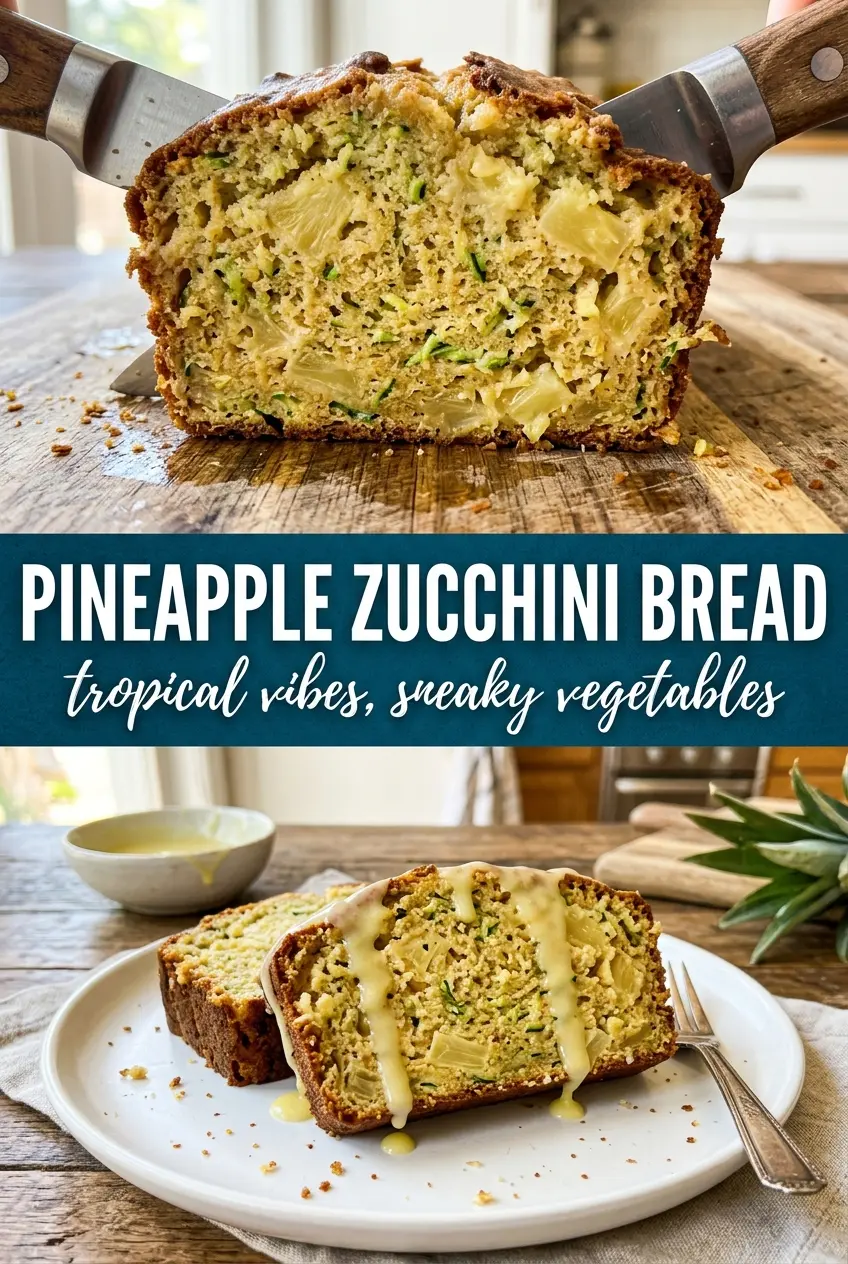
Pineapple Zucchini Bread
Ingredients
Equipment
Method
- Preheat oven to 350°F and grease a 9x5 loaf pan, using a shiny, evenly greased surface to help it release cleanly.
- Whisk all-purpose flour, baking soda, baking powder, salt, and cinnamon together in a bowl until the mixture is evenly speckled.
- Beat granulated sugar, eggs, vegetable oil, and vanilla extract until smooth and glossy.
- Stir in the drained crushed pineapple and the grated zucchini, mixing just until the batter looks cohesive.
- Fold the dry ingredients into the wet until just combined, leaving no visible flour streaks; fold in shredded sweetened coconut if using.
- Pour batter into the loaf pan and bake 55–65 minutes, until a toothpick inserted in the center comes out clean and the top is golden.
- Cool the loaf for 15 minutes in the pan so it sets up before glazing, indicated by a firm, less-wobbly center.
- Mix powdered sugar with the reserved pineapple juice until smooth, then drizzle over the warm loaf so it soaks slightly and stays glossy before serving.