Pesto pasta salad lands in that sweet spot where bright herbs, creamy cheese, and chilled pasta all pull in the same direction. The pesto clings to every ridge of the pasta, the tomatoes pop with acidity, and the mozzarella softens each bite without turning the bowl heavy. It tastes fresh enough for a cookout and substantial enough to count as lunch the next day.
The little things matter here. Tossing the pasta with a bit of olive oil while it’s still warm keeps the noodles from welding together as they cool, and loosening the pesto with lemon juice gives the salad a cleaner finish instead of a thick, pasty coating. Letting it chill before serving isn’t just about temperature; it gives the pasta time to absorb the dressing so the flavor reaches all the way through.
Below, you’ll find the exact point where the pasta should stop cooking, how to keep the basil bright, and what to change if you need to make this dairy-free or ahead for a crowd.
I mixed the pesto with lemon juice like you said, and the salad stayed bright instead of going heavy. The pasta kept its shape after chilling, and the pine nuts stayed crunchy even the next day.
Save this basil pesto pasta salad for the days when you want something cold, herby, and quick to throw together.
The Trick to Keeping Pesto Pasta Salad Bright Instead of Greasy
The biggest mistake with pesto pasta salad is treating the pesto like a heavy sauce instead of a dressing. Straight pesto can coat the pasta in a thick layer that tastes dull once it chills, especially if it’s packed with oil and cheese. Whisking in lemon juice and a little more olive oil loosens it just enough so it spreads evenly and still tastes fresh after resting.
Another place this recipe goes sideways is the pasta temperature. If the noodles are still hot when the pesto goes in, the basil can lose its vivid color and the mozzarella starts to soften too quickly. Cool the pasta completely before combining everything, then let the finished salad sit in the fridge for at least 30 minutes so the flavor settles in without turning muddy.
What Each Ingredient Is Actually Doing in This Salad
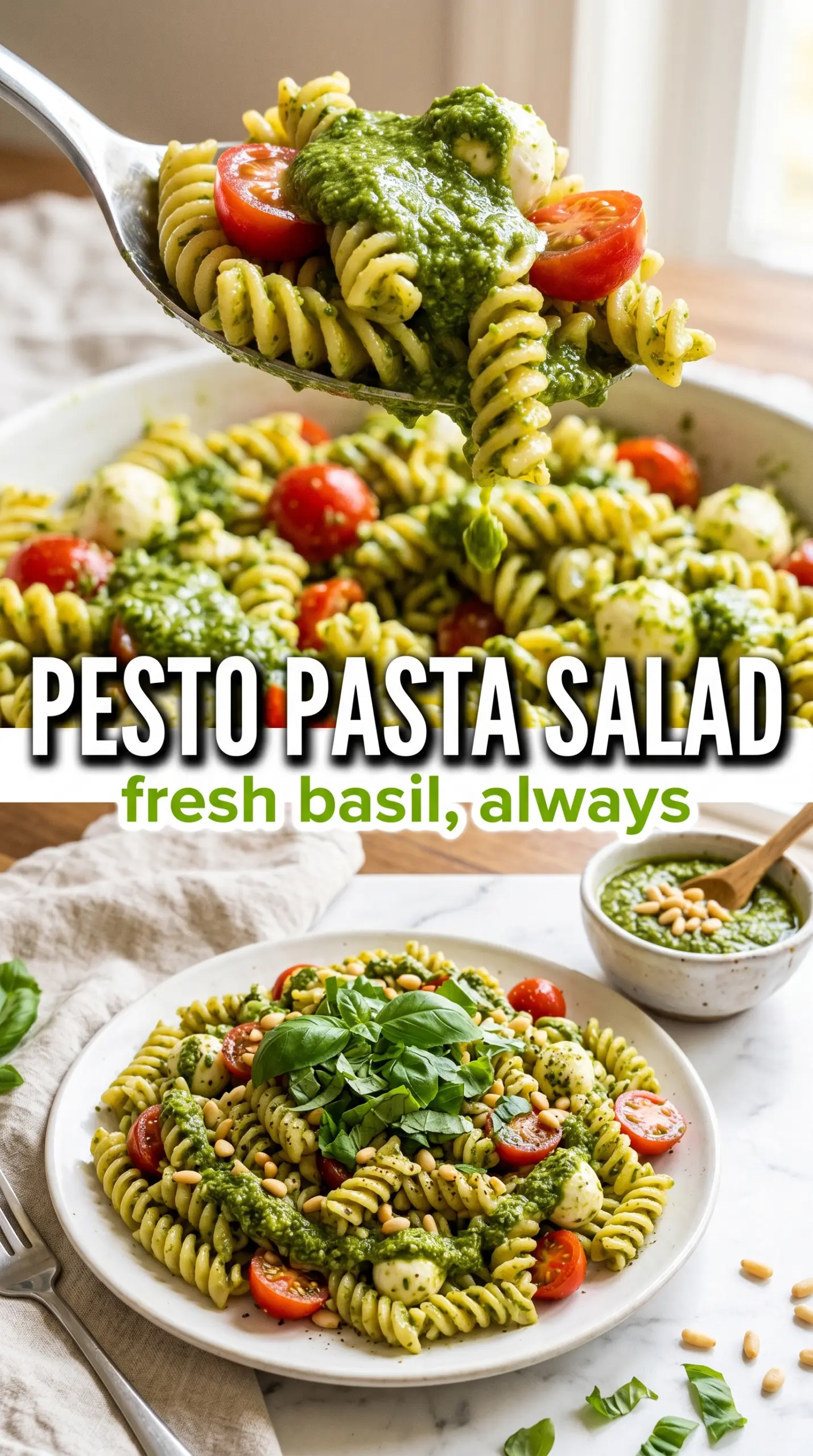
- Fusilli or penne — You want a shape with grooves or ridges so the pesto has something to grab. Smooth pasta works, but it won’t hold the dressing as well, which matters more here than in a mayonnaise-based salad.
- Prepared basil pesto — This is the backbone of the whole dish, so use the best jarred pesto you can find if you’re not making it from scratch. If it tastes flat on its own, it will taste flat in the salad; a squeeze of lemon helps, but it can’t rescue a dull pesto.
- Lemon juice — This is what keeps the salad from feeling heavy. It sharpens the basil and cuts the richness of the cheese and oil, and fresh lemon is worth using here because bottled juice can taste blunt.
- Fresh mozzarella — Use the fresh kind, not the low-moisture block. It gives you those cool, creamy bites that make the salad feel generous instead of just coated pasta.
- Pine nuts — Toast them until they’re fragrant and lightly golden. Untoasted pine nuts taste soft and disappear; toasted ones add the nutty crunch that keeps each bite from feeling one-note.
- Cherry tomatoes — Halved tomatoes bring juiciness and acidity, which keeps the pesto from taking over. If yours are bland, salt them lightly before adding them so they season the salad from the inside out.
Getting the Pasta, Pesto, and Chill Time to Work Together
Cooking the Pasta to the Right Point
Boil the pasta until it’s just al dente, with a firm center and enough structure to hold up after chilling. Overcooked pasta turns soft in the fridge and soaks up dressing unevenly, which leaves you with clumps instead of a clean, coated salad. Drain it well, then toss it with a tablespoon of olive oil while it’s still warm so the pieces stay separate as they cool.
Building the Dressing
Whisk the pesto with the remaining olive oil and lemon juice until it loosens into a pourable sauce. This matters because thick pesto tends to sit on the outside of the pasta instead of getting into the nooks and crannies. If it looks too stiff, add another teaspoon of lemon juice or oil until it moves easily off the spoon.
Combining Without Bruising the Good Stuff
Add the cooled pasta, tomatoes, mozzarella, and basil first, then pour the dressing over and toss gently. Stirring too hard tears the mozzarella and smashes the tomatoes, which turns the bowl wet and muddy. Fold in the toasted pine nuts last so they keep their crunch through the chill time.
The Rest That Pulls It All Together
Refrigerate the salad for 30 minutes before serving. That short rest gives the pasta time to absorb the pesto and lets the lemon settle into the whole dish without dulling the herbs. Right before serving, taste again and add salt, pepper, parmesan, or a small drizzle of olive oil if the salad has tightened up in the fridge.
How to Adapt This Pesto Pasta Salad for Different Tables
Make it dairy-free
Use a dairy-free pesto and skip the mozzarella and parmesan, then add extra cherry tomatoes and a handful of olives or chopped artichokes for more body. You lose the creamy bite from the cheese, but the salad stays bright and still feels complete.
Swap in a gluten-free pasta
A good gluten-free fusilli works here, but it needs close attention because it can turn soft faster than wheat pasta. Pull it the moment it’s tender, rinse briefly if the package suggests it, and toss it with oil right away so it doesn’t clump as it cools.
Turn it into a more substantial main dish
Add grilled chicken, chickpeas, or white beans if you want the salad to stand on its own. Chickpeas keep the vegetarian angle intact and hold up well with pesto, while chicken gives you a firmer, more protein-heavy bowl that still tastes fresh.
Use sun-dried tomatoes for a deeper, saltier edge
The optional sun-dried tomatoes add chew and a concentrated tomato flavor that makes the salad taste a little more pantry-friendly. If you use them, chop them small so they distribute evenly; too-big pieces can overpower the fresh basil and make the salad feel dense.
Storage and Reheating
- Refrigerator: Store covered for up to 3 days. The pasta will absorb more dressing as it sits, so expect it to taste a little less glossy on day two.
- Freezer: Don’t freeze this salad. The mozzarella turns rubbery, the tomatoes lose their texture, and the pesto separates after thawing.
- Reheating: This salad is meant to be served cold or cool. If it seems dry after chilling, stir in a splash of olive oil and a squeeze of lemon instead of trying to warm it up.
Questions I Get Asked About This Pesto Pasta Salad
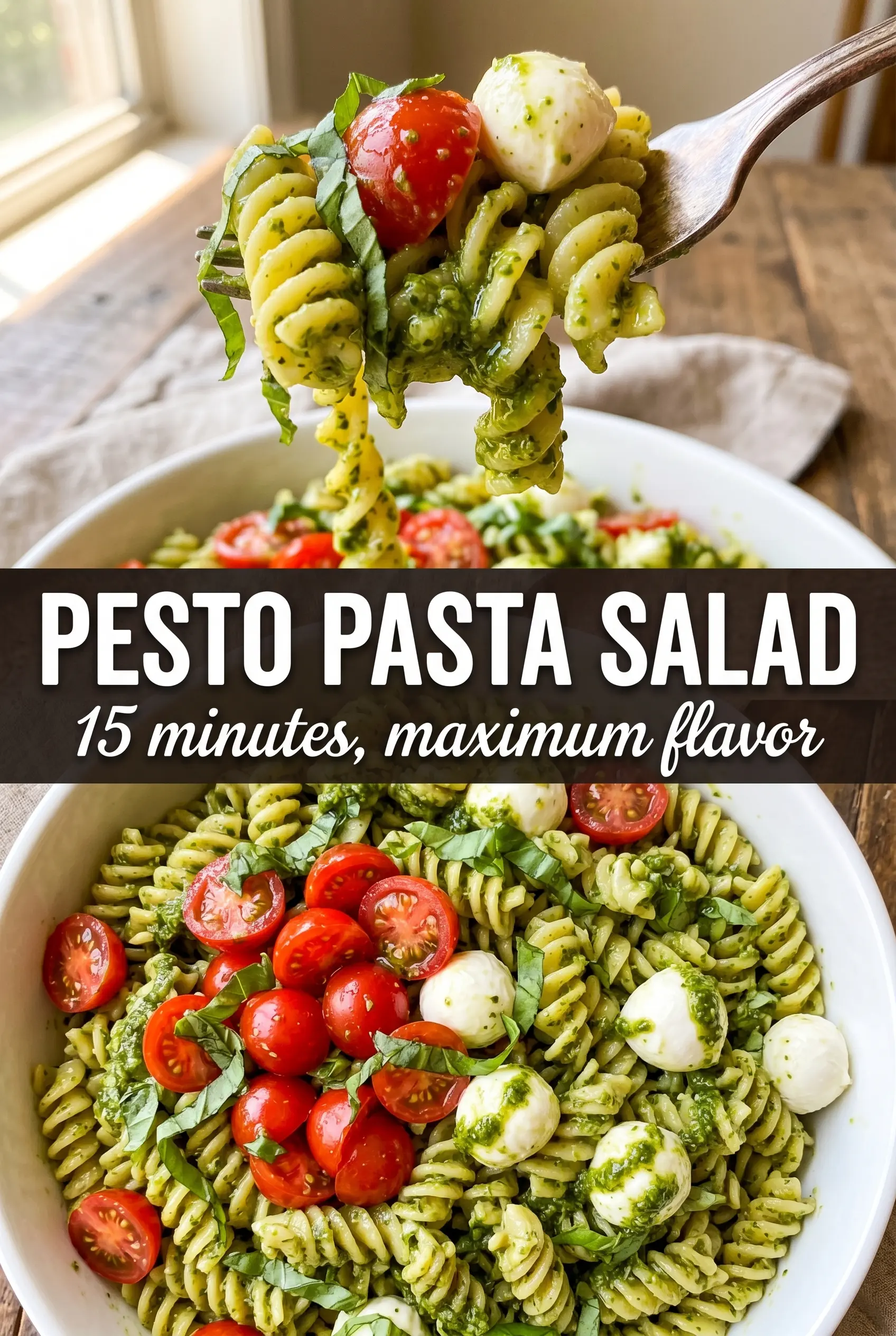
Pesto Pasta Salad
Ingredients
Equipment
Method
- Bring a pot of water to a boil and cook the fusilli or penne to al dente according to package directions. Drain and toss with 1 tablespoon olive oil while warm, then cool completely to prevent sticking.
- Whisk the prepared basil pesto, remaining olive oil, and lemon juice together until smooth and glossy.
- In a large bowl, combine the cooled pasta with halved cherry tomatoes, cubed fresh mozzarella, sun-dried tomatoes if using, and torn basil leaves.
- Pour the pesto dressing over the pasta and toss gently until everything is evenly coated.
- Fold in toasted pine nuts, then season with salt and pepper to taste.
- Refrigerate the pasta salad for 30 minutes so the flavors meld. Top with shaved parmesan and extra basil before serving.