Silky pear potato soup lands in that sweet spot between comforting and elegant. The potatoes give it body, the pears bring a gentle fruitiness, and the whole pot turns into something velvety enough to feel special without being fussy. The toppings matter here, too: a little blue cheese, a few candied walnuts, and a thread of honey turn each bowl into something layered and memorable.
What makes this version work is balance. Yukon gold potatoes blend into a naturally creamy base, while ripe pears soften enough to disappear into the soup without turning it sugary. I like adding the cream after blending so the texture stays smooth and the dairy doesn’t get pushed hard on the stove. The thyme and nutmeg keep the soup grounded, and white pepper gives it a quiet little edge.
Below, you’ll find the small details that keep the soup from tasting flat or overly sweet, plus a few smart swaps if you want to adjust the finish for what you have on hand.
The soup came out silky and the pears blended right into the potatoes without making it taste sweet. I was worried about the gorgonzola on top, but it balanced the honey and walnuts perfectly.
Save this pear potato soup for the night you want a silky bowl with pear sweetness, creamy potatoes, and a sharp finish of gorgonzola.
The Trick Is Keeping the Pears Savory, Not Sweet
Pears can tip this soup into dessert territory if you lean on underripe fruit or overdo the finishing garnish. Ripe pears work best because they soften quickly and blend into the potatoes instead of staying grainy or sharp. The potatoes do the heavy lifting for texture, so the pears should read as mellow and floral, not obvious.
The other thing to watch is heat. Once the vegetables are tender, blend first, then add the cream. If you simmer cream too aggressively before blending, it can get a little flat and lose that clean, silky finish. A gentle hand keeps the soup tasting balanced and fresh.
- Yukon gold potatoes — These give the soup its creamy body without needing flour or a roux. Russets will work in a pinch, but they can make the texture a little fluffier and less naturally buttery.
- Ripe pears — Use pears that give slightly at the stem. Hard pears stay a little woody after simmering, and overripe ones can turn the soup muddy and overly sweet.
- Vegetable or chicken broth — Chicken broth brings a rounder, richer base, while vegetable broth keeps the flavor lighter. Either one should be a good-quality broth, because the soup doesn’t have many ingredients to hide behind.
- Heavy cream — This finishes the soup with a plush texture. Half-and-half will work, but the result will be thinner and a little less luxurious.
What Each Ingredient Is Actually Doing in This Recipe

- Primary ingredient (the star) — Quality matters most. Choose the best you can find.
- Cooking medium (oil, butter, or broth) — This carries flavors and prevents dryness.
- Seasonings (salt, pepper, spices, herbs) — Layer flavors so nothing overpowers. Build depth gradually.
- Aromatics (garlic, onion, herbs) — Cook with fat to bloom flavors. Become the foundation.
- Supporting ingredients — Complement the main ingredient without overpowering it.
- Sauce or liquid (if applicable) — Brings flavors together. Balance richness with acid.
- Acid (lemon, vinegar, wine, or other) — Brightens and prevents flat-tasting results.
- Final finish (garnish, glaze, or sauce) — Prevents one-dimensional taste and adds visual appeal.
Building the Base So the Soup Turns Smooth, Not Starchy
First, cook the onion in butter until it turns soft and lightly golden. That sweetness matters because it gives the soup a savory backbone before the pears go in. Add the garlic for just a minute so it smells fragrant, not browned, then pour in the broth, potatoes, pears, and thyme.
Let everything simmer until both the potatoes and pears collapse easily when pressed with a spoon. If the potatoes still have a little resistance, the blender will leave tiny grainy bits behind. Blend the soup completely smooth with an immersion blender, scraping the bottom and corners of the pot so no chunks hide out.
Stir in the cream after blending, then season with nutmeg, white pepper, and salt. White pepper keeps the finish clean and warm without the little black specks you’d get from regular pepper. Taste at the end, because the broth, cheese topping, and honey all shift the final balance.
Sweating the Onion
Melt the butter over medium heat and cook the onion until it softens and starts to turn golden at the edges. You want sweetness and depth here, not browning so dark that the soup tastes bitter. If the onion starts to catch, lower the heat right away and stir more often.
Simmering the Pears and Potatoes
Add the garlic, cook it briefly, then pour in the broth, potatoes, pears, and thyme. Bring the pot to a boil, then drop it to a steady simmer so the potatoes cook through without breaking apart into glue. The soup is ready for blending when both the potatoes and pears mash easily against the side of the pot.
Blending and Finishing
Blend until the soup is completely smooth, then stir in the cream. If the soup looks too thick, thin it with a splash of warm broth; if it seems thin, let it simmer uncovered for a few minutes before adding the cream. Finish with nutmeg, white pepper, and salt, then serve right away with the toppings so the walnuts stay crisp.
How to Adjust It Without Losing the Creamy-Savory Balance
Make It Dairy-Free
Swap the butter for olive oil or a plant-based butter and use full-fat coconut milk or unsweetened oat cream instead of heavy cream. Coconut milk will make the soup a little sweeter and more aromatic, while oat cream keeps the flavor closer to the original.
Skip the Blue Cheese Topping
If blue cheese isn’t your thing, use shaved Parmesan or a small spoonful of sour cream instead. You’ll lose the sharp funk, but the soup will still have a savory finish that keeps the pears from tasting too sweet.
Make It a Little Heartier
Stir in a handful of cooked shredded chicken or serve the soup with toasted crusty bread on the side. The base is mild enough to carry extra protein, but don’t add anything before blending or you’ll lose that smooth, elegant texture.
Use What Pears You Have
Bartlett pears will give the softest, sweetest result, while Bosc pears stay a little firmer and more floral. Any ripe pear works as long as it’s sweet and tender, but very hard pears need extra simmering and can leave the soup less smooth.
Storage and Reheating
- Refrigerator: Store in an airtight container for up to 4 days. The soup thickens a bit as it chills, which is normal.
- Freezer: It freezes well for up to 2 months, though the cream may separate slightly after thawing. Freeze it before adding the cream for the smoothest result, then stir in cream after reheating.
- Reheating: Warm it slowly over low heat, stirring often. High heat can make the cream separate and can mute the pear flavor, so keep the simmer gentle.
Answers to the Questions Worth Asking
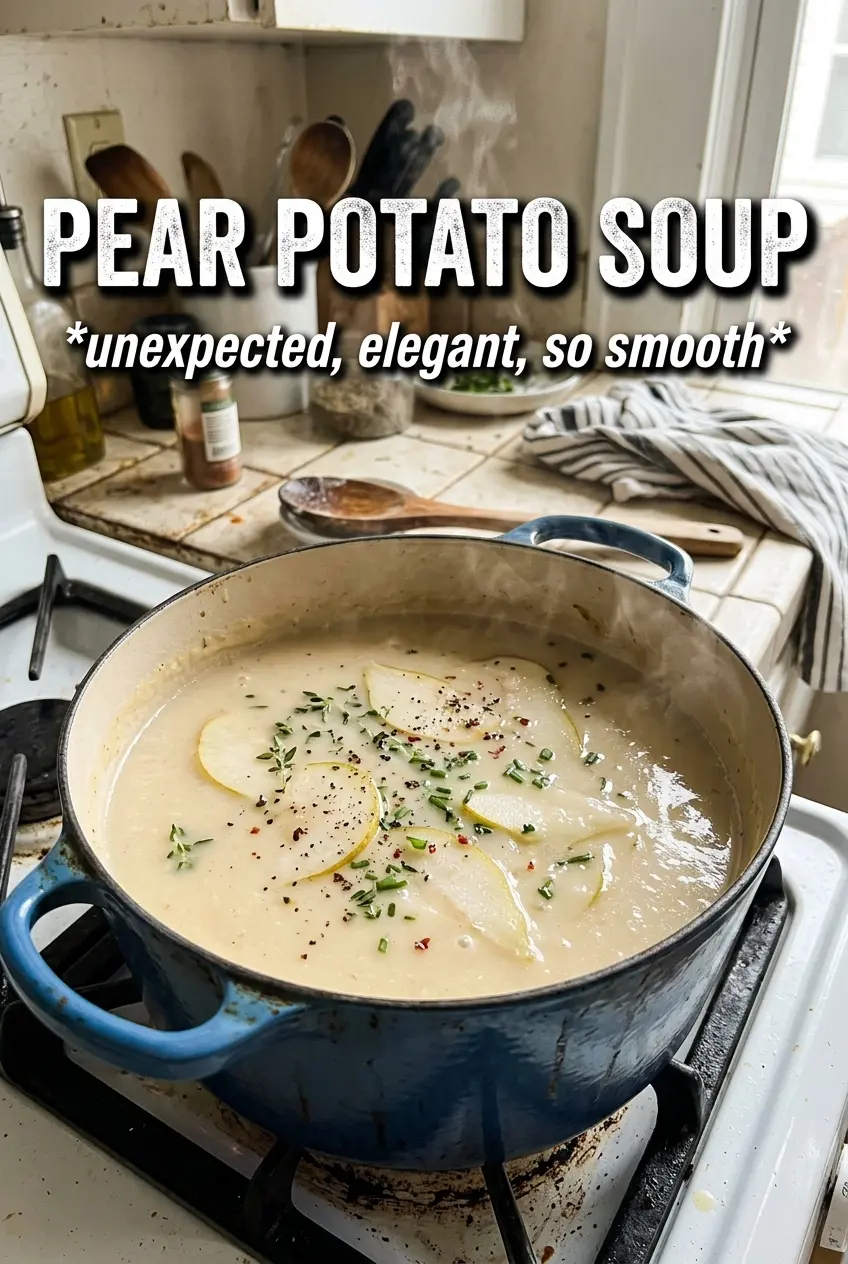
Pear Potato Soup
Ingredients
Equipment
Method
- Melt 2 tablespoons unsalted butter in a large pot over medium heat, then sauté the diced onion for 5 minutes until soft and golden.
- Add the minced garlic and cook for 1 minute, stirring just until fragrant.
- Add the broth, cubed Yukon gold potatoes, and chopped pears to the pot.
- Add 1 tablespoon fresh thyme leaves, then bring the soup to a boil.
- Reduce to a simmer and cook for 25 minutes, until both potatoes and pears are completely tender.
- Blend the soup completely smooth with an immersion blender until no chunks remain.
- Stir in 1 cup heavy cream, then season with nutmeg, white pepper, and salt.
- Serve hot with crumbled gorgonzola or blue cheese, candied walnuts, and a drizzle of honey.
- Finish each bowl with fresh thyme for a bright, herb-flecked look.