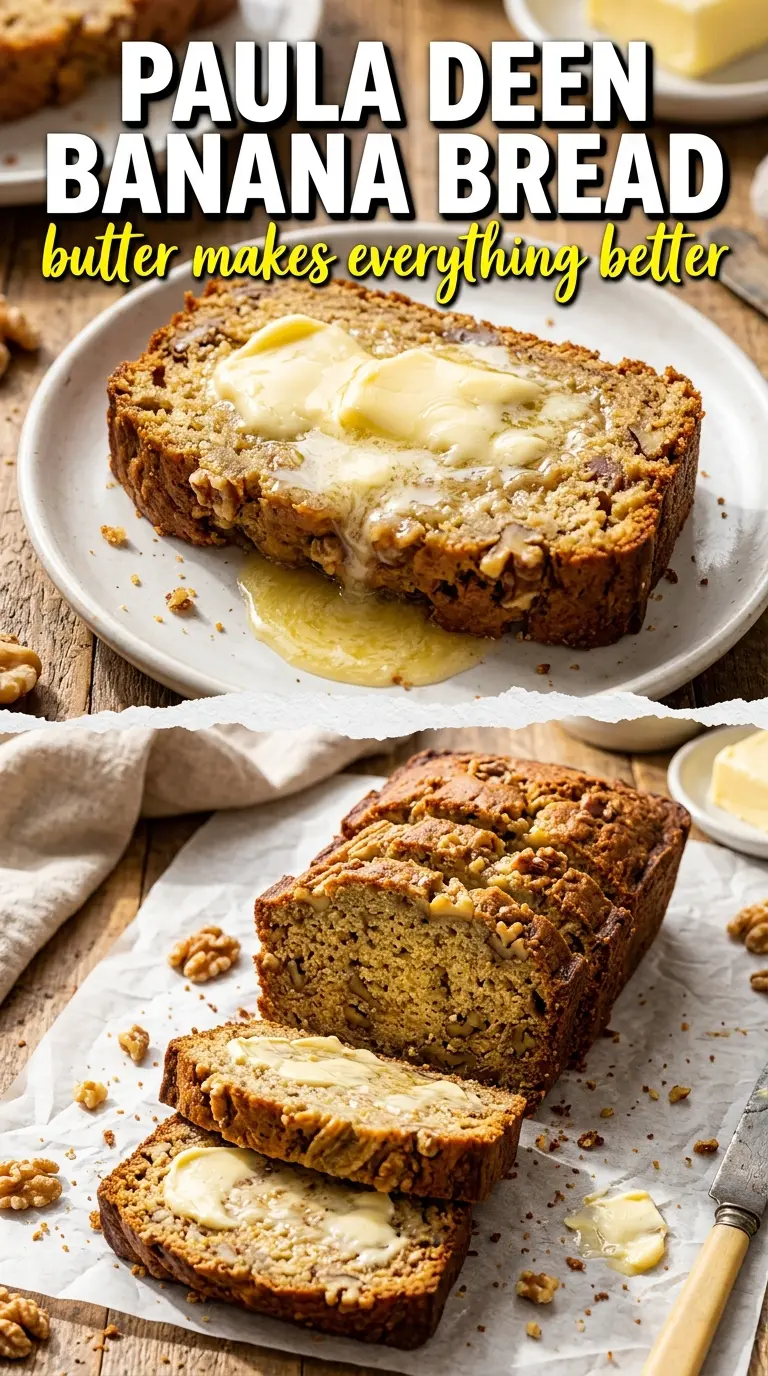
Paula Deen banana bread bakes up with the kind of rich, buttery crumb that lands somewhere between classic quick bread and a slice of pound cake. The crust turns deeply golden, the center stays moist without feeling dense in a heavy way, and every bite tastes like ripe bananas backed by real butter instead of just sugar and spice.
What makes this version stand out is the way the butter and sugar are beaten until pale and fluffy before anything else goes in. That step gives the loaf a finer, tighter crumb and keeps it from baking up stodgy. The bananas bring moisture and flavor, but the butter is what gives the bread its signature Southern-style richness.
Below, you’ll find the little details that matter most: how ripe the bananas should be, why overmixing changes the texture, and what to do if you want to add pecans without weighing the loaf down. If you’ve ever wanted banana bread that eats like a treat instead of a compromise, this is the one to keep.
The loaf came out with a really tender crumb and that buttery crust on top was my favorite part. I baked it right at 65 minutes and the center was perfectly done, not gummy at all.
Save this buttery Paula Deen banana bread for the kind of loaf that bakes up golden, moist, and rich enough to serve warm with extra butter.
The Butter-and-Banana Balance That Keeps This Loaf Tender
The biggest mistake with banana bread is chasing moisture so hard that the loaf turns heavy or gummy. This version avoids that by leaning on softened butter and a proper creaming step, which gives the batter enough structure before the bananas go in. The result is a loaf that slices cleanly but still feels soft on the tongue.
Ripe bananas matter here, but they don’t do all the work. If they’re black-spotted and fragrant, you’re in the right range; if they’re still firm and pale, the bread will taste flatter and need more help from the sugar. The batter should look thick and slightly lumpy after the flour goes in. If it looks glossy and smooth, you’ve mixed too much and the crumb will tighten up in the oven.
- Butter — This is the flavor backbone. Softened butter creams with sugar to trap air, which keeps the loaf lighter than a batter made with melted butter. Don’t swap in oil if you want that pound-cake feel.
- Bananas — Use very ripe bananas with plenty of brown spotting. They bring sweetness and moisture, but they also help the loaf stay tender for days. Under-ripe bananas won’t give you the same depth.
- Sugar — Granulated sugar helps the butter whip properly and supports the crust as it bakes. Brown sugar can work in a pinch, but it adds extra moisture and a deeper molasses note that changes the classic taste.
- Pecans — Optional, but worth it if you like a little crunch. Toast them first if you have time. Untoasted pecans can taste soft and muted inside a rich loaf like this.
What Each Ingredient Is Actually Doing in This Recipe
- Primary ingredient (the star) — Quality matters most. Choose the best you can find.
- Cooking medium (oil, butter, or broth) — This carries flavors and prevents dryness.
- Seasonings (salt, pepper, spices, herbs) — Layer flavors so nothing overpowers. Build depth gradually.
- Aromatics (garlic, onion, herbs) — Cook with fat to bloom flavors. Become the foundation.
- Supporting ingredients — Complement the main ingredient without overpowering it.
- Sauce or liquid (if applicable) — Brings flavors together. Balance richness with acid.
- Acid (lemon, vinegar, wine, or other) — Brightens and prevents flat-tasting results.
- Final finish (garnish, glaze, or sauce) — Prevents one-dimensional taste and adds visual appeal.
Building the Batter So the Center Bakes Through Without Drying Out
Creaming the Butter and Sugar
Start with softened butter, not melted butter. Beat it with the sugar until the mixture looks pale, fluffy, and almost whipped; that takes about 4 minutes and it matters more than the clock. If you rush this step, the loaf can bake up dense because you never built enough structure into the batter.
Adding the Eggs and Bananas
Beat in the eggs one at a time so the batter stays smooth and doesn’t look curdled. Once the bananas and vanilla go in, the mixture may look a little loose or speckled, and that’s fine. The mistake to avoid is overbeating after the eggs are added, which can make the loaf less tender.
Folding in the Dry Ingredients
Add the flour, baking soda, and salt and fold just until no streaks of flour remain. A few small lumps are better than a stirred-to-death batter. If you overmix here, the gluten tightens and the finished bread turns chewy instead of soft.
Baking to a Deep Golden Finish
Scrape the batter into a well-greased 9×5 loaf pan and bake until the top is deeply golden and a toothpick comes out clean from the center. Don’t rely on color alone; banana bread can look done on top before the middle is set. Let it rest in the pan for 15 minutes so the loaf firms up enough to unmold without tearing.
How to Adapt This Banana Bread Without Losing the Rich, Southern Style
Add Toasted Pecans for a Little Crunch
Fold in the chopped pecans at the very end so they stay distributed instead of sinking. Toasting them first gives the loaf a deeper, nuttier flavor and keeps the texture from feeling soft all the way through.
Make It Dairy-Free Without the Same Richness
Use a plant-based butter stick that’s designed for baking. It will still cream properly, but the loaf won’t have quite the same buttery depth, so the banana flavor becomes more forward. Avoid soft tub spreads, which can make the batter greasy and less stable.
Swap in a Little Brown Sugar for a Deeper Flavor
Replace up to half of the white sugar with light brown sugar if you want a warmer, more caramel-like loaf. The bread will bake a touch moister and a little darker, but it loses some of the clean, classic sweetness that makes this version taste familiar.
Storage and Reheating
- Refrigerator: Store tightly wrapped for up to 4 days. The crumb stays moist, but the butter will firm up and the loaf will taste best once it comes back to room temperature.
- Freezer: Banana bread freezes well. Wrap the cooled loaf or individual slices in plastic, then foil, and freeze for up to 3 months.
- Reheating: Warm slices in a low oven or toaster oven until just heated through. Microwaving too long makes the crumb rubbery, so use short bursts if that’s your only option.
Questions I Get Asked About This Banana Bread
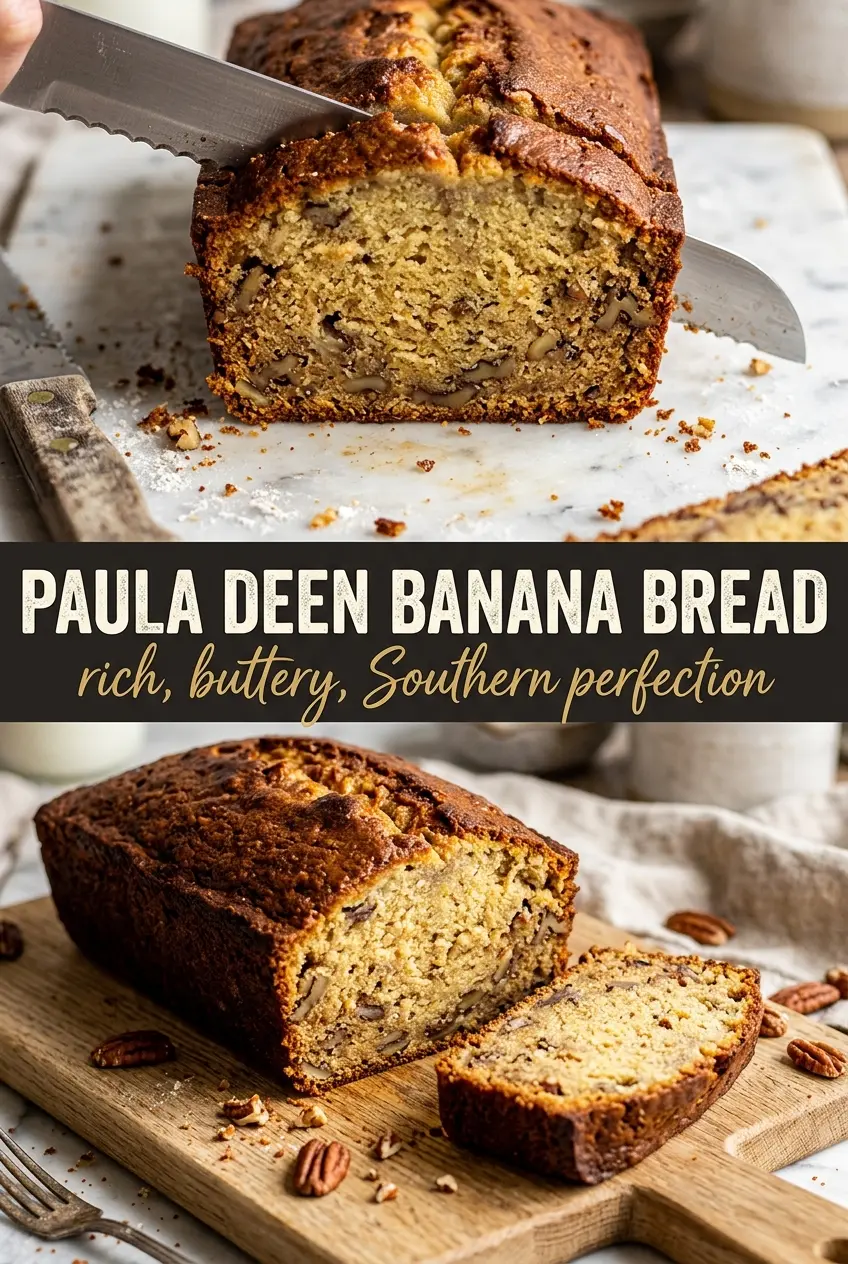
Paula Deen Banana Bread
Ingredients
Equipment
Method
- Preheat the oven to 350°F and generously grease a 9x5 loaf pan so the loaf releases cleanly.
- Beat the softened butter and sugar together until very light and fluffy, about 4 minutes, with a noticeably paler, airy mixture.
- Beat in the eggs one at a time, then stir in the mashed bananas and vanilla until the batter looks smooth and evenly colored.
- Fold in the flour, baking soda, and salt until just combined; stop when no dry streaks remain so the crumb stays tight and moist.
- Fold in the pecans if using so they’re evenly distributed through the loaf.
- Pour the batter into the pan and bake for 60–70 minutes until deeply golden and a toothpick inserted in the center comes out clean.
- Cool in the pan for 15 minutes before unmolding, then serve warm with extra butter.