Pasta salad with Italian dressing lands in that sweet spot between effortless and dependable. The rotini stays lively, the dressing clings to every twist, and the vegetables keep enough crunch to make each bite feel fresh instead of soft and soggy. It’s the kind of side dish that disappears fast at a cookout because it tastes like it was made with a plan, not just tossed together at the last minute.
The trick is cooling the pasta all the way down before adding the dressing, then giving the salad time in the fridge so the noodles absorb flavor without turning mushy. Tri-color rotini helps because the spirals hold onto the zesty dressing and catch little bits of pepper, olive, and onion in every forkful. A generous toss before serving matters too, since pasta salad always drinks up more dressing as it sits.
Below you’ll find the little details that keep this pasta salad crisp, bold, and balanced, plus a few smart ways to adjust it when you want to change the mix of vegetables or make it ahead for a crowd.
I’ve made a lot of pasta salads, and this one held up the best after chilling. The rotini stayed firm, the dressing soaked in without making it heavy, and I added a splash more right before serving just like the note said. Huge hit at our cookout.
This zesty Italian pasta salad gets better after chilling, so it’s perfect for potlucks, cookouts, and make-ahead lunches.
Why Pasta Salad Turns Flat Unless You Season the Pasta Right
Most pasta salad problems start before the dressing ever hits the bowl. If the pasta goes in warm or sits too long after rinsing, it either turns gummy or starts absorbing flavor unevenly, which leaves some bites bright and others bland. The goal here is cooled, well-drained pasta with just enough surface moisture left to catch the dressing, not a slick, wet tangle that washes the seasoning around.
Italian dressing does a lot of the work, but it still needs support from the other ingredients. The peppers, onion, tomatoes, and olives bring salt, sweetness, and acidity in different ways, and that balance is what keeps the salad from tasting one-note. Letting it rest in the fridge gives the pasta time to drink in the dressing without losing its shape.
- Tri-color rotini — The spirals hold dressing better than straight pasta, and the shape gives you little pockets of flavor in every bite. Any short pasta will work, but rotini is the most reliable choice if you want the salad to stay coated after chilling.
- Zesty Italian dressing — Bottled dressing is the fast lane here, and that’s exactly why it works. Use a bold, tangy version rather than a sweet one; if yours tastes sharp out of the bottle, it mellows once it hits the pasta and vegetables.
- Provolone — The mild, creamy cubes soften the edges of the vinegar and garlic in the dressing. Mozzarella can substitute, but provolone gives you a little more salt and character without taking over the bowl.
- Cherry tomatoes — Halving them matters because their juices season the salad and give you a little burst of freshness. Leave them whole and they won’t mingle with the dressing the same way.
What Each Ingredient Is Actually Doing in This Pasta Salad
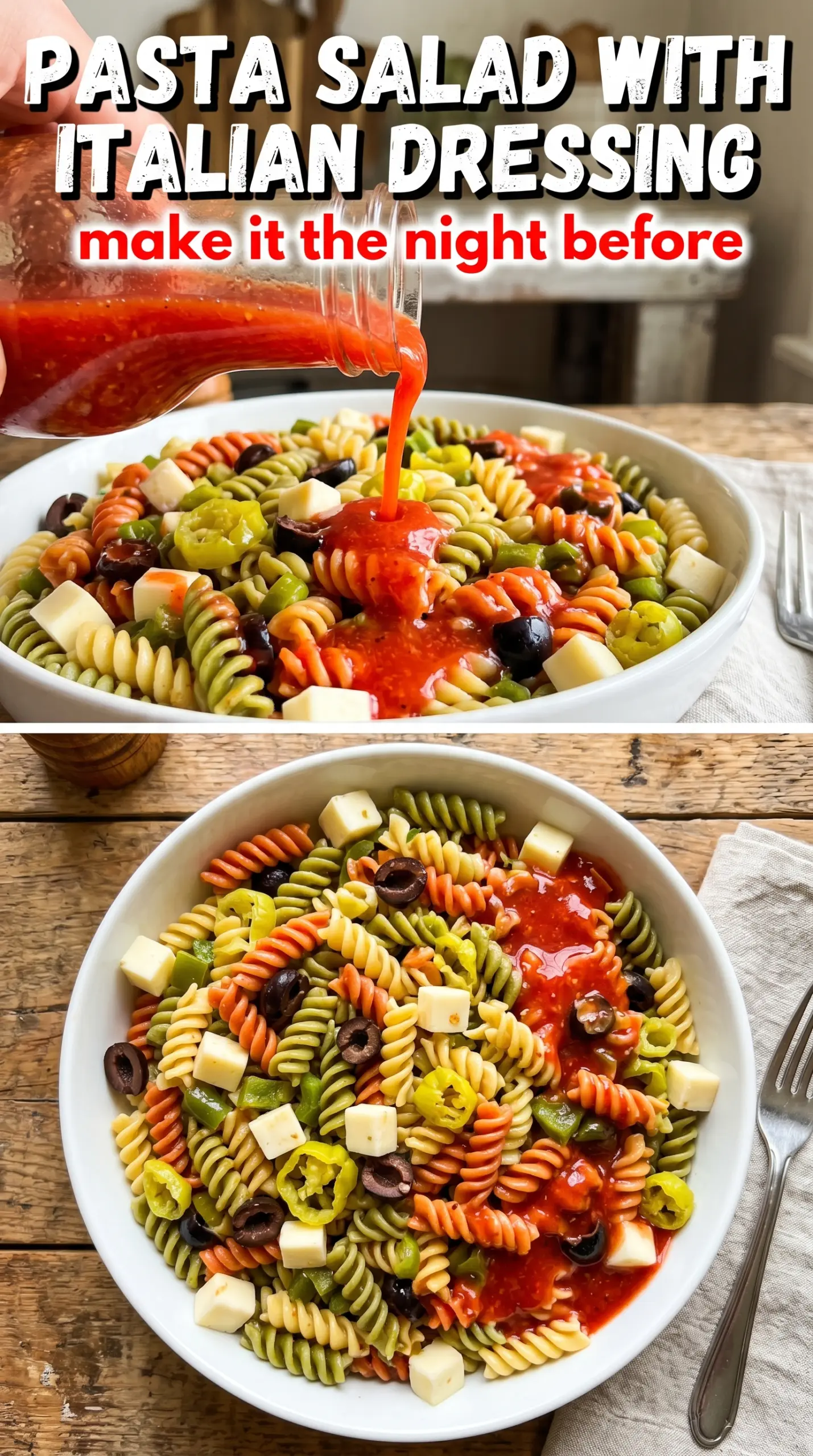
- Cooked pasta (the foundation) — Short shapes like penne or rotini hold dressing better than long noodles. Cook to al dente and cool completely before dressing.
- Olive oil or vinaigrette (the binding medium) — This carries all the flavors throughout and keeps the pasta from clumping. Don’t skip the emulsifier (mustard or vinegar) or the oil separates.
- Vinegar or lemon juice (the brightness) — Acid prevents the salad from tasting heavy and keeps it tasting fresh even after chilling. Fresh is better than bottled.
- Fresh vegetables (the texture and nutrition) — Cut to similar sizes so they cook evenly if blanched. Raw vegetables add crunch; cooked ones soften and absorb flavor.
- Cheese (the creaminess and salt) — Whether feta, parmesan, or mozzarella, cheese adds richness and prevents the salad from tasting one-dimensional.
- Olives, capers, or sun-dried tomatoes (the briny contrast) — These bring sharp flavor that balances sweet vegetables and creamy dressing. They keep the salad interesting.
- Fresh herbs (the finish) — Basil, parsley, or dill added at the end stay bright and fragrant. Cooked herbs lose their personality.
- Proper chilling time (the flavor settling) — 30 minutes lets flavors meld without the pasta getting soggy. The cold temperature also mutes seasoning, so season boldly.
Getting the Pasta and Dressing to Work Together
Cooking the Rotini to Stay Firm
Boil the pasta just to al dente, then drain it and rinse it under cold water until it’s completely cool. That rinse stops the cooking and removes surface starch, which keeps the salad from turning sticky as it chills. If the pasta is even slightly warm when you add the dressing, it softens fast and the texture goes dull. Drain well after rinsing, because extra water dilutes the dressing and blunts the seasoning.
Building the Bowl in the Right Order
Add the cooled pasta to the vegetables and cheese first, then pour in the dressing and Italian seasoning. Toss from the bottom up so the peppers and olives don’t all end up on top while the pasta stays bare underneath. This is where the salad starts to look glossy and evenly coated, and it should smell tangy and herbaceous right away. If the bowl looks dry at this stage, don’t wait until serving time to fix it — add enough dressing to coat lightly, then save a little more for the final toss.
Letting It Rest Before Serving
Chill the salad for at least an hour so the pasta can absorb flavor and the vegetables can settle into the dressing. Give it another toss before it hits the table, then taste it again. Pasta salad nearly always needs a final splash of dressing after resting because the noodles soak up more than you expect. Salt and pepper belong at the end, after chilling, so you season the bowl as it actually tastes rather than how it tasted right after mixing.
How to Change the Mix Without Losing the Balance
Make It Dairy-Free
Skip the provolone and add extra olives or a handful of diced artichoke hearts for more bite. You’ll lose the creamy saltiness of the cheese, so taste the finished salad and add a little more dressing or a pinch of salt to keep the flavor balanced.
Swap in a Different Pasta Shape
Bowties, penne, or fusilli all work well if that’s what you have. Choose a short shape with ridges or curves so the dressing has something to cling to; long pasta turns the salad awkward and doesn’t mix as cleanly with the vegetables.
Add More Protein for a Main-Dish Salad
Diced salami, grilled chicken, or chickpeas all fit the same dressing profile. Salami keeps the Italian deli feel, chicken makes it heavier for lunch, and chickpeas bring a vegetarian option with a firmer bite than cheese alone.
Storage and Reheating
- Refrigerator: Store covered for up to 4 days. The pasta will keep absorbing dressing, so expect the salad to soften a bit by day two.
- Freezer: Don’t freeze it. The vegetables lose their crispness and the pasta texture turns grainy after thawing.
- Reheating: This salad is meant to be served cold. If it has dried out in the fridge, toss it with a small splash of dressing before serving instead of trying to warm it up.
Answers to the Questions Worth Asking
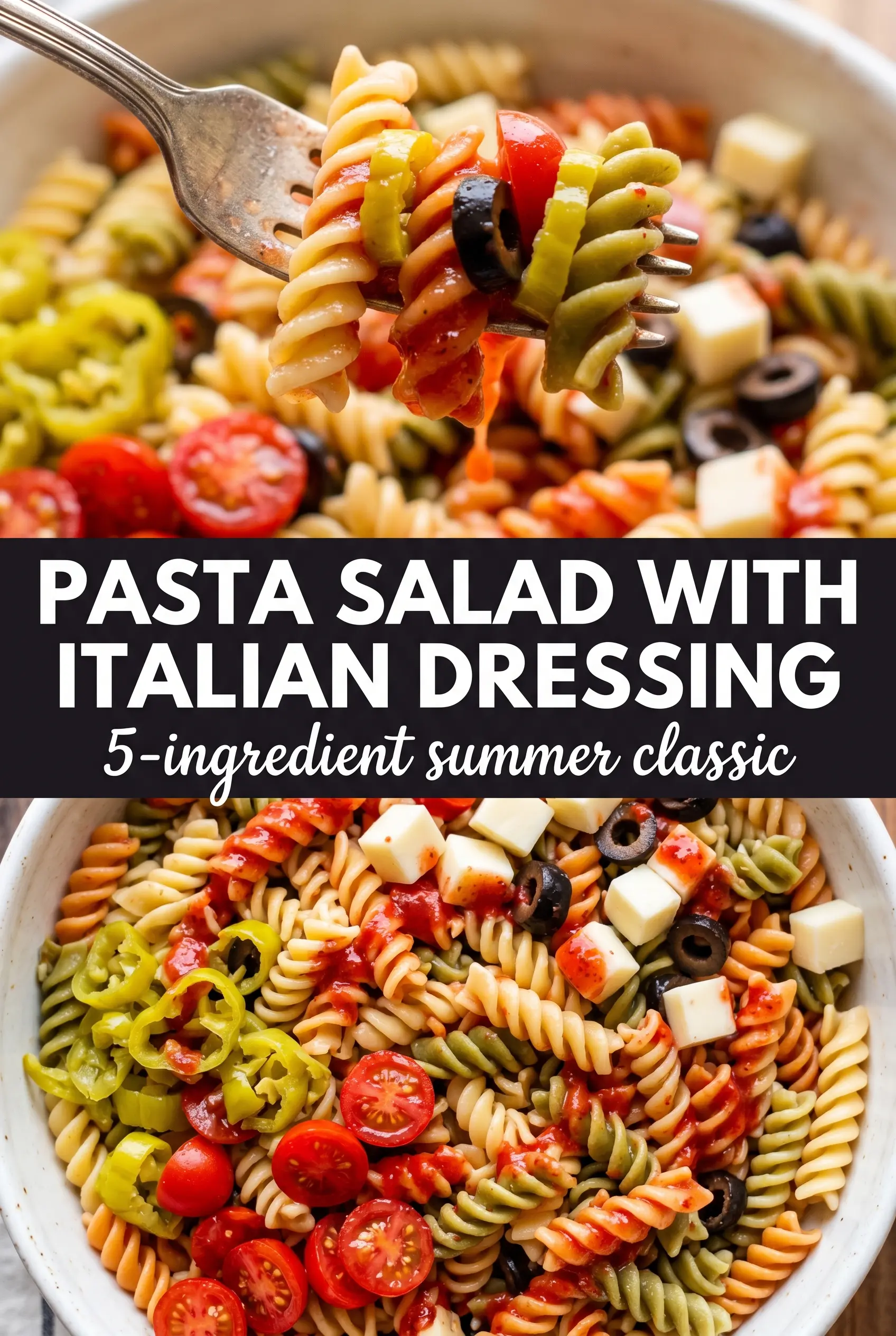
Pasta Salad With Italian Dressing
Ingredients
Equipment
Method
- Cook tri-color rotini pasta until al dente, then drain and rinse cold. Spread the drained pasta on a sheet pan and cool completely.
- Combine the cooled pasta with diced red bell pepper, diced green bell pepper, sliced black olives, diced red onion, halved cherry tomatoes, and cubed provolone.
- Pour zesty Italian dressing over the pasta and add Italian seasoning. Toss well until the tri-color rotini looks evenly coated.
- Refrigerate at least 1 hour, then toss the salad again. Add more Italian dressing before serving as the pasta absorbs it.
- Season with salt and pepper to taste, then garnish with fresh parsley.