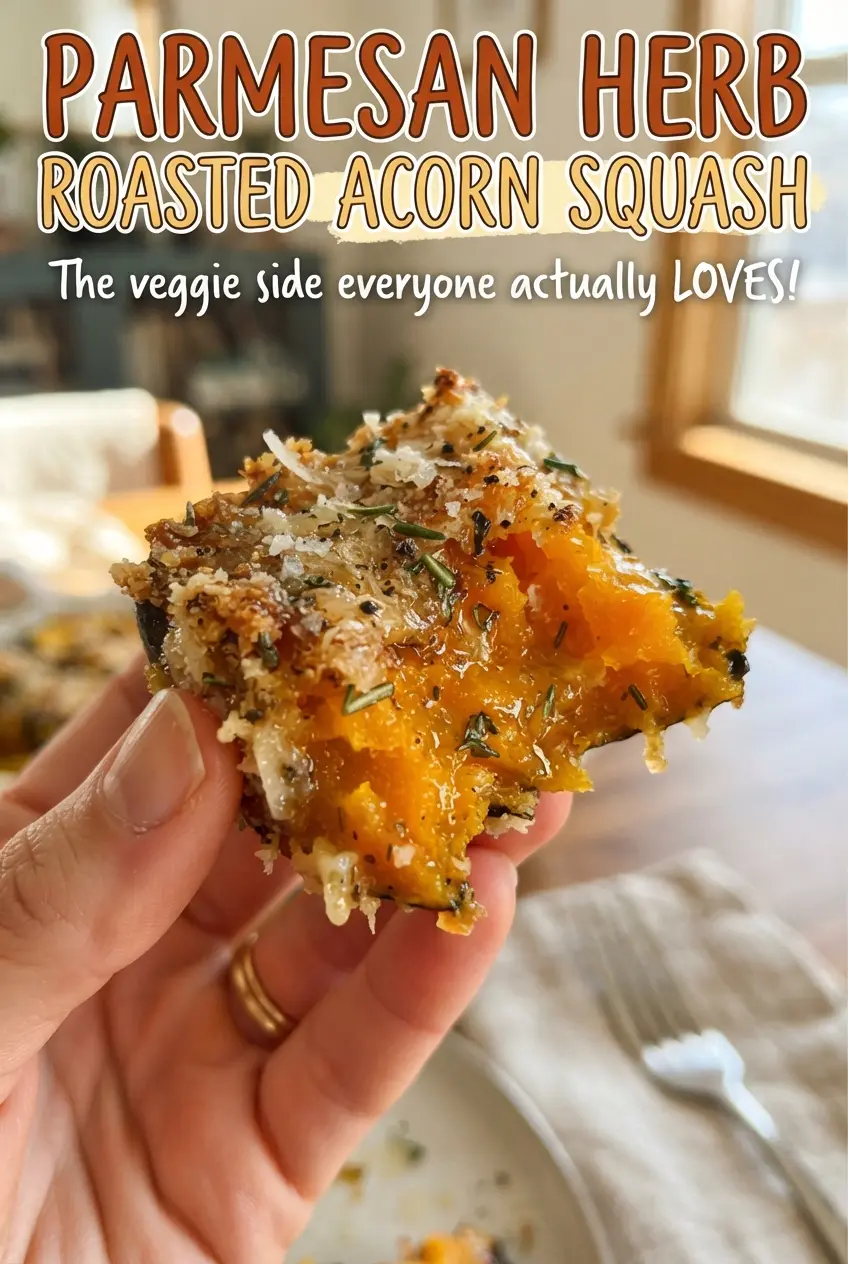
Parmesan herb roasted acorn squash comes out with caramelized edges, tender centers, and a crisp savory crust that makes the whole tray disappear faster than you’d expect. The squash keeps its shape in rings, so every slice gets a little browned edge and a little cheesy crunch instead of turning soft and one-note. It lands on the table looking polished and tasting like you put in far more effort than you did.
The trick is simple: roast the squash long enough to soften it before the Parmesan goes on. If cheese goes in too early, it browns before the squash is tender and can turn bitter or patchy. Holding the Parmesan for the second half of baking gives you that clean golden top and a crisp finish instead of a greasy melt.
Below, I’ll walk through the small details that keep the squash from steaming on the pan and the reason the herb mix tastes fresher than dried seasoning ever could. There’s also a shortcut for getting even slices, plus a few swaps if you’re working with what’s already in the kitchen.
The squash got tender without falling apart, and the Parmesan turned crisp on top instead of melting into a soggy layer. I made it with dinner and ended up eating the leftovers straight from the pan.
Crisp Parmesan herb roasted acorn squash is the kind of side that vanishes fast, so it’s worth keeping this one handy.
The Trick to Crisp Edges Without Overcooking the Squash
Acorn squash can go soft fast, which is why a lot of roasted versions end up pale and a little watery. Cutting it into rings helps here because the flat surfaces get direct contact with the pan, so the edges brown instead of steaming in their own moisture. The single-layer setup matters just as much as the oven temperature. If the slices are crowded, they release steam and the Parmesan never gets the chance to crisp.
The other thing that makes this version work is splitting the roast into two stages. First the squash cooks long enough to become tender; then the cheese goes on for the final stretch. That second bake is where the crust forms, and it’s the difference between a melted topping and a shattery, golden finish.
- Acorn squash rings — Rings roast more evenly than wedges and give you those scalloped edges that brown beautifully. Slice them about 1/2-inch thick so they stay sturdy through the flip and final bake.
- Parchment-lined sheet pan — This keeps the Parmesan from welding itself to the pan. Without parchment, the cheese can stick and tear when you lift the squash.
- Single layer spacing — Give each slice a little room. Tight spacing traps steam, and steam is what steals the crispness you want.
What the Garlic, Herbs, and Parmesan Are Each Doing Here

- Parmesan — This is the ingredient that turns the top into a crisp shell instead of a soft coating. Use finely grated Parmesan for the best coverage and most even browning; a big shard-style grate won’t melt as evenly here.
- Fresh thyme and rosemary — Fresh herbs matter because they perfume the squash without overpowering it. Dried herbs can work in a pinch, but they won’t taste as bright, and rosemary especially can turn dusty if it’s old.
- Olive oil — The oil carries the garlic and herbs across the squash and helps the edges caramelize. You don’t need an expensive finishing oil here, but a good-tasting one makes the whole pan taste cleaner.
- Garlic — Minced garlic gives the squash a savory base, but it needs to be coated well in oil so it doesn’t scorch. If your garlic browns too hard in the first roast, it’ll taste bitter, so keep the pieces fine and well distributed.
Roasting in Two Acts: Tender First, Crispy After
Coating Every Slice
Toss the squash with olive oil, garlic, thyme, rosemary, salt, and pepper until every ring looks glossy. That coating does more than add flavor; it helps the surface brown instead of drying out. If you see dry herb clumps sitting in one spot, spread them around with your hands or a spoon so they don’t burn in patches. The goal is an even sheen, not a thick paste.
The First Roast
Arrange the slices in a single layer on the parchment-lined sheet pan and roast them at 400°F for 20 minutes. By then, the undersides should be starting to caramelize and the squash should be just beginning to yield when pierced with a fork. If the pan is crowded or the pieces are cut unevenly, some will finish early while others stay firm, so keep the thickness consistent from the start.
Adding the Parmesan at the Right Time
Flip each slice and sprinkle the Parmesan generously over the top side. You’re looking for enough cheese to blanket the surface, but not such a thick pile that it slides off in a greasy layer. Return the pan to the oven for 12 to 15 minutes more, until the squash is tender and the Parmesan is golden and crisp at the edges. Pull it as soon as the cheese browns; if you leave it too long, the squash underneath can get mushy.
Make It Dairy-Free
Skip the Parmesan and finish with a mix of nutritional yeast and very fine breadcrumbs or almond meal for a savory top. You won’t get the same sharp cheese bite, but you’ll still get a browned, textured crust that clings to the squash.
Use Butter for a Richer Finish
Swap half of the olive oil for melted butter if you want a rounder, deeper flavor. Butter browns faster than oil, so keep an eye on the edges during the second roast; the payoff is a richer crust with a little more toastiness.
Make the Herb Mix Your Own
Sage works well in place of rosemary if you want something softer and a little sweeter. You can also add a pinch of crushed red pepper for heat, but keep it light so it doesn’t compete with the Parmesan.
Storage and Reheating
- Refrigerator: Store leftovers in an airtight container for up to 4 days. The squash will soften a little, and the Parmesan crust won’t stay as crisp.
- Freezer: I don’t recommend freezing this one. The texture turns watery after thawing, and the cheese topping loses its crispness.
- Reheating: Reheat on a sheet pan in a 375°F oven for about 8 to 10 minutes until warmed through. The oven brings back the edges better than the microwave, which tends to make the squash limp and the cheese rubbery.
Questions I Get Asked About This Recipe
Parmesan Herb Roasted Acorn Squash
Ingredients
Equipment
Method
- Preheat oven to 400F, then line a sheet pan with parchment (visual cue: parchment fully covers the pan).
- Toss acorn squash rings with olive oil, garlic, fresh thyme leaves, fresh rosemary, salt, and black pepper (visual cue: each ring looks lightly coated).
- Arrange squash in a single layer on the sheet pan and roast 20 minutes at 400F (visual cue: edges start to brown).
- Flip the slices, then sprinkle generously with grated Parmesan (visual cue: Parmesan forms an even, pebbled layer).
- Roast 12-15 minutes more at 400F until tender and the Parmesan is golden and crisp (visual cue: browned, bubbling Parmesan and fork-tender squash).