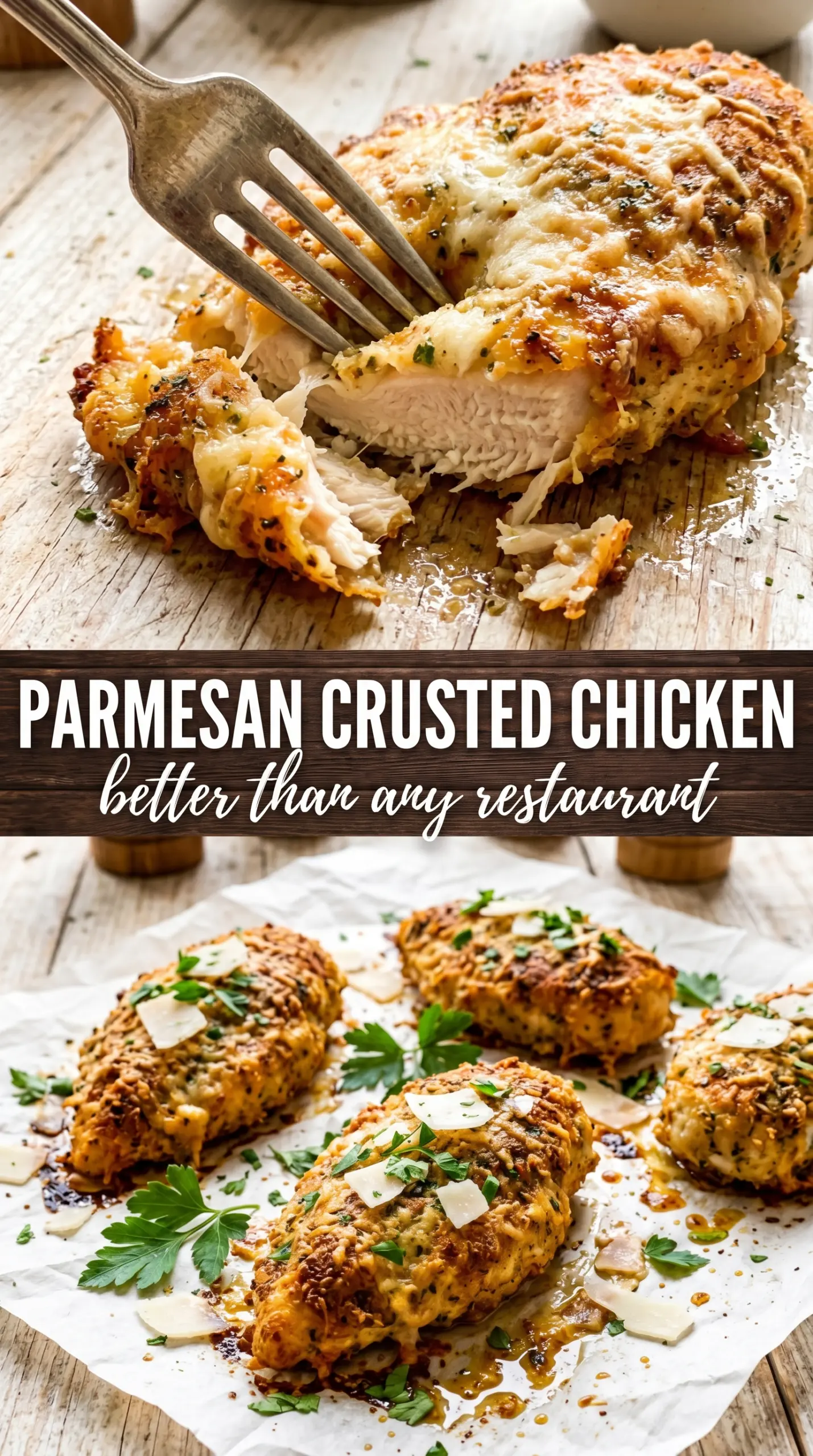
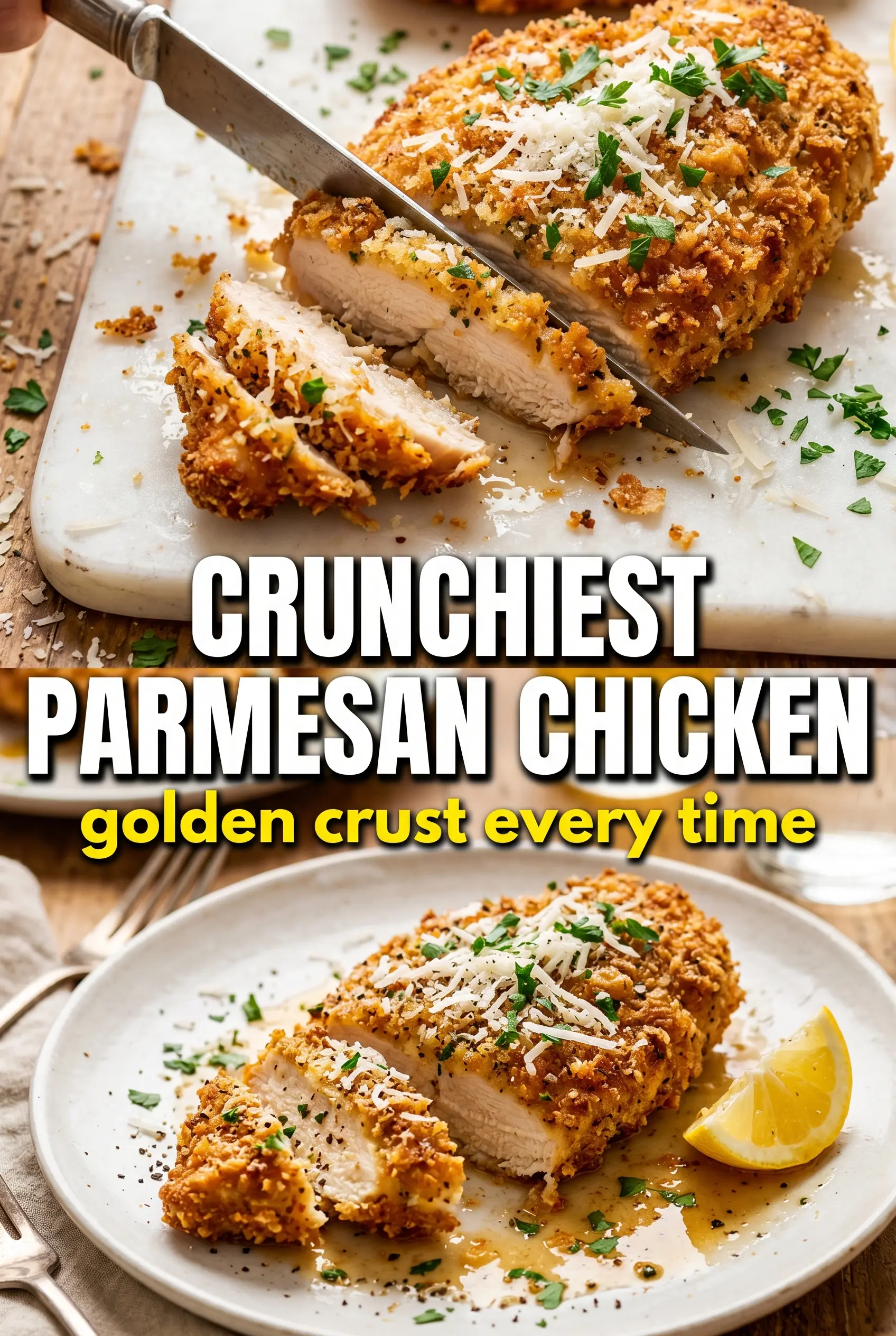
Parmesan crusted chicken earns its place in the regular dinner rotation because the crust turns deeply golden and audibly crisp while the chicken underneath stays juicy. The best versions don’t just taste cheesy; they crackle when you cut into them, with panko giving the coating lift and Parmesan adding that salty, toasty edge that makes plain breaded chicken feel a lot more special.
The difference here is in the balance. Freshly grated Parmesan melts into the panko just enough to help it brown, but not so much that it turns dense or greasy. Baking the chicken on a wire rack matters too, because air can move around the cutlets and keep the bottom from steaming soft. A quick drizzle or spray of oil finishes the crust and helps the coating brown evenly without frying.
Below, I’ve included the one breading habit that keeps the crust attached, plus a few smart swaps if you need to adjust for what’s already in your kitchen.
The crust stayed on every piece and got crisp all the way around on the rack. I was worried the Parmesan would burn, but it turned a perfect deep gold in 22 minutes and the chicken was still juicy.
Like this Parmesan crusted chicken? Save it to Pinterest for the nights when you want a shatteringly crisp chicken dinner with almost no cleanup.
The Rack Is What Keeps the Bottom Crisp Instead of Soggy
Most breaded chicken gets into trouble in the oven because the underside sits against a hot pan and traps steam. That gives you a crust that starts crisp on top and softens underneath before it reaches the table. A wire rack fixes that by letting hot air circulate all the way around the chicken, so the coating dries and browns instead of steaming in its own juices.
The other part people miss is thickness. If the chicken breasts are uneven, the thin ends overcook before the middle is done. Pounding them to an even thickness keeps the crust from burning while the center comes up to temperature at the same pace. That means a better bite and fewer dry edges.
- Chicken breasts — Even thickness matters more than size here. A thicker breast that’s pounded flat cooks more evenly than a naturally thin one, and it gives you enough time for the crust to turn golden without drying out the meat.
- Panko breadcrumbs — Panko gives this recipe its crunch. Regular breadcrumbs work in a pinch, but they make a tighter, softer coating. If you want that shattery texture, keep the panko.
- Freshly grated Parmesan — This is one place where the pre-grated stuff doesn’t perform the same way. Fresh Parmesan melts and browns into the coating; shelf-stable grated cheese tends to stay dusty and can make the crust less cohesive.
- Olive oil — The oil isn’t just for richness. It helps the coating toast evenly in the oven and gives the crust that fried-looking color without needing a skillet of oil.
- Italian seasoning and smoked paprika — The seasoning blend adds herbal depth, while the paprika rounds out the browning. If you don’t have smoked paprika, regular paprika still works; you’ll lose a little warmth, not the structure of the recipe.
What Each Ingredient Is Actually Doing in This Recipe
- Primary ingredient (the star) — Quality matters most. Choose the best you can find.
- Cooking medium (oil, butter, or broth) — This carries flavors and prevents dryness.
- Seasonings (salt, pepper, spices, herbs) — Layer flavors so nothing overpowers. Build depth gradually.
- Aromatics (garlic, onion, herbs) — Cook with fat to bloom flavors. Become the foundation.
- Supporting ingredients — Complement the main ingredient without overpowering it.
- Sauce or liquid (if applicable) — Brings flavors together. Balance richness with acid.
- Acid (lemon, vinegar, wine, or other) — Brightens and prevents flat-tasting results.
- Final finish (garnish, glaze, or sauce) — Prevents one-dimensional taste and adds visual appeal.
Press, Coat, and Bake Before the Crust Has Time to Think About Softening
Set Up the Breading Line
Get your flour, beaten eggs, and Parmesan-panko mixture lined up before the chicken touches anything. That keeps your fingers cleaner and prevents the breading from clumping in the egg wash. Season the chicken first so the flavor starts at the meat, not just on the coating. If the chicken is damp, pat it dry or the flour layer will turn pasty instead of grabbing cleanly.
Build the Crust with Firm Pressure
Dredge each breast in flour, then egg, then the Parmesan-panko mixture, pressing the coating on with your hand. That pressing step is what keeps the crust from falling off later; a loose coating turns patchy in the oven. Cover all sides, including the edges, because any bare spots will bake up pale and soft. Shake off excess flour so the egg can cling instead of sliding off a dusty layer.
Bake Until Deep Gold and Juicy
Set the breaded chicken on the rack and drizzle or spray the tops with olive oil before baking. The crust should turn a deep golden brown, not light tan, and the thickest part should reach 165°F. If your oven runs hot, start checking a couple of minutes early because Parmesan can go from toasted to too dark fast. Let the chicken rest for 3 minutes before slicing so the juices settle instead of running onto the plate.
How to Adjust the Coating Without Losing the Crunch
Make It Gluten-Free
Use a gluten-free flour blend for the dredge and swap in gluten-free panko. The texture still comes out crisp, though the coating may brown a little faster, so keep an eye on the last few minutes in the oven.
Go Dairy-Free
You can replace the Parmesan with a dairy-free Parmesan-style topping, but the crust will be a little less savory and less deeply browned. Add an extra pinch of salt and a little more garlic powder to help make up for what the cheese normally brings.
Turn It Into Cutlets
If you want faster cooking and even more crust per bite, slice each breast horizontally into cutlets before breading. They’ll bake in less time and the edges will get extra crisp, but you’ll need to watch closely so they don’t dry out.
Storage and Reheating
- Refrigerator: Store leftovers in an airtight container for up to 3 days. The crust will soften a bit, but it still tastes great.
- Freezer: This freezes better after baking than before. Freeze in a single layer, then wrap well and store for up to 2 months.
- Reheating: Reheat on a rack set over a baking sheet at 375°F until hot and re-crisped. The biggest mistake is microwaving it first, which turns the crust leathery before the center warms through.
Questions I Get Asked About This Recipe
Parmesan Crusted Chicken
Ingredients
Equipment
Method
- Preheat oven to 425°F and line a baking sheet with a wire rack; spray the rack with cooking spray so the crust crisps evenly.
- Season the chicken breasts with salt, pepper, and garlic powder to taste to build flavor throughout the crust.
- Set up a three-station breading line: place flour in the first, beaten eggs in the second, and the panko mixed with Parmesan, Italian seasoning, garlic powder, and smoked paprika in the third for a crisp, fragrant coating.
- Dredge each chicken breast in flour, dip into egg, then press firmly into the Parmesan panko to coat all sides so the crust sticks and shatters when baked.
- Drizzle or spray olive oil over the breaded chicken and place them on the prepared rack to help the coating turn deep golden.
- Bake at 425°F for 20-22 minutes until the crust is deep golden and the internal temperature reaches 165°F, with the cheese crust crackled and fragrant.
- Rest the chicken for 3 minutes so juices settle and the crust stays crisp.
- Garnish with fresh parsley and serve with lemon wedges for bright, fresh finish.