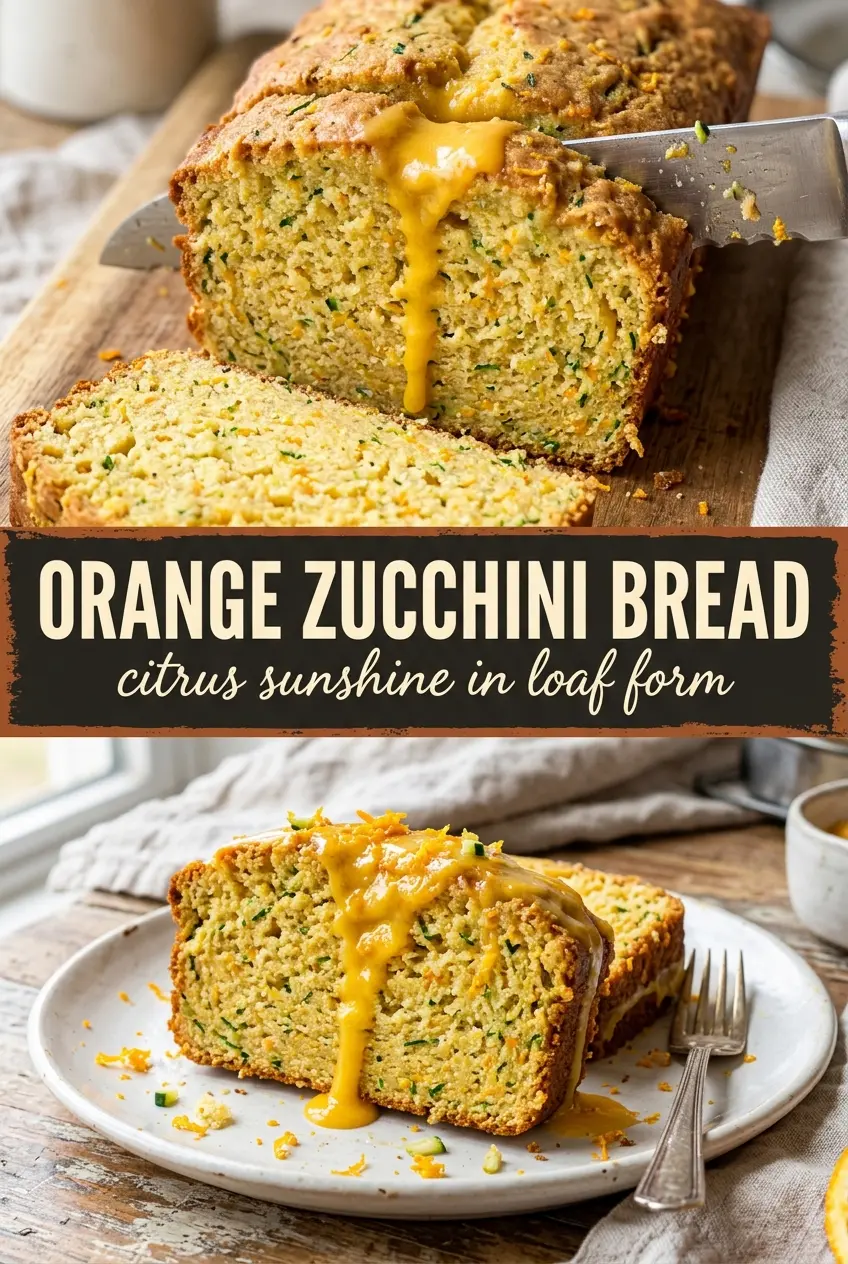
Orange zucchini bread lands somewhere between a tender breakfast loaf and a sunny little cake, with a crumb that stays moist for days and a glaze that soaks into the top just enough to make every slice taste bright and fresh. The zucchini keeps the texture soft without turning the loaf heavy, while the orange zest and juice cut through the sweetness and keep it from tasting flat.
This version works because the zucchini is grated fine and squeezed dry, which gives you moisture without the wet, gummy center that ruins quick breads. Sour cream adds body and a slight tang, and the orange juice gets used in both the batter and the glaze so the citrus flavor doesn’t disappear after baking. The loaf bakes up with a golden top and a clean slice, not a dense middle.
Below you’ll find the little details that matter: how dry the zucchini needs to be, why the glaze goes on while the loaf is still warm, and a few smart swaps if you need to adjust the recipe without losing that bright orange flavor.
The loaf stayed incredibly soft and the orange glaze soaked into the top just enough without making it soggy. I squeezed the zucchini well and the crumb baked up perfect, not wet at all.
Save this orange zucchini bread for a soft, citrusy loaf with a bright glaze and a tender crumb that stays moist all week.
The Trick to Keeping Orange Zucchini Bread Soft Without Going Gummy
The mistake most zucchini loaves make is simple: too much moisture, not enough structure. Zucchini looks harmless in the bowl, but once it bakes, that extra water can turn the center heavy and tight instead of tender. Squeezing the grated zucchini dry fixes that problem before it starts, and it matters more here than in a lot of other quick breads because the batter already includes orange juice and sour cream.
The other thing worth watching is how you mix it. Once the flour goes in, stop as soon as the streaks disappear. Overmixing develops the gluten in the flour and takes this from light and sliceable to tough and bready. You want a batter that looks a little rough, not polished.
- Dry zucchini first — Grate it fine, then press it in a clean towel until it gives up most of its liquid. It should feel damp, not wet.
- Orange flavor comes from zest, not juice alone — The zest carries the strongest citrus oils, so don’t skip it if you want the bread to taste distinctly orange.
- Sour cream protects the crumb — It adds richness and helps the loaf stay soft without making it greasy. Plain Greek yogurt works in a pinch, but it bakes a little tighter.
- Don’t chase a perfectly smooth batter — A few small lumps are fine. Mixing until glossy is how quick bread gets tough.
What Each Ingredient Is Actually Doing in This Loaf

- All-purpose flour — Gives the loaf its structure without making it heavy. A 1:1 gluten-free baking blend can work, but the crumb will be a little more delicate.
- Baking soda and baking powder — These work together to lift the loaf and keep it from sinking in the middle. The baking soda also helps the sour cream and orange juice bake up with better browning.
- Orange zest and orange juice — The zest brings the real citrus aroma; the juice adds brightness and thins the batter just enough. Fresh juice is worth using here because bottled juice tastes dull in the finished loaf.
- Sour cream — This is the ingredient that keeps the crumb plush. If you don’t have it, plain full-fat yogurt is the closest substitute.
- Vegetable oil — Oil keeps the bread moist even after it cools. Butter will work, but the loaf won’t stay as soft on day two.
- Zucchini — It adds moisture and a fine, tender texture without a strong vegetable taste. The key is squeezing it dry before it goes into the batter.
- Powdered sugar glaze — This gives the loaf its sweet finish and locks in a little extra orange flavor on top. Drizzle it over the warm bread so it melts slightly instead of sitting in a thick, dry layer.
Building the Batter and Baking It to a Clean Center
Mix the dry ingredients first
Whisk the flour, baking soda, baking powder, and salt together before you do anything else. That keeps the leavening evenly spread through the batter, which helps the loaf rise without random tunnels or a bitter pocket of baking soda. A quick whisk is enough; you don’t need to sift it.
Beat the wet ingredients until they look cohesive
Whisk the sugar, eggs, oil, orange juice, orange zest, sour cream, and vanilla until the mixture looks smooth and slightly thickened. This step helps the sugar dissolve a bit and gives the batter a more even texture. If the mixture looks separated for a minute, keep whisking and it will come together.
Fold in the zucchini, then stop early
Stir in the squeezed zucchini first, then add the dry ingredients and fold just until no dry flour remains. The batter should look thick and spoonable, not pourable like cake batter. If you keep stirring once the flour is hydrated, the loaf gets dense and loses that soft quick-bread texture.
Bake until the middle sets
Pour the batter into a greased 9×5 loaf pan and bake at 350°F until the top is golden and a toothpick comes out clean or with a few moist crumbs. Start checking at the 50-minute mark because ovens vary, and overbaking dries out the edges before the center is done. If the top browns too quickly, tent it loosely with foil for the last 10 to 15 minutes.
Glaze while the loaf is warm
Let the bread cool for 15 minutes, then whisk the glaze and drizzle it over the top. Warm bread grabs the glaze and turns it into a shiny layer that sinks slightly into the crust. If the loaf is hot, the glaze runs off; if it’s completely cool, it sits too much on top.
How to Adapt This for a Bigger Orange Hit, Less Sugar, or a Dairy-Free Loaf
Make it more citrus-forward
Add an extra teaspoon of zest to the batter and use a slightly thinner glaze by adding a few drops more orange juice. That pushes the orange aroma into the top slice and makes the loaf taste brighter without changing the structure.
Dairy-free version
Swap the sour cream for a thick dairy-free plain yogurt with no added sugar. The loaf still bakes up tender, though the crumb will be a touch less rich and the glaze may need a little extra zest to stand out.
Reduce the sweetness
Cut the granulated sugar by 1/4 cup and leave the glaze on the lighter side. The bread will still be soft and pleasant for breakfast, but the orange flavor will come across more cleanly and less like a dessert loaf.
Storage and Reheating
- Refrigerator: Store covered for up to 5 days. The glaze stays set, and the crumb actually stays moist.
- Freezer: Freeze slices tightly wrapped for up to 2 months. Thaw at room temperature so the glaze doesn’t turn sticky.
- Reheating: Warm individual slices for 10 to 15 seconds in the microwave or a few minutes in a low oven. Too much heat dries quick bread fast, so keep it gentle.
Answers to the Questions Worth Asking
Orange Zucchini Bread
Ingredients
Equipment
Method
- Preheat the oven to 350°F and grease a 9x5 loaf pan.
- Whisk all-purpose flour, baking soda, baking powder, and salt together in a mixing bowl.
- Beat granulated sugar, eggs, vegetable oil, fresh orange juice, orange zest, sour cream, and vanilla extract until smooth.
- Stir in grated and squeezed dry zucchini.
- Fold the dry ingredients into the wet ingredients just until combined; stop mixing when no dry streaks remain.
- Pour the batter into the greased loaf pan and smooth the top.
- Bake at 350°F for 50–58 minutes, until a toothpick comes out clean and the top is golden.
- Cool the loaf for 15 minutes in the pan before glazing.
- Whisk powdered sugar, fresh orange juice, and orange zest until smooth.
- Drizzle the glaze generously over the warm loaf so it lightly soaks into the top.