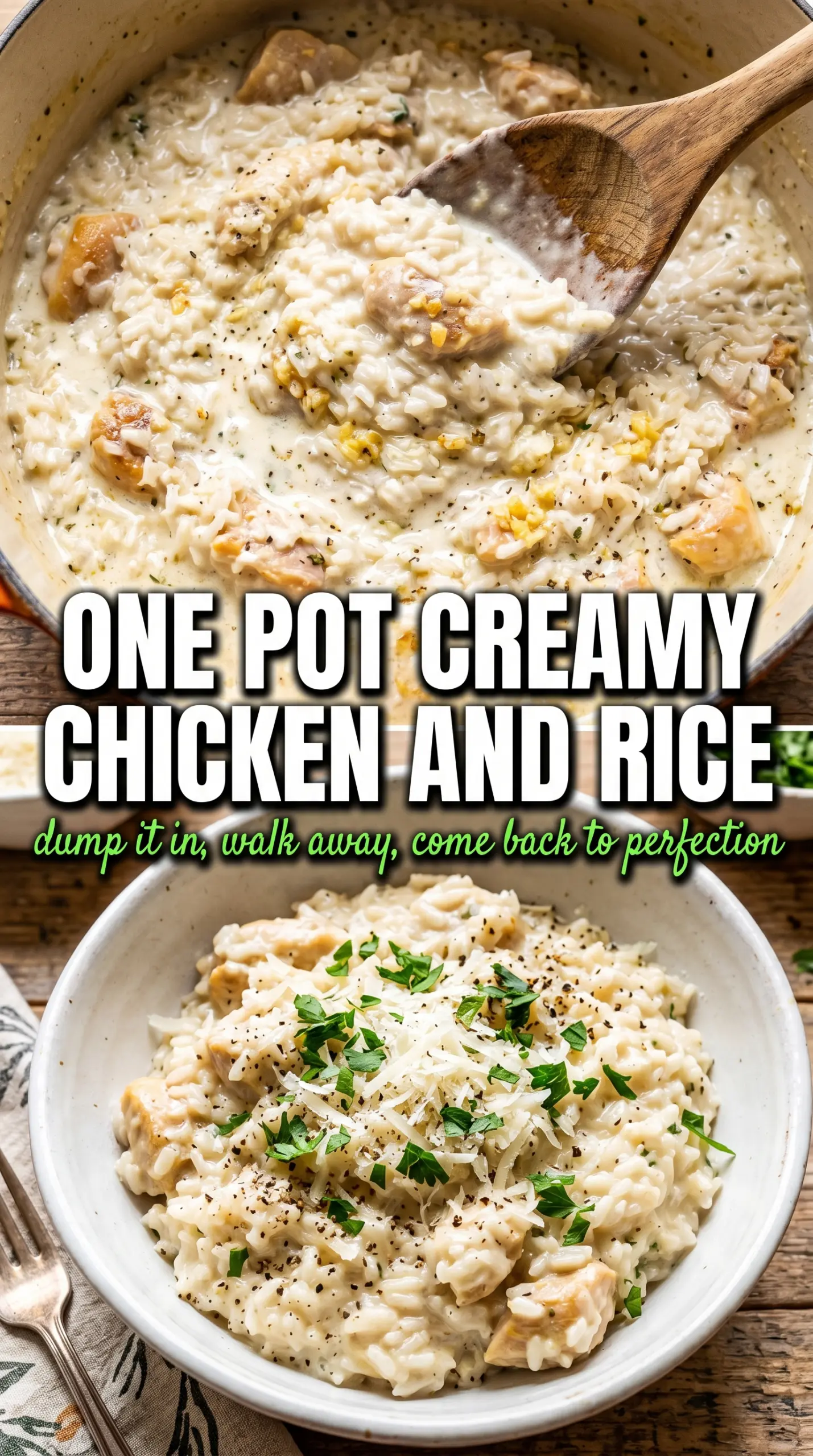
Golden chicken thighs tucked over creamy rice is one of those dinners that looks like it took all afternoon, but the pot does most of the work. The rice turns fluffy and glossy at the same time, soaking up the chicken drippings, broth, cream, and Parmesan until every bite tastes built from the inside out. The skin stays bronzed and crisp enough to give the whole dish a little contrast when you cut into it.
What makes this version worth keeping is the order. The chicken gets a real sear first, which leaves browned bits in the pot for the rice to pick up later. Then the rice toasts for a minute or two before the liquid goes in, so it keeps its shape instead of turning soft and muddy. The cream and Parmesan go in with the broth, but the heat stays gentle once everything is covered. That’s what keeps the sauce silky instead of greasy.
Below, I’ve included the small details that matter here: how dark the chicken should get before you flip it, why long-grain rice works best, and what to do if the pot looks too tight or too soupy near the end.
The chicken skin got beautifully crisp and the rice soaked up all the pan flavor without turning mushy. I covered it for the full 25 minutes and the texture came out spot on.
Creamy chicken and rice with crisp skin and glossy, seasoned rice is worth pinning for an easy one-pot dinner that still feels special.
The Sear Sets Up the Rice, So Don’t Rush It
The biggest mistake with a dish like this is treating the chicken and rice as two separate jobs. They’re not. The chicken thighs need enough time skin-side down to render fat and leave the bottom of the pot full of flavor, and that fond becomes the backbone of the rice. If the chicken only picks up pale color, the rice will taste flat no matter how much seasoning you add later.
Bone-in, skin-on thighs hold up best here because they stay juicy during the covered simmer. Boneless pieces cook faster, but they don’t give the same richness to the rice. The rice also needs a quick toast in the onion and garlic mixture before the liquid goes in. That tiny step keeps the grains separate and gives the finished pot a cleaner, more polished texture.
- Chicken thighs — Bone-in, skin-on thighs bring the best flavor and give you that golden top. Breast meat can work, but it dries out faster and won’t enrich the rice the same way.
- Long-grain white rice — This is the right rice for a fluffy, creamy result. Short-grain rice turns too sticky, and brown rice needs a different liquid ratio and a longer cook.
- Parmesan — Grate it finely so it melts into the sauce instead of clumping. Pre-shredded cheese can work in a pinch, but it won’t disappear as smoothly into the liquid.
- Heavy cream — It softens the broth and gives the rice its rich finish. Half-and-half can be used, but the sauce will be a little lighter and less silky.
What Each Ingredient Is Actually Doing in This Baked Chicken
- Chicken breasts (the lean protein) — Cut evenly so pieces cook at the same rate. Let them sit at room temperature for 15 minutes before baking so they cook evenly.
- Olive oil or butter (the cooking medium and richness) — Good fat keeps the chicken from drying out in the oven. It also carries herb and spice flavors throughout the meat.
- Garlic (the aromatic foundation) — Fresh minced or thin slices mellow and become sweet when baked, adding depth without overpowering the chicken.
- Cream or broth (the sauce base) — This creates the glossy sauce that keeps baked chicken from tasting dry. It also helps flavors develop and carry.
- Lemon juice or vinegar (the brightness) — Acid prevents the cream sauce from tasting too heavy and keeps the dish from being one-dimensional.
- Fresh herbs or spices (the personality) — Basil, thyme, oregano, paprika, or Italian seasoning all work. Choose ones that complement your other flavors.
- Cheese (optional richness) — Parmesan or feta adds creaminess and salt that enhances all other flavors. Don’t overdo it or the dish becomes heavy.
- Proper oven temperature (the key to juicy chicken) — 375-400°F bakes chicken through without drying the edges. Check with a thermometer for 165°F internal temp.
The 20 Minutes That Keep the Rice Creamy Instead of Mushy
Getting the Chicken Browned
Season the thighs well before they hit the pot, then lay them skin-side down in hot oil and leave them alone until the skin is deeply golden and releases on its own. If you try to move them too early, the skin sticks and tears, and you lose both texture and flavor. Flip for just a few more minutes, then pull them out. They’ll finish cooking later in the rice.
Building the Base in the Same Pot
Cook the onion in the drippings until it softens and picks up some color at the edges. Add the garlic only for the last minute so it stays fragrant instead of bitter. Stir in the rice and let it toast briefly; it should smell nutty, not browned. If there’s a stubborn dark layer on the bottom, that’s good, but if it looks black, the heat was too high and the pot needs a quick wipe before you continue.
Simmering Under a Tight Lid
Once the broth, cream, Parmesan, and thyme go in, bring the pot just to a simmer before the chicken goes back on top. The liquid should be moving gently, not boiling hard. Nestle the thighs skin-side up so the skin stays above the surface and doesn’t go soggy. Keep the lid on and the heat low enough that you hear only a soft burble; aggressive heat turns the rice uneven and can split the sauce.
The Rest That Finishes the Texture
When the rice is tender and the chicken reaches 165°F, turn off the heat and leave the lid on for five minutes. That rest lets the steam settle and the rice finish absorbing moisture without getting wet on the bottom. Fluff with a fork instead of stirring hard, or you’ll break the grains and the whole pot gets heavy. Finish with parsley for color and a fresh note against the richness.
How to Adjust This Pot When Your Pantry or Schedule Changes
Make it dairy-free without losing the creamy texture
Swap the heavy cream for full-fat canned coconut milk and skip the Parmesan. The rice will still turn rich and silky, but the flavor shifts slightly toward coconut, so keep the thyme and pepper a little more restrained. If you want the closest savory result, use an unsweetened dairy-free creamer meant for cooking.
Use boneless chicken thighs when you need faster cooking
Boneless thighs cook a little faster and are easier to serve, but they won’t shield the rice the same way bone-in pieces do. Start checking for doneness a few minutes early, and expect a slightly less rich pot since you’re missing some of the flavor that comes from the bone and skin.
Turn it into a gluten-free dinner with no special tricks
This recipe is naturally gluten-free as long as your broth and Parmesan are certified gluten-free. The texture and timing stay the same, so this is one of the easiest dinners to serve without any extra adjustments.
What to do if you want to make it ahead
You can sear the chicken and prep the onion and garlic a few hours ahead, but the rice should be cooked close to serving time. Reheated rice in a creamy pot like this tends to tighten up, so a splash of broth when warming it back up keeps the texture loose.
Storage and Reheating
- Refrigerator: Store leftovers in an airtight container for up to 4 days. The rice will firm up as it chills, which is normal.
- Freezer: It freezes, but the texture softens a little on thawing. Cool it completely, portion it into freezer containers, and freeze for up to 2 months.
- Reheating: Warm gently on the stove or in the microwave with a splash of broth or water. Stir only as much as needed to loosen the rice; aggressive stirring makes it turn pasty.
Answers to the Questions Worth Asking

One Pot Creamy Chicken and Rice
Ingredients
Equipment
Method
- Season the chicken thighs with salt, pepper, garlic powder, smoked paprika, and Italian seasoning to taste. Pat lightly so the spices adhere.
- Heat olive oil in a Dutch oven over medium-high heat and place chicken skin-side down. Sear 7-8 minutes until deeply golden, with the skin crisp and browned.
- Flip the chicken and sear for 3 minutes on the second side. Cook until the chicken releases easily and the edges look browned, then remove to a plate.
- Cook the diced onion in the same Dutch oven for 3 minutes. Stir occasionally until softened and lightly translucent.
- Add the minced garlic and cook for 1 minute. Stir so it smells fragrant but does not brown.
- Add the uncooked long-grain white rice and toast for 2 minutes. Stir to coat the grains and keep them slightly opaque and warm.
- Pour in the chicken broth and heavy cream, then stir in the grated Parmesan and dried thyme. Bring everything to a simmer so the sauce looks smooth and glossy.
- Nestle the chicken thighs skin-side up into the rice and spoon some sauce over the rice around them. Cover tightly and cook over low heat for 22-25 minutes until the rice is cooked and the chicken reaches 165°F.
- Rest the pot covered for 5 minutes after cooking. Keep it sealed so the steam finishes softening the rice.
- Fluff the rice gently with a fork, lifting the grains from the edges toward the center. Let the chicken sit on top while you fluff.
- Garnish with fresh parsley and serve. Add cracked pepper if desired for extra brightness.