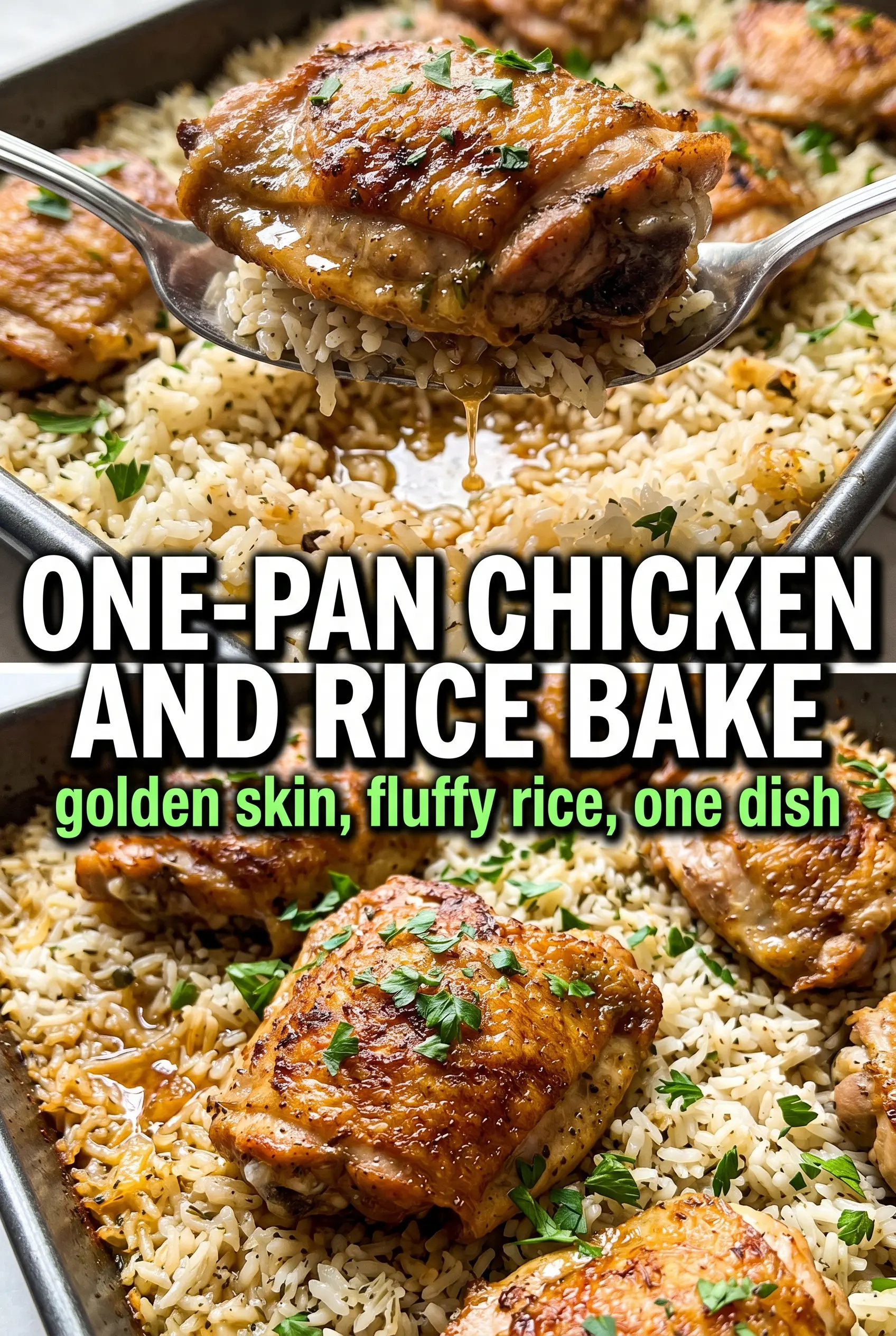
Golden chicken thighs and fluffy rice baked together in one dish is the kind of dinner that earns a permanent spot in the rotation. The rice soaks up every bit of seasoned broth and chicken drippings, while the skin stays lifted above the surface long enough to turn crisp and bronzed instead of soft and soggy. It comes out looking like you worked harder than you did, which is always a good sign on a weeknight.
The trick here is balance. The rice needs enough liquid to cook through, but not so much that it turns mushy, and the chicken needs to sit skin-side up so the fat renders into the pan instead of disappearing into the grains. Bone-in thighs handle the full bake without drying out, and the foil cover gives the rice its head start before the top layer finishes uncovered. That last stretch is where the skin crisps and the flavor tightens up.
Below, I’m walking through the parts that matter most: how to keep the rice from going past tender, which seasoning details actually change the result, and the swaps that still hold up if you need to work with what’s already in the pantry.
The rice came out fluffy, not sticky, and the chicken skin actually stayed crisp after the second bake. I used thighs like you suggested and the whole pan was done right on time.
Save this one-pan chicken and rice bake for the nights when you want crispy chicken and savory baked rice in a single dish.
The Rice Cooks Best When It Starts Under the Chicken, Not Beside It
One-pan chicken and rice can go wrong in two ways: the rice dries out before the chicken is done, or the chicken steams itself into pale, soft skin. Nesting the thighs directly on top of the rice mixture fixes both problems. The rice gets the broth and drippings it needs, and the skin stays exposed enough to brown once the foil comes off.
Long-grain white rice matters here because it stays separate and fluffy. Short-grain rice turns dense faster, and brown rice needs a different amount of liquid and a longer bake. If the rice seems slightly loose when you remove the foil, don’t panic; the last 15 minutes uncovered are where it finishes absorbing liquid and settles into the right texture.
- Bone-in, skin-on chicken thighs — These stay juicy through the full bake and give the rice the richest drippings. Boneless thighs work in a pinch, but they cook faster and won’t give you the same browned skin or savory pan flavor.
- Long-grain white rice — This is the right structure for a bake like this. It cooks evenly without turning gluey, which is exactly what you want when the grains are tucked under a layer of chicken.
- Chicken broth — Use a broth you’d actually drink. A bland broth gives you bland rice, because the rice absorbs every bit of it. Low-sodium is fine if you want more control over seasoning.
- Onion and garlic — They soften into the rice as it bakes and build the base flavor. Dice the onion small so it disappears into the finished dish instead of staying crunchy.
What Each Ingredient Is Actually Doing in This Recipe
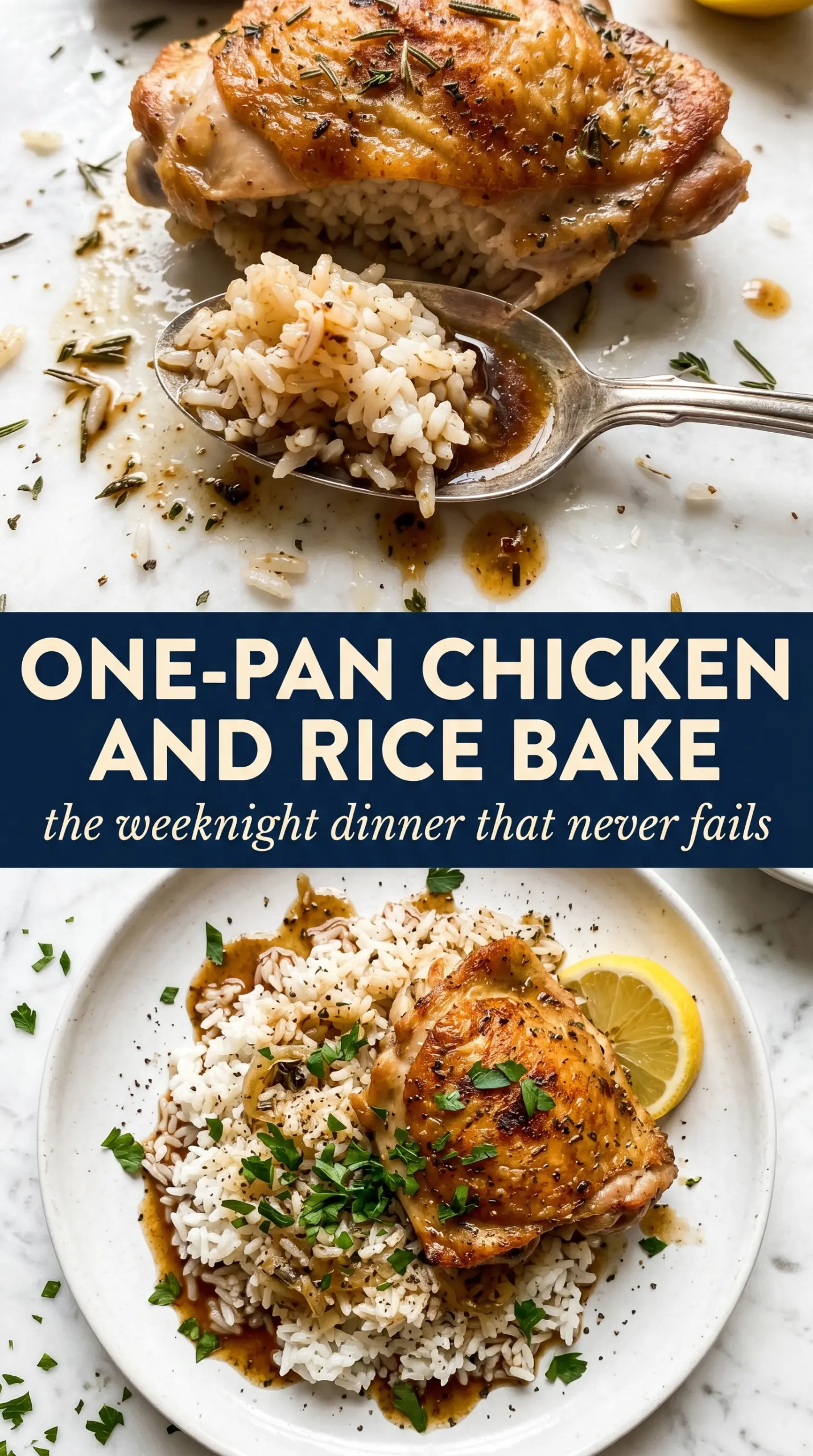
- Primary ingredient (the star) — Quality matters most. Choose the best you can find.
- Cooking medium (oil, butter, or broth) — This carries flavors and prevents dryness.
- Seasonings (salt, pepper, spices, herbs) — Layer flavors so nothing overpowers. Build depth gradually.
- Aromatics (garlic, onion, herbs) — Cook with fat to bloom flavors. Become the foundation.
- Supporting ingredients — Complement the main ingredient without overpowering it.
- Sauce or liquid (if applicable) — Brings flavors together. Balance richness with acid.
- Acid (lemon, vinegar, wine, or other) — Brightens and prevents flat-tasting results.
- Final finish (garnish, glaze, or sauce) — Prevents one-dimensional taste and adds visual appeal.
How to Layer the Pan So Everything Finishes Together
Season the chicken before it goes anywhere near the rice
Season the thighs on all sides so the skin and the meat both carry flavor. Paprika and garlic powder give the chicken a deeper color and a little warmth, while Italian seasoning and thyme echo the herbs in the rice. If you season only the top, the underside tastes flat and the drippings won’t have enough presence to season the rice properly.
Build the rice mixture in the baking dish
Stir the uncooked rice, broth, onion, garlic, thyme, Italian seasoning, and salt directly in the 9×13 dish. The rice needs to be evenly distributed so it cooks at the same rate across the pan. If the onion pieces are too large, they can stay a little firm by the time the rice is done, so keep the dice small and even.
Cover tightly, then uncover at the end
The foil traps steam and gets the rice most of the way tender without drying out the top. Press it down tightly so the edges seal; if steam escapes, the rice near the surface can cook unevenly. When the foil comes off, the pan should still have some visible moisture. That is what the rice uses to finish cooking while the chicken skin dries out and turns crisp.
Watch the final few minutes, not just the timer
After 55 minutes total, the chicken should be golden and the rice should have absorbed the liquid without looking wet. If the rice still looks soupy, give it a few more minutes uncovered. If the rice is done but the skin needs more color, move the pan higher in the oven for a brief finish and keep an eye on it so the top doesn’t overbrown.
Three Ways to Adapt the Pan Without Losing the Texture
Make it dairy-free without changing anything else
This recipe is already naturally dairy-free, so you don’t need a special swap. That’s part of why it works so well for a mixed group — the flavor comes from broth, herbs, onion, garlic, and chicken drippings, not from butter or cream.
Use boneless thighs if that’s what you have
Boneless thighs will still give you a juicy bake, but they cook faster and don’t render as much fat into the rice. Start checking for doneness a little earlier, and expect the top to brown less dramatically than with skin-on pieces.
Add vegetables without throwing off the bake
Frozen peas, diced carrots, or sliced mushrooms can go into the rice mixture before baking. Keep the additions modest so the pan doesn’t get crowded; too many vegetables raise the moisture level and can leave the rice soft instead of fluffy.
Use brown rice only if you change the timing
Brown rice needs more liquid and a longer bake, so it can’t be swapped 1:1 without adjustments. If you use it, expect a different texture and a longer covered cook before the chicken gets its final uncovered finish.
Storage and Reheating
- Refrigerator: Store leftovers in a covered container for up to 4 days. The rice will firm up as it chills, but it still reheats well.
- Freezer: This freezes better than you might expect. Portion it into airtight containers and freeze for up to 2 months, though the rice will be a little softer after thawing.
- Reheating: Reheat covered in the oven at 325°F with a splash of broth or water to loosen the rice. The biggest mistake is blasting it uncovered in the microwave until the chicken dries out and the rice turns chewy.