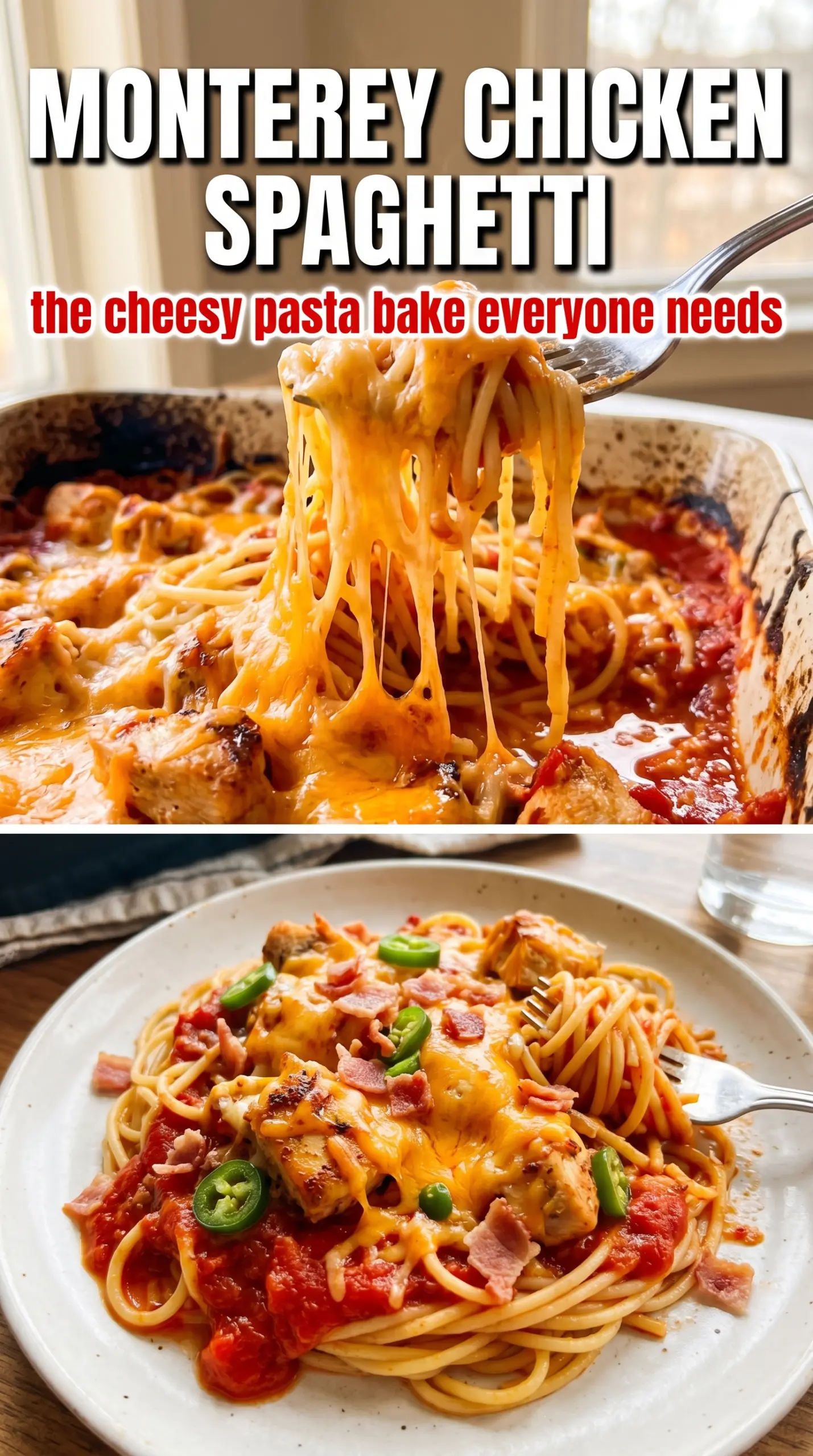
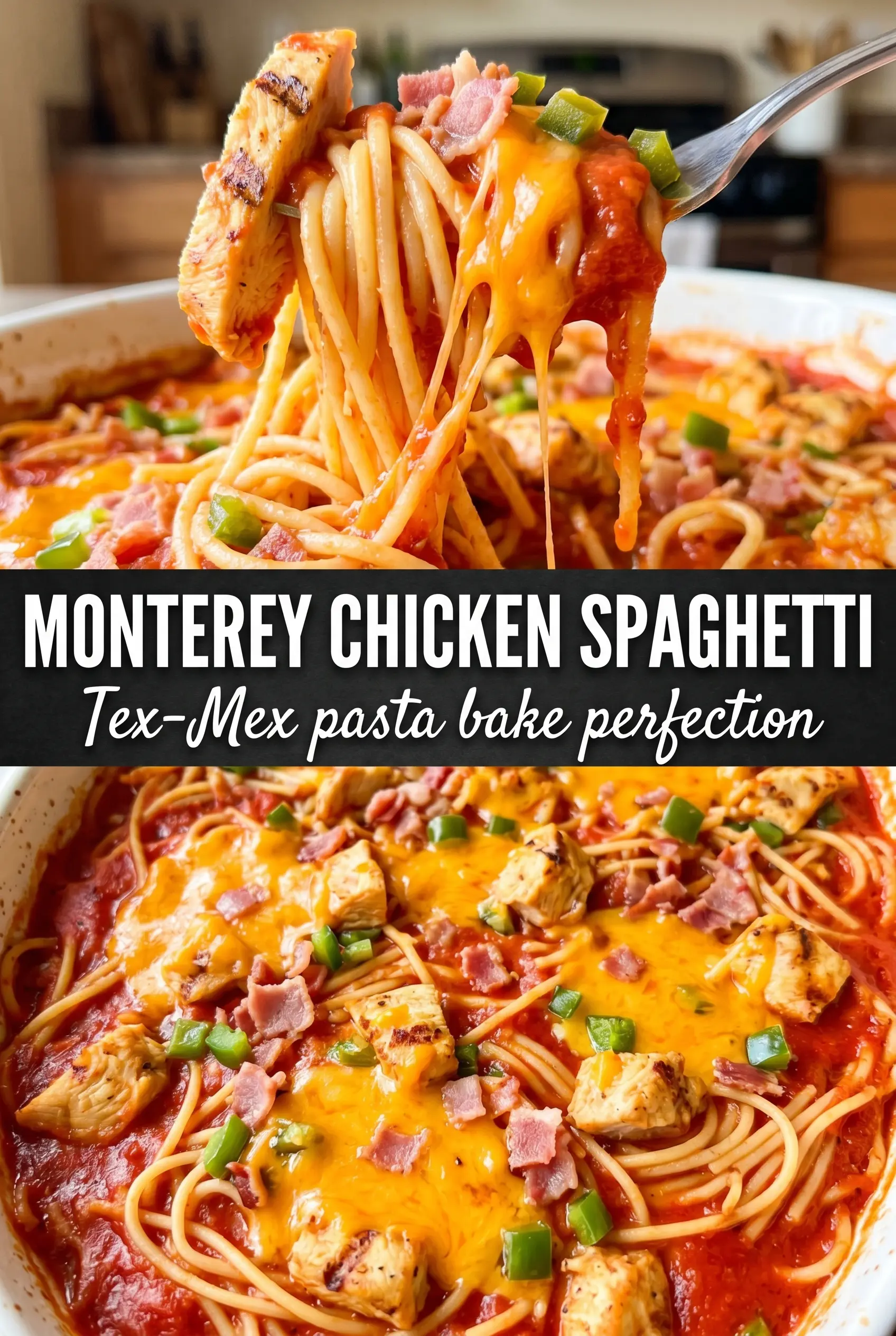
Monterey chicken spaghetti bakes up into the kind of casserole people quietly start going back for before the dish even makes it to the table. The pasta stays coated in a creamy sauce that clings instead of pooling, the chicken keeps it hearty, and the bacon, green chile, and melty cheese give every bite a little smoke, salt, and heat. The top turns golden while the edges bubble, which is exactly what you want from a pasta bake like this.
The difference here is balance. The soup-and-sour-cream base is rich, but the green chiles and bell pepper keep it from tasting flat, and the chicken broth loosens the mixture just enough so the spaghetti can absorb flavor without turning heavy. Breaking the spaghetti before baking helps it serve cleanly and makes the casserole easier to stir together without clumps of pasta sticking together.
Below, I’ve included the small details that matter: when the sauce should look smooth, how to keep the noodles from overcooking, and which swaps work if you need to stretch the dish or change it for what’s in the fridge.
The sauce baked up creamy without turning greasy, and the bacon stayed crisp enough to stand out under the cheese. I followed the timing exactly and the top came out beautifully golden.
Love that cheesy Monterey chicken spaghetti crust? Save this one for the nights when you want a bubbling pasta bake with bacon, green chiles, and a golden top.
The Trick to Keeping the Sauce Creamy After Baking
This casserole works because the sauce starts loose and finishes thickened by the pasta and oven heat. If the mixture looks tight before it goes into the dish, it usually bakes up dry, since the spaghetti keeps pulling moisture as it sits in the oven. The goal is a creamy coat on every strand, not a heavy paste.
The other place people go wrong is with the cheese. If you bury the casserole under cheese too early or bake it too long, the top can turn greasy instead of golden. A divided cheese topping gives you a softer layer inside and a browned crust on top, which is what makes this bake taste like comfort food instead of a bowl of sauced noodles.
What Each Ingredient Is Actually Doing in This Chicken Recipe
- Chicken (the foundation) — Quality chicken starts with good sourcing. Even simple seasoning tastes better on good meat.
- Olive oil or butter (the cooking medium) — Fat carries flavors and keeps chicken from drying. It’s also what makes food taste delicious.
- Salt and pepper (proper seasoning) — Season generously; underseasoned chicken tastes bland. Apply inside and outside so the seasoning penetrates.
- Garlic and onion (the aromatic base) — These add depth and complexity. They sweeten slightly when cooked, becoming mellow and round.
- Acid (lemon, vinegar, wine, or tomato) — This brightens the dish and prevents it from tasting heavy. It also helps balance rich sauces.
- Fresh herbs or spices (the character) — These define the personality of the dish. Choose ones that complement your other flavors.
- Cream or sauce base (optional richness) — A sauce keeps the chicken moist and flavorful. Make sure it’s balanced with acid and herbs.
- Proper cooking technique (the final step) — Whether baking, pan-searing, or simmering, the right method ensures juicy, tender results without drying out the meat.
What Each Ingredient Is Doing in the Casserole
- Chicken soup and mushroom soup — These build the creamy backbone and give the casserole body without needing a separate roux. Canned soup is one place where the shortcut works better than a homemade stand-in because it brings thickness and seasoning in the same step.
- Sour cream — This is what keeps the sauce from tasting one-note. It adds tang and helps the finished casserole stay silky instead of grainy.
- Chicken broth — The broth loosens the soup mixture so it can coat the spaghetti evenly. If you skip it, the filling can get too dense after baking.
- Green chiles, bell pepper, and onion — They cut through the richness and keep each bite from tasting heavy. Dice the onion and pepper small so they soften enough in the oven to blend into the sauce.
- Bacon — Use it for salt, smoke, and a crisp contrast against the creamy pasta. Cook it until truly crisp before crumbling, or it will disappear into the casserole and turn soft.
- Monterey Jack and cheddar blend — Monterey Jack melts smoothly, while cheddar brings sharper flavor and better browning. A blend gives you both the stretch and the crust.
Building the Bake So the Pasta Stays Tender, Not Mushy
Mix the Sauce Until It’s Fully Smooth
Whisk the soups, broth, sour cream, and garlic powder until you don’t see streaks of sour cream anymore. That smooth base matters because lumps at this stage stay lumps in the finished casserole. Taste it before anything else goes in so you can adjust salt and pepper with the full richness in mind.
Coat the Pasta and Filling Evenly
Add the cooked spaghetti, chicken, chiles, bacon, pepper, and onion, then toss until every strand looks coated. If the sauce sits in one puddle, the bottom layer turns creamy while the top layer dries out. Use noodles that are cooked just to al dente, since they’ll soften another notch in the oven.
Bake Until the Edges Bubble and the Top Browns
Spread the mixture into the dish in an even layer and cover it with the cheese blend. Bake until the casserole is bubbling around the edges and the top has patches of golden brown, usually 25 to 30 minutes. If the cheese browns before the center is hot, tent it loosely with foil for the last few minutes so the middle can catch up without burning the top.
How to Adapt Monterey Chicken Spaghetti Without Losing What Makes It Work
Make It Gluten-Free
Use gluten-free spaghetti and swap in gluten-free cream soups. The texture stays close to the original, but gluten-free noodles can soften faster, so pull the casserole as soon as it’s hot and bubbling.
Turn It Into a Lighter Chicken Pasta Bake
Use reduced-fat sour cream and a lighter shredded cheese blend, and cut the bacon down to 4 strips. You’ll lose a little richness, but the casserole still stays creamy because the soup base does most of the work.
Swap the Veggies to Match What You Have
If you don’t have green bell pepper, use red bell pepper for a sweeter finish or leave it out and add extra onion. The casserole still works, but you’ll lose a little of that classic savory crunch from the pepper.
Stretch It for a Bigger Crowd
Add another 4 to 6 ounces of cooked spaghetti and increase the chicken by about 1 cup, then add a splash more broth if the mixture looks dry. This keeps the casserole creamy instead of turning into a packed, chewy bake.
Storage and Reheating
- Refrigerator: Store covered for up to 4 days. The sauce thickens as it chills, so the casserole will look a little firmer the next day.
- Freezer: This freezes well for up to 2 months. Wrap the baked casserole tightly or portion it into containers; thaw overnight in the fridge before reheating.
- Reheating: Reheat covered in a 325°F oven with a splash of broth or milk over the top to bring back moisture. The biggest mistake is blasting it in the microwave until the noodles dry out and the cheese turns rubbery.
Answers to the Questions Worth Asking
Monterey Chicken Spaghetti
Ingredients
Equipment
Method
- Preheat the oven to 350°F and grease a 9x13 baking dish until coated. Place the dish on the oven rack so you can bake right after assembling.
- Whisk together the cream of chicken soup, cream of mushroom soup, chicken broth, sour cream, and garlic powder until smooth. The sauce should look uniform with no streaks.
- Combine the cooked spaghetti, shredded chicken, soup mixture, green chiles, bacon, bell pepper, and onion in a large bowl; toss to coat. Season with salt and pepper so the mixture tastes evenly savory.
- Spread the mixture into the prepared baking dish in an even layer. Sprinkle the cheese blend over the top so it covers the surface.
- Bake at 350°F for 25-30 minutes until bubbly and the cheese is golden. Look for active bubbling at the edges and a browned, crisp top.
- Garnish with fresh parsley right before serving. The bright green flecks add contrast over the golden crust.