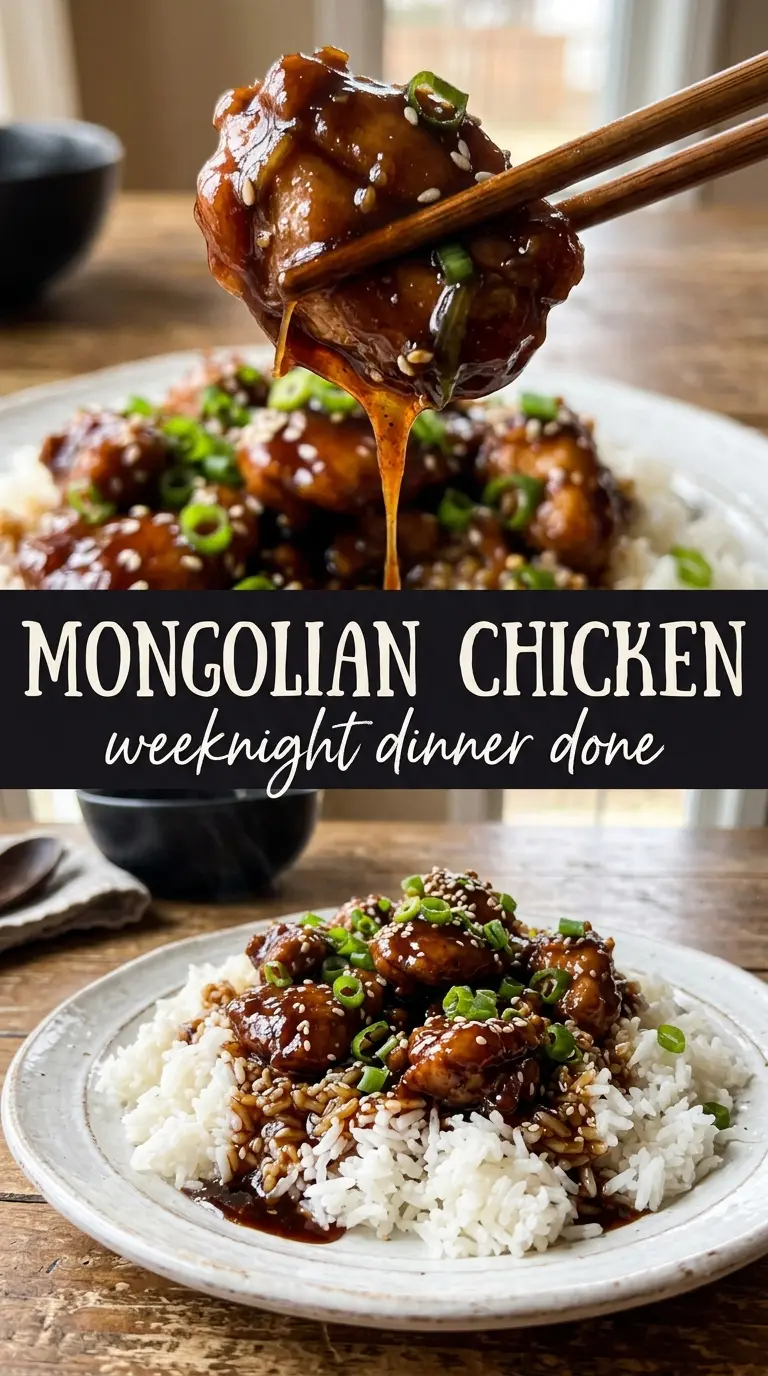
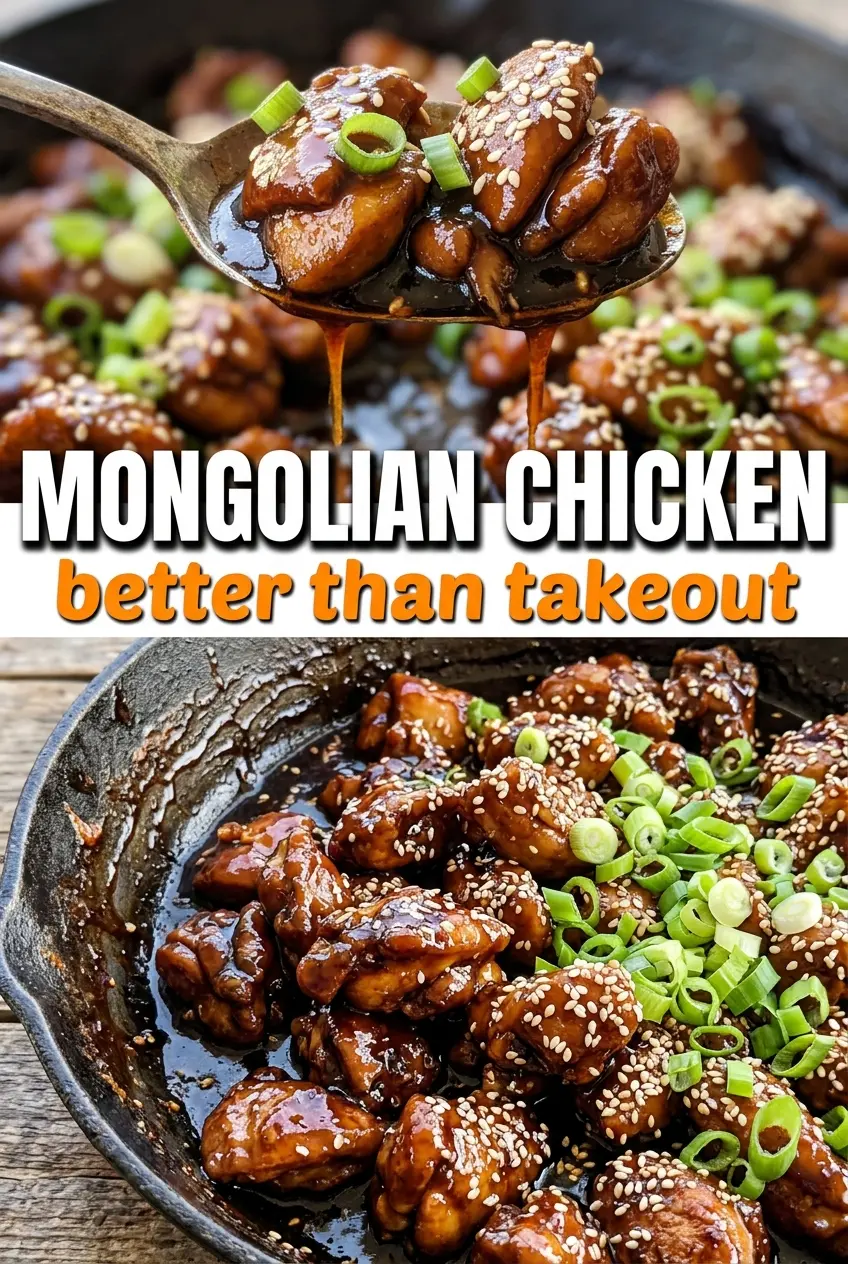
Crispy-edged chicken coated in a dark, sticky Mongolian sauce is one of those dinners that disappears fast because it hits every note at once: salty, sweet, glossy, and just a little fiery. The chicken stays tender inside while the cornstarch gives the outside a light crust that grabs the sauce instead of letting it slide off. Once the green onions hit the hot pan, they soften at the edges and pick up a little char, which is exactly what keeps the dish from tasting one-note.
The trick is keeping the sauce moving from thin to lacquered without overcooking the chicken. High heat gives the chicken color, but the sauce needs a quick boil and a short simmer so the cornstarch slurry can do its job. If you rush that part, you end up with a thin pan sauce instead of the glossy coating that makes this recipe worth repeating.
Below, I’ve added the two places people usually go wrong with Mongolian chicken: getting the pan hot enough for browning and timing the sauce so it turns sticky instead of clumpy. There are also a few swaps that still keep the dish balanced if you need to adjust for what’s in your kitchen.
The chicken got that crisp edge I usually only get from takeout, and the sauce thickened up into a glossy glaze instead of staying watery. My husband went back for seconds before I even sat down.
Save this Mongolian Chicken for the nights when you want a sticky soy-ginger glaze, crisp chicken, and dinner on the table in 30 minutes.
The Trick to Mongolian Chicken That Stays Crisp Under the Sauce
Most versions go soggy because the chicken goes straight into the sauce before it has a chance to build any real crust. Cornstarch on the raw chicken does more than thicken things later; it helps form that thin, crisp shell in the hot oil, and that shell is what keeps the glaze clinging in a good way. If your pan is only lukewarm, the chicken will steam and the coating will turn pasty instead of golden.
The other mistake is crowding the pan. Give the chicken space so the surface moisture can cook off fast, and let one side set before moving it around. You want deep color at the edges and a clean release from the skillet, not pale chicken that has been stirred into submission.
- Cornstarch — This is doing double duty here: it creates the light coating that browns quickly and it helps the sauce turn glossy later. If you swap it for flour, the finish gets heavier and less crisp.
- Chicken breasts — Thin slicing matters more than the cut itself. Breasts cook quickly and stay tender when they’re cut against the grain into even pieces. Chicken thighs work too, but they’ll give you a richer, juicier result with a little less of that takeout-style bite.
- Soy sauce — This is the backbone of the glaze, so use a brand you like the taste of. Low-sodium soy sauce works fine if that’s what you keep on hand, but the sauce will need a touch more time to reduce.
- Hoisin sauce — It adds depth and a little thickness that plain soy sauce can’t replace. If you don’t have it, the sauce still works, but you’ll lose some of that round, slightly sweet finish.
- Sesame oil — Use the real thing and keep it as a finishing flavor, not a frying oil. A small amount goes a long way and gives the sauce that nutty edge that makes the whole pan taste complete.
- Green onions — Add them at the end so the whites soften and the greens stay bright. They should taste fresh but slightly charred, not limp and faded.
What Each Ingredient Is Actually Doing in This Recipe
- Primary ingredient (the star) — Quality matters most. Choose the best you can find.
- Cooking medium (oil, butter, or broth) — This carries flavors and prevents dryness.
- Seasonings (salt, pepper, spices, herbs) — Layer flavors so nothing overpowers. Build depth gradually.
- Aromatics (garlic, onion, herbs) — Cook with fat to bloom flavors. Become the foundation.
- Supporting ingredients — Complement the main ingredient without overpowering it.
- Sauce or liquid (if applicable) — Brings flavors together. Balance richness with acid.
- Acid (lemon, vinegar, wine, or other) — Brightens and prevents flat-tasting results.
- Final finish (garnish, glaze, or sauce) — Prevents one-dimensional taste and adds visual appeal.
Building the Sauce So It Turns Glossy, Not Gritty
Coating the Chicken First
Toss the sliced chicken with cornstarch, salt, and pepper until every piece looks lightly dusty, not thickly packed. That coating should be thin enough that the chicken still looks like chicken, just a little matte on the outside. If you pile on too much cornstarch, it will clump in the pan and turn gummy instead of crisping.
Getting Color in the Pan
Heat the oil until it shimmers before the chicken goes in. Once it hits the pan, it should sizzle immediately. Let it cook without constant stirring so the edges have time to brown; if you keep moving it around, you lose the crust before it forms. Pull the chicken out when it’s deeply golden and just cooked through, because it will finish in the sauce later.
Turning the Glaze Sticky
Cook the garlic and ginger for only about 30 seconds, just until fragrant. Then pour in the sauce and bring it up to a boil so the sugar dissolves and the mixture starts reducing. Stir in the cornstarch slurry and keep it moving for a minute or two until the sauce looks thick enough to coat the back of a spoon and leaves shiny trails in the pan.
Finishing Without Overcooking
Add the chicken and green onions back at the very end and toss just until everything is coated. The goal is hot, glossy chicken, not chicken that has simmered so long it loses its crust. Sesame seeds go on after plating, when the sauce is still tacky enough to hold them in place.
How to Adapt This When You Want It Lighter, Spicier, or Gluten-Free
Gluten-Free Version
Use a gluten-free soy sauce or tamari and check that your hoisin sauce is labeled gluten-free. The texture stays the same, and the cornstarch coating still gives you that crisp edge, so this is one of the easiest swaps to make without changing the dish.
Chicken Thighs Instead of Breasts
Boneless skinless thighs give you a juicier bite and a little more richness. They need about the same cook time if sliced thin, but they’ll brown a bit more slowly because of the extra fat. If you like a softer, more forgiving texture, this is the swap to make.
Less Sweet, More Savory
Cut the brown sugar back a couple tablespoons if you want a sauce that leans more savory than sticky-sweet. The glaze will still thicken, but it won’t cling quite as heavily, so keep an eye on the pan and reduce just until the sauce coats the chicken instead of pooling underneath it.
Extra Heat
Increase the red pepper flakes or add a spoonful of chili paste to the sauce. Do that before the sauce goes into the pan so the heat blends in instead of landing in sharp pockets. The sweetness can handle more spice, but too much heat will bury the soy-ginger balance.
Storage and Reheating
- Refrigerator: Store leftovers in an airtight container for up to 3 days. The chicken will soften as it sits, but the sauce usually tastes even better the next day.
- Freezer: This freezes well, though the green onions lose some texture. Freeze the chicken and sauce without the rice, then thaw overnight in the fridge before reheating.
- Reheating: Warm it in a skillet over medium-low heat with a splash of water if needed. The mistake is blasting it in a hot pan or microwave until the sauce tightens too far and the chicken turns dry.
Questions I Get Asked About This Recipe
Mongolian Chicken
Ingredients
Equipment
Method
- Toss the thinly sliced chicken with cornstarch, salt, and pepper until every piece is evenly coated and looks dry-dusted.
- Whisk together soy sauce, brown sugar, water, hoisin sauce, sesame oil, and red pepper flakes until the sugar dissolves and the mixture looks uniform.
- Heat the vegetable oil in a large skillet or wok over high heat until shimmering, then add chicken in a single layer.
- Cook the chicken for 3-4 minutes per side until deeply golden and cooked through, then remove to a plate.
- Add garlic and ginger to the same pan and stir-fry for 30 seconds until fragrant.
- Pour in the sauce and bring it to a boil, then let it bubble until glossy and thickening slightly.
- Stir in the cornstarch slurry (cornstarch mixed with water) and cook for 1-2 minutes until the sauce turns thick and glossy with a darker amber sheen.
- Return the chicken to the pan and add the green onions, then toss until the onions char slightly and the chicken is fully glazed.
- Serve the sticky Mongolian chicken over steamed rice and top with sesame seeds.