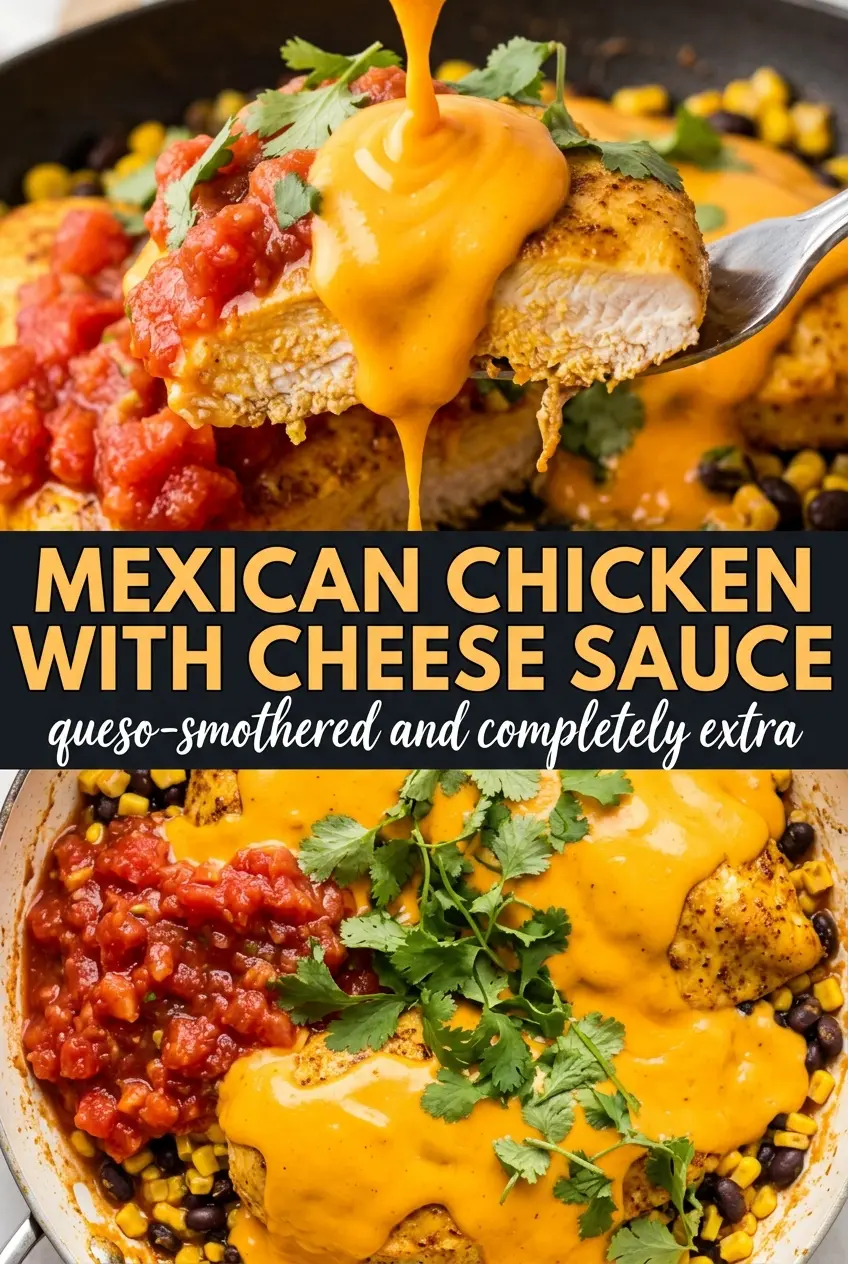
Juicy seared chicken breasts under a thick queso-style sauce hit that sweet spot between weeknight practical and straight-up craveable. The chicken gets a smoky taco-seasoned crust first, then the cheese sauce comes in glossy and spoonable, with enough body to cling to every slice instead of running off the plate.
The part that makes this version work is the combination of cheeses and the way the sauce is built. Mexican cheese blend gives it flavor, Velveeta keeps it smooth, and the flour-butter base holds everything together without turning grainy. The drained tomatoes with green chiles add just enough acidity and heat to keep the sauce from tasting flat, and the jalapeño gives it a fresh bite instead of just more salt and cheese.
Below, I’m walking through the two places people usually stumble: getting a good sear on the chicken without drying it out, and making a cheese sauce that stays silky from the pan to the plate. If you’ve ever had queso sauce turn stringy or thin, this method will feel reassuringly solid.
The sauce thickened up perfectly and stayed smooth even after I spooned it over the chicken. I drained the tomatoes like you said, and the queso had that rich, glossy texture instead of turning watery.
Mexican Chicken with Cheese Sauce is the kind of dinner that lands best when the queso stays thick and the chicken stays juicy.
The Difference Between Smooth Queso and a Grainy Sauce
The biggest mistake in cheese sauce is pushing the heat too high once the dairy goes in. That’s when the sauce turns sandy, stringy, or greasy. This recipe avoids that by building a quick roux first, then adding milk gradually so the base thickens before the cheese ever hits the pan.
The other thing that matters is the order. If the tomatoes and green chiles go in before the cheese has melted, the sauce can look loose at first, but it firms up as it simmers. Pull the pan back from the heat if the cheese starts to clump. Low, steady heat gives you a sauce that pours like velvet instead of separating into little oily pockets.
What Each Ingredient Is Actually Doing in the Pan

- Chicken breasts — Boneless, skinless breasts keep the timing fast and let the sauce do the heavy lifting. Pound them to an even thickness if one side is much thicker than the other; that keeps the exterior from overcooking before the center reaches 165°F.
- Taco seasoning — This gives you the cumin, chili, garlic, and paprika base in one move. Store-bought works fine here, but if yours is salt-heavy, cut back a touch elsewhere so the finished sauce doesn’t taste sharp.
- Mexican cheese blend — This adds the familiar shredded-cheese flavor and helps the sauce taste layered instead of processed. Use freshly shredded if you want the smoothest melt; pre-shredded works, but it often brings a little starch that can dull the texture.
- Velveeta — This is what keeps the sauce stable. It sounds old-school for a reason: it melts evenly and holds the sauce together when the tomatoes and jalapeño go in.
- Rotel and jalapeño — The tomatoes bring acidity, and the green chiles plus jalapeño keep the sauce from reading as just rich and heavy. Drain the tomatoes before adding them, or the sauce can thin out more than you want.
- Milk, butter, and flour — This is the base that gives the sauce body. Whole milk makes the smoothest result, though 2% will work if that’s what you’ve got; just expect a slightly lighter sauce.
Getting the Chicken Sear and Queso Finish Right
Seasoning and Searing the Chicken
Rub the taco seasoning over the chicken until every surface is coated, then sear it in hot olive oil in a skillet over medium-high heat. You want a deep browned crust and an internal temperature of 165°F, which usually takes about 5 to 6 minutes per side depending on thickness. If the pan is too cool, the chicken will steam and look pale instead of picking up that dark, savory edge. Let it rest before slicing so the juices stay in the meat instead of flooding the cutting board.
Building the Sauce Base
Melt the butter, whisk in the flour, and cook that paste for about a minute so the raw flour taste disappears. Then add the milk slowly, whisking as you go, until the mixture turns smooth and lightly thickened. If you dump the milk in all at once, the roux can seize up in clumps. A smooth base here is what keeps the final queso from turning lumpy later.
Melting in the Cheese
Turn the heat down before the shredded cheese and Velveeta go in. Stir until everything melts completely, then add the drained tomatoes, jalapeño, and cumin. The sauce should look thick and glossy, with just enough movement to coat a spoon. If it seems too loose, give it a few more minutes on low heat instead of cranking the burner higher.
Serving It While the Sauce Is at Its Best
Spoon the sliced chicken onto plates first, then pour the queso generously over the top so it settles into the slices and edges of the meat. Finish with cilantro and lime wedges for freshness. That hit of lime matters more than it sounds; it cuts through the richness and makes the whole dish taste brighter. Serve it right away with rice, tortillas, or over nachos while the sauce is still silky.
How to Change This Up Without Losing the Point of the Dish
Make It Spicier
Leave some seeds in the jalapeño or add a pinch of cayenne to the sauce. That changes the heat without changing the texture, so the queso still stays thick and spoonable.
Make It Gluten-Free
Use a gluten-free flour blend in the roux and check that your taco seasoning and Rotel are certified gluten-free. The sauce still thickens the same way, though a blend with a lot of starch can set a little faster, so whisk constantly while the milk goes in.
Use Chicken Thighs Instead
Boneless thighs work well if you want a richer, more forgiving cut. They’ll take a few extra minutes to cook through, but they stay juicy even if your pan runs a little hot.
Swap In a Lighter Finish
You can use reduced-fat cheese and 2% milk, but the sauce will be a little less silky and a little more delicate. It still works, just don’t rush the melting stage or the lower-fat dairy is more likely to look grainy.
Storage and Reheating
- Refrigerator: Store the chicken and sauce in separate airtight containers for up to 3 days. The sauce will thicken as it chills.
- Freezer: The chicken freezes well, but the cheese sauce is not a great freezer candidate because it can separate when thawed. If you want to freeze ahead, freeze the cooked chicken only and make the sauce fresh.
- Reheating: Warm the sauce slowly over low heat with a splash of milk, whisking until smooth again. Reheat the chicken gently in a skillet or microwave so it doesn’t dry out, and don’t boil the sauce or it can split.
Answers to the Questions Worth Asking
Mexican Chicken with Cheese Sauce (Queso Chicken)
Ingredients
Equipment
Method
- Rub the chicken breasts with taco seasoning until evenly coated, then heat olive oil in a skillet over medium-high heat.
- Place the chicken in the skillet and sear for 5-6 minutes per side until cooked through to 165°F, then rest and slice.
- Melt the butter in a saucepan over medium heat, then whisk in the all-purpose flour for 1 minute.
- Gradually add the whole milk while whisking until smooth.
- Stir in the shredded Mexican cheese blend and Velveeta until fully melted.
- Add the drained diced tomatoes with green chiles (Rotel), diced jalapeño, and cumin, then simmer 3-4 minutes until the sauce is smooth and thick.
- Plate the sliced chicken and pour the queso sauce generously over the top so the surface is coated.
- Garnish with fresh cilantro and lime wedges.
- Serve with rice, tortillas, or over nachos.