Bright, briny, and loaded with color, Mediterranean pasta salad is the kind of side dish that disappears before the main course settles in. The pasta stays sturdy, the vegetables bring a clean bite, and the lemon-oregano dressing ties everything together without turning heavy or muddy. Every forkful gets a little salt from the olives, creaminess from the feta, and sweetness from the roasted peppers and tomatoes.
What makes this version work is balance. The pasta is cooked just to al dente and rinsed cold so it doesn’t keep softening while it chills. The dressing uses both lemon juice and red wine vinegar, which keeps the flavor sharp enough to wake up the olives, artichokes, and cheese. That little rest in the fridge isn’t wasted time; it gives the pasta a chance to absorb the dressing instead of leaving it pooled at the bottom of the bowl.
Below, I’ve included the one texture detail that keeps this salad from going soft, plus a few smart swaps and make-ahead notes so you can serve it confidently at a cookout, picnic, or weeknight dinner.
I was worried the pasta would get soggy, but it held up great after chilling and the dressing soaked in just enough. The feta and olives were perfect with the lemony dressing, and I liked that the red peppers stayed in big, colorful pieces.
Pin this lemon-oregano Mediterranean pasta salad for cookouts, picnics, and make-ahead lunches that still taste bright after chilling.
The Pasta That Won’t Go Soft After Chilling
The biggest mistake in pasta salad is treating it like a hot pasta dish that happens to be cold. Once that pasta is done, it needs to stop cooking fast. Rinsing it under cold water does more than cool it down; it washes off enough surface starch to keep the dressing from turning gummy while the salad rests.
Al dente matters here more than it does in a sauced dinner pasta. If you cook it past that point, the fridge time finishes the job and you end up with soft, bloated noodles. The other detail that matters is letting the salad sit long enough for the dressing to soak in, then tossing it again before serving so the oil and acid are distributed evenly.
- Cook the pasta just to al dente — it should still have a little resistance in the center. That firmness keeps it from collapsing after chilling.
- Rinse it cold — this stops the cooking and keeps the dressing from turning thick and gluey on the noodles.
- Toss twice — once when the dressing goes in and again after chilling. The pasta absorbs flavor as it sits, so that final toss wakes everything back up.
What Each Ingredient Is Actually Doing in This Salad
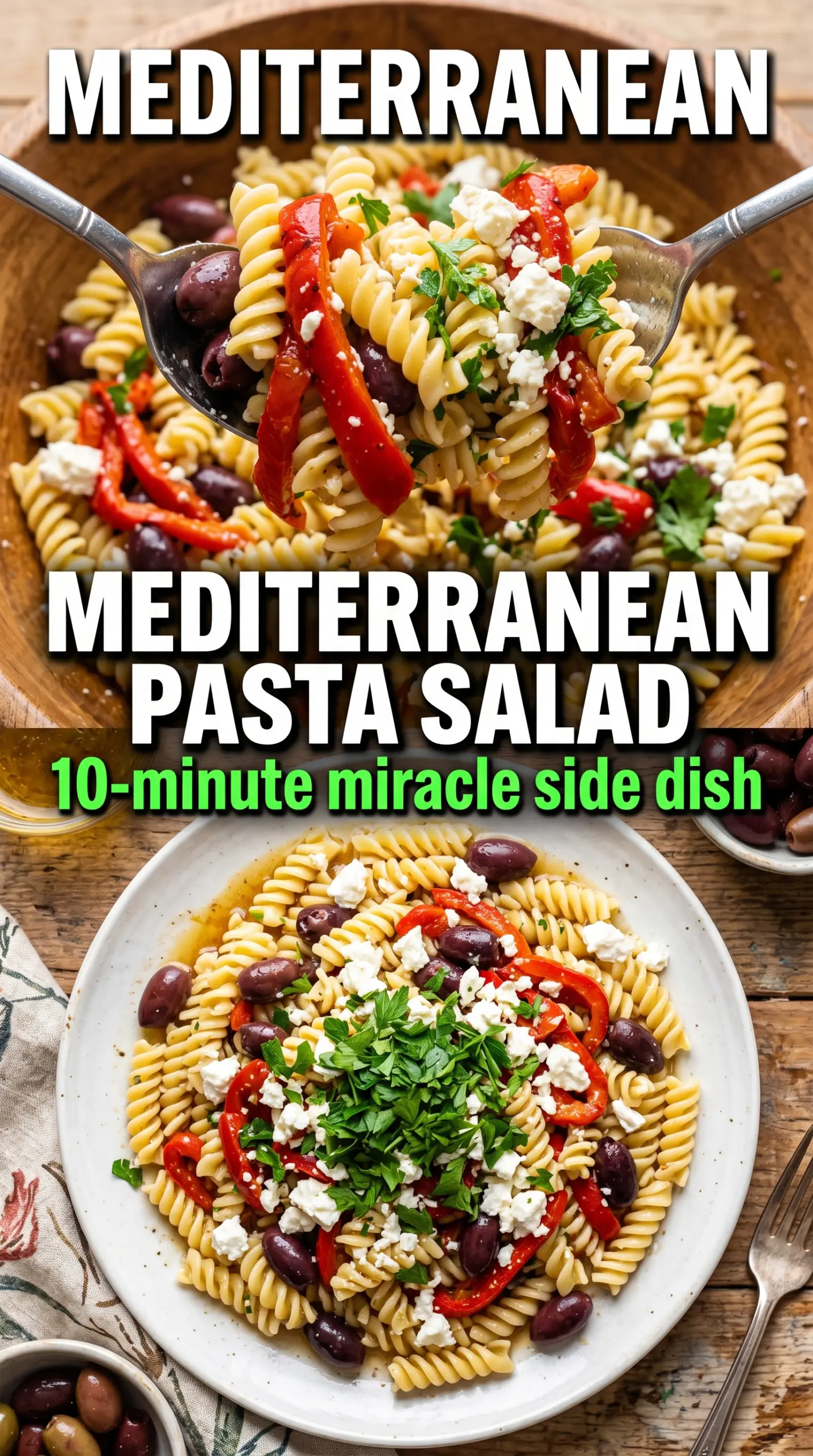
- Penne or rotini — Both shapes hold the dressing well, but rotini catches more of the chopped vegetables in its spirals. Use a sturdy pasta shape here; thin pasta goes limp once the salad chills.
- Roasted red peppers — These bring sweetness and softness without needing any extra cooking. Jarred peppers are fine, just drain them well so they don’t water down the bowl.
- Artichoke hearts — They add a tender, slightly tangy bite that plays well with lemon and oregano. Quarter them so they stay noticeable instead of disappearing into the salad.
- Kalamata olives — This is where the briny, savory edge comes from. If you use a milder olive, the salad tastes flatter, so keep the bold ones if you can.
- Feta — It gives you creamy, salty pockets throughout the salad. Block feta crumbled by hand usually tastes better than the pre-crumbled kind, which is often drier.
- Lemon juice, red wine vinegar, and Dijon — Together they make the dressing bright and balanced. The Dijon helps the dressing hold together instead of splitting into oil and acid the second it sits.
Building the Dressing So the Salad Tastes Bright, Not Heavy
Whisk the acid before the oil
Start with the lemon juice, vinegar, oregano, garlic powder, Dijon, salt, and pepper, then whisk in the olive oil. That order helps the Dijon disperse and keeps the seasoning even through the whole bowl. If the oil goes in first, the dressing can feel uneven and the herbs clump up in one spot.
Mix the vegetables before the cheese settles
Combine the cooled pasta with the roasted peppers, artichokes, olives, tomatoes, and red onion before adding the feta. That keeps the cheese from breaking down too much while you toss. The goal is distinct pieces of each ingredient, not a mashed-together bowl.
Let the salad rest, then adjust
After the parsley goes in, chill the salad for 30 minutes. That’s enough time for the pasta to absorb some dressing without losing its structure. Right before serving, taste again and add salt, pepper, or a squeeze of lemon if the flavors have dulled in the fridge.
How to Adapt This for Different Tables and Dietary Needs
Make It Dairy-Free
Skip the feta and add extra olives or a handful of chopped marinated artichokes for more salty depth. You lose the creamy pockets of cheese, but the lemony dressing still carries the salad and the texture stays clean.
Use Gluten-Free Pasta
Choose a gluten-free rotini or penne that holds its shape well, and pull it from the pot as soon as it’s tender. Gluten-free pasta can go mushy fast, so chilling it promptly matters even more than usual.
Add Protein Without Changing the Character
Chopped grilled chicken, chickpeas, or tuna all fit this salad without fighting the dressing. Chickpeas make it meatless and filling, while chicken turns it into lunch; just add the protein after the pasta is cooled so it doesn’t dry out.
Make It Ahead for a Crowd
Mix everything except the parsley and hold back a small splash of dressing. Stir the parsley in right before serving and use that reserved dressing to refresh the bowl if the pasta has absorbed more than you wanted. That keeps the salad glossy instead of dry.
Storage and Reheating
- Refrigerator: Store covered for up to 4 days. The pasta will absorb more dressing as it sits, so expect a slightly softer texture by day two.
- Freezer: Don’t freeze this salad. The vegetables, feta, and dressing all change in texture once thawed, and the result turns watery and grainy.
- Reheating: This salad is meant to be served cold or cool from the fridge. If it tastes flat after chilling, let it sit at room temperature for 10 minutes and add a spoonful of olive oil or a squeeze of lemon instead of warming it.
Questions I Get Asked About This Recipe
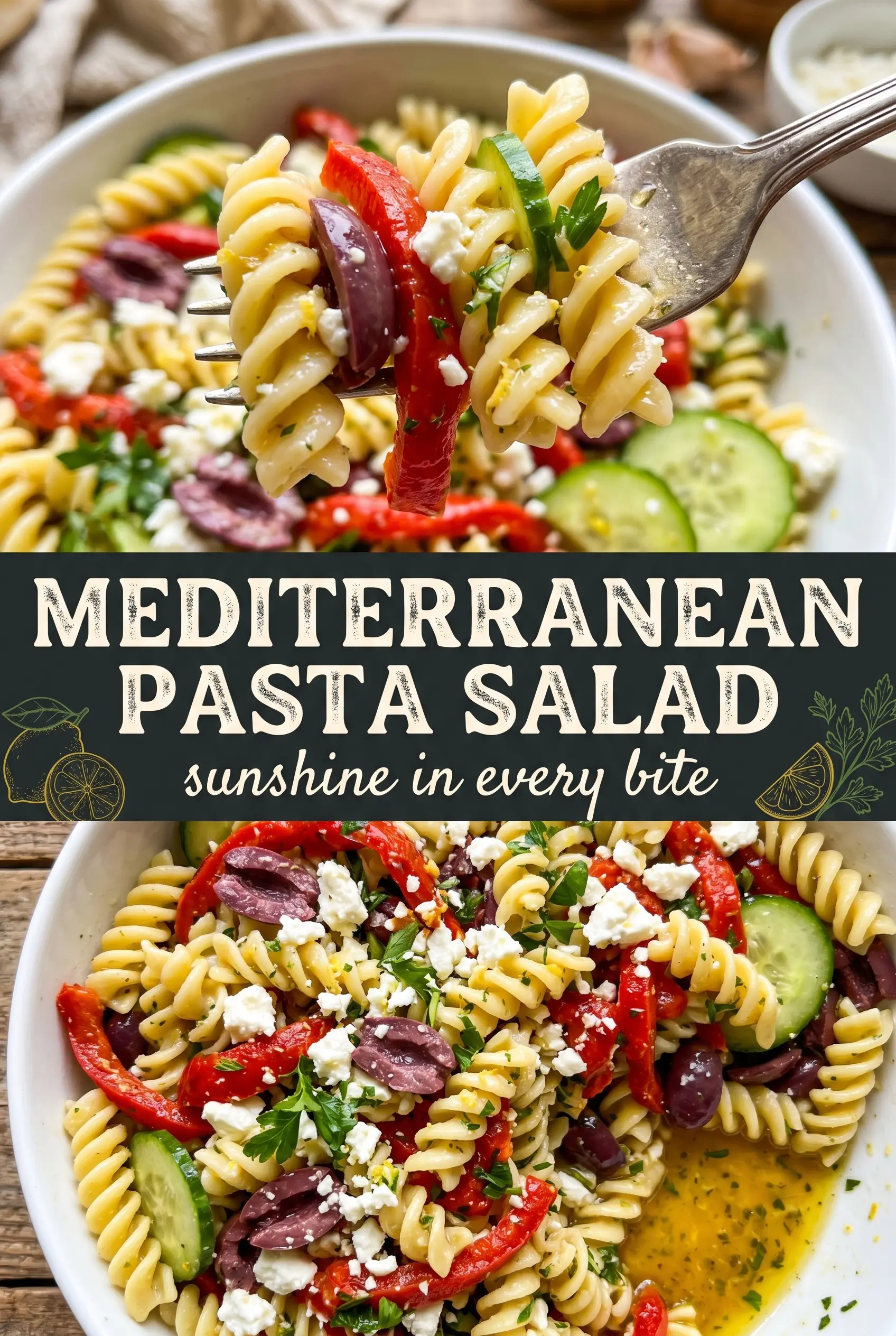
Mediterranean Pasta Salad
Ingredients
Equipment
Method
- Bring a Dutch oven of salted water to a boil and cook penne or rotini until al dente, about 8-10 minutes. Drain immediately and rinse cold under running water until cool.
- Spread the rinsed pasta on a sheet pan in a single layer to cool completely for 5-10 minutes, then let it stand at room temperature briefly.
- Whisk olive oil, lemon juice, red wine vinegar, dried oregano, garlic powder, and Dijon together until evenly combined. Season with salt and black pepper to taste.
- Combine the cooled pasta with roasted red peppers, artichoke hearts, kalamata olives, feta cheese, cherry tomatoes, and red onion in a large bowl. Toss gently to distribute the mix.
- Pour the dressing over the pasta salad and toss thoroughly until coated. Fold in fresh parsley.
- Refrigerate for 30 minutes to chill and let the flavors meld, keeping it covered. Serve cold after chilling.
- Toss once more and adjust seasoning with additional salt, black pepper, or lemon juice as needed before serving. Serve immediately after final adjustments.