Pearl-like orzo turns into something much better than a plain pasta side here: it soaks up lemon vinaigrette, stays tender without getting heavy, and gives every forkful a little bounce against the salty feta and briny olives. The roasted red peppers bring sweetness, the tomatoes keep it fresh, and the herbs lift the whole bowl so it tastes bright instead of weighed down.
The trick is in the cooling and the dressing. Rinsing the orzo after cooking stops the carryover heat and keeps the pasta from clumping, but it also washes away surface starch, so the vinaigrette needs enough acid, oil, and seasoning to cling after chilling. I also like to fold the herbs in at the end and let the salad rest long enough for the lemon, garlic, and feta to settle into the pasta.
Below you’ll find the small details that make this salad hold up well for a picnic, potluck, or next-day lunch, plus a few swaps that still keep the Mediterranean balance intact.
The lemon dressing soaked into the orzo after chilling and the feta stayed creamy instead of disappearing. I made it the night before, and it was even better the next day after everything had time to mingle.
Like this Mediterranean orzo salad? Save it for the next picnic, potluck, or make-ahead lunch when you want lemony pasta, feta, and herbs in one bowl.
The Secret to Orzo That Holds Its Shape After Chilling
Orzo can go soft fast if it’s overcooked, and once it sits in dressing, that softness gets more obvious. Pull it when it still has a little bite, then rinse it cold to stop the cooking immediately. That rinse keeps the pasta from turning gummy, which matters here because the salad needs to stay loose and spoonable after it chills.
The other mistake is underdressing. Cold pasta drinks up more vinaigrette than most people expect, especially after thirty minutes in the fridge. If the salad tastes bright when you first toss it and a little more restrained after chilling, you’re on track; if it tastes flat from the start, it will only get flatter later.
What Each Ingredient Is Actually Doing in the Bowl
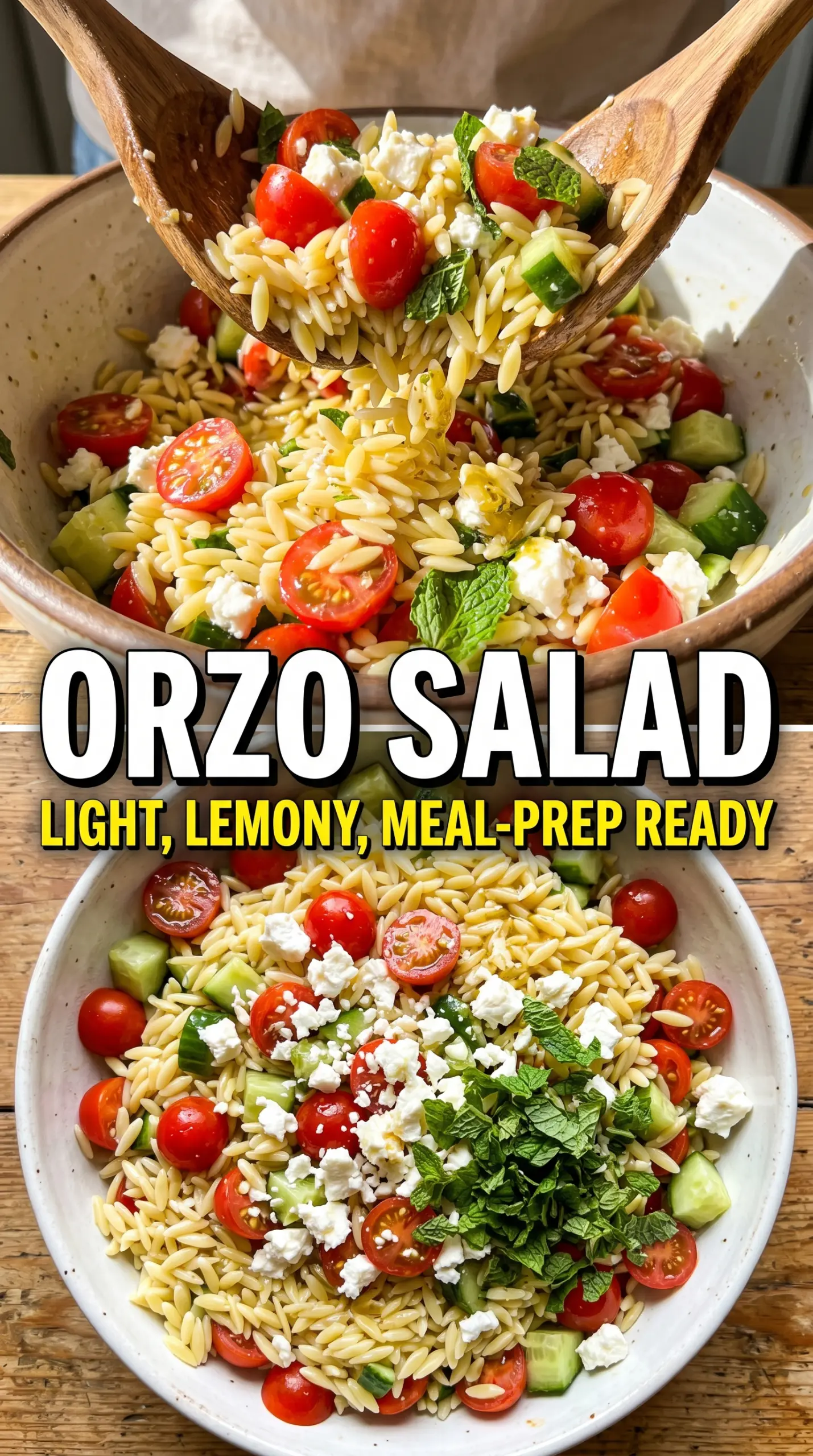
- Orzo pasta — This is the base that carries the vinaigrette. Any small pasta shape can work in a pinch, but orzo gives you that pearl-like texture that feels especially good with chopped vegetables and crumbled cheese.
- Roasted red peppers — They add sweetness and a soft, silky texture that balances the briny ingredients. Jarred peppers are perfect here because they save time and bring consistent flavor.
- Kalamata olives — They bring salt and depth, and you need that contrast against the lemon dressing. If yours are packed very salty, rinse them quickly before adding them so they don’t take over.
- Feta — Use a block if you can and crumble it yourself. Pre-crumbled feta works, but block feta stays creamier and tastes sharper, which matters in a salad built on simple ingredients.
- Lemon, Dijon, and garlic — This dressing needs all three. Lemon gives the brightness, Dijon helps the vinaigrette emulsify, and garlic keeps it from tasting thin or one-note.
Building the Salad So the Dressing Actually Clings
Cooking and Cooling the Orzo
Cook the orzo in well-salted water until it’s just tender with a little firmness in the center. Drain it, then rinse it under cold water until it feels cool to the touch; that stops the cooking and keeps the grains from sticking together. If you skip the rinse, the pasta keeps steaming and turns sticky before the dressing even goes in.
Whisking the Lemon Vinaigrette
Whisk the lemon juice, zest, Dijon, garlic, olive oil, salt, and pepper until the dressing looks slightly thickened and unified. If it separates after a minute, whisk again before pouring it over the pasta. The goal is a sharp, glossy vinaigrette that can coat the orzo, not a thin acidic puddle at the bottom of the bowl.
Folding Everything Together
Combine the cooled orzo with the peppers, olives, feta, onion, and tomatoes first, then pour the dressing over and toss gently. Add the parsley and basil near the end so they stay fresh and don’t bruise into the salad. Refrigerate it for 30 minutes, then toss again and taste for salt and lemon before serving, because chilled pasta always needs a final adjustment.
How to Adapt This Salad for Different Tables
Make It Dairy-Free
Leave out the feta and add a little extra salt plus a handful of chopped toasted almonds or sunflower seeds. You lose the creamy, tangy bite, so the salad leans more on lemon, herbs, and olives for contrast, but it still tastes complete.
Turn It Into a Gluten-Free Pasta Salad
Use a good gluten-free small pasta and stop cooking it just before the package says it’s done. Gluten-free pasta can go mushy after chilling, so drain it well and toss with the dressing while it’s cool, not warm and fragile.
Swap the Herbs Based on What You Have
If basil isn’t around, use extra parsley or a little dill for a more pronounced Mediterranean edge. Basil adds sweetness, parsley adds freshness, and dill pushes the salad in a sharper, more herbal direction, so each swap changes the finish more than the structure.
Storage and Reheating
- Refrigerator: 3 to 4 days. The herbs soften a bit, but the flavor gets even better by day two.
- Freezer: I don’t recommend freezing this salad. The tomatoes, feta, and herbs lose their texture after thawing, and the pasta turns soft.
- Reheating: This salad is meant to be served cold or cool. If it seems dry after sitting, loosen it with a small splash of olive oil and lemon juice instead of heating it.
Questions I Get Asked About This Recipe
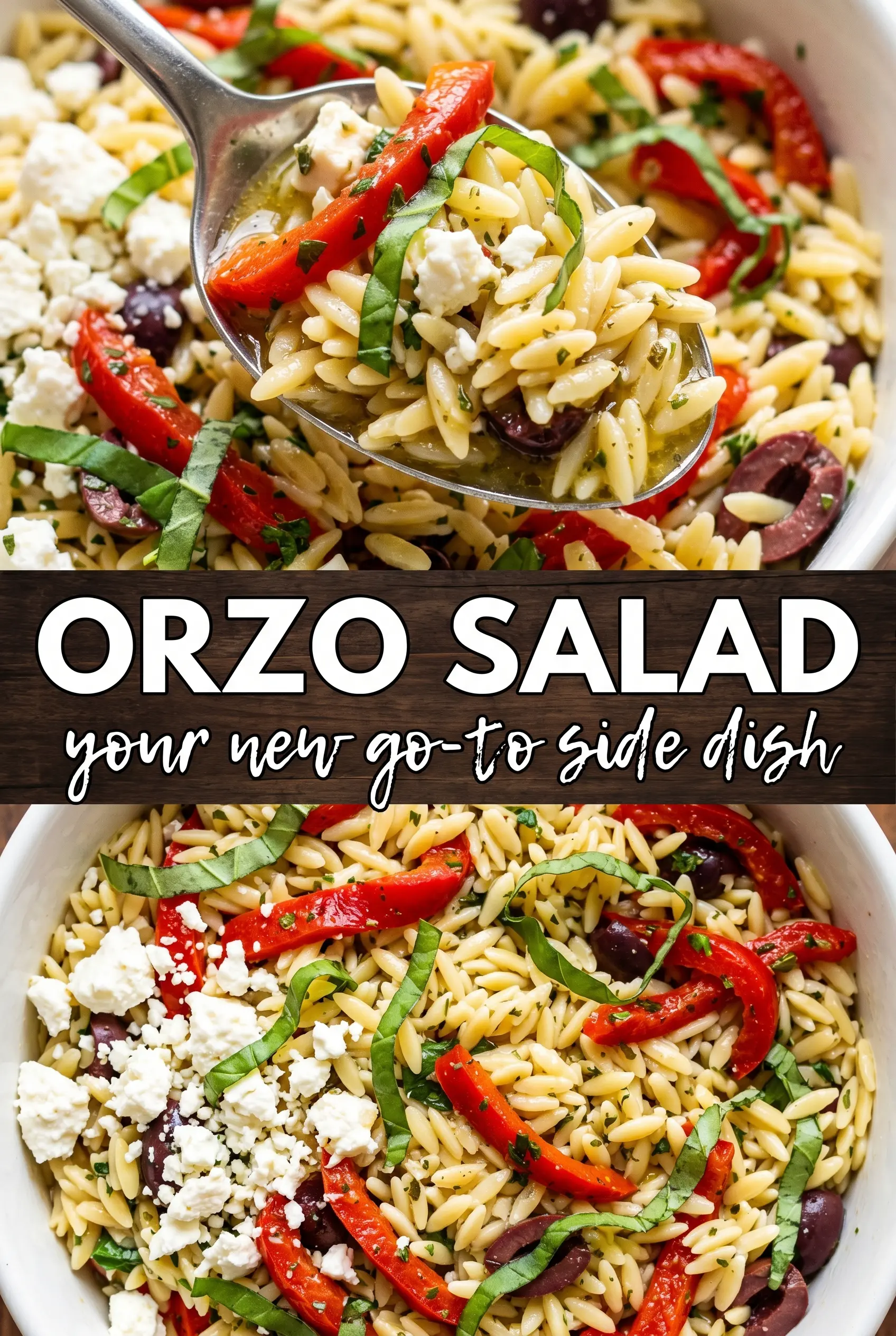
Orzo Salad
Ingredients
Equipment
Method
- Cook orzo in salted water according to package directions until al dente. Drain, rinse cold under cool running water, then cool completely so the salad stays tender and not sticky.
- Whisk olive oil, lemon juice, lemon zest, Dijon, and garlic until smooth. Season with salt and pepper to taste for a bright, tangy dressing.
- Combine cooled orzo with roasted red peppers, kalamata olives, feta, red onion, and cherry tomatoes in a large bowl. Toss gently so feta and vegetables are evenly distributed.
- Pour vinaigrette over the orzo mixture and toss until everything is coated. Spread the salad out slightly so dressing clings evenly.
- Fold in parsley and basil, then refrigerate for 30 minutes. This chilling step helps flavors meld without over-softening the tomatoes and herbs.
- Toss the salad again right before serving and re-season with salt and pepper if needed. Taste for balance—add a touch more lemon juice or salt if the flavors feel muted after chilling.