Grilled chicken, briny olives, feta, and lemony pasta come together here in a salad that eats like a full meal instead of a side dish. The pasta stays separate and tender, the chicken brings enough substance to make this dinner-worthy, and the dressing clings to every ridge without turning the bowl heavy or soggy. It’s the kind of dish that disappears fast at lunch and somehow tastes even better after a short chill in the fridge.
What makes this version work is the balance of sharp, salty, and fresh. The lemon-herb dressing needs enough acid to wake up the pasta, but not so much that it overwhelms the feta and olives. Rinsing the pasta cold matters here because you want the noodles to stop cooking quickly and hold their shape once the dressing goes on. Let the chicken rest before slicing too; that keeps the juices in the meat instead of running across the cutting board.
Below, I’ve included the small details that matter most: how to keep the pasta from clumping, what to do if your chicken is already cooked, and a few smart swaps for making this into a vegetarian or gluten-free meal without losing the good stuff.
The dressing soaked into the pasta without making it mushy, and the chicken stayed juicy even after chilling. I used it for lunch meal prep and the flavors were even better the next day.
Love this Mediterranean chicken pasta salad? Save it for meal prep days when you want something chilled, lemony, and packed with feta, olives, and grilled chicken.
The Trick to Keeping Pasta Salad from Turning Heavy
Most pasta salads get weighed down because the pasta keeps drinking in dressing long after it should stop. That’s fine for a creamy salad, but not here. This recipe needs the pasta cooled quickly, then tossed with enough dressing to coat every piece without pooling in the bottom of the bowl. The short chill time helps the flavors settle in, but the salad should still taste bright, not overloaded.
The other thing that matters is structure. Penne holds onto the lemon-herb dressing without collapsing, and the mix of feta, olives, artichokes, and tomatoes gives you enough contrast that each bite stays interesting. If the pasta is overcooked, the whole salad goes soft by the time it hits the table. Pull it when it’s still pleasantly firm and the center has just a little bite.
What Each Ingredient Is Doing in the Bowl
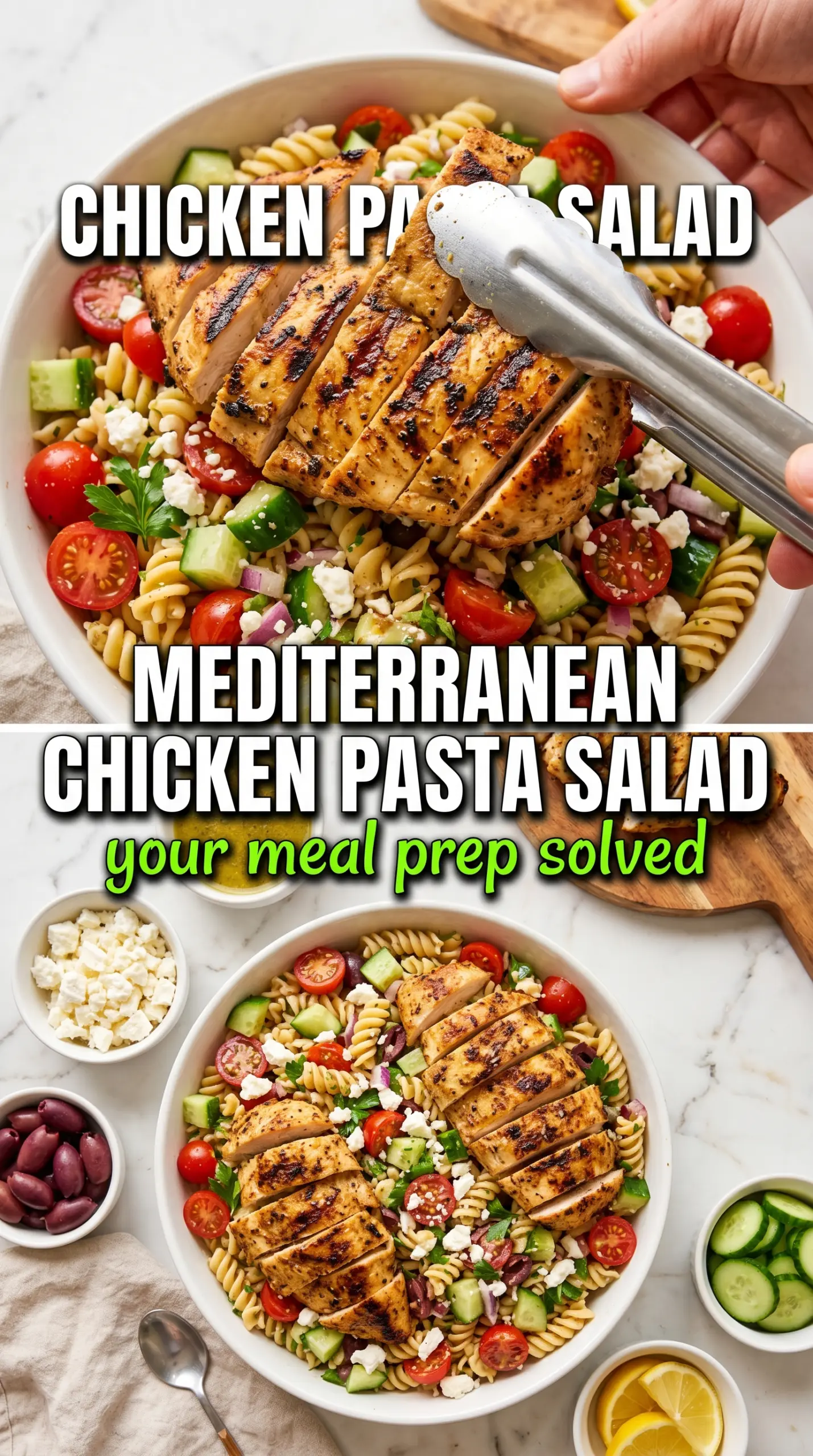
- Penne pasta — The ridges catch dressing, and the tube shape holds up after chilling. Any short pasta with some texture works, but skip delicate shapes that soften too fast.
- Grilled chicken breast — This turns the salad from a side into a main dish. If you’re using leftover chicken, slice it thin and toss it with a spoonful of dressing first so it doesn’t eat dry.
- Kalamata olives and feta — These two bring the salty backbone. Don’t swap in bland olives if you can help it; the briny punch is part of what makes the bowl taste Mediterranean instead of just dressed pasta.
- Sun-dried tomatoes and cherry tomatoes — The sun-dried tomatoes add concentrated sweetness, while the fresh tomatoes keep the salad from tasting flat. If your sun-dried tomatoes are packed in oil, drain them well so the dressing doesn’t turn greasy.
- Artichoke hearts and red onion — Artichokes add a soft, tangy bite, and the onion brings sharpness. Thin-slice the onion so it blends in instead of taking over; if it tastes too strong, soak it in cold water for 10 minutes and drain.
- Lemon-herb dressing — This is the piece that ties everything together. Dijon helps it emulsify, garlic gives it edge, and oregano keeps it grounded; whisk it well enough that it looks glossy and unified before it hits the pasta.
Building the Salad So Every Bite Stays Bright
Cooking the Pasta to Hold Its Shape
Boil the penne until it’s al dente, not soft. You want it cooked through but still a little firm in the center because it will keep relaxing as it chills with the dressing. Drain it, rinse it cold, and let the steam escape before you combine anything. If the pasta goes into the bowl warm, it starts absorbing dressing too quickly and the salad loses its clean, fresh texture.
Grilling or Searing the Chicken
Season the chicken with olive oil, salt, pepper, and oregano, then cook it until the outside has good color and the center reaches doneness without drying out. Rest it before slicing. That pause is not extra time for the sake of it; it keeps the juices inside the meat. Slice across the grain so each piece stays tender and sits neatly on top of the salad instead of shredding apart.
Mixing and Chilling the Salad
Toss the cooled pasta with the olives, feta, tomatoes, sun-dried tomatoes, artichokes, and red onion first, then pour the dressing over the top. Fold it gently so the feta stays in crumbles and the pasta doesn’t break. Add the herbs at the end so they stay fresh and bright. The 30-minute chill gives the flavors time to settle, but don’t leave it so long that the dressing disappears into the pasta; if it looks dry after chilling, add a small drizzle of olive oil and a squeeze of lemon.
Three Ways to Adjust This Pasta Salad Without Losing the Point
Make it gluten-free
Use a sturdy gluten-free short pasta and cook it just until tender. Gluten-free pasta can get fragile after chilling, so rinse it well, drain it thoroughly, and toss it with dressing while it’s fully cooled. The flavor stays the same; the texture just needs a gentler hand.
Skip the chicken for a vegetarian version
Leave out the chicken and add extra artichokes, chickpeas, or cucumber for more body. Chickpeas bring the best contrast because they hold the dressing and add enough protein to keep the salad satisfying. You’ll lose the grilled flavor, so a little extra oregano and lemon helps keep the bowl lively.
Use rotisserie chicken when you’re short on time
Rotisserie chicken works well here if you’re trying to get dinner on the table fast. Slice or shred it and toss it with a spoonful of dressing before adding it to the bowl so it doesn’t taste like an afterthought. You’ll lose the grilled edges, but you keep the same bright, salty balance.
Storage and Reheating
- Refrigerator: Keeps for 3 to 4 days in a covered container. The pasta will absorb more dressing as it sits, so expect the salad to feel a little tighter on day two.
- Freezer: I don’t recommend freezing this one. The pasta turns soft, the feta changes texture, and the tomatoes lose their bite.
- Reheating: This salad is meant to be served cold or cool. If it’s been in the fridge and tastes muted, let it sit at room temperature for 10 to 15 minutes and add a small splash of lemon juice or olive oil instead of heating it, which would make the pasta and feta go off.
Answers to the Questions Worth Asking
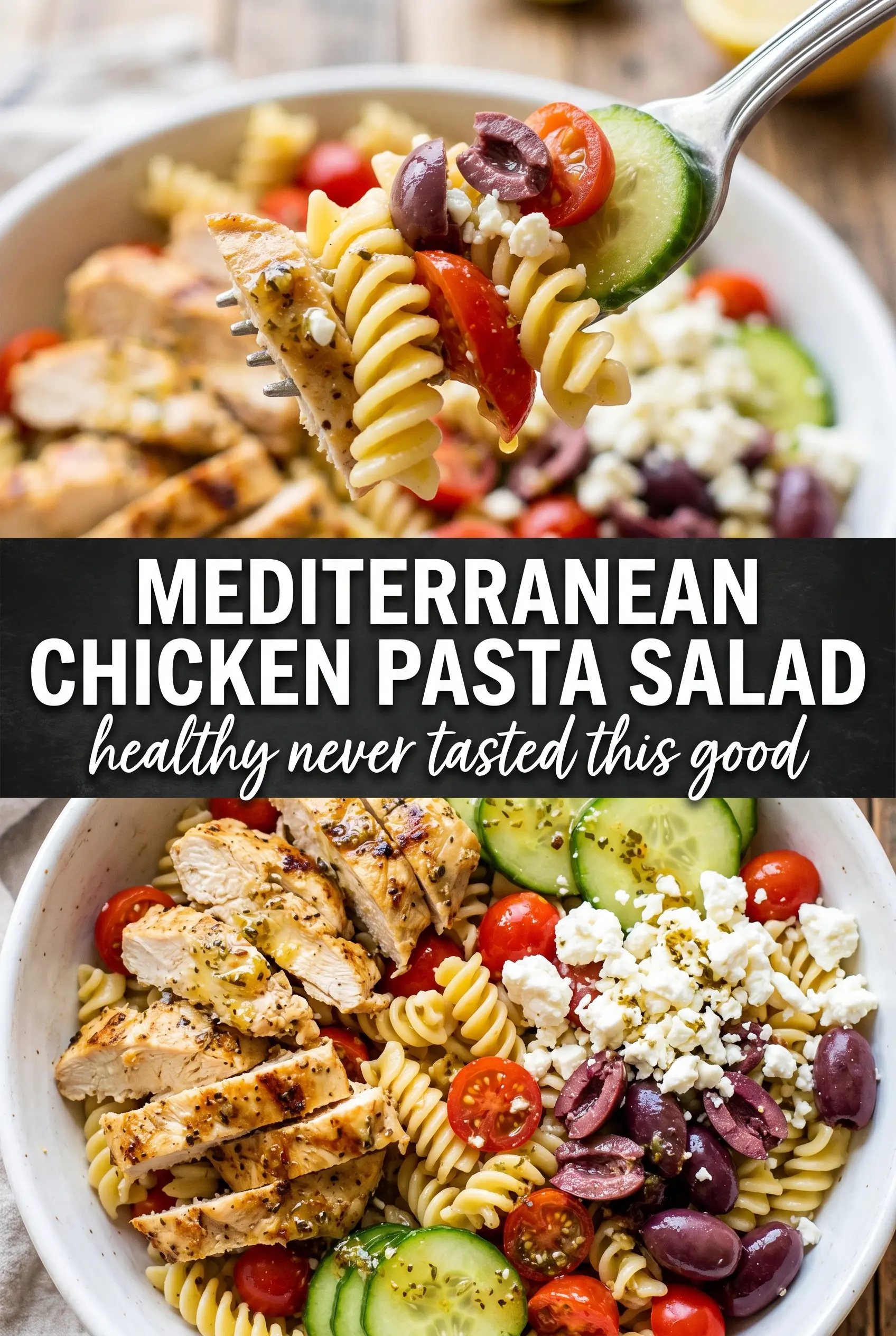
Mediterranean Chicken Pasta Salad
Ingredients
Equipment
Method
- Cook penne pasta in boiling water until al dente, then drain immediately and rinse cold under running water to stop the cooking process.
- Spread the cooled pasta on a sheet pan and let it cool completely while you prepare the chicken and dressing.
- Heat a grill or grill-pan and cook chicken breast brushed with olive oil, seasoning with salt, pepper, and oregano, until cooked through.
- Rest the grilled chicken, then slice it thinly so it stays juicy when added to the pasta salad.
- Whisk olive oil, lemon juice, red wine vinegar, oregano, Dijon, and garlic with salt and pepper until the dressing is well combined.
- Combine the cooled penne pasta with kalamata olives, feta cheese, cherry tomatoes, sun-dried tomatoes, artichoke hearts, and red onion.
- Pour the lemon-herb dressing over the pasta mixture and toss until evenly coated, then fold in fresh parsley and basil.
- Top with sliced chicken and refrigerate 30 minutes before serving to let the flavors meld.