Golden chicken thighs and lemony rice are one of those dinners that disappear fast because they hit every note at once: crisp skin, tender meat, fluffy grains, briny olives, and little bursts of sweet tomato. The best part is that everything bakes together in one pan, so the rice catches the chicken drippings as it cooks and ends up far more flavorful than plain stovetop rice ever could.
The marinade pulls double duty here. It seasons the chicken before it goes in the oven, then gets stirred into the rice so the lemon, garlic, and oregano keep working after the chicken is in the dish. Bone-in, skin-on thighs matter because they stay juicy through the bake and give the rice enough fat to taste rich without turning greasy. The foil-covered bake is what keeps the rice from drying out before the chicken finishes, and the final uncovered stretch is what gives you that deep golden skin.
Below, I’ve included the small timing details that keep the rice from turning mushy, plus a few swaps if you want to lean this dish more herb-forward, dairy-free, or make-ahead friendly.
The rice came out fluffy and soaked up all that lemon-garlic broth, and the chicken skin still crisped up beautifully after taking the foil off. My husband went back for seconds and asked if I could make it again next week.
Love that lemony rice under crisp chicken thighs? Save this Mediterranean Chicken and Rice for the nights when one pan needs to do everything.
The Rice Needs the Right Start to Stay Fluffy Under the Chicken
The biggest mistake with oven-baked chicken and rice is treating the rice like an afterthought. If the broth ratio is off, or the dish isn’t covered tightly for the first part of the bake, the rice dries on top before it finishes underneath. This version works because the rice starts in a shallow, even layer and cooks in seasoned broth while the chicken sits right on top, sending flavor down into the grains as they steam.
Chicken thighs are the other non-negotiable piece. They render enough fat to keep the rice savory, and they’re forgiving in the oven, which matters because the rice needs time to finish without the meat drying out. The foil traps steam for the first 30 minutes, and that steam is what gives you tender rice instead of hard little pockets in the center.
What Each Ingredient Is Actually Doing in This Pan
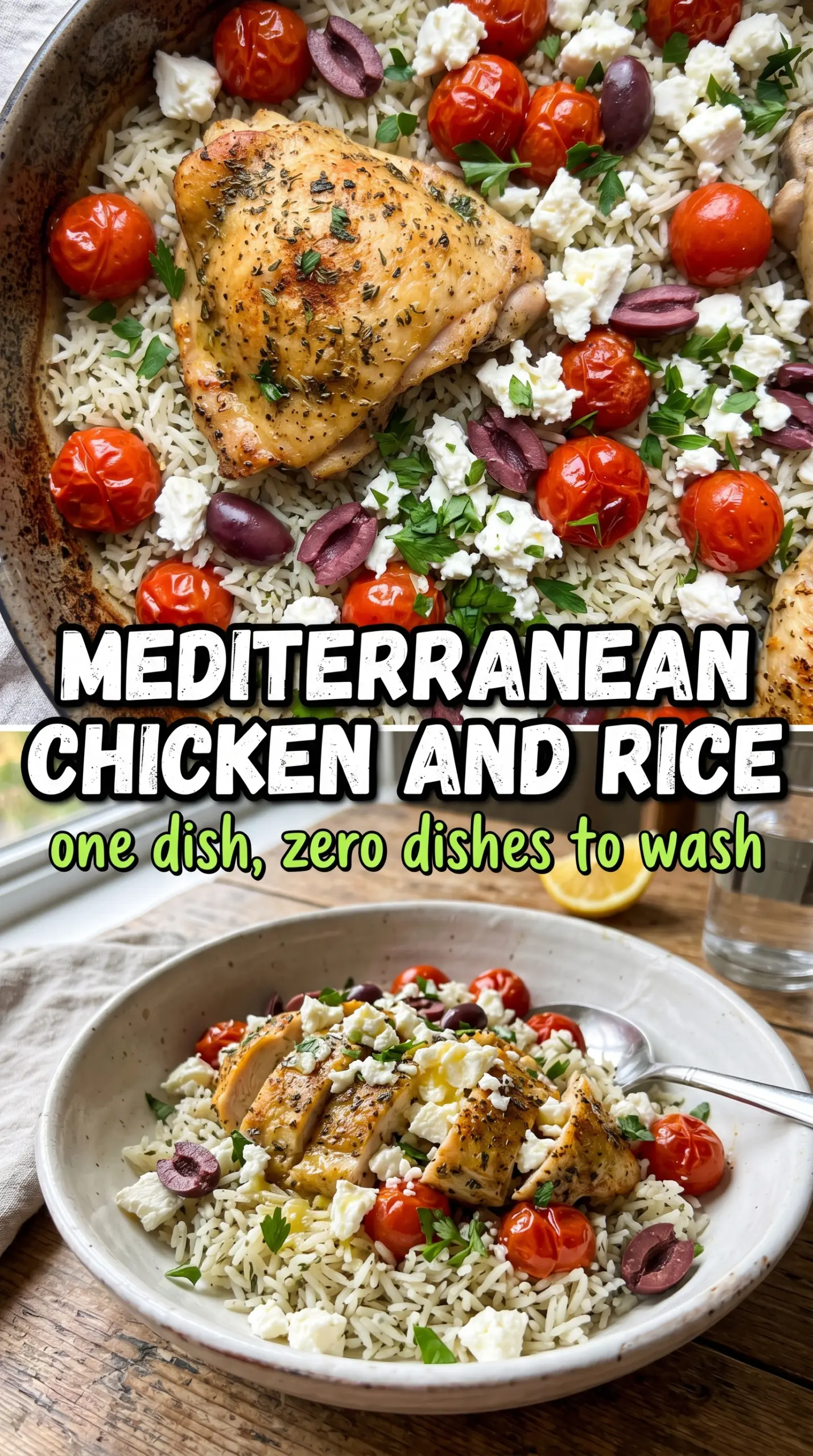
- Chicken thighs — Bone-in, skin-on thighs are what make the rice taste like it simmered for hours, even though the dish is baked. You can swap in boneless thighs, but they’ll cook faster and won’t flavor the rice as deeply, so check them early and expect a little less richness.
- Olive oil, lemon juice, and zest — This is the backbone of the marinade and it does more than season the chicken. The zest gives you the bright lemon aroma, while the juice brings the sharpness; if you skip one, the dish tastes flatter. Use fresh lemon here, not bottled, because the peel is doing a lot of the work.
- Garlic and oregano — Garlic gives the rice and chicken a warm base, and oregano pushes the whole pan in a Mediterranean direction without needing a long spice list. If your oregano has been sitting in the cabinet for years, replace it; stale oregano tastes dusty instead of herbal.
- Long-grain white rice — Long-grain rice stays separate and fluffy under the chicken. Short-grain rice will turn softer and more risotto-like, which isn’t wrong, but it changes the texture a lot. Rinse it only if it’s especially dusty; too much rinsing can throw off the liquid balance.
- Chicken broth — This seasons the rice from the inside out. Water works in a pinch, but the dish loses depth, and you’ll notice the difference in the final bite.
- Cherry tomatoes, olives, and feta — These finish the pan with salt, acidity, and little pockets of creamy richness. The feta goes in after baking so it softens without disappearing, and that’s what keeps the topping from turning heavy.
The Oven Timeline That Keeps the Chicken Skin Crisp and the Rice Tender
Build the Marinade First
Whisk the olive oil, lemon juice, lemon zest, garlic, oregano, salt, and pepper until the mixture looks loose and glossy. Coat the chicken and let it sit for the full 20 minutes so the surface picks up seasoning before it goes into the oven. Don’t marinate much longer than that with this much lemon juice, or the texture of the chicken can start to turn a little tight on the outside.
Set Up the Rice Like It Has to Cook Alone
Spread the rice in the baking dish and pour the broth over it before the chicken goes in. Stir in a pinch of salt and the remaining marinade so every grain has a chance to pick up flavor. If the rice isn’t in an even layer, the edges overcook before the center catches up.
Cover, Bake, and Trust the Steam
Nestle the chicken skin-side up into the rice, then scatter the tomatoes and olives around the pan. Cover it tightly with foil and bake for 30 minutes; the pan should stay sealed enough that the steam builds instead of leaking out. If the foil is loose, the rice dries before it finishes and the top layer can turn hard.
Uncover for Color, Not for Guesswork
Pull the foil off and bake 15 minutes longer until the chicken skin is golden and the rice is cooked through. You’re looking for rice that’s tender with no crunch at the center and chicken that feels firm when pressed near the thigh joint. If the top looks done but the rice is still firm, cover it again for a few more minutes rather than letting the pan dry out.
Finish While the Pan Is Hot
Crumble the feta over the dish right away so it softens into the rice instead of sitting in dry little cubes on top. Finish with parsley and lemon wedges for brightness. The lemon at the table matters because it wakes up the rice after the richness of the chicken and feta.
How to Change the Pan Without Losing What Makes It Work
Make It Dairy-Free
Leave out the feta and finish with extra parsley and a few more lemon wedges. You lose the salty creaminess, so add a pinch more salt at the table if needed, but the dish still tastes complete because the olives and lemon carry a lot of the flavor.
Use Boneless Chicken Thighs Instead
Boneless thighs work, but they cook faster and won’t drip as much flavor into the rice. Start checking them about 10 minutes earlier, and if the rice needs more time, tent the chicken loosely so the top doesn’t overbrown while the grains finish.
Swap the Rice for Brown Rice
Brown rice needs more liquid and more time, so this isn’t a straight swap. Add about 1/2 cup more broth and expect a longer covered bake; otherwise the grain stays chewy in the center while the chicken is already done.
Storage and Reheating
- Refrigerator: Store leftovers in an airtight container for up to 4 days. The rice will firm up as it chills, but it reheats well.
- Freezer: Freeze portions for up to 2 months. The rice softens a little after thawing, but this dish holds up better than most baked rice recipes.
- Reheating: Add a splash of broth or water, cover, and warm gently in the oven or microwave until hot. The common mistake is reheating uncovered, which dries the rice before the chicken gets warm.
Answers to the Questions Worth Asking
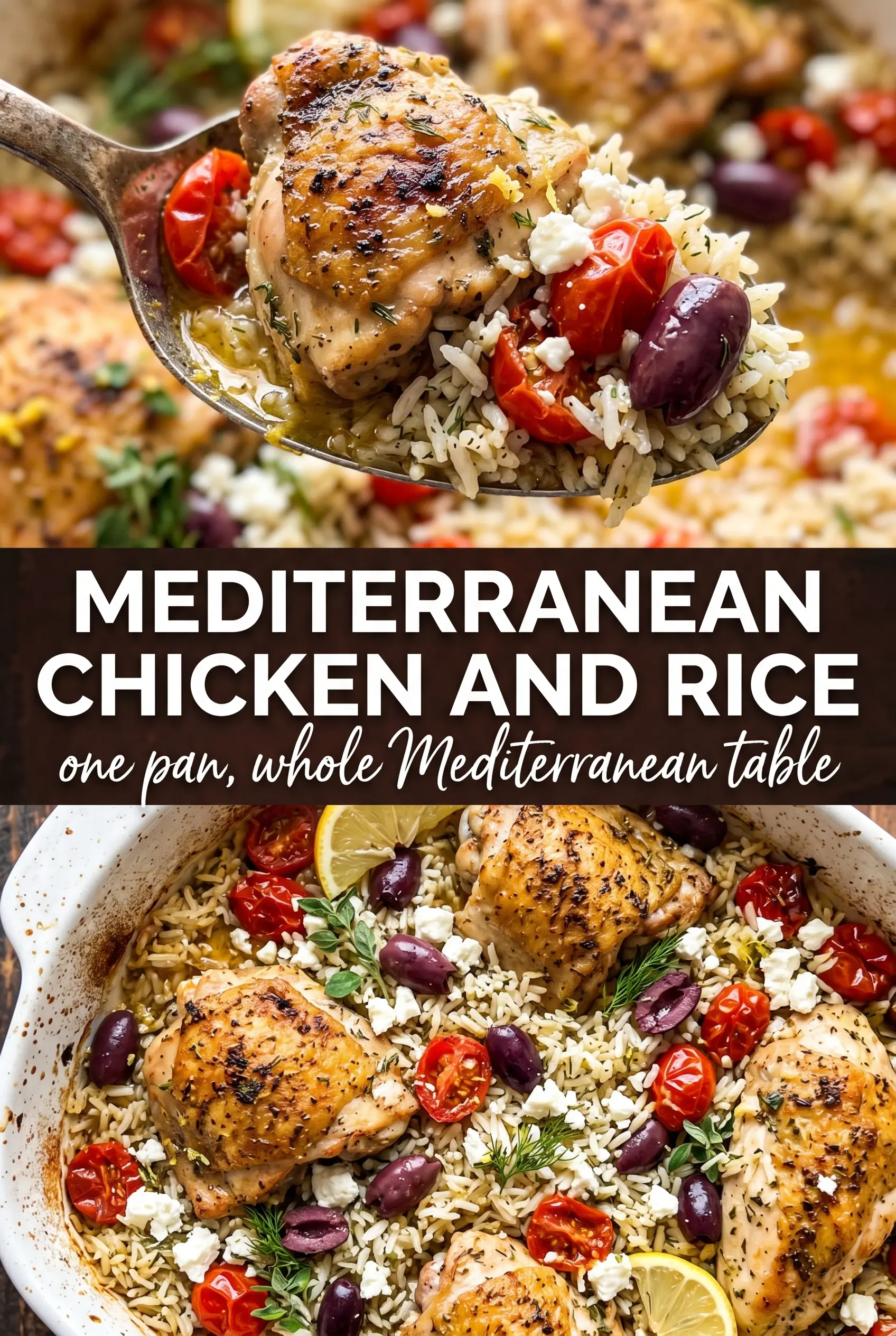
Mediterranean Chicken and Rice
Ingredients
Equipment
Method
- Whisk together olive oil, fresh lemon juice, lemon zest, minced garlic, dried oregano, and salt and pepper until evenly combined. Marinate the bone-in skin-on chicken thighs for 20 minutes.
- Preheat the oven to 375°F. Spread the long-grain white rice in a 9x13 baking dish and pour the chicken broth over the rice.
- Stir in a pinch of salt and the remaining marinade into the rice and broth. Nestle the chicken thighs skin-side up into the rice.
- Scatter the cherry tomatoes and halved Kalamata olives around the chicken. Cover tightly with foil and bake for 30 minutes.
- Remove the foil and bake for 15 minutes at 375°F, until the chicken skin is golden and the rice is cooked. Immediately crumble the feta cheese over the hot dish so it softens into the grains.
- Garnish with fresh parsley and serve with lemon wedges. Let the dish stand briefly so the rice settles before portioning.