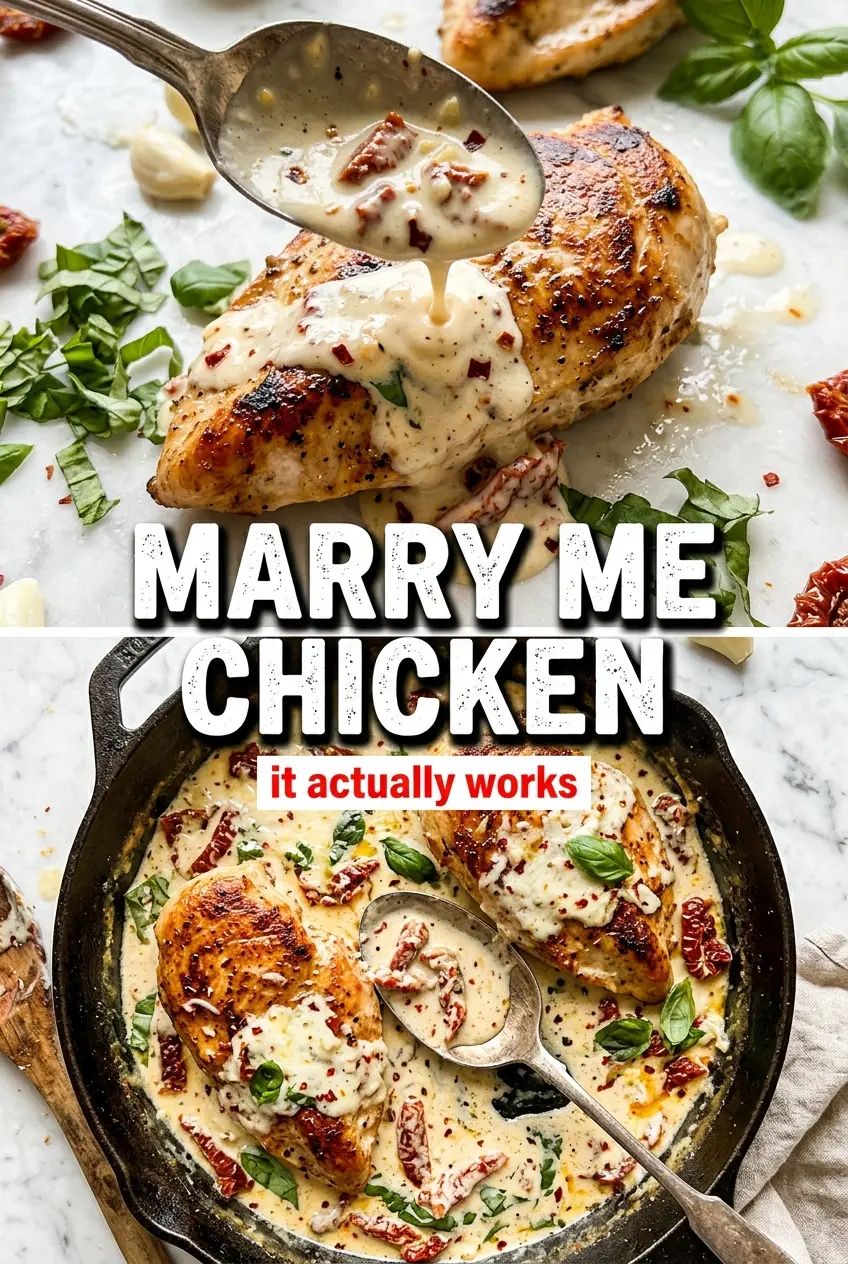
Golden seared chicken breasts tucked into a sun-dried tomato cream sauce earn their reputation fast. The chicken stays juicy, the sauce turns silky and spoonable, and the whole skillet smells like garlic, Parmesan, and basil the second it hits the table. It’s the kind of dinner that feels a little dramatic in the best way, but it still comes together on a weeknight without any special equipment beyond a good pan.
What makes this version work is the order. The chicken gets a hard sear first, which builds flavor in the pan and keeps the meat from going pale and steamed. Then the garlic and sun-dried tomatoes go in just long enough to wake up, not burn, before the broth loosens all those browned bits into the sauce. The cream and Parmesan finish it off with enough body to coat the chicken instead of running off the plate.
Below, I’m breaking down the one part people usually rush, plus the ingredient swaps that actually hold up if you need to change the dish a little.
The sauce thickened up beautifully and coated the chicken instead of turning watery. I served it over mashed potatoes and my husband kept going back for “just one more spoonful” of the sauce.
Love the glossy sun-dried tomato cream sauce? Save Marry Me Chicken for the nights when you want a skillet dinner that feels restaurant-worthy with minimal cleanup.
The Chicken Needs a Real Sear Before the Sauce Starts
If the chicken goes into the sauce too early or too wet, it never gets that deep, savory crust that gives this dish its backbone. A good sear is what keeps Marry Me Chicken from tasting flat. You want the surface golden and the pan bottom full of browned bits, because that’s what the broth will pick up when you deglaze.
The other mistake is crowding the pan. If the breasts are packed too tightly, they steam instead of browning, and the sauce ends up carrying all the work. Give each piece room, let the heat stay steady, and pull the chicken when it reaches 165°F so it finishes tender instead of dry.
What Each Ingredient Is Actually Doing in the Skillet

- Chicken breasts — Boneless, skinless breasts keep the timing quick and give you clean slices for serving. If yours are thick on one end and thin on the other, pound them lightly so they cook evenly; that matters more here than buying the fanciest package.
- Sun-dried tomatoes in oil — These bring concentrated sweetness and a little tang that plain tomatoes can’t match. Drain them, but don’t rinse them; a bit of the oil carries flavor into the pan, and slicing them helps the sauce feel more even instead of stringy.
- Heavy cream — This is what gives the sauce its lush texture and keeps it from breaking when the Parmesan goes in. Half-and-half can work in a pinch, but the sauce will be thinner and a little less stable.
- Parmesan — Use finely grated Parmesan, not big shreds, so it melts into the cream instead of clumping. Pre-shredded cheese often has anti-caking starches that can make the sauce grainy.
- Chicken broth — This loosens the browned bits in the skillet and keeps the sauce from turning heavy. Use a broth you’d drink on its own if possible, because this is one of the few places where a bland broth shows up fast.
- Garlic and red pepper flakes — Garlic gives the sauce its sharp, savory base, and the pepper flakes keep the cream from tasting one-note. Don’t let the garlic sit in the pan long enough to brown; once it turns dark, the whole sauce tastes bitter.
Building the Sauce Without Letting It Turn Grainy
Searing the Chicken
Heat the oil until it shimmers, then lay the chicken in and leave it alone until the first side releases easily and turns deep gold. If you move it too soon, the crust tears and sticks. Turn it once, cook the second side, and pull the chicken as soon as it reaches 165°F in the center.
Waking Up the Tomatoes and Garlic
Use the same skillet and add the garlic and sun-dried tomatoes after the chicken comes out. Stir constantly for about a minute, just until the garlic smells fragrant. If the garlic starts to brown, the heat is too high and the sauce will pick up a burnt edge you can’t hide later.
Deglazing and Thickening
Pour in the broth and scrape the pan clean with a wooden spoon. That’s where the flavor lives. Let it simmer long enough to lose the raw alcohol-like bite of the broth and start reducing, then add the cream, Parmesan, seasoning, and pepper flakes over medium-low heat so the sauce thickens slowly instead of splitting.
Finishing the Chicken
Return the chicken to the skillet and spoon sauce over the top so it stays glossy while it warms through. Give it a final two minutes in the sauce, just enough to let the flavors settle together. If the sauce looks too thick, loosen it with a splash of broth; if it looks thin, keep it at a gentle simmer until it coats the spoon.
How to Adapt This When You Need a Different Dinner Plan
Make It Dairy-Free
Use full-fat coconut cream in place of the heavy cream and a dairy-free Parmesan-style cheese if you have one that melts well. The sauce will taste a little less sharp and more rounded, but the sun-dried tomatoes still carry the dish. Keep the heat low, because dairy-free creams can separate faster if they’re boiled hard.
Use Chicken Thighs Instead
Boneless, skinless thighs give you a richer, juicier result and are more forgiving if you cook a minute too long. They’ll need a little extra time in the skillet, but the sauce clings to them beautifully. Watch the color rather than the clock and cook until they’re fully done at the center.
Make It Gluten-Free
This recipe is naturally gluten-free as written, as long as your chicken broth and Parmesan are certified gluten-free. Serve it over mashed potatoes, rice, or gluten-free pasta and you won’t miss a thing. The sauce itself gets its body from reduction and cheese, not flour.
Stretch It for More Servings
Add a second splash of broth and a little extra cream, then increase the Parmesan just enough to keep the sauce balanced. The flavor will still be bold, but the sauce will coat more pasta or potatoes instead of disappearing into the pan. Don’t double the garlic blindly; a little extra goes farther than you think once the sauce reduces.
Storage and Reheating
- Refrigerator: Store in an airtight container for up to 3 days. The sauce thickens as it chills, so it may look tighter the next day.
- Freezer: It’s not my first choice for freezing because cream sauces can separate when thawed. If you do freeze it, cool it completely and freeze in a tightly sealed container for up to 1 month.
- Reheating: Warm gently on the stove over low heat with a splash of broth or cream, stirring often. High heat is what breaks the sauce and makes the chicken tough, so keep it slow.
Answers to the Questions Worth Asking
Marry Me Chicken
Ingredients
Equipment
Method
- Season chicken breasts generously on both sides with salt, pepper, garlic powder, Italian seasoning, and smoked paprika.
- Heat olive oil in a large cast iron skillet over medium-high heat, then sear chicken for 5-6 minutes per side until golden.
- Check doneness: continue cooking until the internal temperature reaches 165°F, then remove chicken to a plate.
- In the same pan, cook garlic and sun-dried tomatoes for 1 minute, stirring until fragrant.
- Pour in chicken broth and deglaze the pan, scraping up browned bits.
- Stir in heavy cream, Parmesan, dried Italian seasoning, and red pepper flakes; simmer for 4-5 minutes until the sauce thickens.
- Return chicken to the pan and spoon the sauce over each breast.
- Simmer for 2 more minutes to reheat the chicken and coat it in the thick cream sauce.
- Garnish with fresh basil and serve over pasta or mashed potatoes.