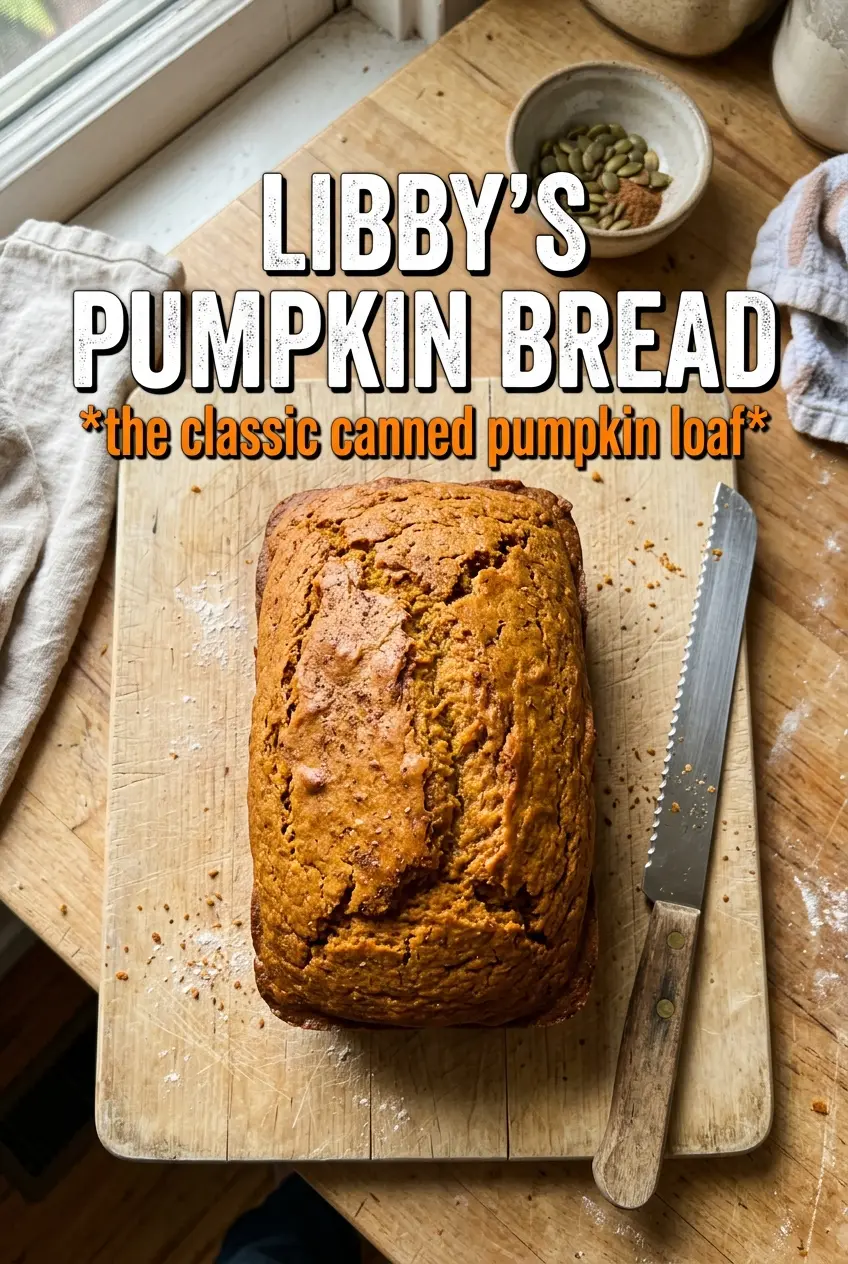
Libby’s pumpkin bread bakes up with that tall, familiar dome and a crumb that stays soft for days. The spices are warm without crowding the pumpkin, and the loaf slices cleanly once it’s cooled, which is exactly what you want from a bread that shows up at breakfast, snacks, and late-night coffee breaks with equal ease.
What makes this version work is the balance: enough sugar to keep the crumb tender, enough pumpkin to give it moisture and body, and just enough mixing to avoid the dense, tunnel-heavy texture that happens when quick breads are worked too hard. The canned pumpkin does the heavy lifting here, so there’s no need to complicate it with extra dairy or fussy add-ins. It’s a straight-ahead loaf that tastes like the one people remember, not a modernized version trying too hard to improve on a classic.
Below, I’ll walk through the one mixing step that matters most, the ingredient details that affect texture, and a few smart ways to adapt the loaf without losing that classic pumpkin bread feel.
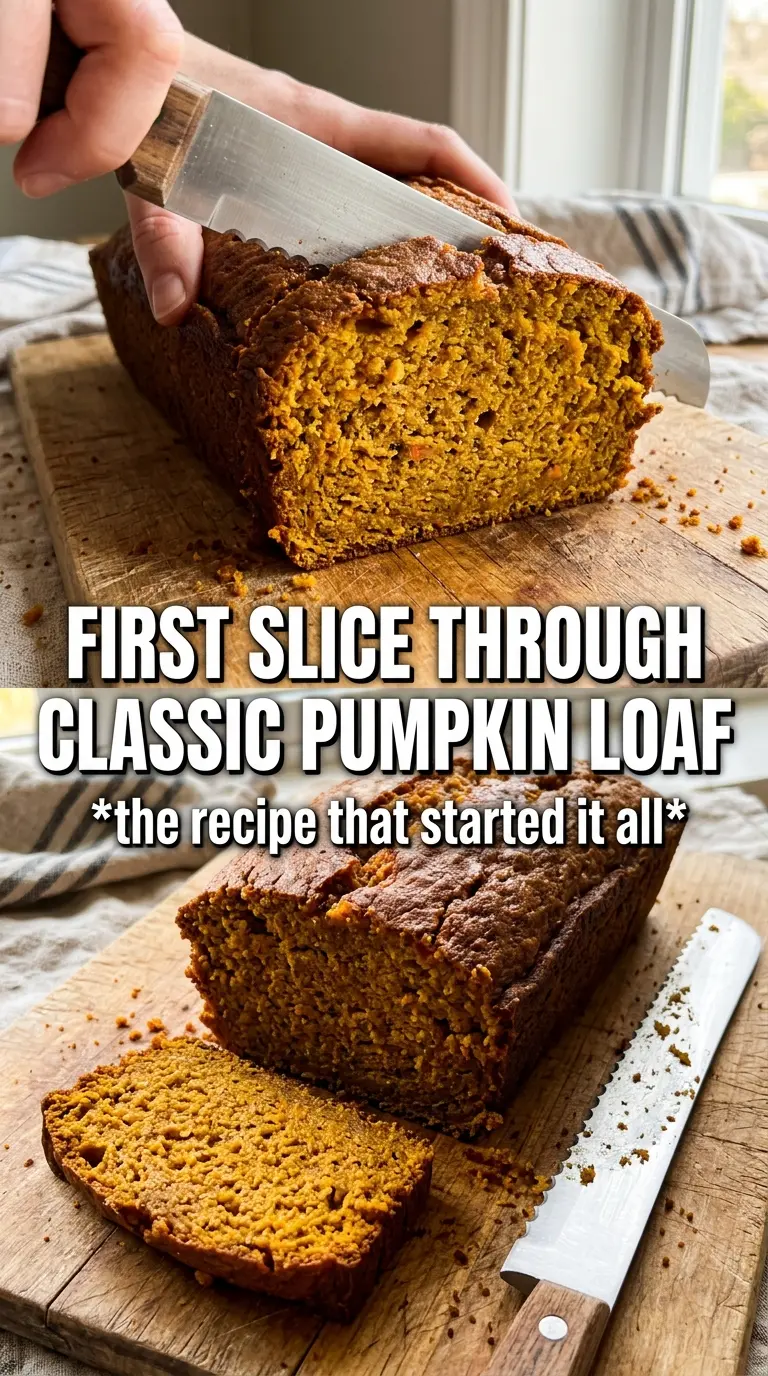
The loaf came out with a gorgeous dome and the crumb stayed so moist I didn’t even need butter. I also loved that the spices didn’t overpower the pumpkin.
Like this classic loaf? Save Libby’s pumpkin bread to Pinterest for the days when you want a tall, moist, warmly spiced breakfast bread.
The Mixing Step That Keeps This Loaf Tender Instead of Tough
Pumpkin bread looks simple, but it turns dense fast if the batter gets beaten like cake batter. Once the wet and dry ingredients come together, the flour only needs a few turns with a spatula until you stop seeing dry streaks. If you keep stirring after that, the gluten tightens up and the loaf bakes up with a tighter crumb and those gummy lines near the top.
The other thing that matters here is pan fill. A 9×5 pan gives you a taller loaf with a soft center, while mini pans bake faster and set more evenly. If you’re using a smaller pan than the recipe calls for, watch the top closely near the end so the crust doesn’t get too dark before the center is done.
What Each Pantry Ingredient Is Doing in the Loaf
- Libby’s 100% Pure Pumpkin — This is the backbone of the loaf. It brings moisture, color, and that unmistakable pumpkin flavor without adding extra water or pulp that can throw off the texture. Use the canned pumpkin, not pumpkin pie filling.
- All-purpose flour — This gives the bread its structure without making it cakey or dry. I wouldn’t swap in cake flour here; it’s too soft and the loaf can sink. A 1:1 gluten-free blend can work, but the crumb will be a little more delicate.
- Vegetable oil — Oil keeps the crumb soft for days, which is why this loaf still tastes good on day three. Melted butter changes the texture and makes the bread feel a little firmer once chilled. Neutral oil is the right call for a classic result.
- Eggs — They bind the batter and help the loaf rise with a stable, even crumb. Don’t skip them or replace them with extra pumpkin; the bread will get heavy and squat.
- Spices — Cinnamon, nutmeg, cloves, and allspice give the loaf its warm backbone. Fresh spices matter more here than in a lot of quick breads because the ingredient list is short and the flavor relies on them.
Building the Batter Without Crushing the Crumb
Whisk the dry ingredients first
Start by whisking the flour, sugar, baking soda, salt, and spices in a large bowl until the color looks evenly speckled. That step matters because baking soda and spices need to be distributed well or you’ll get uneven rise and pockets of clove-heavy flavor. A quick whisk is enough; you’re not aerating the batter, just making sure every spoonful bakes the same way.
Mix the pumpkin base until it looks silky
In a separate bowl, whisk the pumpkin, oil, eggs, and water until the mixture looks smooth and glossy. If the eggs are still streaked in, keep whisking before you add the dry ingredients. The smoother this base is, the less stirring you’ll need later, and that’s what keeps the crumb soft.
Stop stirring as soon as the flour disappears
Pour the wet mixture into the dry and stir just until combined. A few small streaks of flour are better than an overworked batter. The loaf finishes mixing in the oven, and that gentle finish is what gives you a tender slice instead of a tough one with tunnels.
Watch for the clean toothpick, not a burnt top
Bake until the top is deeply golden and a toothpick inserted in the center comes out clean or with just a few moist crumbs. If the top is browning before the center is done, tent it loosely with foil for the last stretch. Let it cool in the pan for 10 minutes before turning it out; if you rush that part, the loaf can tear while it’s still fragile.
How to Adapt Libby’s Pumpkin Bread Without Losing the Classic Texture
Make it dairy-free without changing a thing
This recipe is already dairy-free as written, which is part of why it works so well. The oil-based batter keeps the loaf soft without butter, and you don’t need any swaps to keep the texture where it should be.
Turn it into mini loaves
Divide the batter between two 7×3 pans and start checking early, around 50 minutes. Mini loaves bake faster and can dry out at the edges if you forget them, but they’re great for gifting and freeze beautifully once cooled.
Use a gluten-free flour blend
A good 1:1 gluten-free blend can work here, especially one with xanthan gum already included. The loaf will be a little more delicate when warm, so let it cool completely before slicing or it may crumble at the center.
Storage and Reheating
- Refrigerator: Store tightly wrapped for up to 5 days. The crumb stays moist, though the spices mellow a little by day three.
- Freezer: Wrap the cooled loaf or individual slices in plastic, then foil, and freeze for up to 3 months. Slice first if you want quick grab-and-go pieces.
- Reheating: Warm slices in the microwave for 10 to 15 seconds or toast gently. Don’t overheat it or the crumb will lose that soft, tender texture.
Answers to the Questions Worth Asking
Libby's Pumpkin Bread
Ingredients
Equipment
Method
- Preheat oven to 350F. Grease and flour a 9x5 loaf pan (or two 7x3 pans for mini loaves).
- Whisk all-purpose flour, granulated sugar, baking soda, cinnamon, nutmeg, cloves, allspice, and salt in a large bowl until evenly combined. Use a light, even whisking motion so the spices are distributed.
- Whisk Libby's 100% Pure Pumpkin, vegetable oil, eggs, and water in a separate bowl until smooth. Stop when the mixture looks fully uniform with no egg streaks.
- Pour the wet ingredients into the dry ingredients and stir until just combined—do not overmix. The batter should look thick and slightly lumpy rather than smooth.
- Pour batter into the prepared loaf pan. Tap the pan gently once to settle the batter.
- Bake at 350F for 60-65 minutes for a large loaf or 50-55 minutes for mini loaves. It’s done when a toothpick inserted in the center comes out clean.
- Cool in the pan for 10 minutes. This helps the loaf set before unmolding.
- Remove and cool on a wire rack until warm or fully cool. Slice once the loaf is firm so the crumb stays tender.