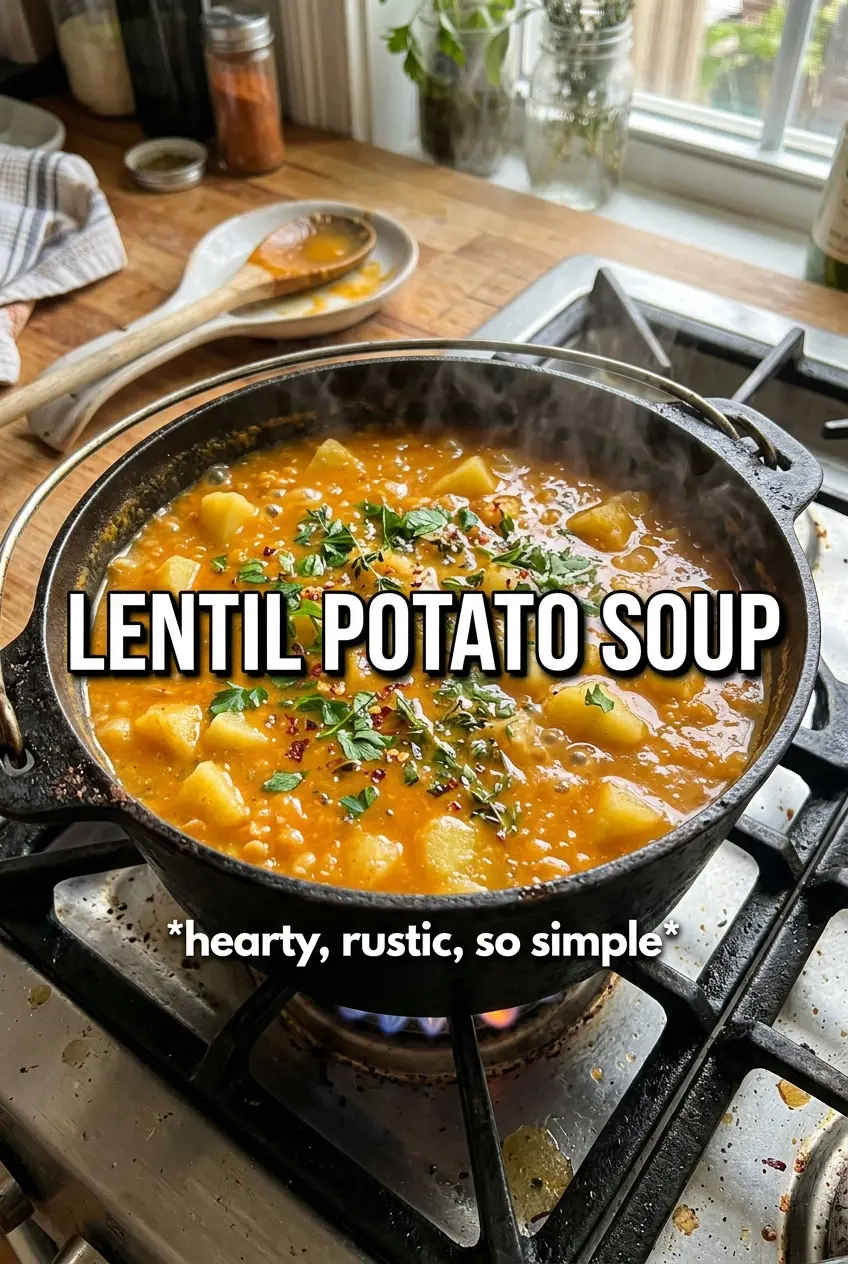
Hearty lentil potato soup earns its place in the regular rotation because it lands in that sweet spot between comforting and practical. The broth turns thick and savory, the potatoes soften into the lentils, and the whole pot tastes like it cooked for hours even though it comes together on a weeknight timeline. A squeeze of lemon at the end keeps it from tasting flat, and that little hit of brightness is what makes the bowl feel finished.
This version works because the vegetables get a head start before the broth goes in. That first sauté builds a sweeter, deeper base, and the spices bloom in the oil instead of tasting dusty in the finished soup. The potatoes are sturdy enough to hold shape, but if you mash a portion at the end, they give the broth body without needing cream or flour. It’s the kind of soup that gets better as it sits, which is handy if you want leftovers that actually hold up.
I loved how the potatoes broke down just enough to thicken the soup without turning it into mush. The lemon at the end made the cumin and smoked paprika pop, and it reheated beautifully for lunch the next day.
Save this lentil potato soup for the nights when you want a thick, lemony bowl with almost no effort and one pot to wash.
The Trick to Thick Lentil Soup Without Turning It Pasty
Lentil soup gets muddy fast when everything boils hard from the start. Potatoes, lentils, and tomatoes all bring their own starch and body, so the real job is controlling how much of that starch ends up in the bowl. A gentle simmer keeps the lentils intact longer and lets the potatoes soften in a way that thickens the broth naturally instead of making it gluey.
The other detail that matters is when you stop. If the potatoes are tender and the lentils are cooked through, you’ve already got a soup with enough body. Mash only a portion if you want it thicker. Blend too much and you lose the contrast between the lentils and potato cubes, which is one of the best parts of eating it.
- Green or brown lentils — These hold their shape better than red lentils, which is why the soup stays hearty instead of turning into puree. If you swap in red lentils, cut back on simmering time and expect a much softer texture.
- Yukon gold potatoes — They break down just enough to thicken the broth while still keeping some cubes intact. Russets work, but they’ll soften more aggressively and make the soup less defined.
- Diced tomatoes — They add acidity and body. Use the full can with the juices; draining them makes the soup flatter and thinner.
- Broth — Vegetable broth keeps it vegetarian, while chicken broth adds a little extra savoriness. Use a good one here, because the soup has a short ingredient list and the broth flavor comes through.
What Each Ingredient Is Actually Doing in This Recipe

- Primary ingredient (the star) — Quality matters most. Choose the best you can find.
- Cooking medium (oil, butter, or broth) — This carries flavors and prevents dryness.
- Seasonings (salt, pepper, spices, herbs) — Layer flavors so nothing overpowers. Build depth gradually.
- Aromatics (garlic, onion, herbs) — Cook with fat to bloom flavors. Become the foundation.
- Supporting ingredients — Complement the main ingredient without overpowering it.
- Sauce or liquid (if applicable) — Brings flavors together. Balance richness with acid.
- Acid (lemon, vinegar, wine, or other) — Brightens and prevents flat-tasting results.
- Final finish (garnish, glaze, or sauce) — Prevents one-dimensional taste and adds visual appeal.
Building the Base So the Spices Taste Warm, Not Flat
Heat the olive oil first, then cook the onion and carrots until the onion looks translucent and the carrots have started to soften at the edges. That first five minutes gives the soup sweetness and keeps the finished bowl from tasting one-note. If you rush this part, the soup still works, but it won’t taste as rounded.
Add the garlic and spices once the vegetables have some color and give them just a minute in the oil. You want the cumin and smoked paprika to smell fragrant, not scorched. Then add the tomatoes, lentils, potatoes, and broth all at once so the spices get pulled into the liquid before they have a chance to burn on the bottom of the pot.
Sweating the Vegetables
Cook the onion and carrots over medium heat until the onion softens and the carrots lose their raw edge. The pot should smell sweet and savory, not browned or bitter. If the heat is too high, the onion will color before the carrots have had time to soften, and that throws off the texture of the whole soup.
Blooming the Spices
Stir in the garlic, cumin, smoked paprika, turmeric, coriander, and cayenne right after the vegetables are ready. Keep the spices moving for about a minute so they wake up in the oil. If the garlic starts to darken, the heat is too high and the spices will taste harsh instead of warm.
Simmering to Finish
Once the broth goes in, bring the pot to a boil just long enough to get things moving, then drop it to a gentle simmer. You want the lentils and potatoes to soften slowly so they hold their shape better. If the soup boils hard the whole time, the potatoes can collapse on the outside before the centers are tender.
Make It Vegan Without Losing Depth
Use vegetable broth and keep the rest of the recipe the same. The tomatoes, cumin, smoked paprika, and lemon still give you a full, savory bowl, so you won’t miss the chicken broth. If your vegetable broth tastes thin, add a little extra salt at the end rather than trying to force flavor earlier.
For a Creamier, More Rustic Bowl
Mash about a third of the soup with a potato masher or blend a few cups with an immersion blender. That gives the broth a thicker, silkier feel while keeping enough lentils and potato cubes for texture. Blend too much and you lose the hearty spoonfuls that make this soup satisfying.
Swap the Potatoes for Sweet Potatoes
Sweet potatoes add a little more sweetness and make the soup lean slightly warmer in flavor. They soften faster than Yukon golds, so start checking them a few minutes early. The soup will also look more orange and taste a touch less earthy.
Storage and Reheating
- Refrigerator: Store for up to 4 days. It thickens as it sits, so expect a heartier texture the next day.
- Freezer: It freezes well for up to 3 months. Cool it completely first, then freeze in portions; the potatoes may soften a little after thawing, but the soup still holds up.
- Reheating: Warm it gently on the stove over medium-low heat with a splash of broth or water if needed. Don’t boil it hard, or the potatoes can break down too much and the lentils can turn grainy around the edges.
Questions I Get Asked About This Recipe
Lentil Potato Soup
Ingredients
Equipment
Method
- Heat olive oil in a large pot over medium heat. Sauté onion and carrots for 5 minutes, stirring often, until softened and glossy.
- Add garlic and cook for 1 minute. Stir continuously until fragrant, about 60 seconds, without browning.
- Stir in cumin, smoked paprika, turmeric, coriander, and cayenne. Cook for 30 seconds to bloom the spices, turning them slightly darker.
- Add diced tomatoes, rinsed lentils, cubed potatoes, and broth to the pot. Bring everything to a boil over medium-high heat, then watch for rapid bubbling.
- Reduce heat and simmer for 30-35 minutes until lentils and potatoes are completely tender. Keep a gentle simmer with steady bubbles across the surface.
- Mash a portion of the soup for a thicker consistency, or blend partially with an immersion blender. Stop when the soup looks creamy but still shows lentil texture.
- Season with salt and a squeeze of lemon juice. Taste and adjust, then serve with fresh parsley on top.