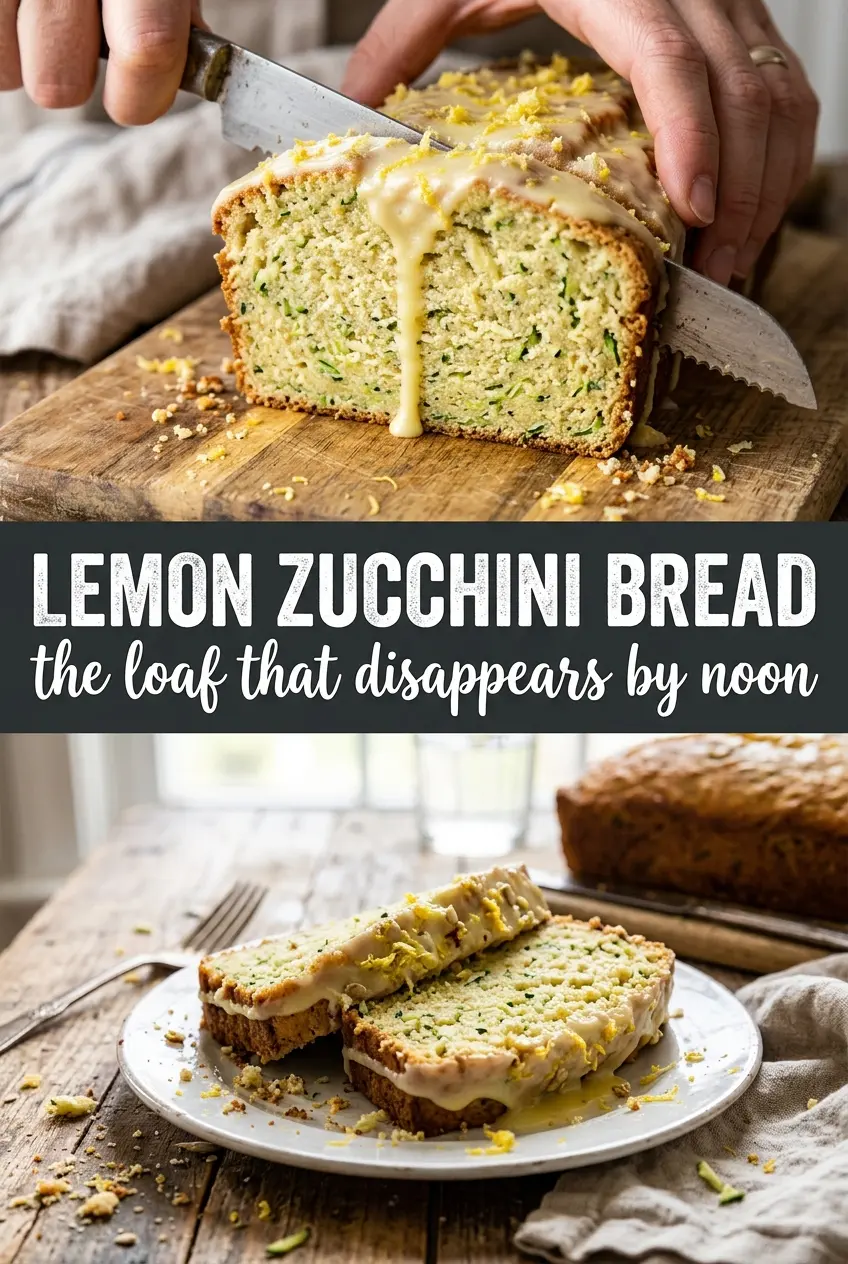
Soft, lemony zucchini bread has a way of disappearing fast, especially when the crumb stays tender for days instead of drying out by the next morning. This loaf bakes up with a fine, moist texture, a bright citrus scent, and just enough sweetness to work for breakfast without feeling heavy. The glaze gives it that bakery-style finish, but the real payoff is inside: a loaf that slices cleanly and stays plush.
The trick is keeping the zucchini in the background where it belongs. Once it’s grated, it needs to be squeezed dry so the loaf doesn’t turn gummy, but not so aggressively that it loses all its moisture. The lemon comes from both zest and juice, which gives the bread real lemon flavor instead of just a vague tang. Greek yogurt or sour cream adds body and helps the crumb stay soft without making the batter greasy.
Below you’ll find the detail that matters most for this loaf: how to keep the batter from overmixing, how to know when the center is actually done, and a few swaps that still preserve that bright, tender result.
The crumb came out unbelievably moist and the lemon glaze set up just enough to drip without soaking in. I was worried the zucchini would make it dense, but it sliced perfectly after cooling and tasted even better the next day.
Like this lemon zucchini bread? Save it to Pinterest for the days when you want a moist, glazed loaf with bright lemon flavor.
The Reason This Loaf Stays Moist Without Getting Heavy
Lemon zucchini bread goes wrong when the batter gets too wet or the zucchini gets treated like a shortcut ingredient instead of part of the structure. The zucchini should add moisture, not flood the crumb, which is why squeezing it dry matters more than most people think. Too much liquid and the loaf bakes up gummy in the center, even if the top looks done.
The other place this loaf fails is overmixing. Once the flour goes in, stir only until the streaks disappear. That keeps the texture tender instead of tough and bready. The combination of oil and yogurt gives you a soft crumb that still holds together when sliced, and the lemon zest carries the flavor in a way juice alone never can.
- Zucchini — Grate it fine and squeeze it dry in a clean towel. If you skip the squeeze, the loaf can sink in the middle and stay damp long after the toothpick test.
- Greek yogurt or sour cream — This adds body and a gentle tang. Full-fat versions give the best texture, but regular plain yogurt works if that’s what you have.
- Lemon zest — This is where the real lemon flavor lives. Don’t rely on juice alone, or the loaf will taste flat.
- Vegetable oil — Oil keeps the crumb soft for longer than butter does in a quick bread. Melted butter can work, but the loaf won’t stay as tender the next day.
What Each Ingredient Is Actually Doing in the Batter

- All-purpose flour — Gives the loaf enough structure to hold the zucchini and glaze without turning cakey.
- Baking soda and baking powder — The soda reacts with the lemon and yogurt for lift, while the baking powder adds a little insurance so the loaf rises evenly.
- Sugar — Sweetens the bread and helps the crust brown. It also supports the moist crumb, so don’t cut it too far if you want the right texture.
- Eggs — Bind everything together and help the loaf slice cleanly after cooling.
- Lemon juice and zest — Juice adds brightness, zest adds intensity. Use both or the flavor won’t read as lemon bread, just sweet quick bread with a little tang.
- Powdered sugar glaze — This sets into a thin, glossy layer that seals in some moisture and gives the loaf its finished look. Add the lemon juice slowly so it stays thick enough to drizzle instead of run off completely.
Building the Batter So the Crumb Stays Tender
Whisk the Dry Ingredients First
Start with the flour, baking soda, baking powder, and salt in one bowl. Whisking them together evenly matters because a pocket of baking soda can leave a bitter bite in one slice while another slice rises unevenly. This step takes seconds and keeps the loaf consistent from edge to center.
Mix the Wet Ingredients Until Smooth
Beat the sugar, eggs, oil, yogurt, lemon zest, lemon juice, and vanilla until the mixture looks glossy and fully blended. The sugar should start dissolving and the zest should be evenly dispersed, not clumped in one corner. If the mixture looks separated, keep whisking for another few seconds before you add the zucchini.
Fold, Don’t Stir
Add the grated squeezed-dry zucchini, then fold in the dry ingredients just until the flour disappears. A few streaks are fine; they’ll finish blending in the pan. If you stir until the batter is perfectly smooth, you’ll develop the gluten and the loaf will bake up tighter and less tender.
Bake Until the Center Sets
Scrape the batter into a greased 9×5 loaf pan and bake until the top is golden and a toothpick inserted in the center comes out clean. Start checking at 50 minutes because ovens vary and this loaf can go from underdone to dry fast. The center should spring back lightly when pressed, not leave a wet indentation.
Glaze While the Loaf Is Warm
Let the loaf cool for 15 minutes before glazing so the glaze thickens on contact instead of vanishing into the crumb. Whisk the powdered sugar, lemon juice, and zest until smooth, then drizzle generously over the top. If the glaze looks too thin, add a little more powdered sugar; if it’s too thick to pour, thin it with a few drops of lemon juice.
How to Adapt This Loaf Without Losing the Bright, Tender Crumb
Dairy-Free Version
Use unsweetened dairy-free yogurt in place of the Greek yogurt or sour cream. You’ll still get moisture and a little tang, though the crumb may be slightly less rich. Stick with oil rather than butter so the loaf stays soft once cooled.
Gluten-Free Swap
Use a 1:1 gluten-free baking flour that includes xanthan gum. The loaf will still rise well, but the crumb may be a touch more delicate, so let it cool fully before slicing.
Make It Less Sweet
Reduce the sugar slightly in the batter if you want a breakfast-style loaf, but keep in mind that sugar helps with browning and moisture. I’d leave the glaze on the sweet side so the lemon still comes through clearly.
Storage and Reheating
- Refrigerator: Store in an airtight container for up to 4 days. The glaze may soften a little, but the loaf stays moist.
- Freezer: Freeze slices or the whole unglazed loaf tightly wrapped for up to 2 months. Glaze after thawing for the best texture.
- Reheating: Warm slices briefly in the microwave or toaster oven. Don’t overheat it or the crumb will dry out and the glaze can melt off completely.
Answers to the Questions Worth Asking
Lemon Zucchini Bread
Ingredients
Equipment
Method
- Preheat the oven to 350°F and grease a 9x5 loaf pan, leaving a light film so the loaf releases cleanly after baking.
- Whisk all-purpose flour, baking soda, baking powder, and salt until evenly combined and no dry streaks remain.
- Beat granulated sugar, eggs, vegetable oil, Greek yogurt or sour cream, lemon zest, lemon juice, and vanilla extract until smooth and glossy.
- Fold in the grated, squeezed-dry zucchini until it’s evenly distributed through the batter.
- Add the dry ingredients to the wet ingredients and fold just until no flour pockets show—do not overmix to keep the crumb tender.
- Pour the batter into the prepared loaf pan and tap once to settle the top.
- Bake at 350°F for 50–60 minutes until a toothpick inserted in the center comes out clean, with the loaf looking golden and set.
- Cool the loaf for 15 minutes before glazing so the glaze stays thick and clings rather than soaking in.
- Whisk powdered sugar, lemon juice, and lemon zest until smooth, thick, and pourable.
- Drizzle the glaze generously over the warm loaf, letting it pool over the edges and run slightly down the sides.