Lemon Pecorino crusted chicken brings the kind of sharp, salty crunch that makes a plain chicken breast feel like a real dinner. The crust bakes up deeply golden and fragrant, with the lemon zest lifting the cheese so it tastes bright instead of heavy. When it comes out right, the coating crackles at the edges and holds onto the chicken instead of sliding off the first time you cut into it.
The trick here is building flavor in layers before the chicken ever hits the oven. Dijon gives the coating something tacky to cling to, while the olive oil helps the crumb brown without drying out. Pecorino Romano does the heavy lifting because it’s saltier and more assertive than Parmesan, which is exactly what you want when the chicken itself is mild. Panko keeps the crust light enough to stay crisp, and the lemon zest cuts through the richness so every bite stays lively.
Below, I’ve included the one oven setup that gives the crust its best chance to stay crisp, plus the substitutions that still make sense if you need to work around what’s in your kitchen.
The crust browned evenly and stayed on every piece, and the lemon zest kept the cheese from tasting too heavy. I baked it on a rack like you said and the bottom stayed crisp instead of getting soggy.
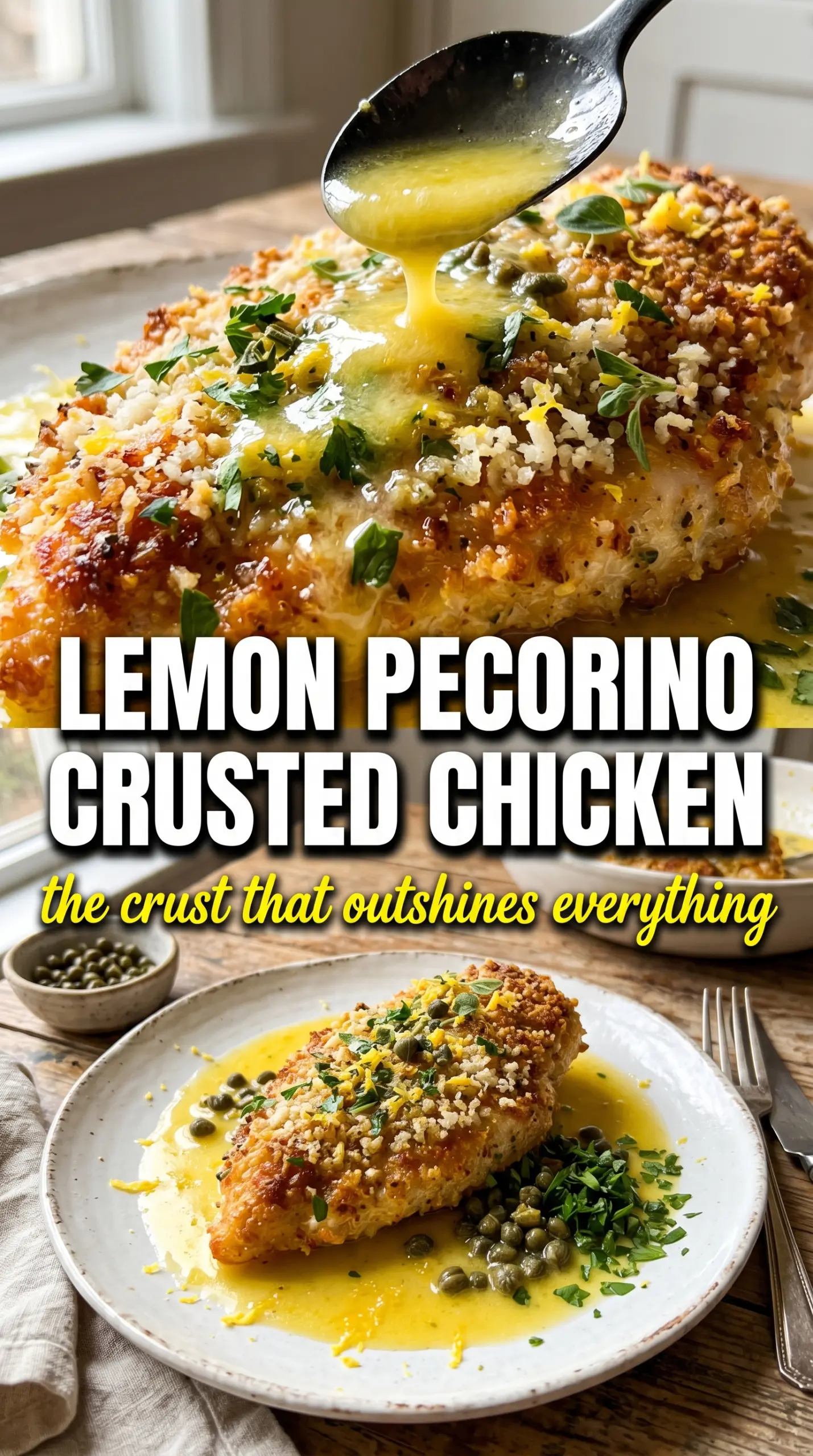
Crispy lemon Pecorino crusted chicken with a shattering golden top and bright basil finish
The Rack Matters More Than the Breadcrumbs Here
The biggest difference between a crust that stays crisp and one that turns damp is airflow. Baking the chicken on a wire rack lets hot air move around the bottom, so the panko and cheese can brown instead of steaming in their own moisture. If you set it directly on a sheet pan, the underside softens before the top has time to fully develop that crackly crust.
Thin, even chicken breasts matter just as much. Uneven pieces cook at different speeds, and the thinner end dries out before the thicker side reaches temperature. Pounding them to an even thickness gives you a narrower cooking window, which is exactly what this recipe needs if you want juicy chicken under a crisp coating.
- Pecorino Romano — This is the main source of salt and sharpness. Parmesan can work in a pinch, but the flavor will be milder and the crust won’t taste as bold.
- Panko breadcrumbs — Panko stays lighter and crispier than standard breadcrumbs, which helps the crust shatter instead of turning dense. If you use regular crumbs, expect a tighter, less airy coating.
- Dijon mustard — This is the glue. It gives the cheese mixture something to grab onto and adds a subtle tang that keeps the chicken from tasting flat.
- Lemon zest — Use fresh zest, not bottled lemon juice. Zest gives the crust aroma without extra liquid, and too much liquid can make the coating slide.
What Each Ingredient Is Actually Doing in This Chicken Recipe
- Chicken (the foundation) — Quality chicken starts with good sourcing. Even simple seasoning tastes better on good meat.
- Olive oil or butter (the cooking medium) — Fat carries flavors and keeps chicken from drying. It’s also what makes food taste delicious.
- Salt and pepper (proper seasoning) — Season generously; underseasoned chicken tastes bland. Apply inside and outside so the seasoning penetrates.
- Garlic and onion (the aromatic base) — These add depth and complexity. They sweeten slightly when cooked, becoming mellow and round.
- Acid (lemon, vinegar, wine, or tomato) — This brightens the dish and prevents it from tasting heavy. It also helps balance rich sauces.
- Fresh herbs or spices (the character) — These define the personality of the dish. Choose ones that complement your other flavors.
- Cream or sauce base (optional richness) — A sauce keeps the chicken moist and flavorful. Make sure it’s balanced with acid and herbs.
- Proper cooking technique (the final step) — Whether baking, pan-searing, or simmering, the right method ensures juicy, tender results without drying out the meat.
How to Press the Crust On So It Stays Put
Seasoning and the Dijon Layer
Season the chicken first with salt, pepper, and garlic powder so the meat itself is seasoned, not just the crust. Mix the Dijon with olive oil until smooth, then brush it over both sides in a thin layer. If the coating looks wet or pooled in spots, it will slide; the goal is a tacky surface, not a thick glaze.
Building the Cheese Crumb Mixture
Combine the Pecorino, panko, lemon zest, parsley, garlic powder, and black pepper until the zest is evenly distributed. The mixture should look sandy and a little clumpy from the cheese, not dry and dusty. Press it onto the chicken firmly with your hand so it actually adheres; a gentle sprinkle won’t survive the oven.
Baking Until the Top Turns Deep Gold
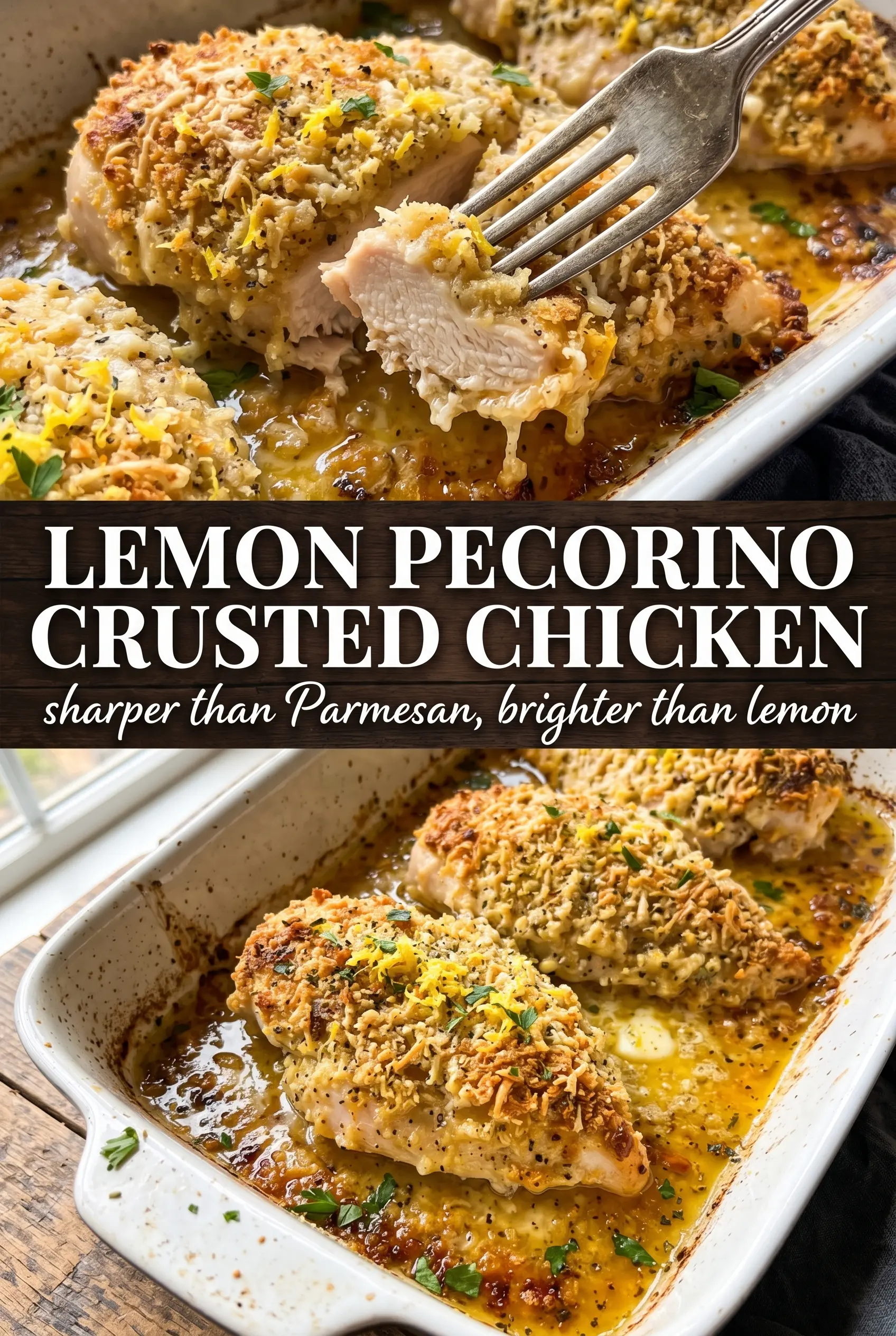
Place the coated chicken on the prepared rack and bake at 425°F for 20 to 22 minutes. You’re looking for a crust that’s deeply golden with a few darker toasted spots and chicken that reaches 165°F at the thickest part. If the crust is coloring too fast, the chicken is usually too close to the top heating element, so move the rack one level down next time rather than lowering the oven temperature.
The Short Rest Before Serving
Let the chicken rest for 3 minutes before slicing. That brief pause keeps the juices from running out the second the knife hits the meat, and the crust settles enough to slice cleanly. Finish with basil and lemon wedges so each plate has a fresh hit of aroma right at the end.
How to Adapt This for Different Kitchens and Dinner Plans
Gluten-Free Version
Swap the panko for gluten-free breadcrumbs or crushed rice cereal-style crumbs. You’ll still get crunch, though the crust may brown a little faster, so start checking a couple minutes early.
Dairy-Free Direction
This one leans hard on the cheese, so a true dairy-free swap changes the dish a lot. The closest approach is a seasoned breadcrumb crust with extra lemon zest, nutritional yeast, and a little more salt, but it won’t have the same salty, crackly finish that Pecorino gives.
Parmesan Instead of Pecorino
Parmesan works if that’s what you have, but use a little extra salt in the seasoning because Parmesan is less assertive. The crust will still brown well, just with a softer, nuttier flavor.
Storage and Reheating
- Refrigerator: Store leftovers in an airtight container for up to 3 days. The crust will soften a bit, but it still reheats well.
- Freezer: Freeze after baking if needed, wrapped tightly and then placed in a freezer bag. The crust won’t stay as crisp after thawing, but the flavor holds up.
- Reheating: Reheat on a rack in a 375°F oven until hot, about 10 to 12 minutes. Skip the microwave if you want any chance of keeping the coating crisp, because it turns the crust rubbery fast.
Answers to the Questions Worth Asking
Lemon Pecorino Crusted Chicken
Ingredients
Equipment
Method
- Preheat the oven to 425°F and line a baking sheet with a wire rack. This helps air circulate so the crust crackles as it bakes.
- Pound the chicken breasts to an even thickness. Aim for uniform thickness so they cook at the same rate.
- Season the chicken with salt, pepper, and garlic powder. Rub evenly over both sides for balanced flavor.
- Mix Dijon mustard with olive oil, then brush over both sides of each chicken breast. Keep the coating thin but complete so the crust adheres.
- Combine Pecorino Romano cheese, panko breadcrumbs, lemon zest, parsley, garlic powder, and black pepper. Stir until the mixture looks evenly speckled.
- Press the crust mixture firmly onto the mustard-coated chicken. Press with steady pressure so it sticks in an even layer.
- Place the chicken on the prepared rack. Arrange in a single layer so the tops brown without steaming.
- Bake at 425°F for 20-22 minutes until the crust is golden and the internal temperature reaches 165°F. Look for a crisp, deeply golden surface with visible cheese caramelization.
- Rest the chicken for 3 minutes. This sets the crust so it stays crackly when you slice or bite.
- Garnish with fresh basil and serve with lemon wedges. Add wedges at the table for bright citrus contrast.